
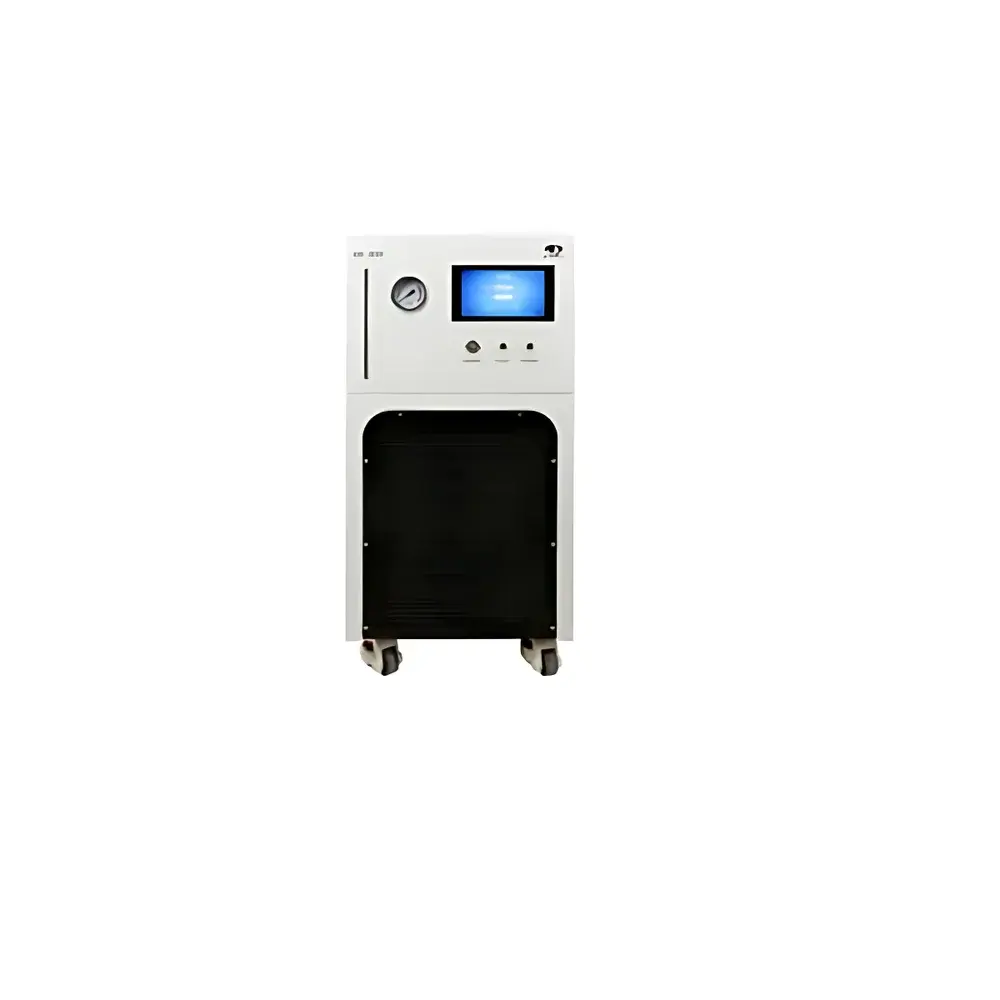
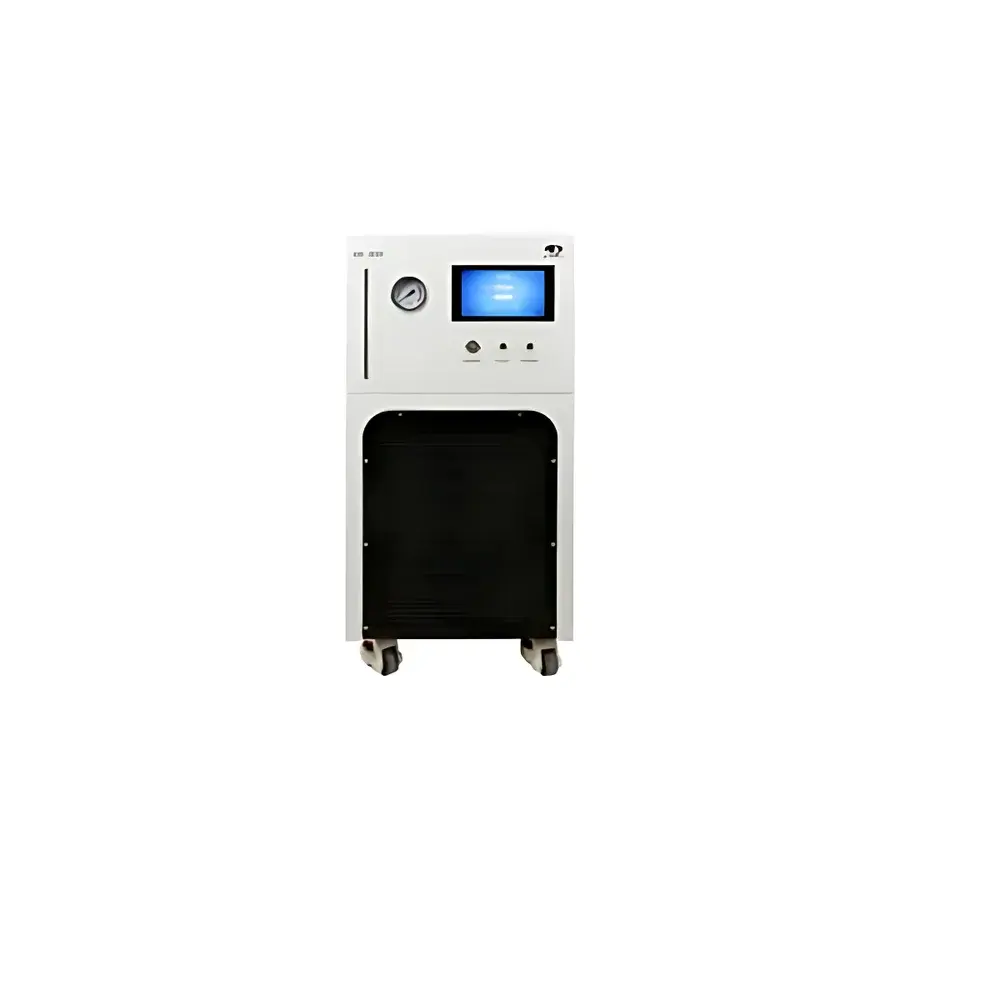
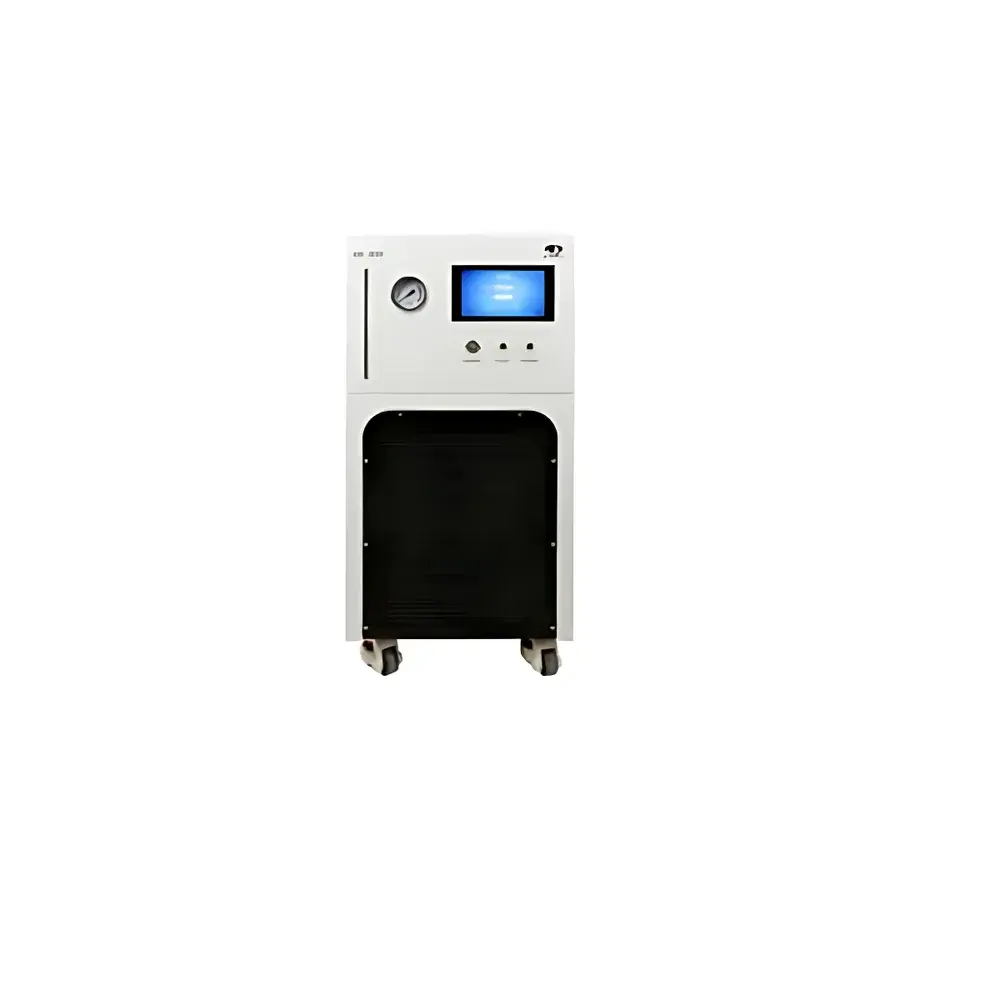
Scientz SLC-2030 Circulating Chiller
| Brand | Scientz |
|---|---|
| Origin | Zhejiang, China |
| Model | SLC-2030 |
| Instrument Type | Integrated Circulating Chiller |
| Cooling Method | Air-Cooled |
| Temperature Control Range | –25 to +45 °C |
| Temperature Stability | ±0.1 °C |
| Refrigeration Capacity | 3.0 kW (at 25 °C ambient) |
| Circulating Pump Pressure | 0–6 bar (adjustable) |
| Max. Flow Rate | 30 L/min |
| Reservoir Volume | 8–15 L (usable), 18 L (total) |
| Total Power Consumption | 1.6 kW |
| Dimensions (L×W×H) | 428 × 620 × 890 mm |
| Construction | Stainless Steel Evaporator Tank, Corrosion-Resistant Tubing |
Overview
The Scientz SLC-2030 is an integrated air-cooled circulating chiller engineered for precise thermal management in demanding laboratory and analytical instrument applications. It operates on a closed-loop refrigeration cycle utilizing R-410A refrigerant and features an electronically controlled expansion valve (EEV) that dynamically modulates refrigerant flow in response to real-time thermal load variations—ensuring stable temperature output without manual intervention. The unit maintains setpoint temperatures across its full operating range of –25 °C to +45 °C with a stability of ±0.1 °C, achieved through high-resolution PID control and a thermally isolated stainless steel evaporator reservoir. Its design prioritizes long-term operational reliability under continuous duty cycles, making it suitable for integration with high-value instrumentation requiring uninterrupted cooling performance.
Key Features
- Stainless steel evaporator tank and corrosion-resistant Polish-textured flexible tubing—compatible with aqueous, mild organic, and buffered coolant mixtures
- Parallel-flow microchannel heat exchanger architecture—improves thermal transfer efficiency by >25% compared to conventional fin-tube designs
- Self-cleaning, low-maintenance air-cooled condenser—eliminates routine dust-filter replacement and reduces airflow restriction over time
- Electronically adjustable circulation pump delivering 0–6 bar pressure and up to 30 L/min flow rate—enabling compatibility with high-backpressure systems (e.g., ICP-MS spray chambers or TEM cooling jackets)
- Temperature control resolution of 0.1 °C with active compensation for external fluid path resistance changes—no recalibration required when modifying hose length or diameter
- Integrated dual-mode operation: internal recirculation (for standalone temperature stabilization) and external loop mode (for instrument cooling via inlet/outlet ports)
Sample Compatibility & Compliance
The SLC-2030 supports standard laboratory coolant formulations—including deionized water, 30% ethylene glycol/water blends, and pH-neutral inhibited solutions—without degradation of wetted components. Its stainless steel reservoir and fluoropolymer-sealed pump housing comply with ISO 8573-1 (compressed air purity) and ASTM D1384 (coolant compatibility testing) material exposure guidelines. While not certified for medical device manufacturing environments, the chiller meets CE marking requirements per EN 61000-6-3 (EMC emission limits) and EN 61000-6-2 (immunity standards). Its temperature logging capability (via optional RS485/Modbus interface) supports GLP-compliant audit trails when integrated into validated laboratory workflows.
Software & Data Management
The unit includes an embedded 4.3-inch TFT LCD touchscreen interface with multilingual support (English, Chinese, Spanish), real-time graphing of temperature, flow rate, and system pressure, and configurable alarm thresholds for high/low temperature, low flow, and refrigerant saturation anomalies. Optional Modbus RTU communication enables integration with LabVIEW, SCADA, or LIMS platforms for centralized monitoring and automated event logging. All operational parameters—including cumulative runtime, compressor cycles, and temperature deviation history—are stored in non-volatile memory for post-event analysis. Firmware updates are performed via USB port using signed binary files, ensuring integrity and traceability in regulated environments.
Applications
- Cooling of inductively coupled plasma optical emission spectrometers (ICP-OES) and mass spectrometers (ICP-MS), where consistent torch and interface temperature directly impacts signal stability and oxide formation rates
- Thermal regulation of atomic absorption spectrophotometers (AAS), particularly graphite furnace modules requiring rapid cooldown between atomization cycles
- Stabilization of transmission electron microscope (TEM) cold stages and cryo-transfer systems during high-resolution imaging sessions
- Heat dissipation from high-power laser sources used in Raman spectroscopy and confocal microscopy setups
- Condenser cooling in Kjeldahl digestion and distillation systems to ensure reproducible nitrogen recovery yields per AOAC 984.27 and ISO 8968-1 protocols
- Support of MRI pre-polarization coils and superconducting magnet quench protection circuits in physics research laboratories
FAQ
What coolant types are compatible with the SLC-2030?
Deionized water, 20–30% ethylene glycol/water mixtures, and commercially available inhibited heat-transfer fluids meeting ASTM D3306 specifications are approved. Avoid chlorinated solvents, acetone, or high-concentration methanol.
Can the SLC-2030 operate continuously at –20 °C ambient temperature?
Yes—the unit is rated for continuous operation in ambient environments ranging from 5 °C to 40 °C. Performance at low ambient temperatures is maintained via intelligent defrost cycling and compressor crankcase heater activation.
Is the temperature stability specification (±0.1 °C) guaranteed across the entire flow range?
Yes—stability is verified at minimum (5 L/min) and maximum (30 L/min) flow rates under steady-state conditions with a 2-meter, 10-mm ID external loop.
Does the chiller support FDA 21 CFR Part 11-compliant electronic records?
Not natively—but when connected to a validated third-party data acquisition system via Modbus, full audit trail, electronic signature, and role-based access control can be implemented per Part 11 requirements.
What maintenance intervals are recommended for extended service life?
Annual inspection of condenser coil cleanliness and refrigerant charge verification is advised. No scheduled oil changes or filter replacements are required due to sealed compressor design and self-cleaning condenser topology.



