
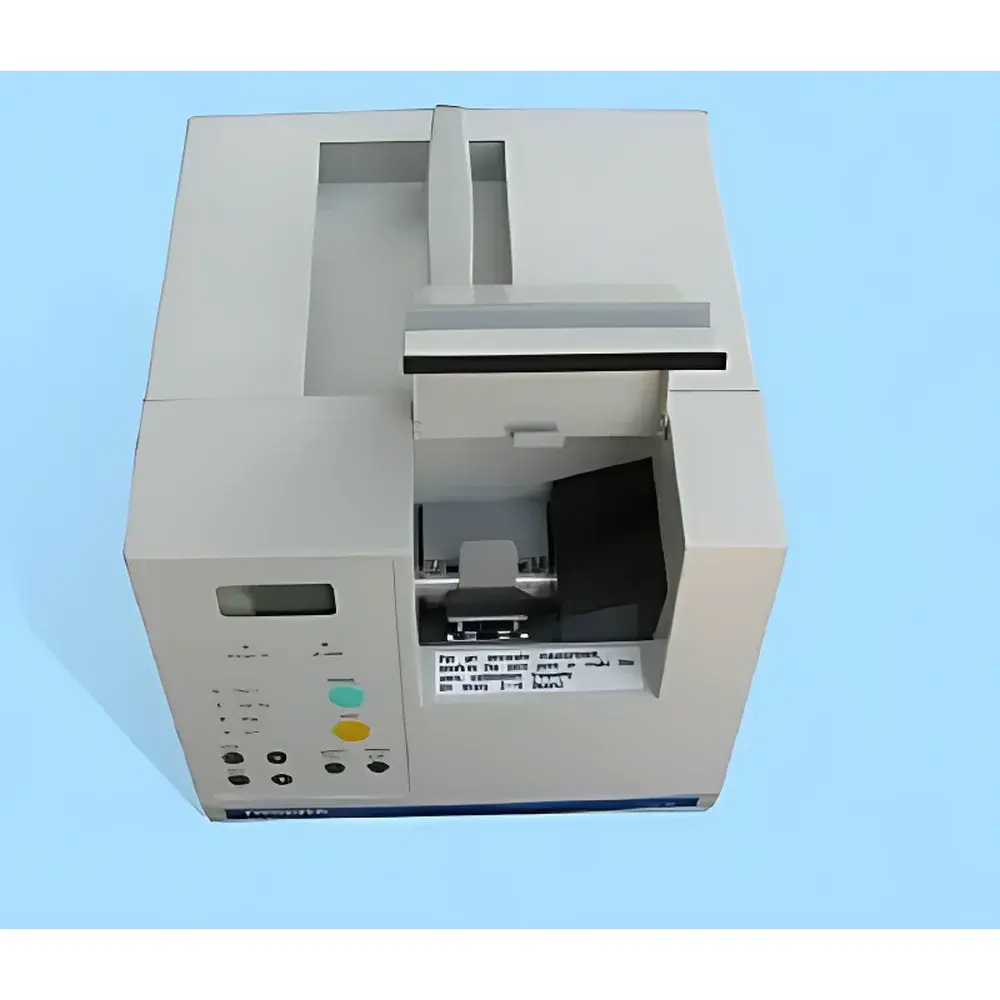
Horiba OCMA-350 Non-Dispersive Infrared Oil Content Analyzer
| Origin | Japan |
|---|---|
| Manufacturer Type | Authorized Distributor |
| Origin Category | Imported |
| Model | OCMA-350 |
| Pricing | Available Upon Request |
Overview
The Horiba OCMA-350 Non-Dispersive Infrared (NDIR) Oil Content Analyzer is a precision laboratory instrument engineered for quantitative determination of total hydrocarbon content in aqueous, soil, and surface wipe samples. It operates on the well-established principle of solvent extraction followed by NDIR absorbance measurement at the characteristic C–H stretching vibration band near 3.4–3.5 µm — a spectral region highly selective for aliphatic and aromatic hydrocarbons. Unlike dispersive IR or UV-Vis methods, the OCMA-350 employs a fixed-wavelength thermal detector architecture with optimized optical pathlength (20 mm quartz cell), delivering robust, interference-resistant quantification without spectral scanning or complex calibration curves. Designed for compliance-driven environmental and industrial laboratories, the system supports trace-level detection (down to 0.1 mg/L) and integrates seamlessly into workflows requiring adherence to EPA Method 1664A (revision B), ISO 9377-2, and ASTM D7066–18 protocols for petroleum hydrocarbon analysis.
Key Features
- Stable Readout Algorithm: Embedded data evaluation logic continuously monitors signal drift and baseline stability during measurement; only displays final values once statistical convergence criteria are met, ensuring reproducibility across operator shifts.
- Real-Time Self-Diagnostic Interface: Backlit 3.5-digit LCD and dual-line alphanumeric display provide immediate visibility of system status—including photodetector output, lamp intensity, cell temperature, and power supply voltage—enabling rapid identification of hardware anomalies prior to measurement error.
- Traceable Data Logging: Internal clock and calendar stamp every measurement with date/time metadata; stores up to 1000 records with full parameter configuration (e.g., sample ID, dilution factor, solvent batch code), compliant with GLP audit requirements.
- Automated Calibration Routine: One-point calibration initiated via RS-232C command or front-panel input after introduction of certified reference standard (e.g., mineral oil in S-316); eliminates manual slope/intercept entry and reduces operator-induced variability.
- Optimized Solvent Compatibility: Fully validated for use with JH1 S-316 (perchloroethylene-free, low-toxicity chlorinated solvent), compatible with SR-300 solvent recovery systems to minimize hazardous waste generation and operational cost per analysis.
Sample Compatibility & Compliance
The OCMA-350 accepts liquid-phase extracts from water (fresh and saline), homogenized soil slurries, and solvent-rinsed solid surfaces (e.g., metal parts, textiles). Sample preparation follows standardized extraction procedures per ISO 11542-2 and EPA SW-846 Method 3510C. The 6.5 mL quartz flow cell accommodates both direct injection and syringe-loaded samples, with thermal stabilization minimizing condensation artifacts. Instrument design conforms to IEC 61010-1 safety standards for laboratory electrical equipment and meets electromagnetic compatibility requirements per EN 61326-1. Data integrity features—including immutable timestamping and non-editable record storage—support 21 CFR Part 11 readiness when paired with validated LIMS integration.
Software & Data Management
Raw absorbance (Abs), concentration (mg/L or mg/kg), and diagnostic logs are exportable via RS-232C serial interface to external PCs or centralized printers. ASCII-formatted output includes header fields for instrument ID, operator code, and method version. Optional Horiba LabManager™ software (v4.2+) enables automated report generation with customizable templates aligned to ISO/IEC 17025 accreditation reporting requirements. All stored measurements retain full audit trail metadata, including time-of-acquisition, user login session, and calibration history — essential for regulatory inspections under EU Water Framework Directive or US Clean Water Act enforcement programs.
Applications
- Environmental Monitoring: Quantification of hydrocarbon contamination in groundwater, surface water, and leachate from landfills or brownfield sites.
- Industrial Wastewater Compliance: Verification of effluent discharge limits per NPDES permits and ISO 14001-certified EMS protocols.
- Maritime Operations: Bilge water monitoring onboard vessels to meet MARPOL Annex I discharge standards.
- Oil-Water Separation Efficiency: Real-time assessment of separator performance in refineries and offshore platforms.
- Tank Cleaning Validation: Residual oil verification in fuel storage tanks prior to maintenance or decommissioning.
- Automotive & Manufacturing QA: Surface cleanliness verification on machined parts and textile substrates per VDA 19.1 and ISO 14644-1 particulate control frameworks.
FAQ
What extraction solvents are compatible with the OCMA-350 besides S-316?
The instrument is factory-optimized for JH1 S-316; alternative solvents require full revalidation of linearity, LOD/LOQ, and interferences per ISO/IEC 17025 Clause 5.4.1.
Does the OCMA-350 support multi-point calibration?
No — it implements a single-point, linear-response calibration model validated over its specified range (0–200 mg/L); multi-point calibration is not supported by firmware.
Can the OCMA-350 measure emulsified oil directly without extraction?
No — all samples must undergo solvent-based liquid-liquid or solid-phase extraction prior to analysis; the instrument measures only dissolved hydrocarbons in the organic phase.
Is the quartz cell user-replaceable?
Yes — the 20 mm pathlength cell is a field-serviceable component with documented torque specifications and alignment procedure in the Maintenance Manual Rev. 3.1.
What is the typical warm-up time required before first measurement?
Minimum 30 minutes at ambient temperature (23 ± 2 °C) to stabilize detector thermal equilibrium and lamp output; displayed “READY” indicator confirms thermal readiness.







