
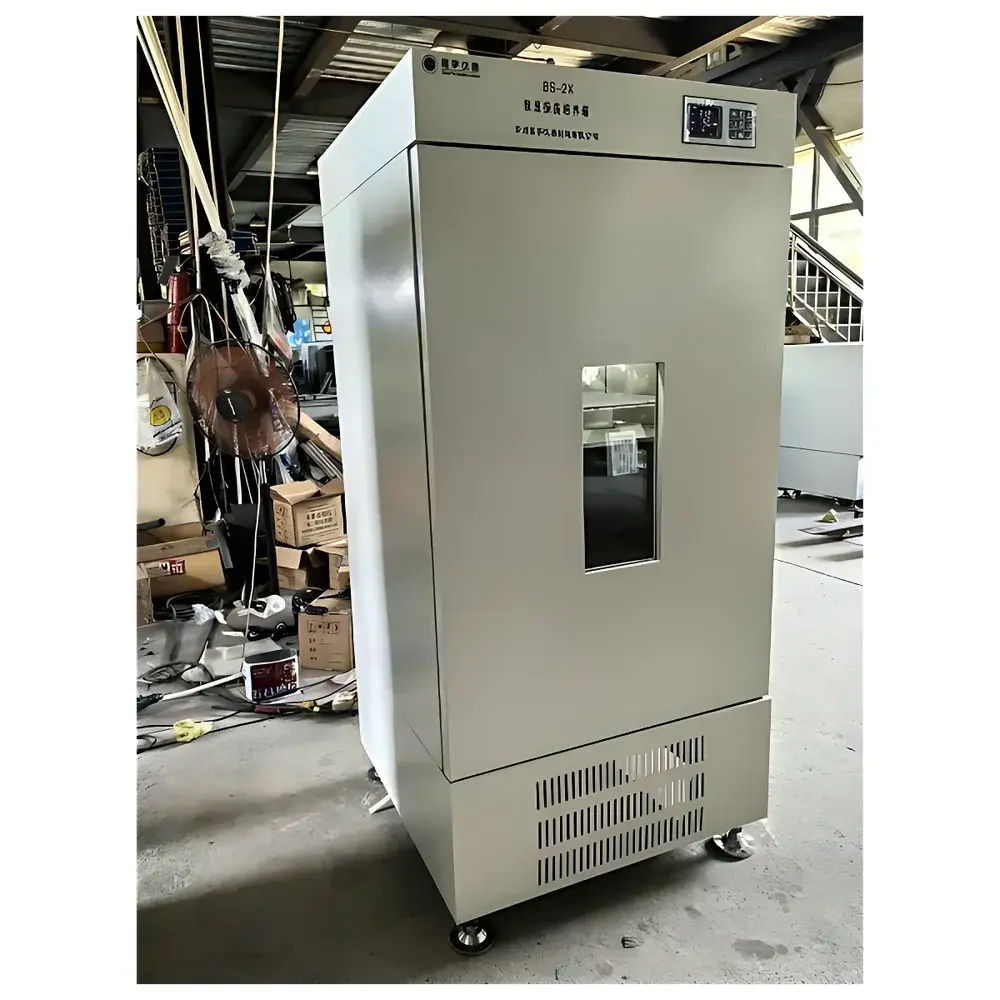
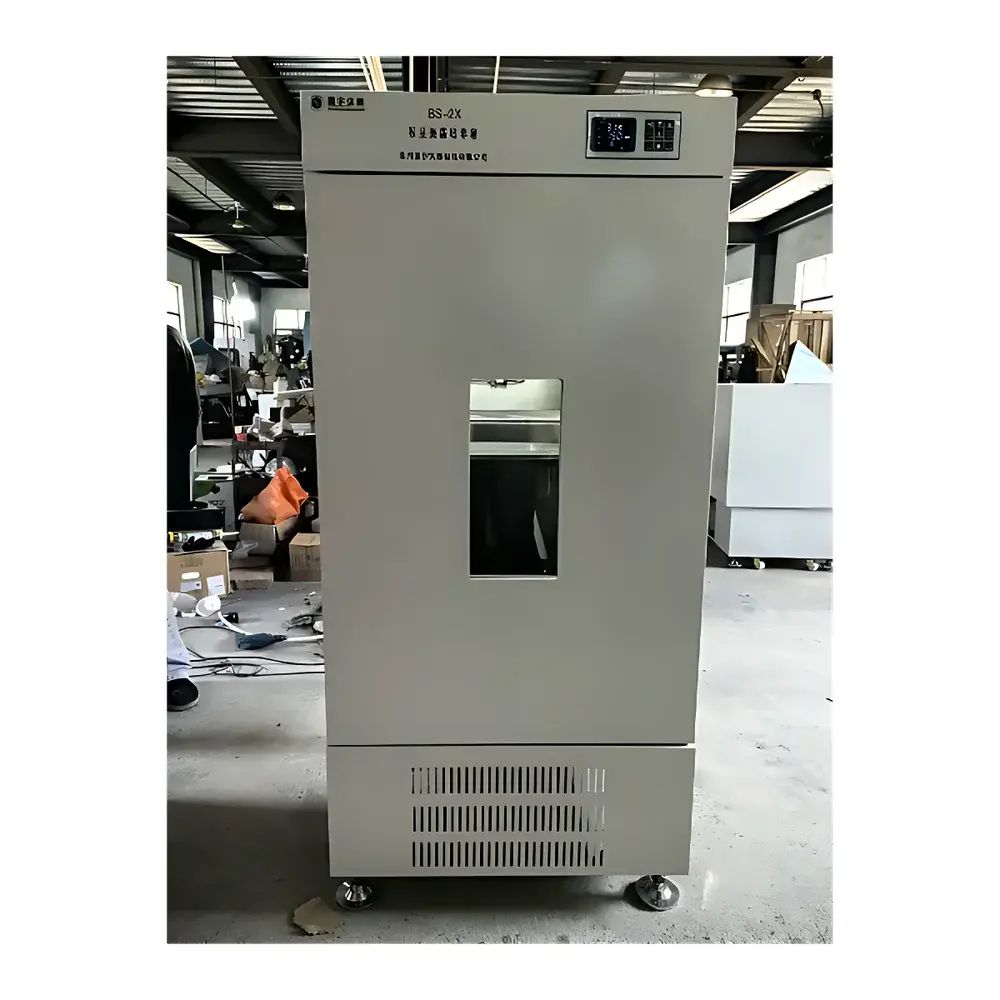
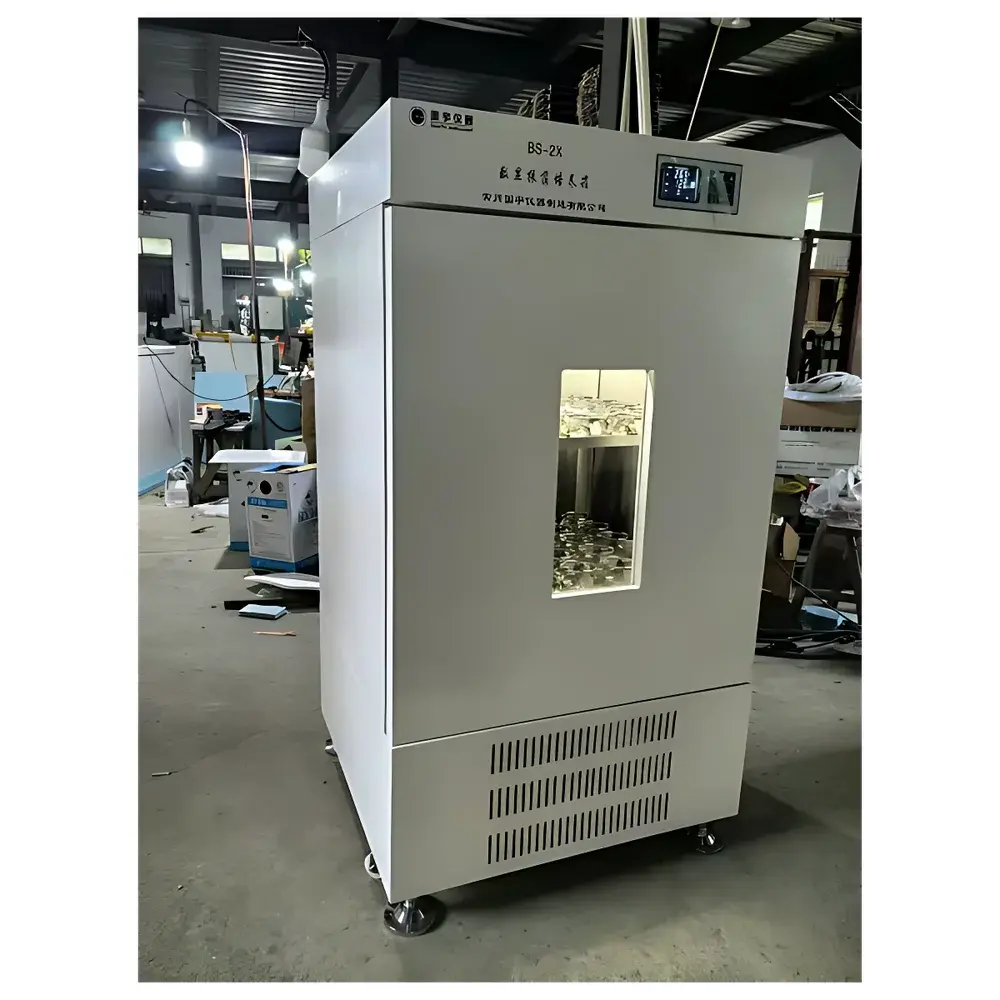
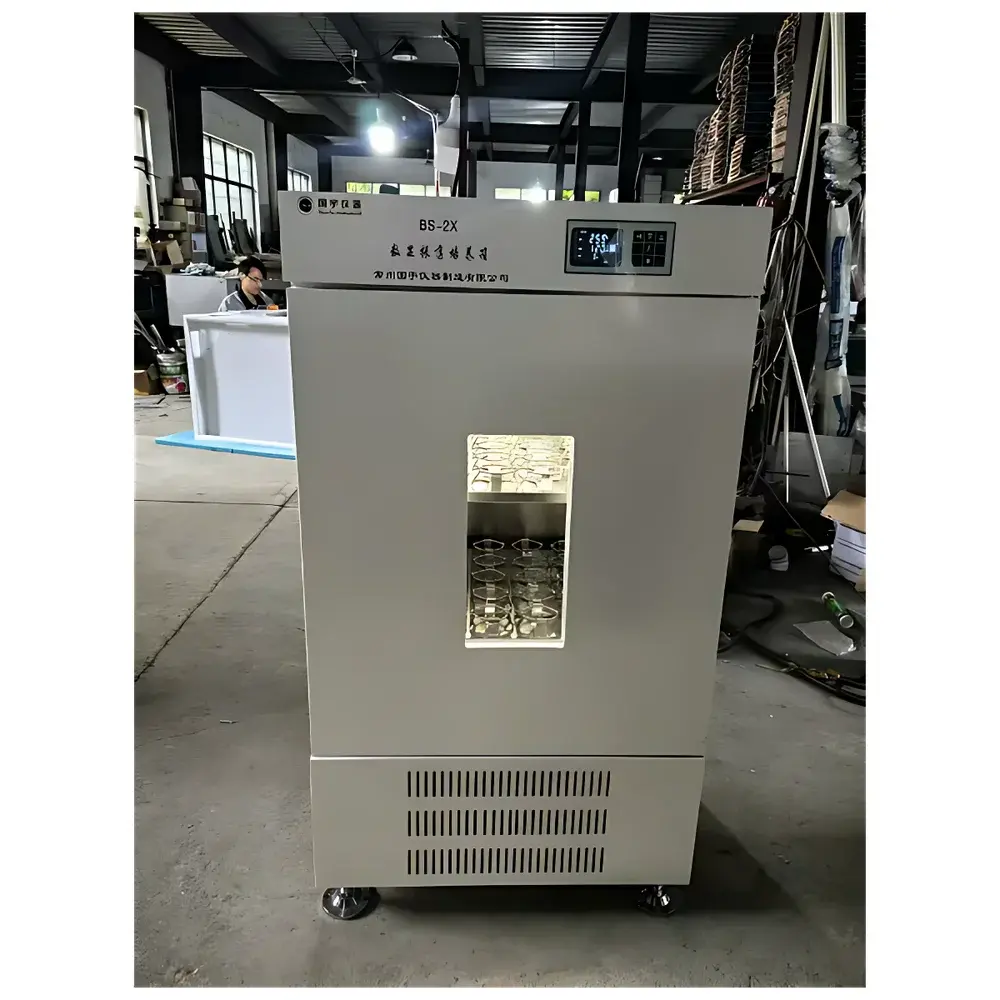
CZGY BS-2F Digital Display Incubator Shaker
| Brand | CZGY |
|---|---|
| Origin | Jiangsu, China |
| Manufacturer Type | Direct Manufacturer |
| Product Category | Domestic |
| Model | BS-2F |
| Price Range | USD 700–1,400 (FOB) |
| Instrument Type | Full-Temperature Orbital Shaker |
| Timer Range | 0–9999 min |
| Oscillation Frequency | 30–300 rpm |
| Oscillation Amplitude | 26 mm |
| Temperature Range | 5–60 °C |
| Shelf Quantity | 2 shelves |
| Motor Type | Brushless DC Motor |
| Control Interface | Integrated LCD Display |
| Temperature Control | PID Algorithm |
| Temp. Accuracy | ±0.5 °C |
| Speed Accuracy | ±1 rpm |
| Operating Mode | Orbital (interchangeable to reciprocating upon request) |
| Platform Dimensions | 500 × 400 mm (per shelf) |
| Construction | Cold-rolled steel exterior with stainless steel inner chamber and shelves |
| UV Sterilization | Built-in ultraviolet lamp |
| Power Supply | 220 V, 50 Hz |
| Total Power Consumption | 900 W |
| Safety | Grounded power input, over-temperature and motor overload protection |
Overview
The CZGY BS-2F Digital Display Incubator Shaker is a dual-function, full-temperature orbital shaker engineered for precision-controlled cultivation and agitation of biological samples under regulated thermal conditions. It integrates convection-based air-heating technology with high-stability brushless DC motor-driven orbital motion—enabling simultaneous temperature regulation and uniform mixing in a single compact unit. This design supports applications requiring both physiological temperature maintenance and mechanical homogenization, such as microbial growth studies, suspension cell culture, enzyme kinetics assays, and hybridization protocols. The instrument operates across a broad ambient-compatible temperature range (5–60 °C), making it suitable for mesophilic and thermotolerant organism cultivation, as well as low-temperature fermentation processes. Its PID-controlled thermal system ensures minimal overshoot and stable setpoint retention, while the wide-speed oscillation range (30–300 rpm) accommodates diverse viscosity and vessel-size requirements without compromising reproducibility.
Key Features
- Brushless DC Motor Drive: Eliminates carbon wear, enabling continuous operation over extended durations with consistent torque delivery and speed stability (±1 rpm accuracy).
- Dual-Shelf Configuration: Two independently accessible stainless steel platforms (500 × 400 mm each) allow parallel processing of multiple sample sets with minimized cross-contamination risk.
- PID Temperature Regulation: Achieves ±0.5 °C control accuracy across the full 5–60 °C operating range; integrated thermal sensors provide real-time feedback for dynamic compensation against ambient fluctuations.
- Programmable Timer: Offers flexible timing resolution from 1 minute up to 9999 minutes (166.6 hours), supporting unattended overnight or multi-day experiments with automatic shutdown.
- UV Sterilization System: Built-in germicidal ultraviolet lamp (254 nm) enables routine decontamination of interior surfaces between runs—critical for maintaining aseptic integrity in cell culture and microbiology workflows.
- Robust Mechanical Architecture: Cold-rolled steel housing with electrostatic powder coating resists corrosion and mechanical abrasion; stainless steel inner chamber and shelves ensure chemical compatibility and ease of cleaning per GLP-compliant laboratory standards.
Sample Compatibility & Compliance
The BS-2F accommodates standard laboratory vessels including Erlenmeyer flasks (up to 2 L), test tubes, petri dishes, and multi-well plates via configurable spring clamps or optional 250 mL bottle-specific fixtures (60-position). Its orbital motion profile (26 mm amplitude) delivers gentle yet effective mixing ideal for aerobic bacterial cultures, yeast suspensions, and mammalian cell lines in suspension format. The unit complies with general electrical safety requirements per IEC 61010-1 for laboratory equipment and supports traceable operation under Good Laboratory Practice (GLP) environments when paired with validated procedures. While not inherently 21 CFR Part 11 compliant, its manual logging interface permits integration into electronic lab notebook (ELN) systems for audit-trail documentation.
Software & Data Management
The BS-2F utilizes an integrated LCD interface with segmented display and tactile membrane keys—designed for intuitive parameter entry and real-time monitoring of temperature, speed, and remaining time. No proprietary software or PC connectivity is included; however, all operational parameters are retained in non-volatile memory during power interruption. For laboratories requiring data export or remote supervision, third-party RS-232 or analog signal adapters may be installed externally to feed temperature and RPM signals into SCADA or LIMS platforms. Calibration records—including temperature sensor verification and speed validation—are recommended annually per ISO/IEC 17025 guidelines to maintain measurement traceability.
Applications
- Microbial culture expansion and bioprocess optimization (e.g., E. coli, Bacillus subtilis)
- Suspension-based mammalian and insect cell line propagation
- Enzyme activity assays requiring constant agitation at defined temperatures
- Nucleic acid hybridization and immunoassay incubation steps
- Fermentation screening and media development studies
- Environmental microbiology—water quality testing, bioremediation trials
- Pharmaceutical QC: stability testing of liquid formulations under agitated thermal stress
FAQ
What is the maximum flask size supported on each shelf?
Standard configuration supports up to 2 L Erlenmeyer flasks using spring clamps; custom fixtures for 250 mL bottles (60 units/shelf) are available upon request.
Can the BS-2F operate at 4 °C for cold-sensitive applications?
No—the minimum operational temperature is 5 °C. For sub-ambient control, a refrigerated incubator shaker model is required.
Is the UV lamp intensity calibrated or replaceable?
The UV lamp is a standard low-pressure mercury vapor type (254 nm); replacement lamps are field-serviceable and rated for 8,000 hours of cumulative use.
Does the unit include over-temperature or motor-failure safeguards?
Yes—dual independent thermal cutouts and motor current monitoring prevent damage during fault conditions, triggering audible alarm and automatic shutdown.
How often should calibration be performed?
Temperature and speed calibration are recommended annually or after any physical impact, relocation, or repair event—per ISO/IEC 17025 Clause 6.5.2.




