
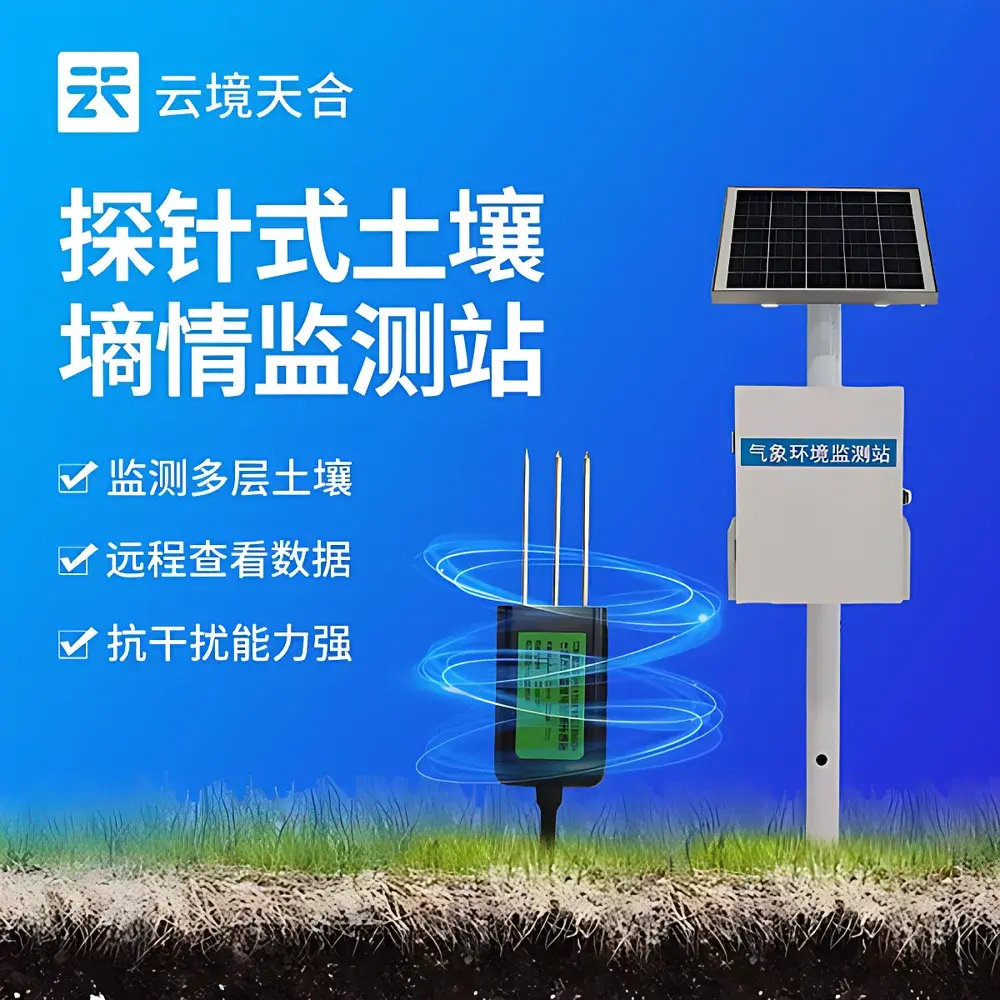
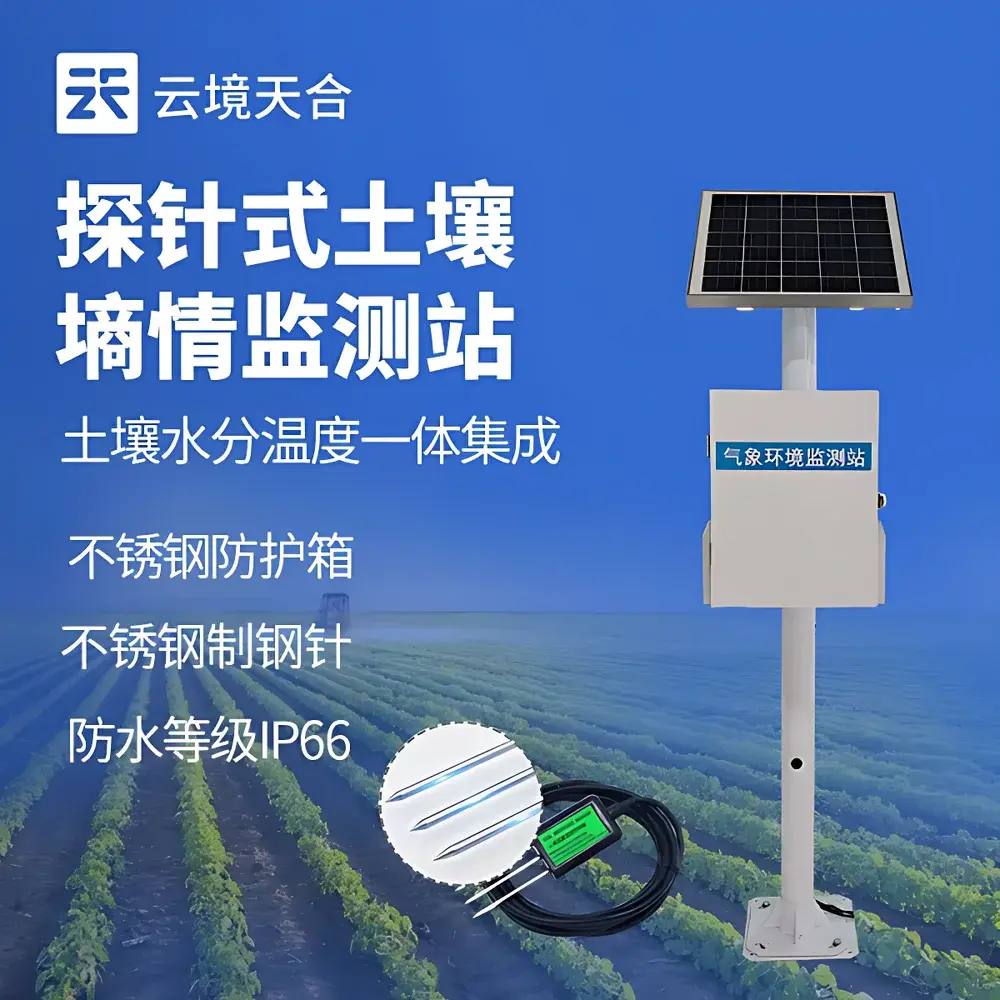
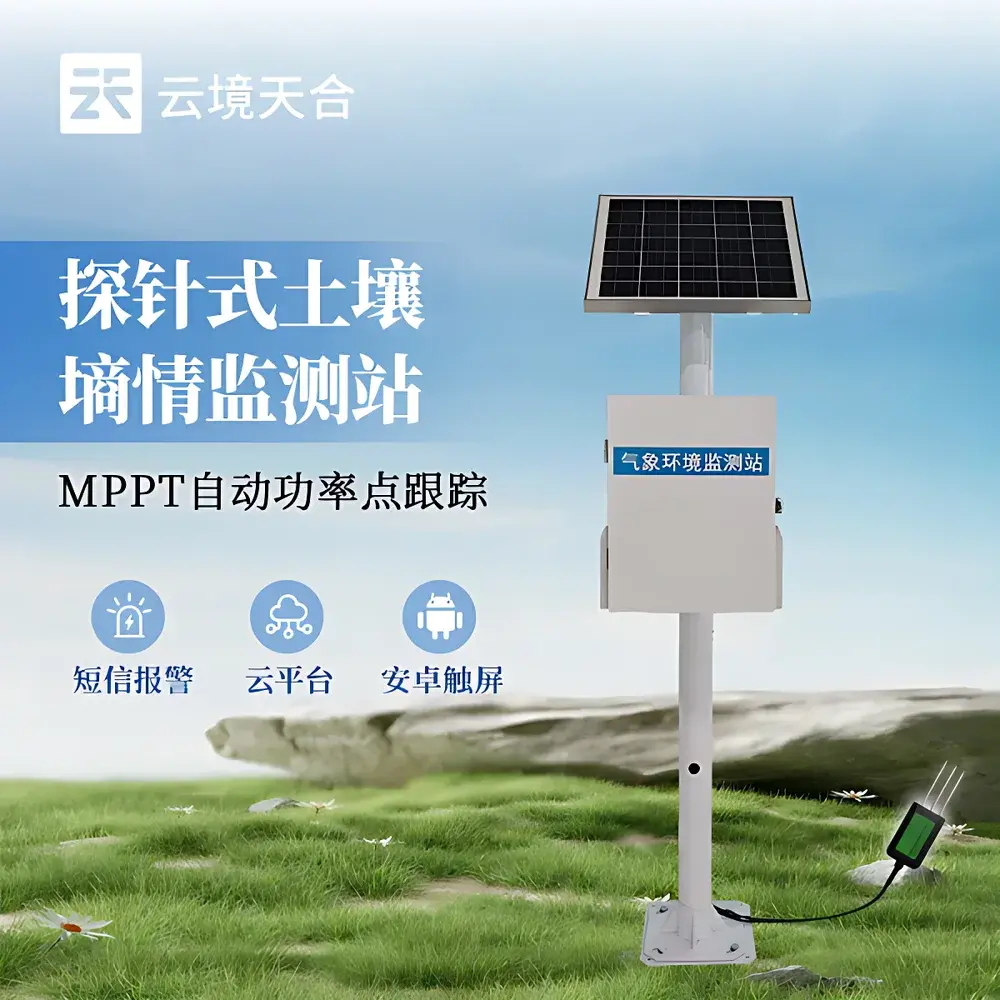
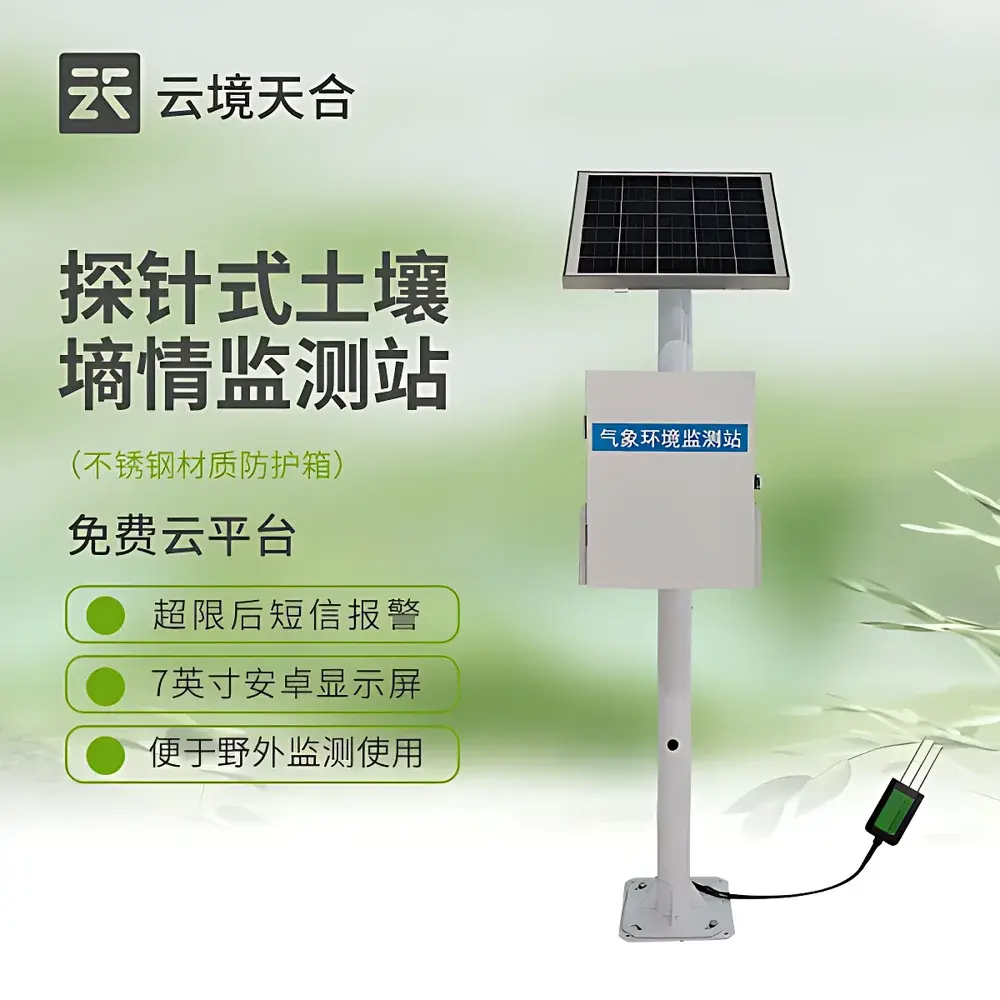
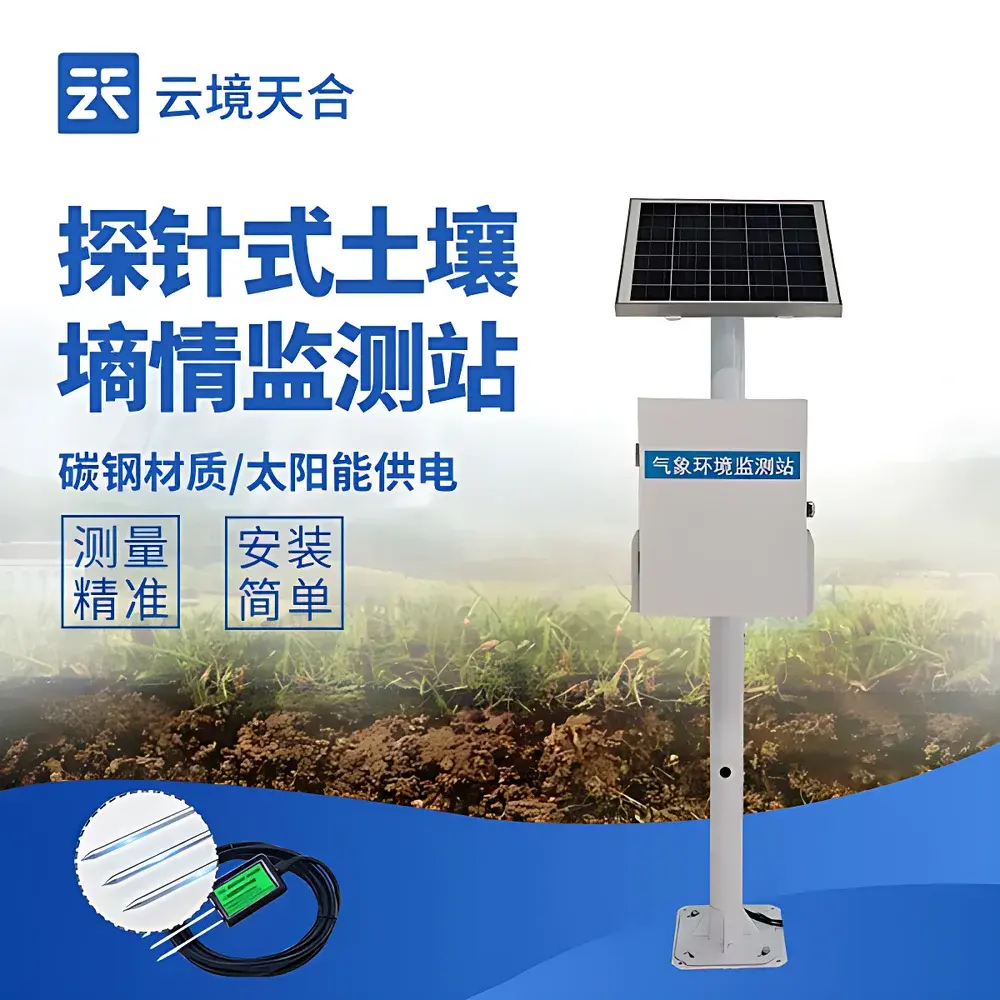
TH-TS400 Wireless Soil Moisture and Temperature Monitoring Station
| Brand | Tianhe (Shandong Tianhe Environmental Technology Co., Ltd.) |
|---|---|
| Origin | Shandong, China |
| Manufacturer Type | Direct Manufacturer |
| Country of Origin | China |
| Model | TH-TS400 |
| Price | USD 695 (FOB Qingdao) |
| Power Supply | Solar-powered with MPPT charge controller |
| Communication | GPRS, Bluetooth 4.2, RS485 (optional wired interface) |
| Display | 7-inch low-temperature Android panel (v4.4.2, Quad-core Cortex-A7, 512MB RAM / 4GB storage) |
| Enclosure | IP66-rated ABS weatherproof housing |
| Deployment Time | ≤30 minutes by single operator |
| Data Storage Capacity | ≥500,000 records |
Overview
The TH-TS400 Wireless Soil Moisture and Temperature Monitoring Station is an integrated, field-deployable environmental sensing platform engineered for continuous, autonomous monitoring of soil hydrothermal conditions in unattended outdoor environments. Operating on the principle of frequency-domain reflectometry (FDR) for volumetric water content (VWC) measurement and precision thermistor-based sensing for soil temperature, the system delivers high-reproducibility data under variable climatic and edaphic conditions. Designed for long-term deployment in agricultural fields, forest ecosystems, ecological research plots, and geotechnical observation networks, the TH-TS400 complies with foundational requirements for environmental data integrity per ISO 14001-supported monitoring workflows and aligns with FAO-recommended protocols for soil moisture network calibration. Its modular architecture supports seamless integration of auxiliary sensors without hardware modification—enabling scalable observatory-grade data acquisition across heterogeneous landscapes.
Key Features
- Four-tier vertically stacked soil moisture and temperature sensor array (5.5 cm stainless-steel probes, 3 mm diameter), enabling stratified profile analysis from surface to subsoil layers
- Integrated monocrystalline solar panel with MPPT (Maximum Power Point Tracking) charge controller—delivering up to 20% higher energy conversion efficiency versus conventional PWM controllers under partial shading or low-light conditions
- Ruggedized 7-inch industrial-grade Android display (operating system v4.4.2, ARM Cortex-A7 quad-core processor, 512 MB RAM / 4 GB flash) with wide-temperature operation (−20°C to +60°C ambient)
- IP66-rated ABS enclosure providing resistance to UV degradation, chemical corrosion, and mechanical impact—validated for continuous exposure in saline, acidic, or alkaline soils
- Multi-protocol wireless transmission: GPRS for wide-area telemetry, Bluetooth 4.2 for local configuration and diagnostics, and optional RS485 for wired fallback or gateway integration
- Configurable SMS alerting system triggered by user-defined thresholds—supporting real-time notification of critical VWC or temperature excursions via GSM network
Sample Compatibility & Compliance
The TH-TS400 is validated for use in mineral soils (sand, loam, clay), organic substrates (peat, compost), and disturbed anthropogenic media (reclaimed mine soils, green roof matrices). Sensor calibration is traceable to NIST-traceable reference standards for water content and temperature. While not certified to IEC 61000-6-2/4 for EMC immunity or UL 61010-1 for safety, the device meets CE marking requirements for electromagnetic compatibility (2014/30/EU) and RoHS Directive 2011/65/EU for hazardous substance restriction. Data logging firmware implements timestamped, non-volatile storage with cyclic overwrite protection—supporting audit-ready records for GLP-aligned field studies. Optional sensor modules (EC, pH, air T/RH, PAR, optical rain) conform to ASTM D511, ASTM D1293, and ISO 7726 where applicable.
Software & Data Management
Local data visualization is enabled through the embedded Android HMI, supporting real-time trend graphs, historical playback, and manual calibration offset entry. Raw sensor outputs are stored in CSV-compliant format with UTC timestamps, sensor ID, and quality flags. Remote data retrieval utilizes HTTP POST or MQTT protocols to cloud platforms (e.g., ThingSpeak, Ubidots, or custom LORA/GSM gateways). Firmware updates are delivered over-the-air (OTA) via encrypted HTTPS handshake. The system supports basic metadata tagging (site ID, sensor depth, installation date) and exports time-synchronized datasets compatible with R, Python (Pandas), and MATLAB for statistical modeling and time-series analysis. Audit trails—including configuration changes, alarm events, and battery voltage logs—are retained for ≥90 days.
Applications
- Irrigation scheduling and deficit irrigation optimization in precision agriculture systems
- Soil moisture–temperature hysteresis characterization for climate change impact studies
- Root-zone monitoring in silvicultural trials and restoration ecology projects
- Validation of satellite-derived soil moisture products (e.g., SMAP, Sentinel-1)
- Boundary condition input for numerical models (HYDRUS-1D, SWAT, ParFlow)
- Long-term eddy covariance site ancillary measurements (flux tower networks)
FAQ
What is the recommended installation depth for the four-layer probe array?
Probes are factory-configured at 10 cm, 20 cm, 40 cm, and 60 cm intervals—optimized for crop root zone profiling. Custom spacing is achievable via field calibration and software mapping.
Does the system support MODBUS RTU or SDI-12 communication protocols?
No—native communication is limited to GPRS (TCP/IP), Bluetooth SPP, and RS485 (ASCII protocol only). MODBUS or SDI-12 requires external protocol converter hardware.
How frequently does the device transmit data via GPRS?
Transmission interval is user-configurable from 10 minutes to 24 hours; default factory setting is 30 minutes. Battery life scales inversely with transmission frequency and sensor activation count.
Is the soil pH sensor suitable for long-term burial in highly acidic soils (pH < 4.0)?
The optional pH electrode uses a gel-filled Ag/AgCl reference system rated for pH 2–12; continuous immersion below pH 3.5 may accelerate junction potential drift—quarterly recalibration is advised in such conditions.
Can historical data be exported without internet connectivity?
Yes—via microSD card (not included) or direct USB connection to PC using the onboard serial interface and provided terminal utility.
Related Products







