
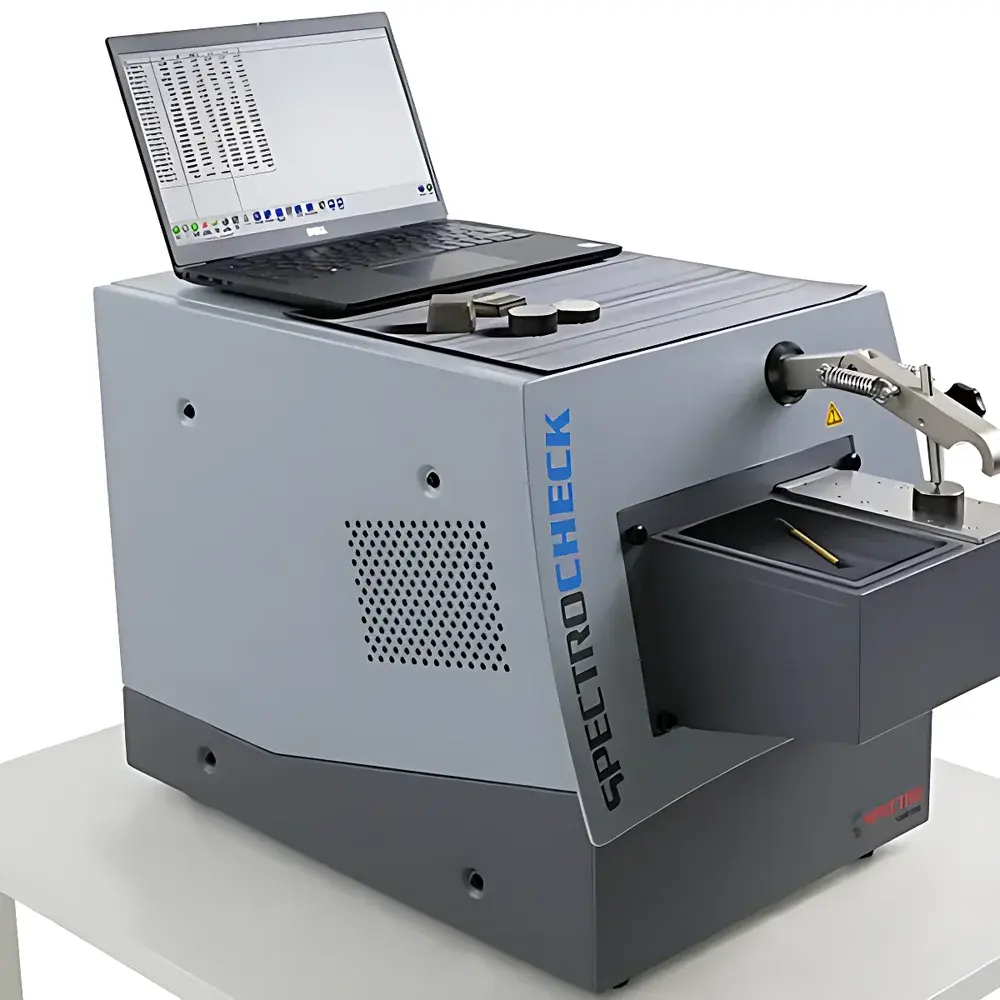
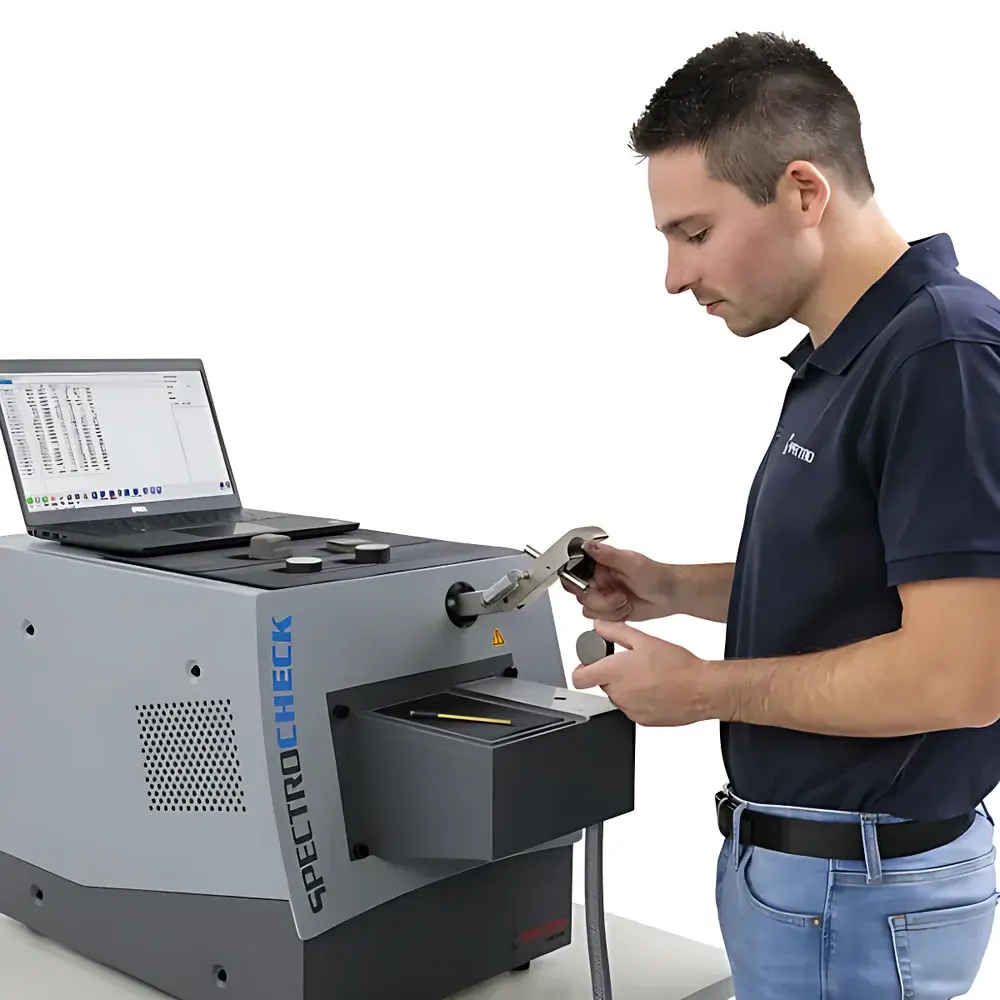
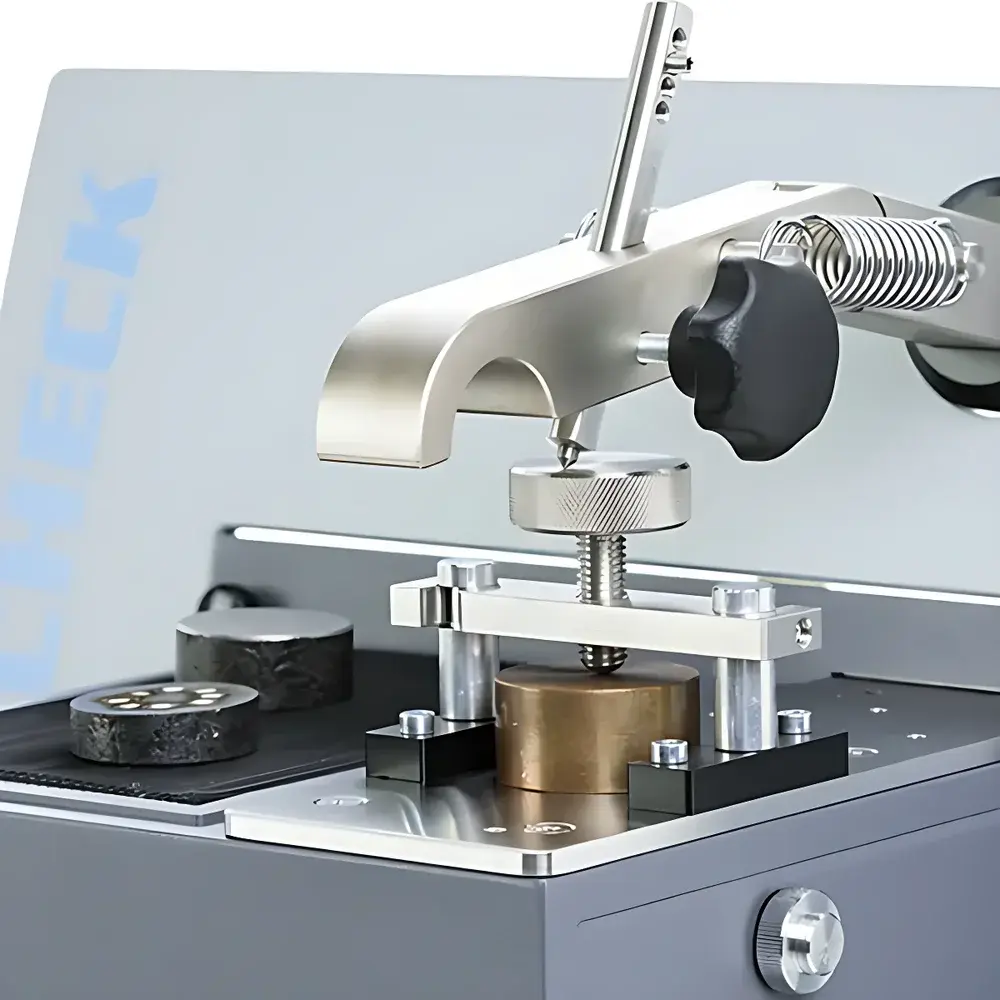
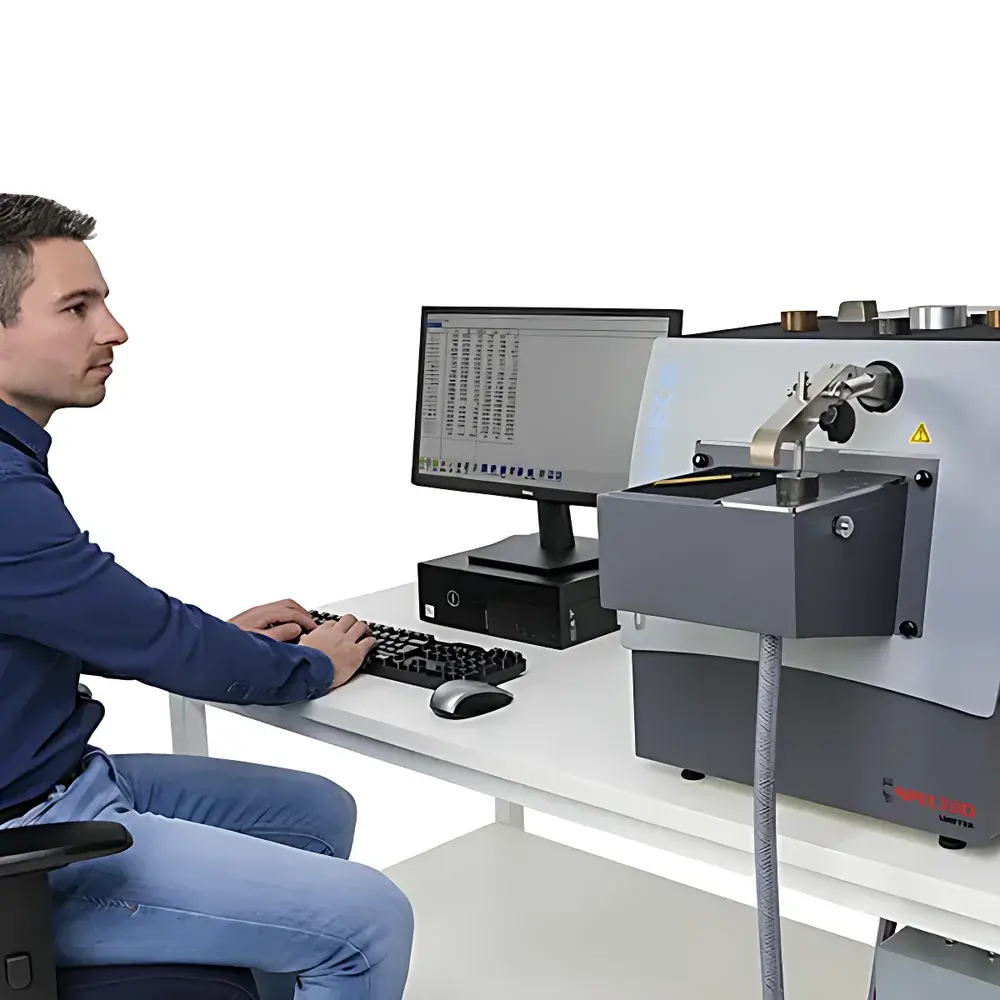
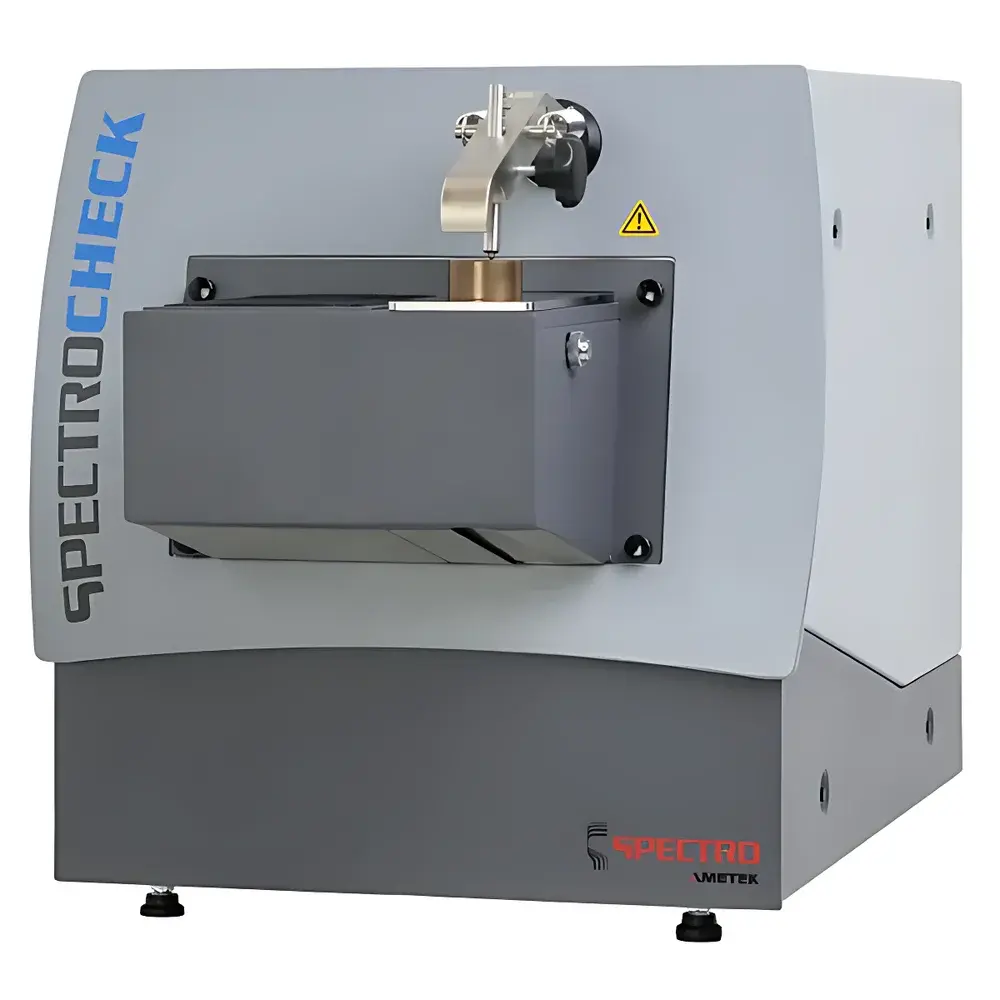
SPECTROCHECK LMM02 Direct-Reading Optical Emission Spectrometer
| Brand | SPECTRO |
|---|---|
| Origin | Germany |
| Model | SPECTROCHECK LMM02 |
| Instrument Type | Benchtop |
| Excitation Method | Spark |
| Detector Type | CMOS |
| Focal Length | 400 mm |
Overview
The SPECTROCHECK LMM02 is a benchtop direct-reading optical emission spectrometer (OES) engineered for high-precision elemental analysis of solid metallic samples in production and quality control environments. It operates on the principle of spark-induced atomic emission spectroscopy: a controlled high-voltage spark ablates a micro-volume of the conductive sample surface, generating a transient plasma; emitted light from excited atoms and ions is dispersed via a fixed 400 mm Czerny–Turner optical system and resolved by a high-resolution CMOS detector array. This enables simultaneous multi-element quantification across the UV–VIS spectral range (typically 130–800 nm), with detection limits in the sub-ppm range for key alloying and trace elements in ferrous, aluminum, and copper-based matrices. Designed specifically for small- to medium-sized foundries, automotive component suppliers, and metal service centers, the SPECTROCHECK LMM02 delivers laboratory-grade analytical performance in a compact, production-hardened platform—without requiring dedicated climate-controlled rooms or complex infrastructure.
Key Features
- Spark source optimized for stable, reproducible excitation across diverse metal types—including cast iron, low-alloy steels, Al-Si alloys, and Cu-Zn brass—ensuring consistent ablation depth and minimal matrix effects.
- Fixed 400 mm focal length Paschen–Runge optical layout with thermally stabilized mounting, delivering long-term wavelength stability and minimizing drift between calibrations.
- High-sensitivity CMOS linear array detector with on-chip binning capability, enabling rapid spectral acquisition (< 20 s per analysis) and improved signal-to-noise ratio for trace element detection.
- iCAL (intelligent Calibration Logic): proprietary single-standard normalization algorithm that dynamically corrects for instrumental drift and minor sample surface variations—eliminating the need for dual-high/low reference standards and reducing daily recalibration time by ~30 minutes.
- Smart argon management system: fully shuts off argon flow during instrument idle periods and reduces standby consumption by up to 70% versus prior-generation OES systems—lowering operational cost and environmental footprint.
- Compact footprint: 35% smaller than predecessor models, facilitating integration into space-constrained QC labs or near-production lines without sacrificing optical path integrity or maintenance accessibility.
Sample Compatibility & Compliance
The SPECTROCHECK LMM02 supports standardized solid metallic samples conforming to ASTM E415, ISO 11577, and EN 10315 specifications. Sample requirements include flat, clean, spark-polished surfaces (minimum 20 mm diameter, thickness ≥ 4 mm). It is validated for routine analysis of Fe-, Al-, Cu-, Ni-, and Zn-based alloys, covering over 60 elements—from major constituents (C, Si, Mn, P, S, Cr, Ni, Mo) to critical tracers (B, Sn, Pb, As, Bi). All calibration models are developed and verified using CRMs traceable to NIST and BAM reference materials. The system architecture complies with GLP/GMP documentation requirements, including full audit trail logging, user access controls, and electronic signature support per FDA 21 CFR Part 11 when configured with optional software modules.
Software & Data Management
Controlled by SPECTRO’s WinSpark software suite, the instrument provides intuitive workflow-driven operation—from sample registration and analysis sequencing to real-time spectral visualization and statistical reporting. Raw spectral data, intensity values, and calibration coefficients are stored in an encrypted SQLite database with automatic daily backups. Export formats include CSV, XML, and PDF reports compliant with internal QA templates or external customer portals. Optional data connectivity supports OPC UA and Modbus TCP protocols for integration into MES or ERP systems. Software updates follow a validated release cycle, with version history, change logs, and impact assessments documented per ICH Q9 principles.
Applications
- Routine grade identification and positive material identification (PMI) in incoming raw material inspection.
- In-process verification of melt composition before casting—enabling rapid correction of alloy additions.
- Final product certification for automotive OEMs requiring PPAP-compliant chemistry reports (e.g., AIAG CQI-9).
- Scrap sorting and recycling operations where fast turnaround and multi-matrix flexibility are essential.
- Failure analysis laboratories performing comparative elemental mapping of fracture surfaces or inclusion-rich zones.
FAQ
What sample preparation is required for optimal SPECTROCHECK LMM02 performance?
Flat, spark-polished surfaces free of oxide layers, oil, or coatings are mandatory. Recommended preparation includes mechanical grinding followed by spark polishing using tungsten or copper electrodes under argon purge.
Does the instrument support analysis of coated or plated metals?
No—only bulk composition of homogeneous, electrically conductive solids is measured. Coatings must be removed prior to analysis to avoid interfacial interference and inaccurate quantification.
How frequently must the optical system be cleaned or realigned?
The sealed, purged optical chamber requires no routine cleaning. Under normal operating conditions, optical alignment remains stable for ≥12 months; verification is recommended annually or after physical relocation.
Is remote diagnostics supported?
Yes—via secure HTTPS-based SPECTRO Remote Service Portal, enabling authorized engineers to monitor system health, review error logs, and perform firmware updates without onsite visits.
Can the instrument be upgraded with additional elements or calibration packages post-purchase?
Yes—calibration expansions and software feature modules (e.g., inclusion analysis, statistical process control dashboards) are available as licensed plug-ins, maintaining full traceability and validation records.





