
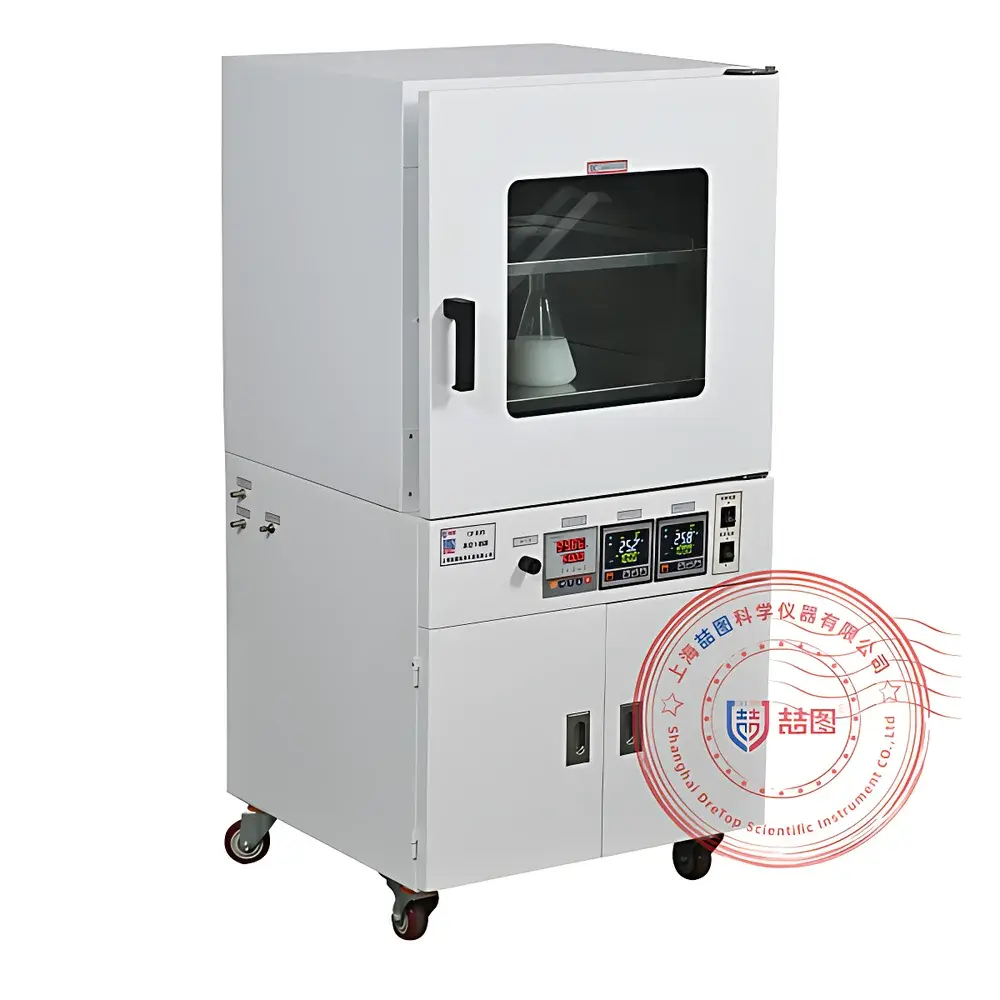
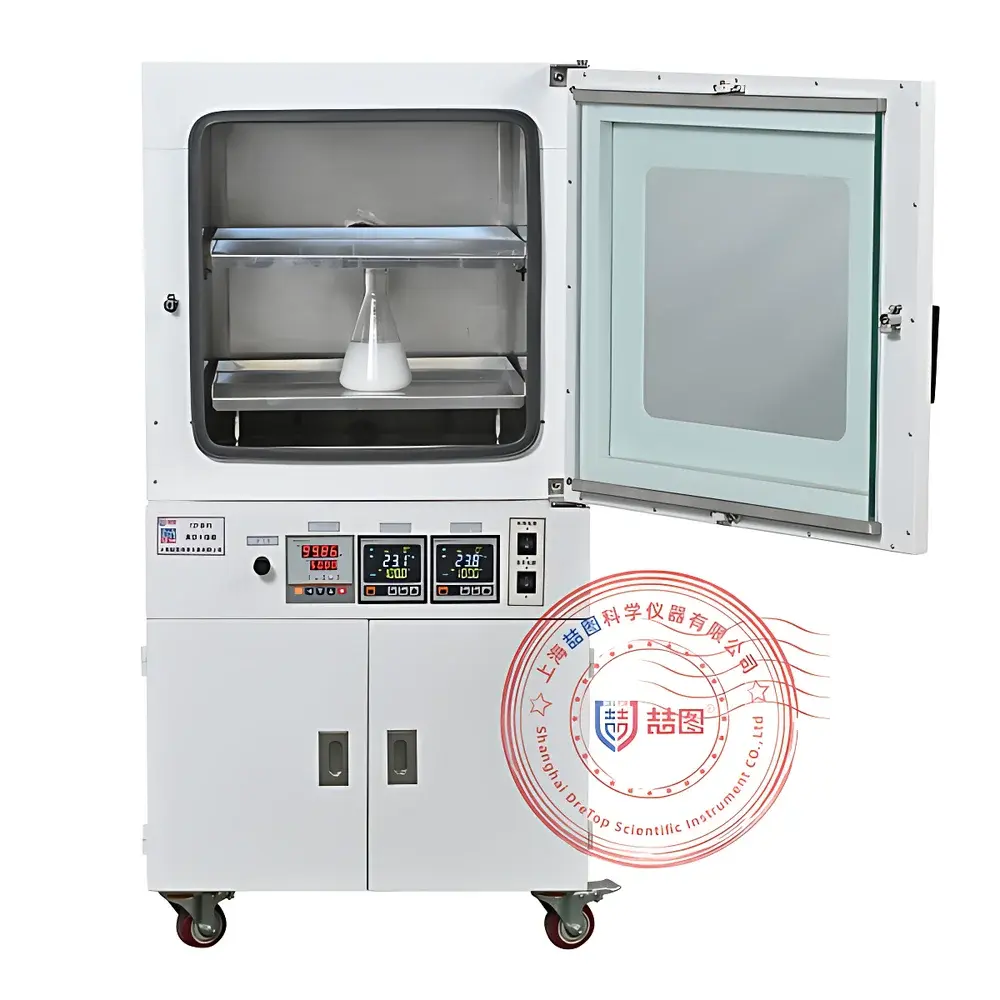
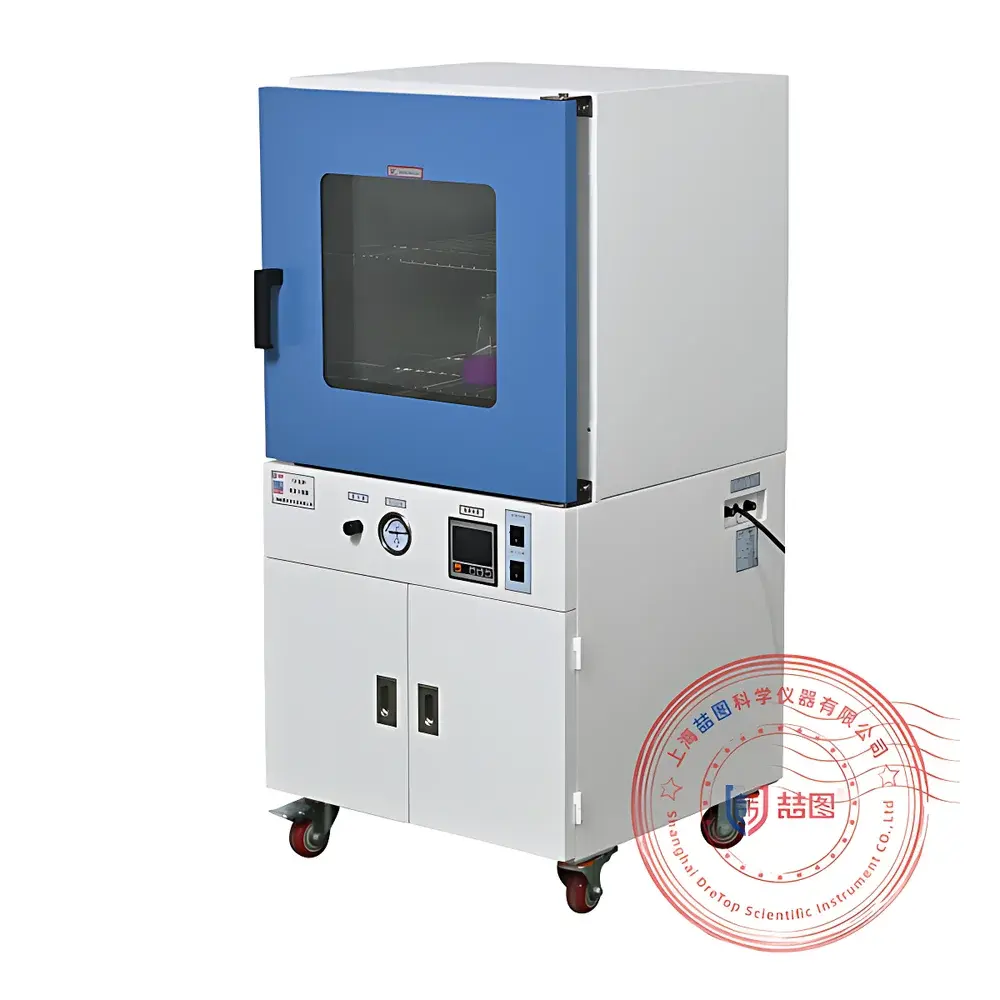
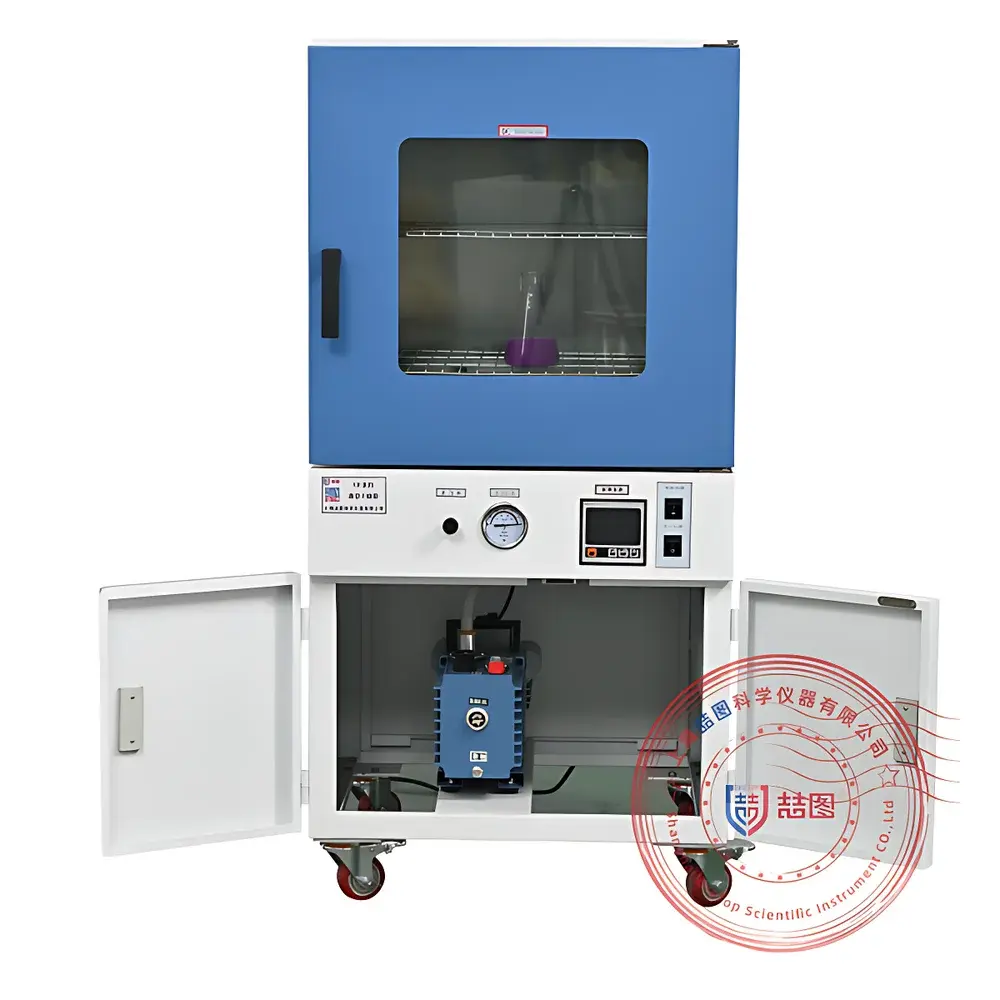
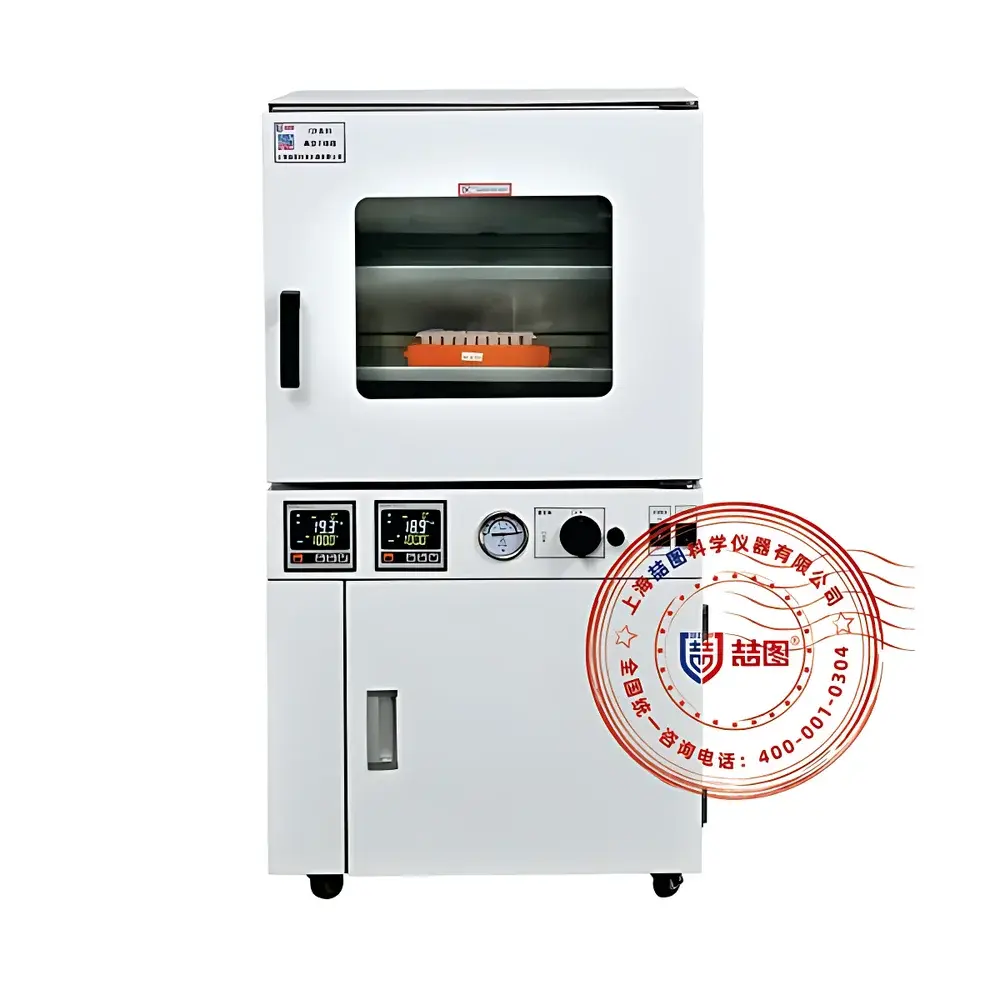
DRETOP TNF-6090LVP Vertical Vacuum Drying Oven
| Brand | DRETOP |
|---|---|
| Origin | Shanghai, China |
| Manufacturer Type | Direct Manufacturer |
| Product Category | Domestic |
| Model | TNF-6090LVP |
| Instrument Type | Vacuum Oven |
| Temperature Range | RT+10 to 250 °C |
| Temperature Uniformity | ±1 °C |
| Temperature Fluctuation | ±0.5 °C |
| Temperature Resolution | 0.1 °C |
| Vacuum Degree | ≤133 Pa |
| Internal Chamber Dimensions | 450 × 450 × 450 mm |
| External Dimensions | 641 × 701 × 1250 mm |
| Inner Chamber Material | 304 Stainless Steel |
| Heating Method | Internal Heating |
| Working Environment Temperature | RT+10 to 250 °C |
| Insulation Material | Glass Fiber |
| Safety Protections | Over-temperature alarm, over-current protection, short-circuit protection, power failure data retention |
Overview
The DRETOP TNF-6090LVP is a vertically oriented, internally heated vacuum drying oven engineered for precision thermal processing under controlled low-pressure environments. It operates on the fundamental principle of reducing ambient pressure—via integrated vacuum interface compatibility—to lower the boiling point of solvents and moisture, thereby enabling gentle, oxidation-free drying of thermally sensitive, hygroscopic, or chemically reactive materials. Unlike conventional convection ovens, this system eliminates convective heat transfer and atmospheric oxygen exposure, making it indispensable for applications where sample integrity, compositional stability, and residual solvent removal are critical. The TNF-6090LVP is designed for laboratory-scale R&D, QC/QA validation, and pilot-scale production in regulated environments—including semiconductor packaging, lithium-ion battery electrode conditioning, optical component degassing, and pharmaceutical active ingredient stabilization.
Key Features
- Internal heating architecture: Heating elements are embedded beneath stainless-steel shelves, delivering rapid thermal response, uniform heat distribution (±1 °C), and precise temperature control (±0.5 °C fluctuation) across the 90 L chamber volume.
- High-integrity vacuum sealing: Dual-stage rotary latch mechanism with reinforced silicone gasket ensures consistent vacuum integrity down to ≤133 Pa—classified as low vacuum per ISO 27874—and minimizes leakage during extended hold cycles.
- Intelligent microprocessor control: PID-based digital temperature controller with 0.1 °C resolution, programmable timer (1–9999 minutes), and dual-limit over-temperature protection compliant with IEC 61000-4-2 EMC standards.
- Robust chamber construction: 304 stainless-steel interior (electropolished finish optional), cold-rolled steel exterior with electrostatic powder coating, and multi-layer glass-fiber insulation for thermal efficiency and energy conservation.
- Real-time operational diagnostics: Integrated self-diagnostic system displays fault codes (e.g., E01 = sensor open circuit, E02 = heater failure) directly on the LCD interface, supporting GLP-aligned maintenance logging.
Sample Compatibility & Compliance
The TNF-6090LVP accommodates diverse sample formats—including wafers, coated substrates, gel matrices, powdered APIs, and porous ceramics—without mechanical agitation or airflow-induced displacement. Its vacuum-compatible chamber geometry (450 × 450 × 450 mm) supports standardized DIN/ISO sample trays and custom fixtures. The system meets essential safety and electromagnetic compatibility requirements per GB/T 14710 (Chinese national standard for environmental testing of medical electrical equipment) and aligns with general-purpose laboratory equipment provisions under ISO/IEC 17025:2017 for method validation. While not inherently FDA 21 CFR Part 11–compliant, its data logging interface (RS485 optional) enables integration into validated systems when paired with compliant software platforms supporting audit trails and electronic signatures.
Software & Data Management
The standard configuration includes an embedded LCD controller with real-time display of chamber temperature, setpoint, elapsed time, and vacuum status (via external gauge). Optional upgrades include a color touchscreen HMI with programmable multi-step profiles (ramp-hold-cool sequences), USB data export (CSV format), and RS485 Modbus RTU communication for SCADA-level integration. When equipped with the optional embedded printer, users generate hard-copy records traceable to batch ID, operator code, and timestamp—supporting ISO 9001 documentation requirements. All firmware adheres to IEC 62443-3-3 cybersecurity baseline practices for industrial control devices.
Applications
- Electronics manufacturing: Degassing of encapsulants, curing of underfill adhesives, and moisture removal from PCB assemblies prior to conformal coating.
- Battery R&D: Electrode drying under inert gas purge (optional N₂ inlet valve) to prevent LiCoO₂ decomposition and ensure Coulombic efficiency reproducibility.
- Pharmaceutical development: Solvent residue reduction in lyophilized intermediates per USP , and thermal stabilization of monoclonal antibody formulations.
- Materials science: Outgassing of metal-organic frameworks (MOFs), activation of catalyst supports, and pre-treatment of aerogel precursors.
- Academic research: Controlled dehydration of biological tissues for SEM sample preparation, and low-temperature polymer crosslinking without chain scission.
FAQ
What vacuum pump is recommended for optimal performance with the TNF-6090LVP?
A corrosion-resistant diaphragm vacuum pump (e.g., DRETOP VGM-24, ultimate vacuum ≤5 Pa) is recommended for solvent-laden or acidic vapor applications; for general-purpose use, a 2L/s rotary vane pump (V-20 series) achieves ≤133 Pa within 12 minutes.
Can inert gas purging be integrated into the drying cycle?
Yes—the optional inert gas inlet valve (standard NPT 1/4″ port) allows controlled nitrogen or argon backfilling between vacuum cycles, mitigating oxidation during cooling phases.
Is the chamber suitable for sterilization or depyrogenation protocols?
No—this model is not rated for steam sterilization (SAL 10⁻⁶) or dry-heat depyrogenation (≥250 °C for ≥30 min); for such applications, refer to DRETOP’s dedicated hot-air sterilizers (e.g., SHP series).
How is temperature uniformity validated across the working volume?
Per ASTM E2207–22, DRETOP provides a factory calibration certificate documenting 9-point mapping at 100 °C and 200 °C using NIST-traceable PT100 sensors; users may perform periodic verification with calibrated thermocouples.
Does the unit support remote monitoring via Ethernet or Wi-Fi?
Not natively—but the RS485 interface enables protocol translation to TCP/IP via industrial gateways (e.g., Moxa EDS-G205), permitting integration into LabVantage or Thermo Fisher SampleManager LIMS environments.



