
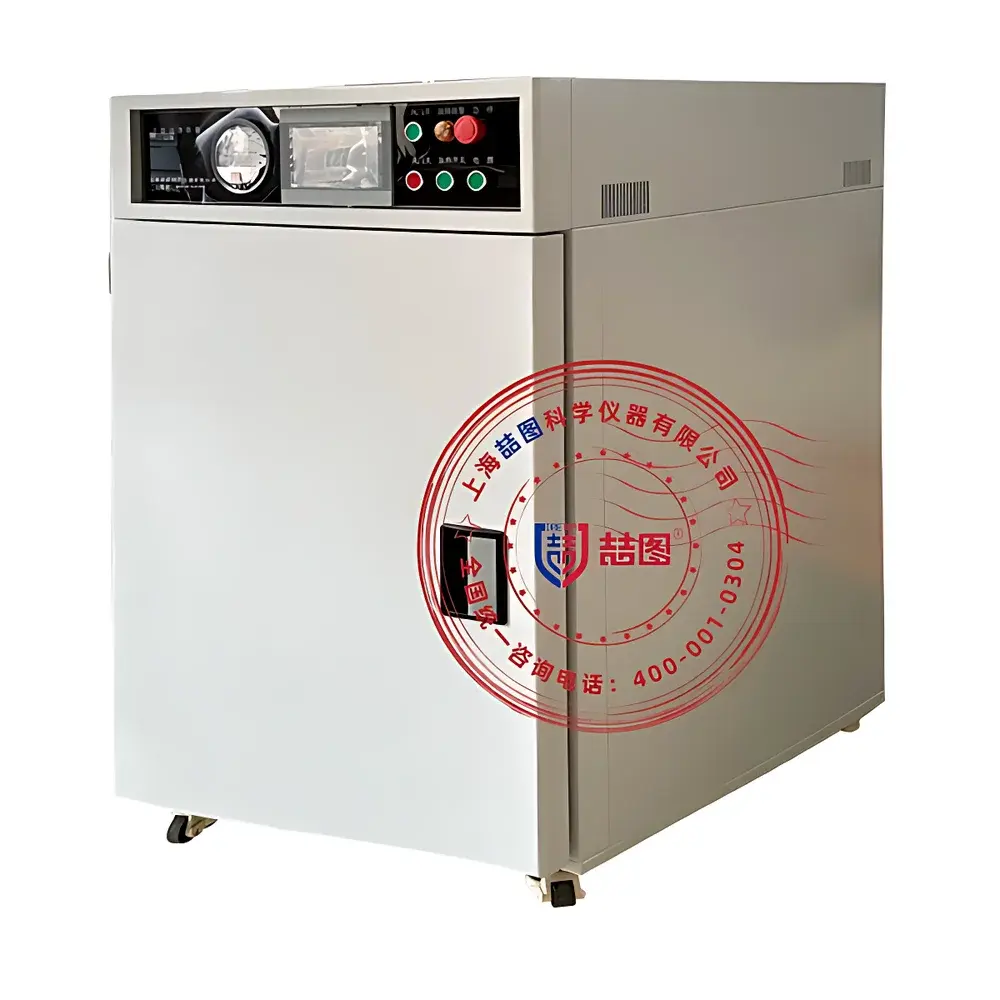
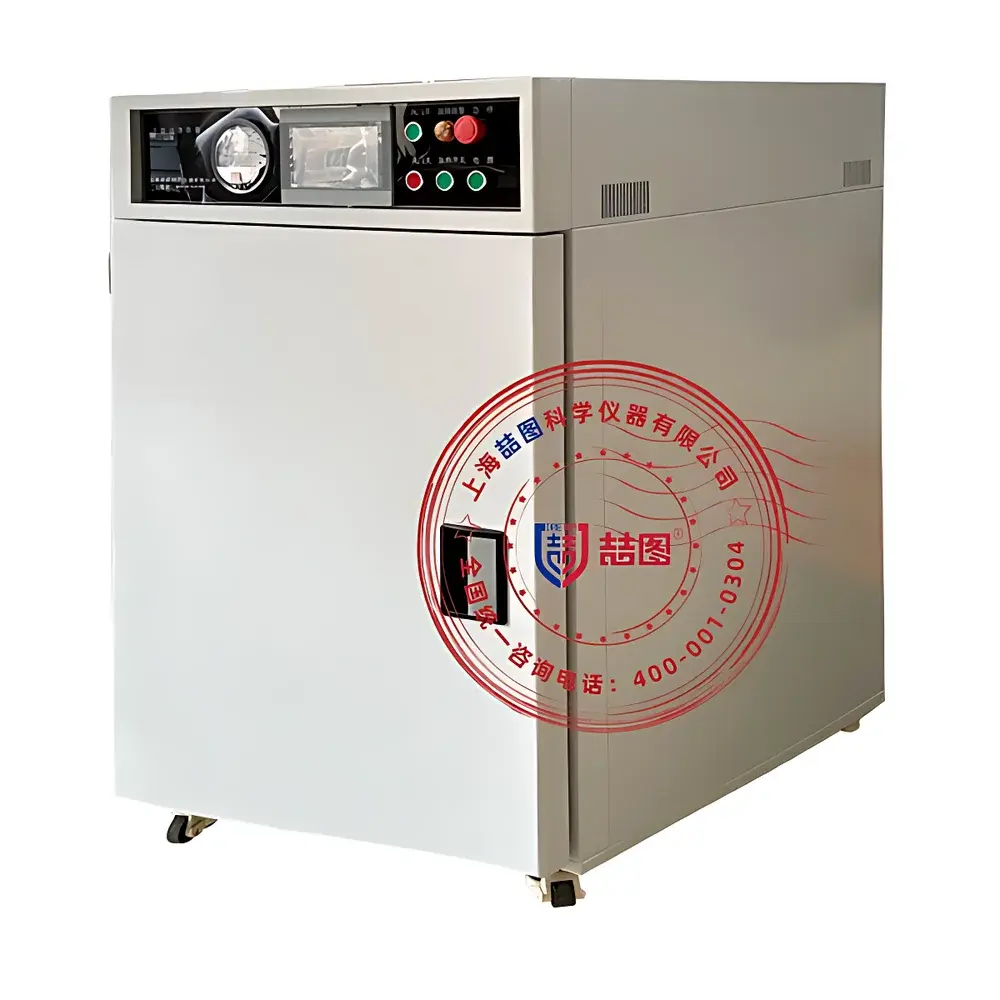
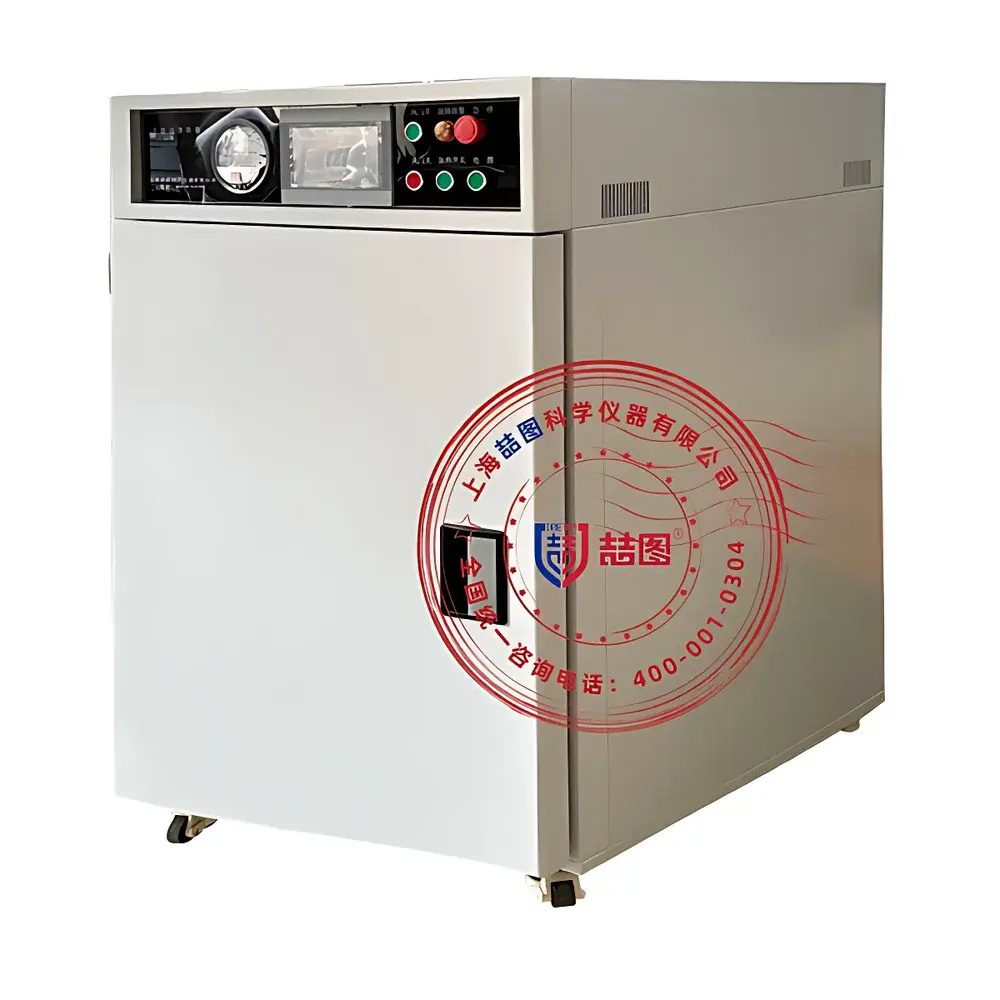
DRETOP TBJ-270 Class 100 Cleanroom Drying Oven
| Brand | DRETOP |
|---|---|
| Origin | Shanghai, China |
| Manufacturer Type | Direct Manufacturer |
| Product Category | Domestic |
| Model | TBJ-270 |
| Instrument Type | Precision Cleanroom Oven |
| Temperature Range | RT+50 °C to 250 °C |
| Temperature Fluctuation | ≤ ±1 °C |
| Control Range | RT+50 °C to 250 °C |
| Interior Dimensions (W×D×H) | 600 × 500 × 900 mm |
| Operating Ambient Temperature | 5–45 °C |
| Interior Material | ASTM A240 Type 316 Stainless Steel |
| Heating Method | Forced-air Circulation with Helical Airflow Path |
| Temperature Uniformity | ±2.5% of setpoint (per ISO 14644-3 Annex B, at 120 °C steady state) |
| Filtration | H14 HEPA (EN 1822-1), ≥99.995% @ 0.3 µm |
| Cleanroom Classification | ISO Class 5 (FS209E Class 100) |
| Power Supply | AC 380 V / 50 Hz |
| Rated Power | 5.5 kW |
| Volume | 270 L |
| Shelf Load Capacity | <15 kg (customizable to ≥15 kg) |
| Timer Range | 1–9999 min |
| Compliance | ISO 14644-1, SEMI S2/S8, GMP Annex 1 (draft), FDA 21 CFR Part 11 (with audit trail option) |
Overview
The DRETOP TBJ-270 Class 100 Cleanroom Drying Oven is an ISO 14644-1 compliant precision thermal processing system engineered for applications demanding simultaneous control of temperature, particulate contamination, and atmospheric integrity. Unlike conventional drying ovens, the TBJ-270 integrates a continuous positive-pressure forced-air circulation architecture with certified H14 high-efficiency particulate air (HEPA) filtration—maintaining sustained ISO Class 5 (FS209E Class 100) cleanliness (≤100 particles ≥0.5 µm per cubic foot) throughout thermal operation. Its core measurement and control principle relies on closed-loop PID-regulated resistive heating combined with real-time airflow velocity profiling and differential pressure monitoring across the filter bank. This enables reproducible thermal treatment of sensitive substrates—including semiconductor wafers, photomasks, optical components, and sterile pharmaceutical intermediates—without compromising surface purity or dimensional stability. Designed for integration into controlled environments (e.g., cleanrooms ISO Class 5–7), it meets the baseline environmental requirements of semiconductor front-end fabrication, biopharmaceutical lyophilization support, and advanced materials R&D labs where residual organic volatiles or metallic particulates must be minimized below detection thresholds.
Key Features
- ISO Class 5-certified cleanroom performance: Maintains ≤100 particles/ft³ (≥0.5 µm) under dynamic thermal load via H14 HEPA filter (EN 1822-1, efficiency ≥99.995% @ 0.3 µm) and continuous positive-pressure airflow (≥20 Pa internal over ambient).
- High-fidelity thermal control: 7-inch color touchscreen interface with auto-tuning PID algorithm; temperature fluctuation ≤±1 °C and uniformity ±2.5% of setpoint (validated per ISO 14644-3 Annex B at 120 °C).
- Corrosion-resistant chamber: Interior constructed from full-welded ASTM A240 Type 316 stainless steel with electropolished finish; external enclosure coated with epoxy-polyester electrostatic powder coating.
- Engineered airflow management: Helical duct design and tangential centrifugal blower ensure laminarized recirculation, minimizing dead zones and enabling rapid particle clearance (<3 min to 90% particle reduction post-door opening).
- Regulatory-ready software architecture: Optional 21 CFR Part 11 compliance package includes three-tier user access (Operator/Supervisor/Admin), electronic signatures, immutable audit trail, and timestamped event logging (power loss, door open, alarm trigger, parameter change).
- Integrated safety redundancy: Dual independent temperature sensors (PT100), overtemperature cut-off relay, phase-loss detection, motor thermal protection, earth leakage circuit breaker, and automatic fault-code display with diagnostic guidance.
Sample Compatibility & Compliance
The TBJ-270 accommodates non-volatile, non-explosive samples requiring inert, low-particulate thermal exposure—including silicon wafers pre- and post-lithography, lithium niobate optical waveguides, OLED encapsulation substrates, sterile API powders, and calibration standards for surface metrology. It complies with ISO 14644-1:2015 (Class 5), SEMI F1-0220 (for semiconductor tool environments), and EU GMP Annex 1 (2022 draft) provisions for clean process equipment. While not intrinsically rated for hazardous locations, its design excludes ignition sources and conforms to IEC 61000-6-2/6-4 for electromagnetic compatibility in laboratory settings. Chamber volume (270 L) and shelf loading capacity (<15 kg standard, customizable) support batch processing of ISO 3–5 carrier trays and SMIF pods.
Software & Data Management
The embedded controller supports local data capture of temperature setpoint, actual chamber temperature, filter differential pressure, cycle time, and operator ID. All operational events—including door openings, alarm activations, and parameter modifications—are time-stamped and stored in non-volatile memory for ≥12 months. USB export (CSV format) enables traceable data transfer to LIMS or MES platforms. Optional RS-485 Modbus RTU interface permits bidirectional communication with centralized lab automation systems. When configured with audit-trail firmware, the system records user actions with cryptographic hashing to satisfy FDA 21 CFR Part 11 Subpart C requirements for electronic records and signatures.
Applications
- Semiconductor manufacturing: Pre-bake and post-exposure hard bake of photoresist-coated wafers; dehydration of MEMS devices; outgassing of quartz and sapphire substrates prior to thin-film deposition.
- Biopharmaceutical development: Low-oxygen drying of lyophilized vaccine intermediates; thermal conditioning of sterile filter housings and filling line components.
- Advanced optics: Stress-relief annealing of fused silica lenses; moisture removal from anti-reflective coatings without inducing micro-cracking.
- Materials science: Solvent-free curing of ceramic precursors; thermal aging of polymer composites under controlled particulate conditions.
- Calibration laboratories: Stabilization of reference standards (e.g., platinum resistance thermometers, mass standards) prior to metrological evaluation.
FAQ
What cleanroom classification does the TBJ-270 maintain during operation?
It sustains ISO Class 5 (FS209E Class 100) cleanliness continuously under thermal load, verified by upstream/downstream particle counters per ISO 14644-3 protocols.
Can the oven be validated per IQ/OQ/PQ protocols?
Yes—DRETOP provides URS-aligned validation documentation packages, including sensor calibration certificates (NIST-traceable PT100s), airflow mapping reports, and temperature mapping templates compliant with ASTM E2297 and EU GMP Annex 15.
Is the interior compatible with aggressive solvents or acidic vapors?
The 316 stainless steel chamber resists mild organic solvents and diluted acids; however, prolonged exposure to halogenated compounds or concentrated HF requires custom passivation or alternative chamber lining.
Does the system support remote monitoring via Ethernet or Wi-Fi?
Standard configuration includes RS-485; optional Ethernet/Wi-Fi gateway modules enable secure TLS-encrypted remote status viewing and alarm notification via SNMP or REST API.
How is filter integrity monitored?
Differential pressure across the H14 filter is continuously measured; deviation >25% from baseline triggers visual/audible alert and logs event to audit trail; scheduled integrity testing (DOP/PAO scan) is supported per ISO 14644-3.
Related Products



