
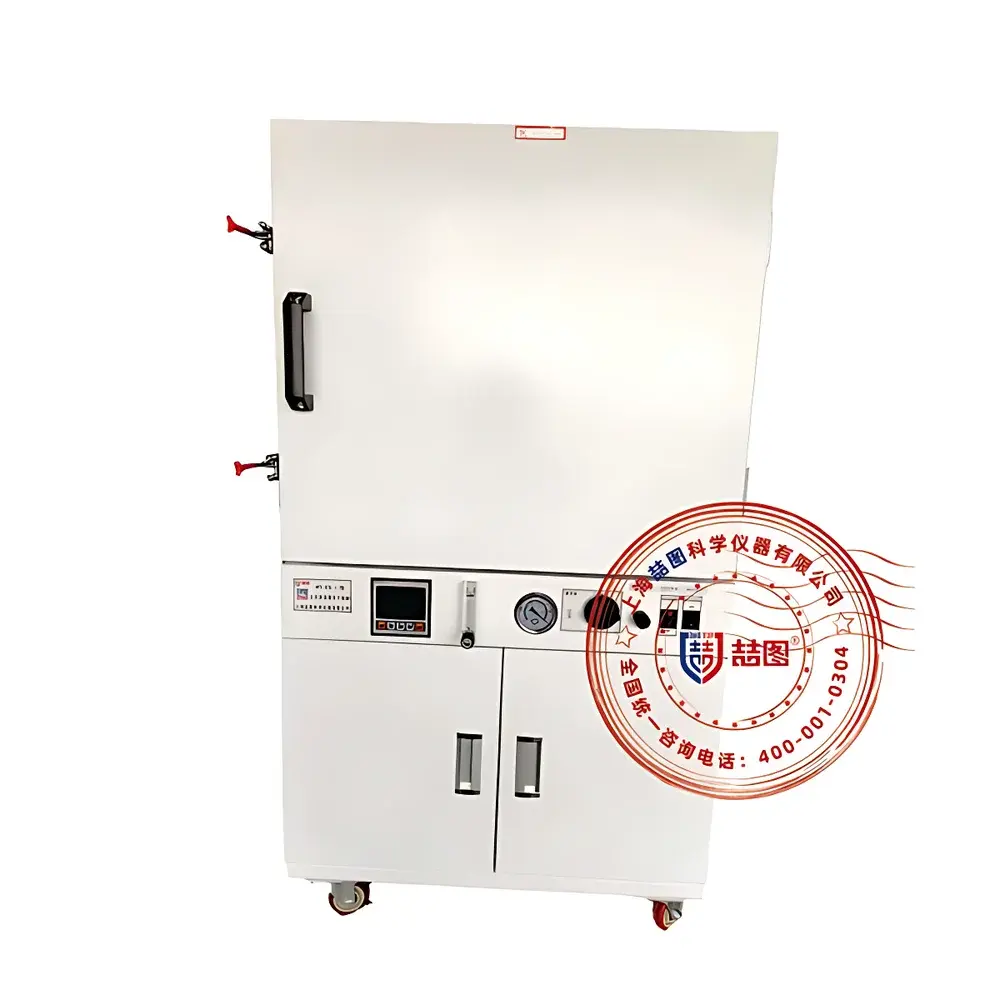
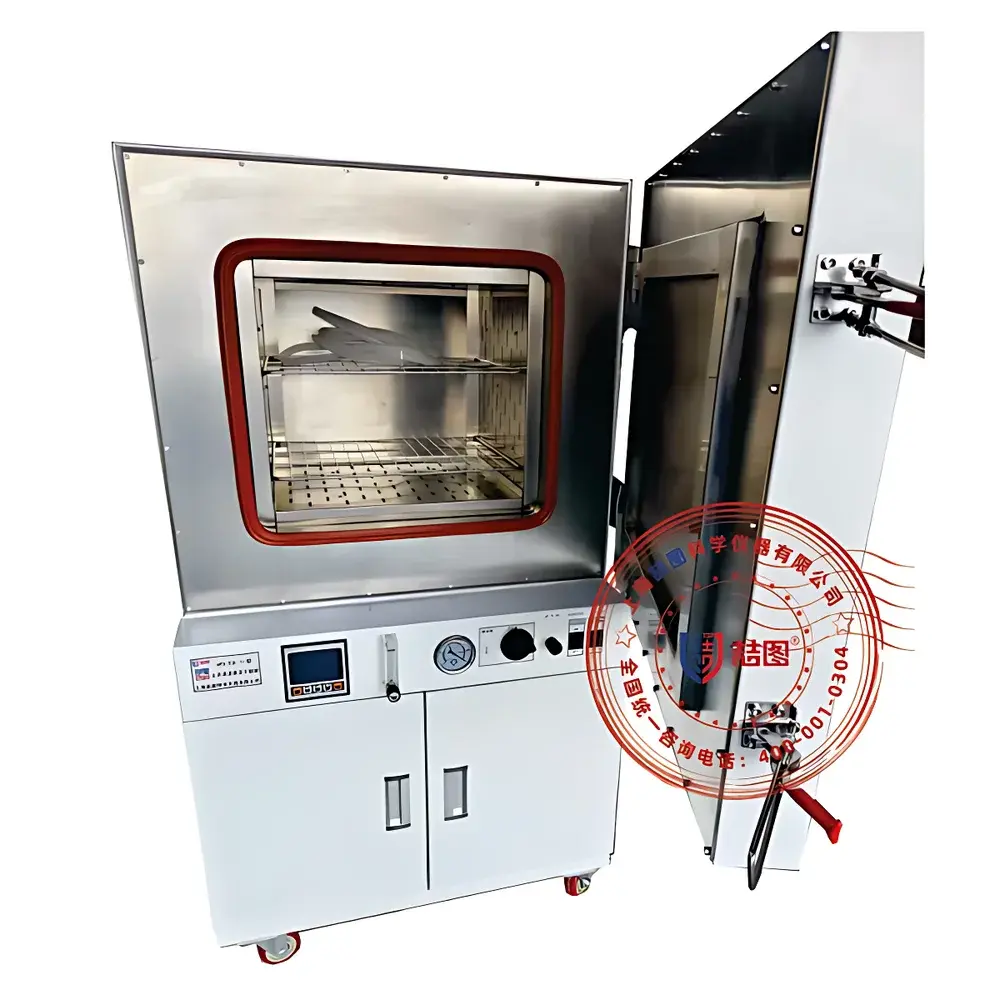
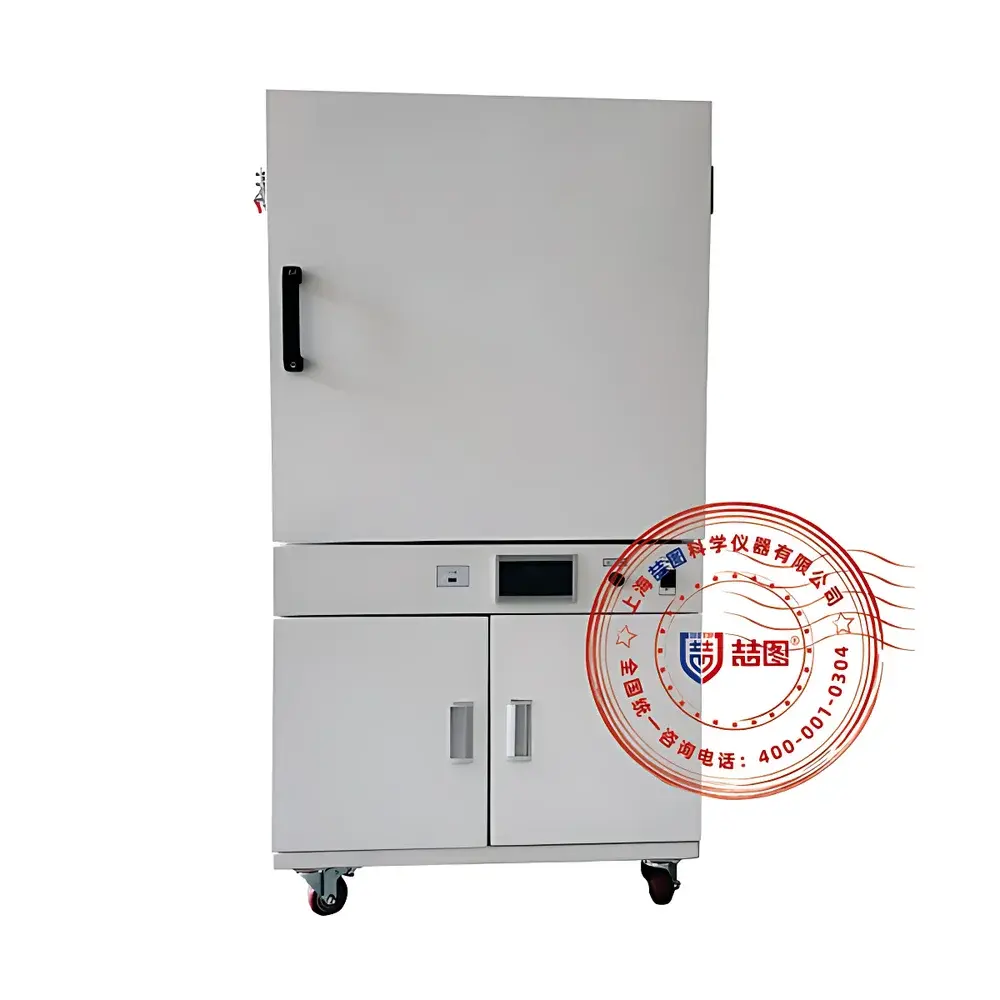
DRETOP TUF-6050LV Vertical Vacuum Drying Oven
| Brand | DRETOP |
|---|---|
| Origin | Shanghai, China |
| Manufacturer Type | Direct Manufacturer |
| Model | TUF-6050LV |
| Temperature Range | RT+10°C to 300°C |
| Temperature Fluctuation | ±0.5°C |
| Chamber Dimensions (W×D×H) | 415 × 370 × 345 mm |
| External Dimensions (W×D×H) | 710 × 550 × 550 mm |
| Temperature Resolution | 0.1°C |
| Operating Ambient Temperature | 5–45°C |
| Interior Material | 304 Stainless Steel |
| Heating Method | Internal Heated Wall (Direct Conduction + Proximity Radiation) |
| Temperature Uniformity | ±2.5°C |
| Vacuum Level | ≤133 Pa (achievable with standard included rotary vane pump) |
Overview
The DRETOP TUF-6050LV Vertical Vacuum Drying Oven is an engineered solution for low-temperature, oxygen-sensitive thermal processing of heat-labile and oxidation-prone materials. It operates on the principle of vacuum-assisted boiling point depression: by reducing internal chamber pressure to ≤133 Pa, the vaporization temperature of solvents and moisture is significantly lowered—enabling effective drying at temperatures as low as 30°C to 80°C for biological samples or up to 300°C for robust industrial compounds. Unlike conventional convection ovens, the TUF-6050LV employs internal heating—where resistive elements are integrated directly into the 304 stainless steel chamber walls—ensuring efficient conductive and near-field radiative heat transfer even under high vacuum, where convective heat transfer is negligible. This architecture eliminates surface hardening, thermal gradients, and residual solvent trapping commonly observed in jacket-heated or forced-air systems under vacuum.
Key Features
- Internal heating system with embedded heating elements in 304 stainless steel chamber walls—optimized for uniform thermal delivery under vacuum conditions
- PID-based digital temperature controller with 0.1°C resolution and ±0.5°C stability over time, supporting both manual setpoint operation and optional multi-segment programmable ramp-soak profiles
- Robust vacuum integrity: chamber designed for leak-tight operation; compatible with standard rotary vane vacuum pumps (included) to achieve ≤133 Pa base pressure
- Dual safety architecture: independent over-temperature cut-off (mechanical and electronic), real-time vacuum loss alarm, and pressure-relief safety valve compliant with EN 61000-6-3 EMC requirements
- Ergonomic vertical design with front-loading double-layer tempered glass door and silicone gasket seal—facilitates rapid sample loading/unloading while minimizing ambient air ingress during operation
- Chamber volume of 50 L (415 × 370 × 345 mm), accommodating up to one adjustable 304 stainless steel shelf (standard configuration), with load capacity suitable for R&D-scale batches or QC validation runs
Sample Compatibility & Compliance
The TUF-6050LV supports diverse sample types requiring inert, low-oxygen, or sub-atmospheric thermal treatment—including pharmaceutical granules, lyophilized biologics intermediates, microelectronic substrates, catalyst precursors, polymer composites, and microbial culture stocks. Its stainless steel interior meets ISO 14644-1 Class 8 cleanroom compatibility for post-sterilization drying of labware. While not certified for GMP production, its operational repeatability (±0.5°C control stability, ±2.5°C spatial uniformity), audit-ready temperature logging (via optional RS485 interface), and configurable process parameters align with GLP documentation standards and support FDA 21 CFR Part 11-compliant data integrity when paired with validated third-party software. The unit complies with IEC 61010-1:2010 for laboratory electrical equipment safety and CE marking requirements for electromagnetic compatibility and low-voltage directive conformity.
Software & Data Management
The standard control interface includes a backlit LCD display with intuitive menu navigation, real-time temperature/vacuum readout, and timer function (1–9999 minutes). Optional upgrades include an RS485 serial port enabling integration with SCADA systems or PC-based data acquisition platforms (e.g., LabVIEW, MATLAB, or custom Python scripts) for time-stamped logging of temperature, elapsed time, and vacuum status. Programmable temperature profiles allow up to 32 segments per cycle—supporting complex drying protocols such as gradual ramping to remove volatile solvents, isothermal hold for moisture equilibration, and controlled cooldown under vacuum to prevent rehydration. All logged data can be exported in CSV format for traceability, trending analysis, and regulatory submission preparation.
Applications
- Pharmaceutical R&D: Low-temperature drying of enzyme formulations, vaccine adjuvants, and peptide APIs to preserve conformational integrity and bioactivity
- Materials Science: Solvent removal from nanoparticle dispersions, metal-organic frameworks (MOFs), and battery electrode slurries without thermal decomposition
- Electronics Manufacturing: Degassing and curing of encapsulants, dielectrics, and conformal coatings on PCBs and MEMS devices
- Food & Biotechnology: Concentration and stabilization of probiotic cultures, fermentation broths, and natural extracts without Maillard reaction or enzymatic degradation
- Quality Control Labs: Residual moisture determination per ASTM E1868–22, accelerated stability testing under reduced-pressure conditions, and sterilized-glassware drying per USP
FAQ
What vacuum level can the TUF-6050LV achieve with the included pump?
With the supplied single-stage rotary vane pump, the chamber reaches ≤133 Pa (1 Torr) within 15–20 minutes under standard ambient conditions.
Is inert gas purging supported?
Yes—optional inert gas inlet valves (N₂ or Ar) are available for backfilling or dynamic purge cycles to further suppress oxidation during heating or cooling phases.
Can the oven operate continuously at 300°C under vacuum?
Yes—the chamber and sealing system are rated for continuous operation across the full RT+10°C to 300°C range at ≤133 Pa, provided ambient cooling airflow is maintained per installation guidelines.
How is temperature uniformity verified and maintained?
Uniformity is ensured via symmetric internal heater distribution and calibrated PID tuning; users may validate performance using NIST-traceable PT100 probes placed at nine standardized locations per ISO 17025 dry-block mapping procedures.
Does the unit support 21 CFR Part 11 compliance?
The base instrument provides timestamped event logs; full Part 11 compliance requires integration with validated third-party electronic lab notebook (ELN) or LIMS software that enforces user authentication, audit trails, and electronic signatures.



