
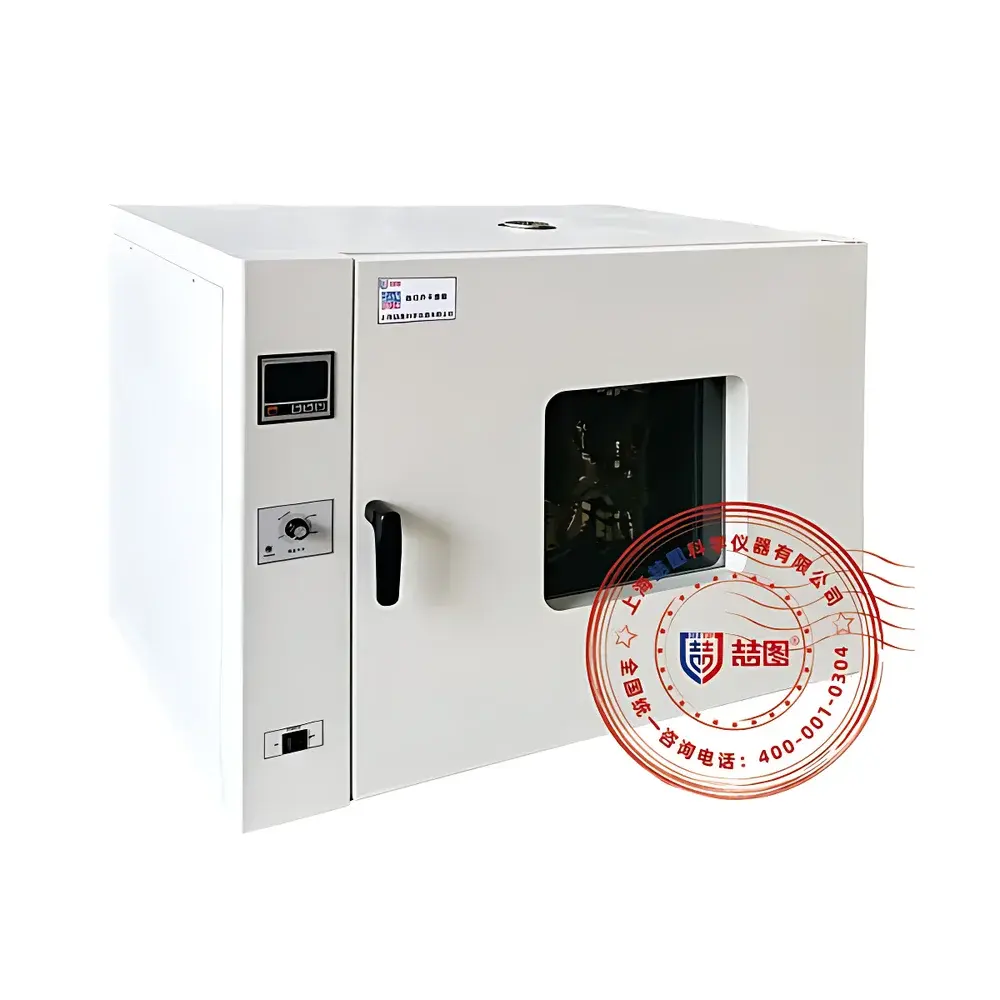
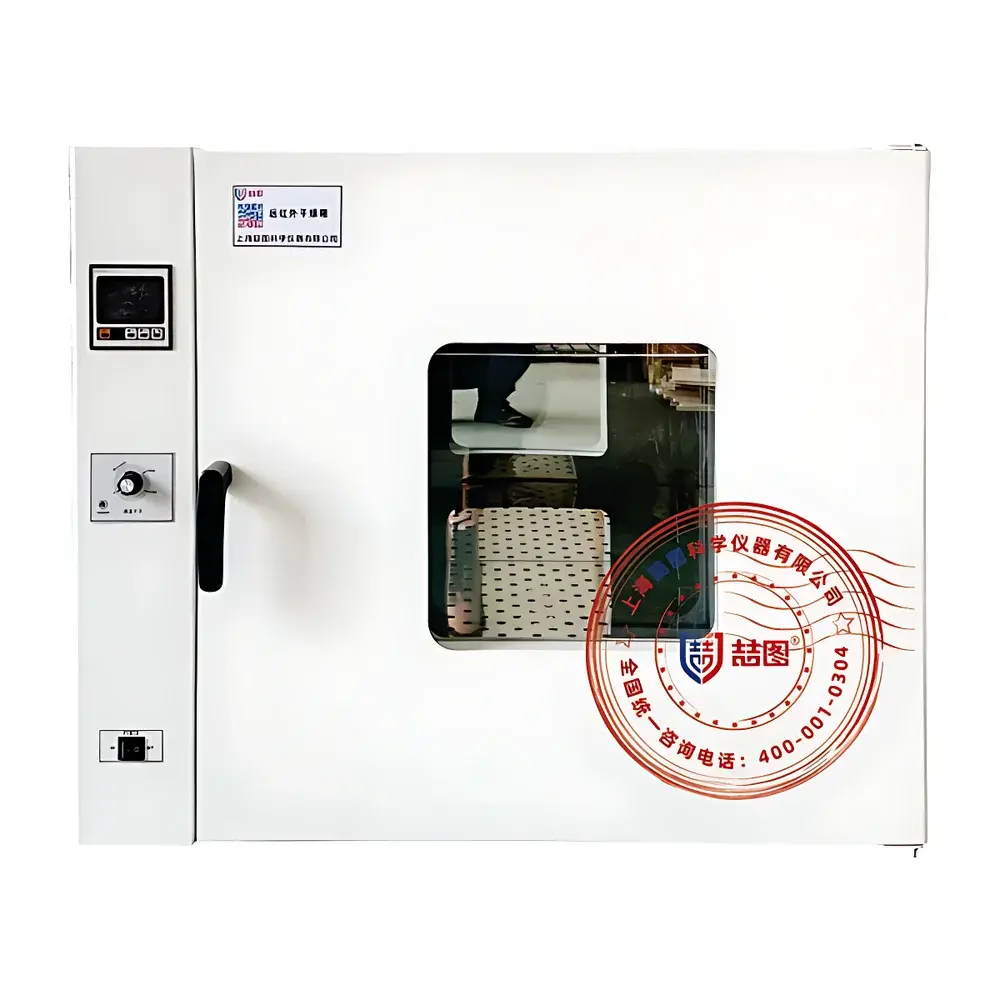
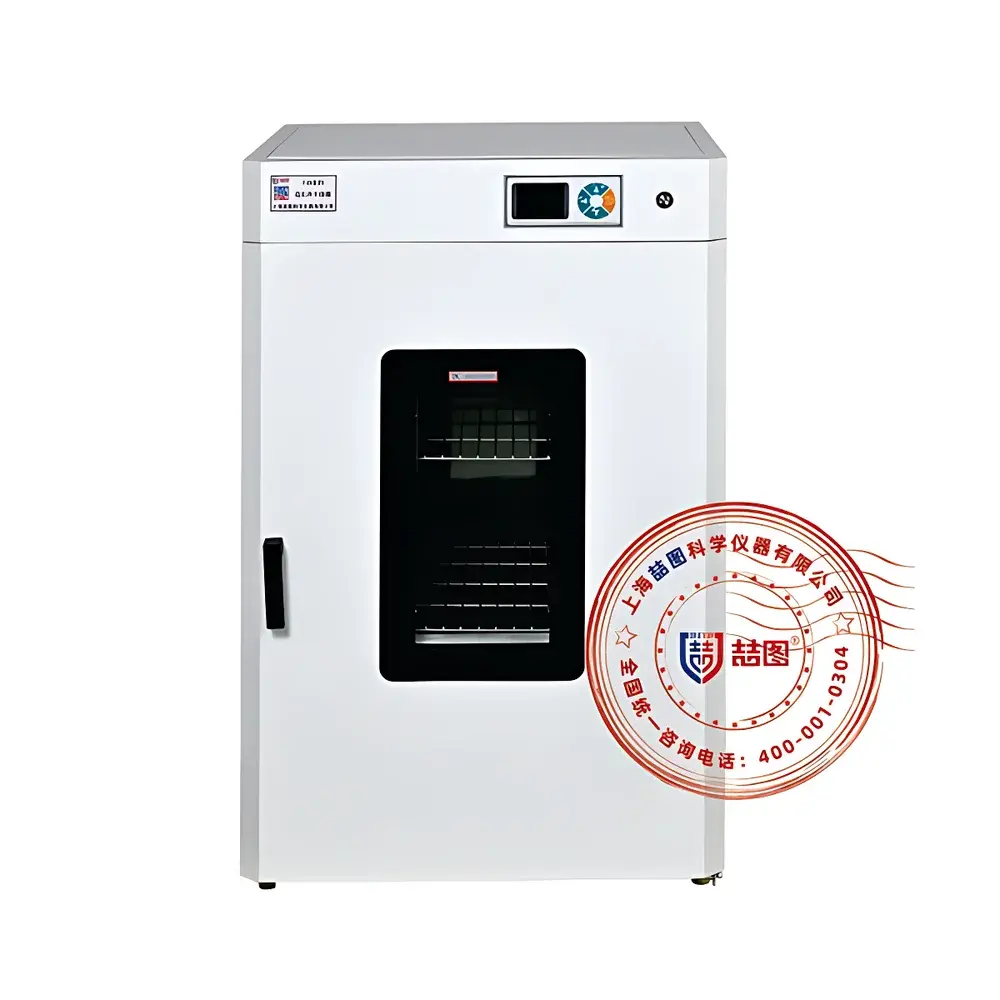
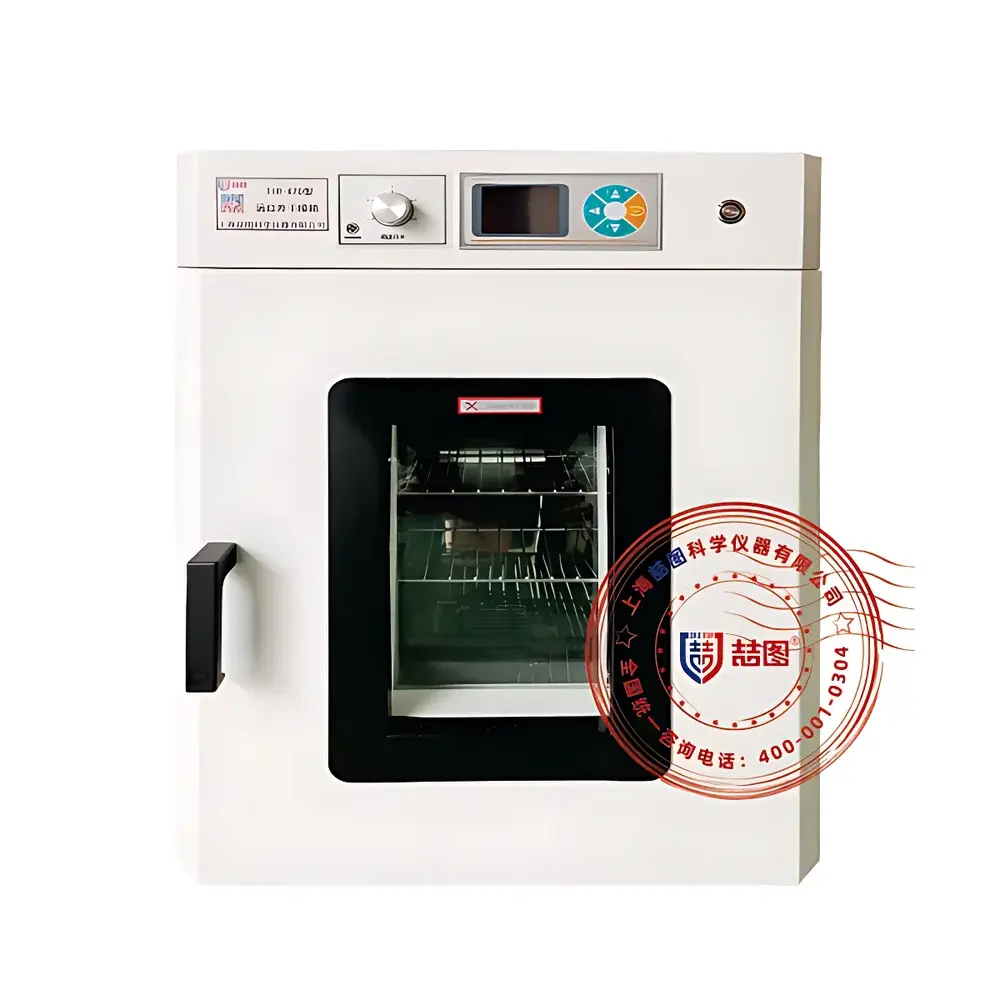
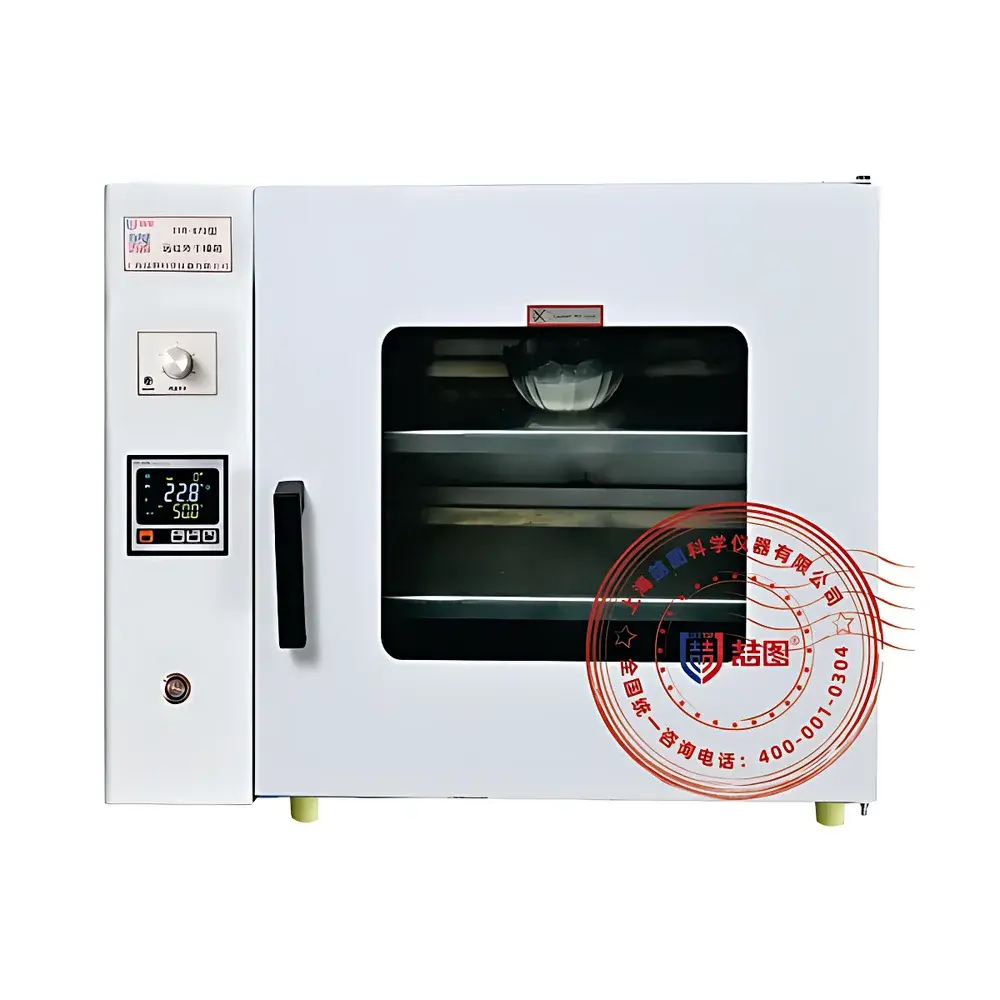
DRETOP TIR-36BP Far-Infrared Drying Oven
| Brand | DRETOP |
|---|---|
| Origin | Shanghai, China |
| Manufacturer Type | Direct Manufacturer |
| Product Category | Domestic |
| Model | TIR-36BP |
| Instrument Type | General-Purpose Drying Oven |
| Temperature Range | RT + 10°C to 300°C |
| Temperature Fluctuation | ±1°C |
| Internal Chamber Dimensions | 350 × 300 × 350 mm (W × D × H) |
| Temperature Resolution | 0.1°C |
| Operating Ambient Temperature | 5–45°C |
| Interior Material | Stainless Steel |
| Heating Method | Far-Infrared Radiant Heating |
| Temperature Uniformity | ±2.5°C (at 100°C, with forced-air circulation) |
| Power Supply | AC 220 V, 50 Hz |
| Input Power | 2100 W |
| Nominal Volume | 36 L |
| Standard Shelving | 2 Adjustable Stainless Steel Trays |
| Timer Range | 1–9999 min |
| Safety Features | Overtemperature Cut-off, Leakage Protection, Short-Circuit Protection, Thermal Overload Protection, Data Retention on Power Failure |
| Optional Accessories | USB Data Export Interface, Programmable Multi-Stage Controller, RS-485 Communication Port, Thermal Printer Interface, Color Touchscreen Upgrade, Calibration Test Port |
Overview
The DRETOP TIR-36BP Far-Infrared Drying Oven is a precision-engineered laboratory drying system designed for applications requiring rapid, uniform thermal processing without mechanical disturbance to delicate or particulate samples. Unlike conventional convection ovens that rely solely on forced air circulation—often compromising the integrity of powders, granules, or thin-film specimens—the TIR-36BP integrates far-infrared (FIR) radiant heating as its primary thermal energy transfer mechanism. FIR radiation (wavelength range: ~3–1000 µm) enables direct molecular excitation within the sample, resulting in faster heat penetration, reduced thermal inertia, and minimized surface turbulence. A variable-speed axial fan supports optional forced-air mode for enhanced temperature homogeneity while remaining fully deactivatable to preserve sample positioning—making this oven uniquely suited for moisture content analysis, polymer curing, pharmaceutical stability testing, botanical drying, and pre-weighing desiccation protocols where sample dispersion must be avoided.
Key Features
- Far-infrared heating elements with silicon-controlled rectifier (SCR) or solid-state relay (SSR) power regulation ensure precise, low-inertia thermal response and stable setpoint maintenance.
- Microprocessor-based PID temperature controller with digital LCD display (three-color backlight), real-time deviation monitoring, and self-diagnostic fault code reporting (e.g., E01 = sensor open circuit; E02 = overtemperature).
- Adjustable forced-air circulation system with infinitely variable fan speed control—from zero airflow (radiant-only mode) to optimized convection—enabling method-specific thermal profiles per ASTM D1654 (coating drying) or ISO 554 (standard atmospheres for conditioning).
- 3D-refractive thermal field design: strategically angled internal reflectors and optimized chamber geometry promote multi-directional infrared reflection, improving spatial temperature uniformity across the entire 36 L working volume.
- Robust construction featuring electrophoretically coated cold-rolled steel exterior, 1.2 mm thick 304 stainless steel interior chamber, and high-temperature silicone rubber door gasket rated to 350°C for long-term sealing integrity and minimal heat leakage.
- Large-view tempered glass observation window with double-layer thermal insulation allows non-intrusive visual monitoring without thermal loss or condensation interference.
Sample Compatibility & Compliance
The TIR-36BP accommodates diverse sample formats—including Petri dishes, crucibles, aluminum weighing pans, glass vials, and ceramic boats—within its 350 × 300 × 350 mm stainless steel chamber. Its dual-mode operation (radiant-only or radiant + adjustable convection) ensures compatibility with thermally sensitive biological matrices (e.g., lyophilized enzymes), fine powders (e.g., catalysts, APIs), and hygroscopic materials (e.g., clays, silica gels). The unit complies with general safety requirements outlined in IEC 61010-1:2010 (Safety Requirements for Electrical Equipment for Measurement, Control, and Laboratory Use) and meets electromagnetic compatibility standards per EN 61326-1. While not certified for Class I Div 1 hazardous locations, it supports GLP-compliant workflows through configurable alarm thresholds, parameter memory retention (up to 72 hr backup during power interruption), and optional audit-trail-capable controllers aligned with FDA 21 CFR Part 11 data integrity expectations when paired with validated software.
Software & Data Management
The base configuration includes an embedded timer (1–9999 min) and analog/digital temperature logging via front-panel display. For advanced traceability, optional modules extend functionality: a USB interface enables direct export of time-stamped temperature logs to FAT32-formatted USB drives; an RS-485 port supports Modbus RTU communication with SCADA systems or centralized lab management platforms; programmable controllers offer up to 30 segment ramp-soak profiles with slope limiting and event-triggered outputs. When equipped with the color touchscreen option, users gain access to graphical trend visualization, password-protected user roles, electronic signature capability, and CSV-formatted report generation—all supporting documentation requirements under ISO/IEC 17025 and USP <1210> Analytical Procedure Validation guidelines.
Applications
- Moisture loss-on-drying (LOD) determination per USP <731> and Ph. Eur. 2.2.32 for raw materials and finished dosage forms.
- Pre-conditioning of filter media, chromatographic columns, and humidity-sensitive sensors prior to calibration.
- Accelerated aging studies for packaging materials under controlled thermal stress (ISO 11607-1).
- Drying of botanical extracts, herbal powders, and food-grade ingredients without oxidation or particle migration.
- Curing of epoxy resins, silicone encapsulants, and printed circuit board conformal coatings per IPC-CC-830B.
- Residual solvent removal from synthesized organic compounds prior to NMR or MS analysis.
FAQ
What distinguishes far-infrared heating from conventional convection heating in drying applications?
Far-infrared radiation transfers thermal energy directly to molecular bonds via resonant absorption, enabling deeper penetration and faster equilibration without relying on air movement—critical for preserving sample morphology and minimizing dust displacement.
Can the TIR-36BP be used for sterilization or depyrogenation?
No. This model is not validated for microbial kill or endotoxin destruction; it lacks the temperature uniformity certification (e.g., EN 285), chamber mapping validation, and documentation required for sterilization cycles.
Is the temperature uniformity specification valid across the full operating range?
The ±2.5°C uniformity value is verified at 100°C under forced-air mode per internal IQ/OQ protocol; uniformity may vary slightly at extremes (e.g., ±3.0°C at 300°C), consistent with Class II oven performance per ASTM E145.
Does the unit support external data acquisition via analog output signals?
Not by default; however, the RS-485 interface enables digital integration with third-party DAQ systems using standard Modbus registers for real-time temperature and status telemetry.
What maintenance intervals are recommended for optimal long-term performance?
Inspect door seal integrity and clean interior surfaces quarterly; verify sensor calibration annually using a NIST-traceable reference thermometer; replace fan filter (if installed) every 6 months in high-dust environments.



