
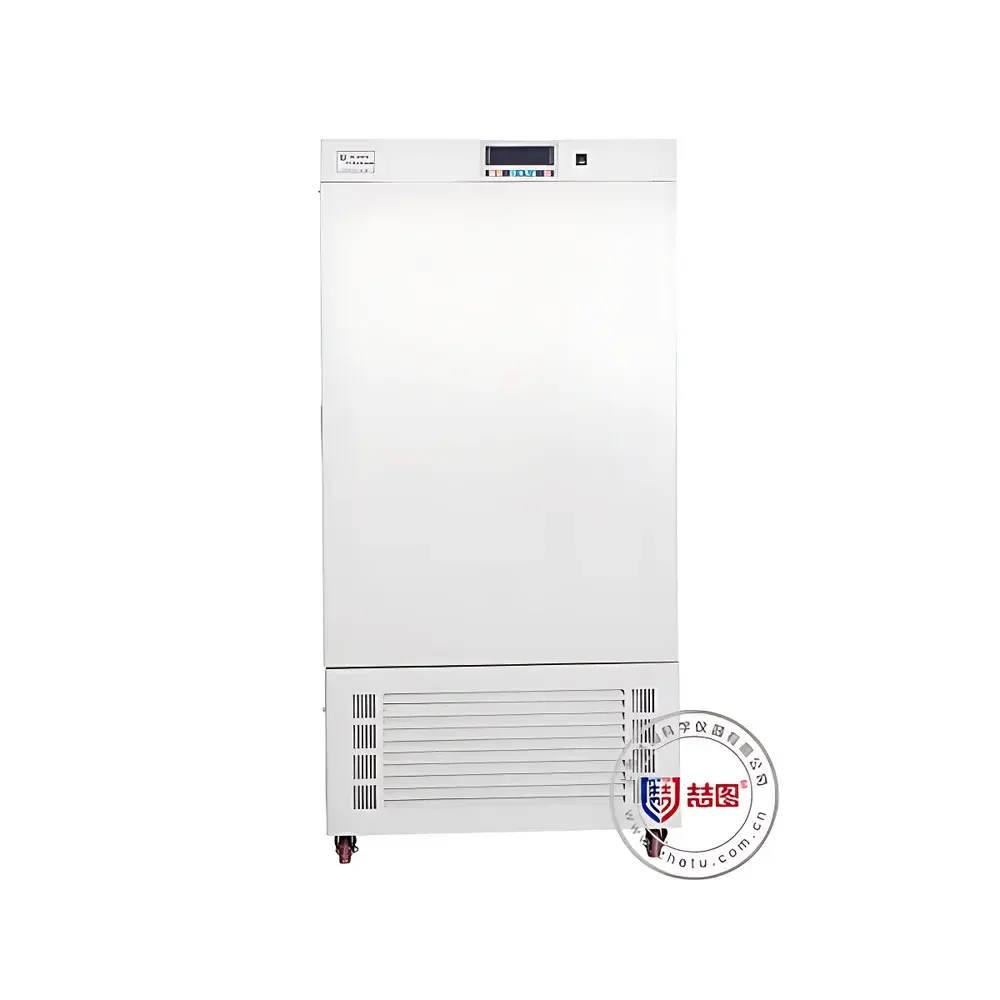
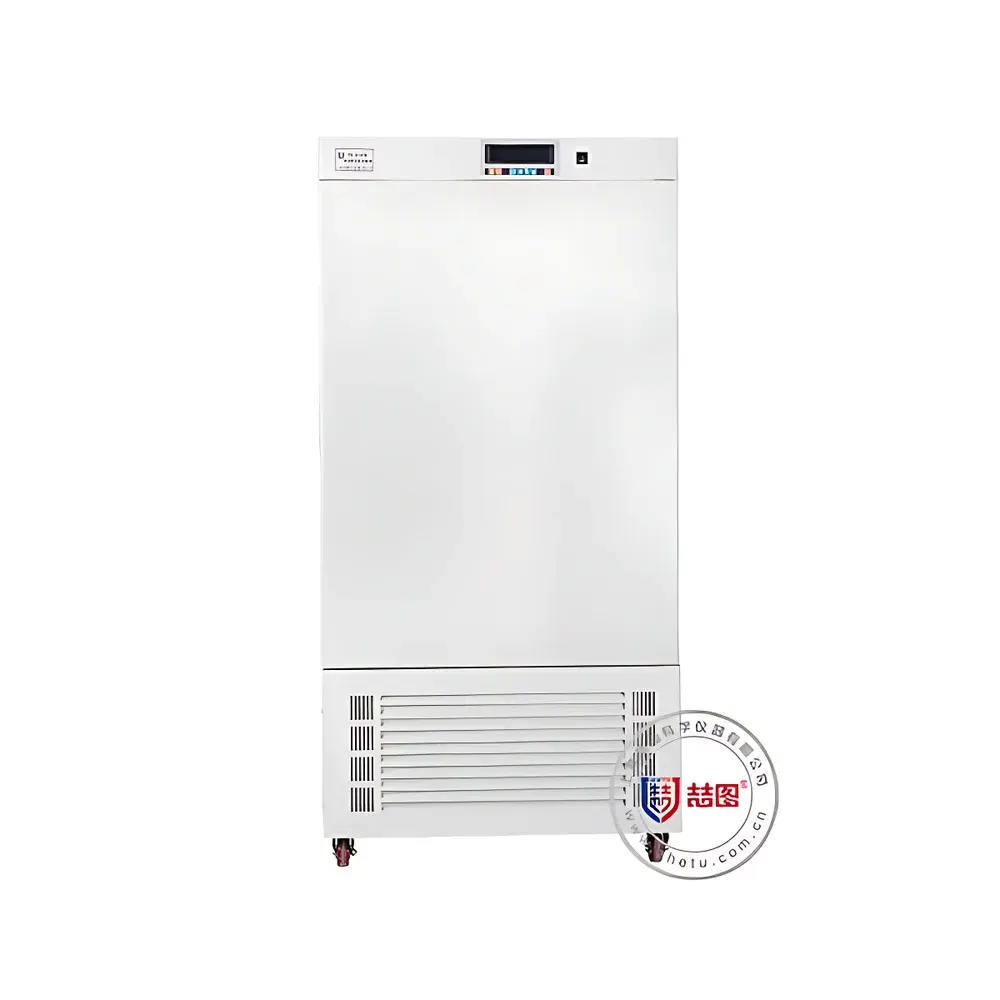
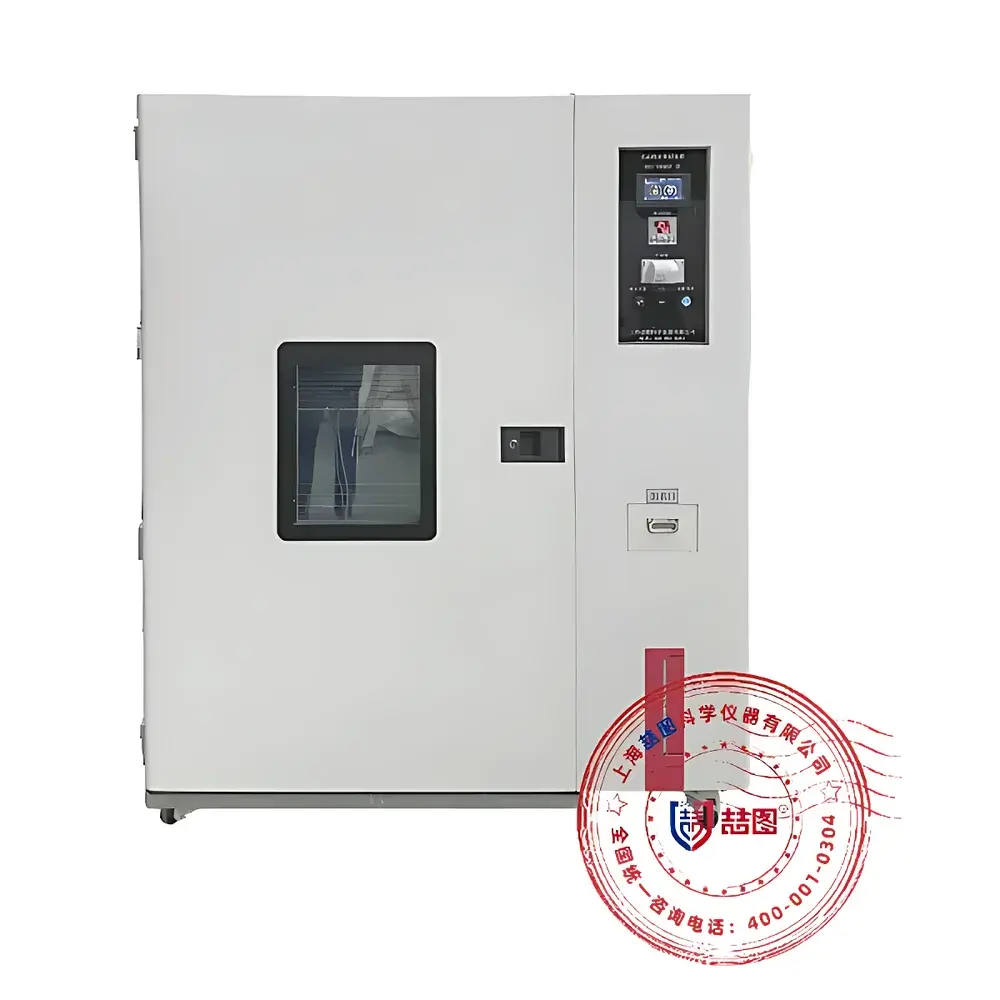
DRETOP BGMH-150 Comprehensive Drug Stability Testing Chamber
| Brand | DRETOP |
|---|---|
| Origin | Shanghai, China |
| Manufacturer Type | Direct Manufacturer |
| Model | BGMH-150 |
| Voltage | AC 220 V / 50 Hz |
| Temperature Range | 0–65 °C |
| Temperature Uniformity | ±2.5 °C |
| Temperature Fluctuation | ±0.5 °C |
| Humidity Range | 30–95 %RH (customizable to 20–95 %RH) |
| Humidity Deviation | ±3 %RH |
| Illumination Range | 0–25,000 lx (optional) |
| Internal Volume | 150 L |
| Inner Chamber Dimensions (W×D×H) | 500 × 400 × 750 mm |
| Power Consumption | 2.2 kW |
| Programmable Stages | 100 per program, up to 1,000 programs |
| Data Logging Interval | 60 s (≥3 years continuous storage) |
| Compliance | Designed for ICH Q1A–Q1E, USP <1151>, ISO 14644-1 (Class 8), and GMP-aligned 3Q validation (IQ/OQ/PQ) |
Overview
The DRETOP BGMH-150 Comprehensive Drug Stability Testing Chamber is an engineered environmental simulation system designed to meet the rigorous requirements of pharmaceutical stability testing in accordance with International Council for Harmonisation (ICH) guidelines—specifically Q1A(R3) through Q1E—and aligned with United States Pharmacopeia (USP) “Stability Considerations in Dispensing Practice” and European Pharmacopoeia (Ph. Eur.) 2.2.32. It provides precise, long-term control of temperature (0–65 °C), relative humidity (30–95 %RH), and optional photometric irradiance (0–25,000 lx), enabling accelerated, intermediate, long-term, high-humidity, and photostability studies per ICH Q5C and Q5E. The chamber employs a dual-loop PID-controlled refrigeration-heating-humidification architecture with independent actuation pathways, ensuring thermodynamic decoupling and minimizing cross-interference during multi-parameter ramp-and-soak protocols. Its structural design prioritizes thermal inertia minimization, airflow laminarity, and spatial uniformity—critical for reproducible degradation kinetics assessment across solid dosage forms, biologics, sterile products, and active pharmaceutical ingredients (APIs).
Key Features
- Full-color 7-inch capacitive touchscreen HMI with bilingual (English/Chinese) interface and role-based access control: Administrator (full system configuration), Maintenance Technician (real-time monitoring + log review), and Operator (run/stop + data view only).
- Advanced programmable logic: Up to 1,000 user-defined test protocols; each supporting up to 100 sequential segments with independent ramp rates, dwell times, and setpoint targets for temperature, humidity, and illumination.
- Dual independent climate control loops: Refrigeration (hermetic scroll compressor, R134a-free eco-refrigerant), resistive heating (NiCr alloy elements), and steam-based humidification—each with dedicated feedback sensors and closed-loop regulation.
- High-fidelity environmental sensing: High-temperature-rated capacitive humidity sensor (no dry/wet bulb maintenance), Class A PT100 temperature probes (IEC 60751), and NIST-traceable photopic lux sensor (for optional E-type illumination module).
- Enhanced chamber integrity: Triple-layer silicone door gasket, double-wall insulated construction (PU foam, ≥80 mm), and optimized axial fan array delivering ≥25 air changes/hour with turbulence-free vertical airflow distribution.
- Robust data governance: Onboard 8 GB flash memory storing timestamped parameters at 60-second intervals for ≥3 years; audit-trail-enabled event logging (alarms, operator actions, power cycles); optional SMS alerting (B-type) and mobile app remote monitoring (S-type).
- Safety-critical protection suite: Dual-stage overtemperature cutoff (PID controller + independent K-type mechanical limiter), compressor/fan overload detection, ground-fault circuit interruption (GFCI), and automatic power recovery after grid interruption.
Sample Compatibility & Compliance
The BGMH-150 accommodates standard pharmaceutical packaging configurations—including blister cards, HDPE bottles, glass vials, and aluminum-laminated pouches—on three adjustable stainless-steel shelves (load capacity: 15 kg/shelf). Its internal geometry and airflow path comply with ICH-recommended placement criteria for uniform exposure (e.g., no shadowing, minimum 50 mm clearance from walls). The chamber supports full qualification per GMP Annex 15: Installation Qualification (IQ), Operational Qualification (OQ), and Performance Qualification (PQ) documentation packages are available upon request, including mapping reports per ISO 14644-1 (Class 8 cleanroom-equivalent air handling) and traceable calibration certificates (CNAS-accredited at user-specified points: e.g., 25 °C/60 %RH, 40 °C/75 %RH, 60 °C/ambient RH). All firmware and data handling protocols conform to FDA 21 CFR Part 11 requirements for electronic records and signatures when paired with optional RS485-to-PC connectivity (R-type) and J-type paperless recorder.
Software & Data Management
The embedded controller firmware implements deterministic real-time scheduling with millisecond-level task resolution, ensuring sub-second response to environmental deviations. Data export is supported via USB 2.0 (CSV format), RS485 Modbus RTU (for SCADA integration), or optional Ethernet/WiFi modules. Historical datasets include operational logs (start/stop timestamps, program IDs), alarm history (type, duration, acknowledgment status), and full parameter traces—each cryptographically signed to prevent tampering. The optional J-type standalone recorder provides redundant local archiving with color LCD visualization and SD-card backup. For enterprise deployment, the S-type mobile application enables authenticated remote viewing of live curves, alarm status, and chamber health metrics (compressor runtime, heater duty cycle, humidity saturation margin) without granting configuration rights.
Applications
- ICH Q1A(R3) Accelerated Stability Testing (40 °C ± 2 °C / 75 %RH ± 5 %RH, 6 months)
- ICH Q1B Photostability Testing (Option E/V): UV-A (320–400 nm) and visible light (400–800 nm) exposure per Q5C recommendations
- Long-Term Storage Simulation (25 °C ± 2 °C / 60 %RH ± 5 %RH, 12–36 months)
- Intermediate Condition Assessment (30 °C ± 2 °C / 65 %RH ± 5 %RH)
- High-Humidity Challenge Studies (40 °C / 90 %RH, 10 days)
- Excipient Compatibility Screening under controlled hygrothermal stress
- Biological Product Real-Time Stability Monitoring (refrigerated or ambient conditions)
FAQ
Does the BGMH-150 comply with ICH Q1 series requirements for regulatory submissions?
Yes—the chamber’s control accuracy, uniformity, and data integrity architecture align with ICH Q1A–Q1E specifications. Full 3Q validation documentation and CNAS-mapped calibration reports support regulatory filing readiness.
Can humidity be maintained reliably at 20 %RH?
Standard configuration supports 30–95 %RH; 20–95 %RH is available as a factory-customized option using enhanced dehumidification and desiccant-assisted drying circuits.
Is the illumination system spectrally calibrated?
The E-type LED array delivers photopic-weighted irradiance (lux) traceable to NIST standards; spectral power distribution (SPD) reports are provided for UV/visible modules upon request.
How is data security enforced during remote access?
Mobile (S-type) and PC (R-type) interfaces use TLS 1.2 encryption; all commands require session authentication; no write permissions are granted outside administrator mode.
What maintenance intervals are recommended for long-term GMP compliance?
Compressor oil and refrigerant integrity checks every 24 months; humidity sensor recalibration annually; door gasket inspection quarterly; full IQ/OQ re-execution after major component replacement or software updates.






