
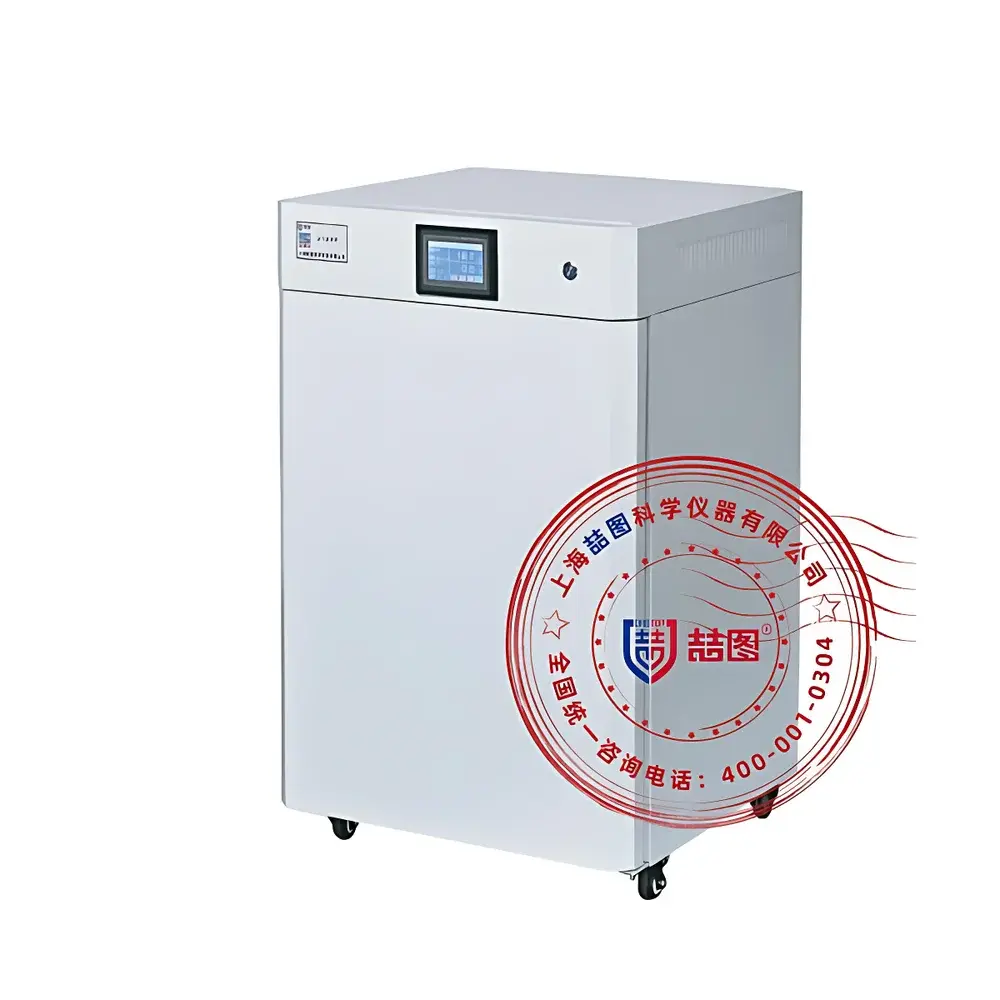
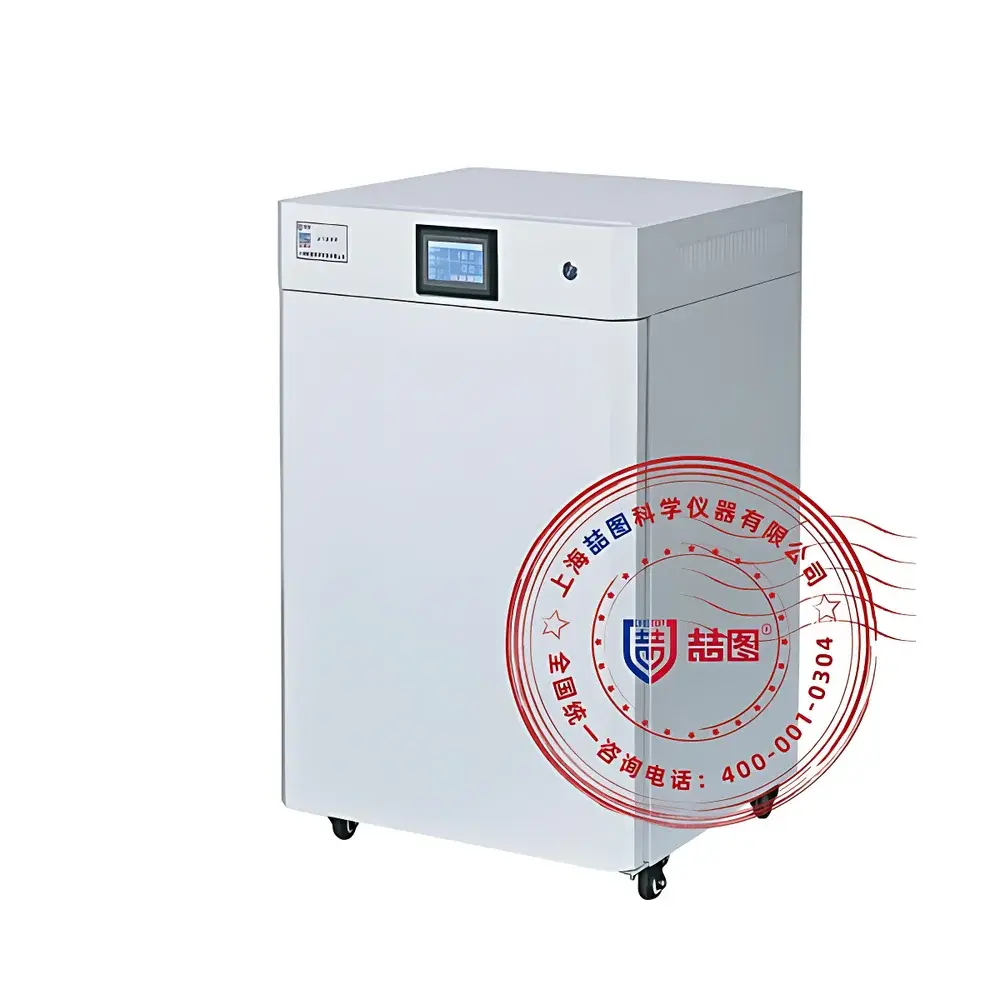
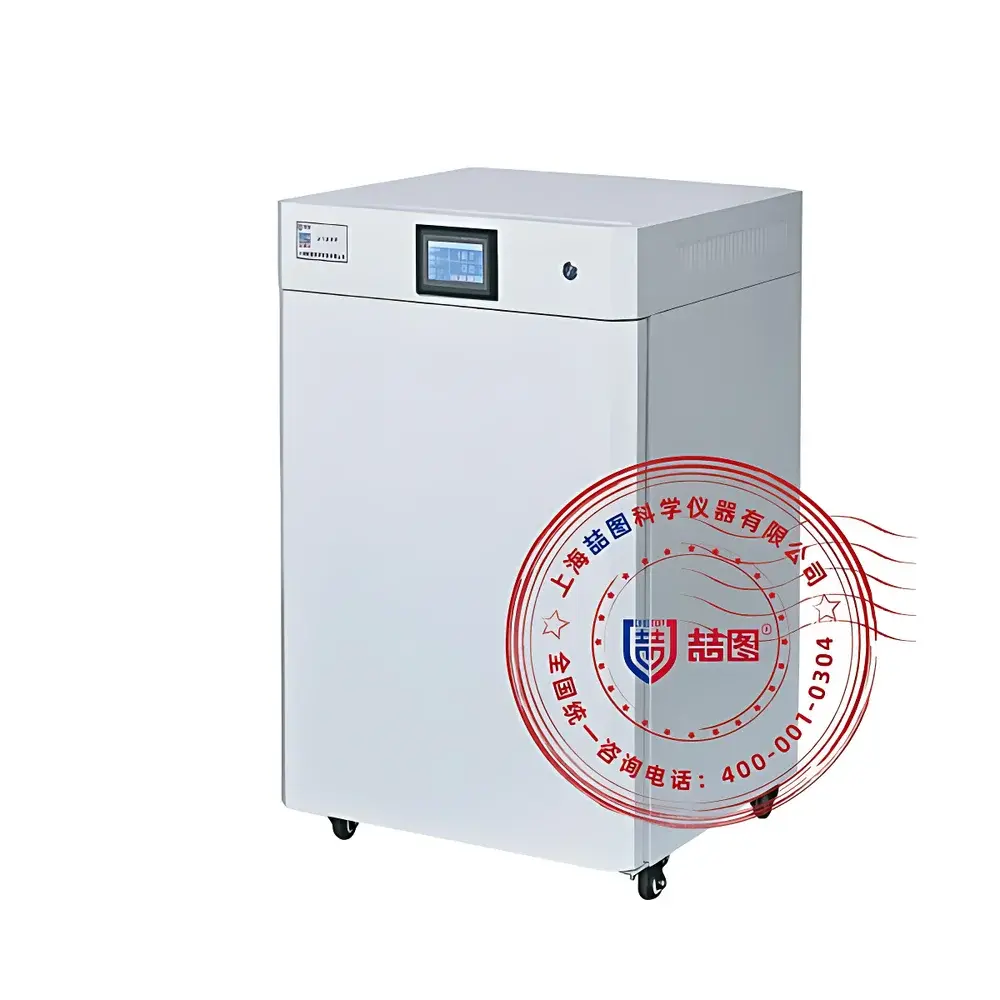
DRETOP TGC-50 Tri-Gas Incubator
| Brand | DRETOP |
|---|---|
| Origin | Shanghai, China |
| Manufacturer Type | Direct Manufacturer |
| Instrument Type | Air-Jacketed Tri-Gas Incubator |
| O₂ Range | 1–95%, ±0.2% |
| CO₂ Range | 0–20%, ±0.1% |
| Temperature Range | RT+5°C to 60°C, ±0.1°C control resolution, ±0.2°C stability |
| Humidity | Natural evaporation via removable water pan, ≥90% RH (unregulated) |
| Capacity | 50 L |
| External Dimensions | 345 × 355 × 410 mm |
| Power Supply | 220 V, 50 Hz |
| Power Consumption | 350 W |
| Internal Chamber Material | Electropolished stainless steel (304), electrochemically passivated |
| Filtration | Integrated HEPA filter (H14 class, ≥99.995% @ 0.3 µm) with real-time filter life monitoring |
| Sterilization | Built-in UV-C lamp (254 nm), programmable cycle, full-chamber irradiation including fan blades, sensor surfaces, and humidification pan |
| Gas Control Logic | Adaptive N₂ balancing algorithm ensuring CO₂ + O₂ + N₂ = 100% |
Overview
The DRETOP TGC-50 Tri-Gas Incubator is an air-jacketed, microprocessor-controlled environmental chamber engineered for precise regulation of oxygen (O₂), carbon dioxide (CO₂), and nitrogen (N₂) concentrations—alongside temperature and humidity—to replicate physiologically relevant conditions for sensitive biological systems. Unlike standard CO₂ incubators, the TGC-50 implements a closed-loop tri-gas mixing architecture grounded in real-time feedback from dual high-stability sensors: non-dispersive infrared (NDIR) for CO₂ and electrochemical zirconia for O₂. This enables accurate simulation of normoxic (21% O₂), hypoxic (1–5% O₂), hyperoxic (up to 95% O₂), and microaerophilic (e.g., 5–10% O₂) environments—critical for stem cell expansion, tumor spheroid culture, anaerobic microbiology, and ischemia-reperfusion modeling. Its six-sided uniform heating system eliminates thermal gradients, while the air-jacket design ensures rapid recovery (<3 min for CO₂ stabilization post-door opening) and minimizes condensation on chamber surfaces—key factors in maintaining sterility and assay reproducibility.
Key Features
- Full-color capacitive touchscreen interface with real-time graphical display of all process variables: chamber temperature, CO₂ concentration (%), O₂ concentration (%), relative humidity (RH%), UV lamp status, and HEPA filter remaining service life.
- Electropolished 304 stainless-steel inner chamber with electrochemical passivation—resistant to corrosion, easy to decontaminate, and compliant with ISO 14644-1 Class 5 cleanroom surface requirements.
- Passive humidification system using a removable, autoclavable stainless-steel water pan; achieves ≥90% RH within 15 minutes after chamber rehydration, without active humidity control circuitry that introduces microbial risk.
- Low-turbulence air circulation optimized for laminar flow patterns—reducing shear stress on adherent cultures while accelerating equilibration of gas partial pressures and thermal homogeneity across the 50 L working volume.
- Dual-door architecture: outer insulated door with magnetic seal and inner tempered glass door—enabling visual inspection without compromising chamber integrity or inducing thermal/hygrometric drift.
- Integrated anti-condensation heating on inner door surface prevents fogging and microbial colonization on optical surfaces; also mitigates heat loss during observation intervals.
- Comprehensive safety suite includes over/under temperature alarms, CO₂/O₂ deviation alerts, door-open duration monitoring (>60 s triggers alarm), sensor fault diagnostics, and automatic suspension of fan operation upon door actuation to minimize gas exchange with ambient air.
Sample Compatibility & Compliance
The TGC-50 supports long-term cultivation of mammalian cell lines (including primary neurons and iPSCs), organoids, bacterial cultures requiring defined O₂ tension (e.g., Helicobacter pylori, Clostridium difficile), and tissue explants. Its internal geometry accommodates standard T-25/T-75 flasks, 6-/24-/96-well plates, and Petri dishes across two adjustable stainless-steel shelves. All materials contacting the chamber atmosphere comply with USP Class VI biocompatibility standards. The integrated HEPA H14 filtration meets EN 1822-1 requirements for airborne particulate removal, while the UV-C sterilization protocol (254 nm, ≥100 µW/cm² irradiance at 1 m) validates log₄ reduction of Escherichia coli, Bacillus subtilis spores, and Candida albicans per ISO 15714. The device is designed for use in GLP-compliant laboratories and supports audit-ready operational records when paired with optional data logging modules.
Software & Data Management
The embedded controller stores up to 30 days of time-stamped operational logs—including setpoint history, actual values, alarm events, and maintenance timestamps—with automatic overwrite protection. Data export is supported via USB 2.0 port in CSV format for integration into LIMS or ELN platforms. While no remote access or cloud connectivity is built-in, the unit provides RS-485 Modbus RTU output for third-party SCADA integration. All parameter changes require password authentication, and the system enforces user-level access control (operator vs. administrator). Audit trail functionality satisfies FDA 21 CFR Part 11 requirements when used with validated external data acquisition software.
Applications
- Hypoxia research: modeling solid tumor microenvironments (1–5% O₂) and embryonic development pathways.
- Microaerophilic pathogen culture: growth of Campylobacter jejuni, Neisseria gonorrhoeae, and Brucella spp. under controlled low-O₂ conditions.
- Stem cell differentiation: maintaining pluripotency or directing lineage commitment through dynamic O₂ modulation.
- Co-culture systems: independent optimization of stromal and epithelial compartments within shared gas environments.
- Bioprocess development: pre-screening of cell line performance under varying gas tensions prior to bioreactor scale-up.
- Regulatory testing: supporting ISO 10993-5 cytotoxicity assays where atmospheric composition directly impacts metabolic response.
FAQ
What gas supply connections are required?
The TGC-50 requires three independent, pressure-regulated gas lines: medical-grade CO₂ (99.5% purity), O₂ (≥99.5%), and N₂ (≥99.998%). Each inlet accepts standard 6 mm OD tubing with push-to-connect fittings.
Is humidity actively controlled or monitored?
Humidity is maintained passively via natural water evaporation from a removable stainless-steel pan; no active humidification or RH feedback loop is implemented. Relative humidity is not measured or displayed.
Can the incubator operate in continuous UV mode?
No—UV exposure is strictly time-programmable (1–9999 minutes) and automatically disables upon door opening or temperature deviation exceeding ±2°C to prevent operator exposure and material degradation.
What calibration standards are supported?
Factory calibration uses NIST-traceable reference gases (certified CO₂ and O₂ mixtures) and PT100-class temperature probes. Field recalibration requires authorized service personnel and certified calibration kits per ISO/IEC 17025 guidelines.
Does the unit meet electromagnetic compatibility (EMC) directives?
Yes—the TGC-50 complies with IEC 61326-1:2013 for laboratory equipment emissions and immunity, and carries CE marking for EMC and LVD directives.





