

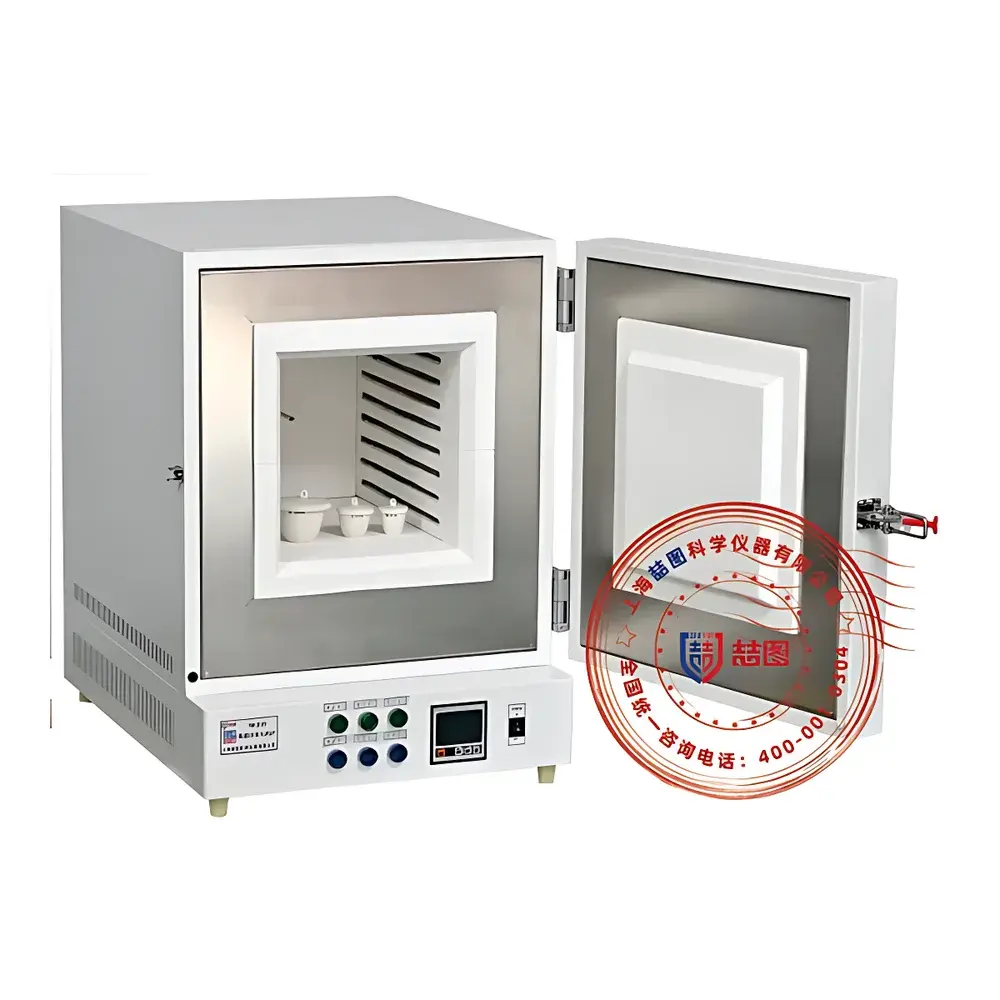
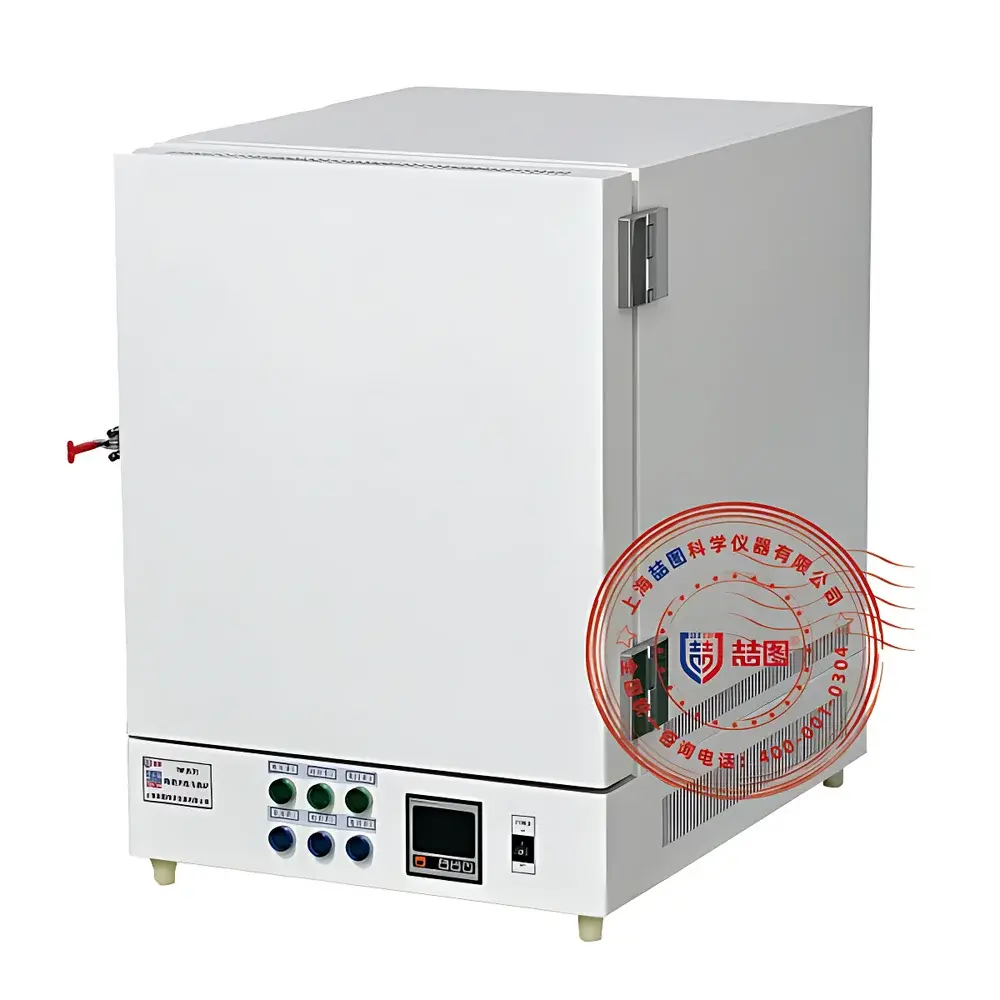
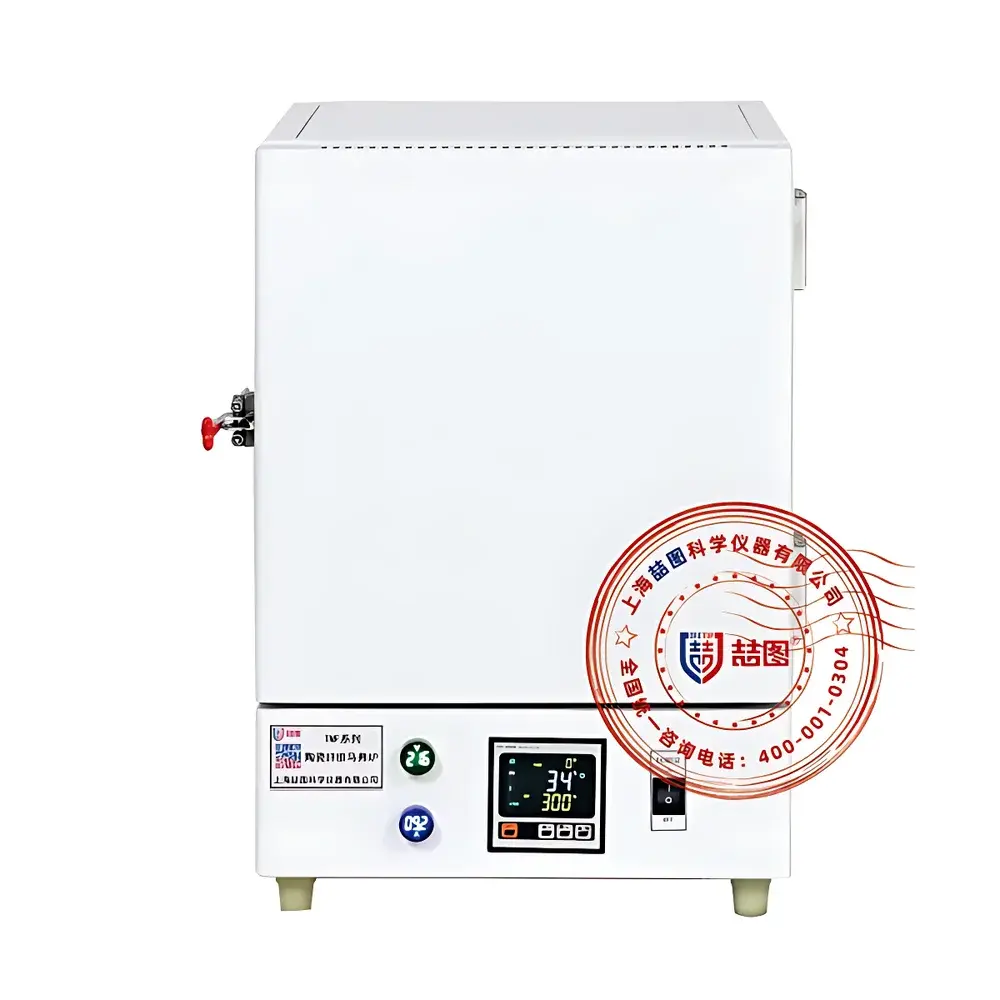
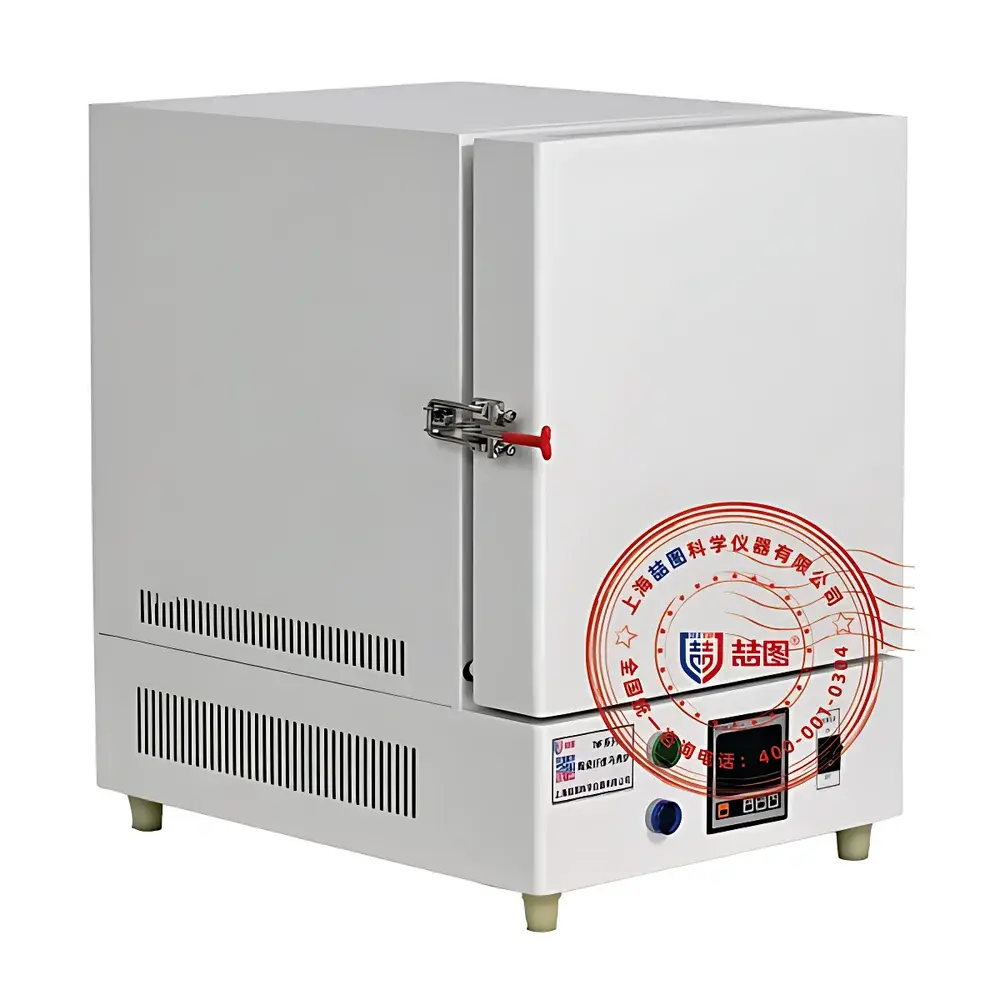
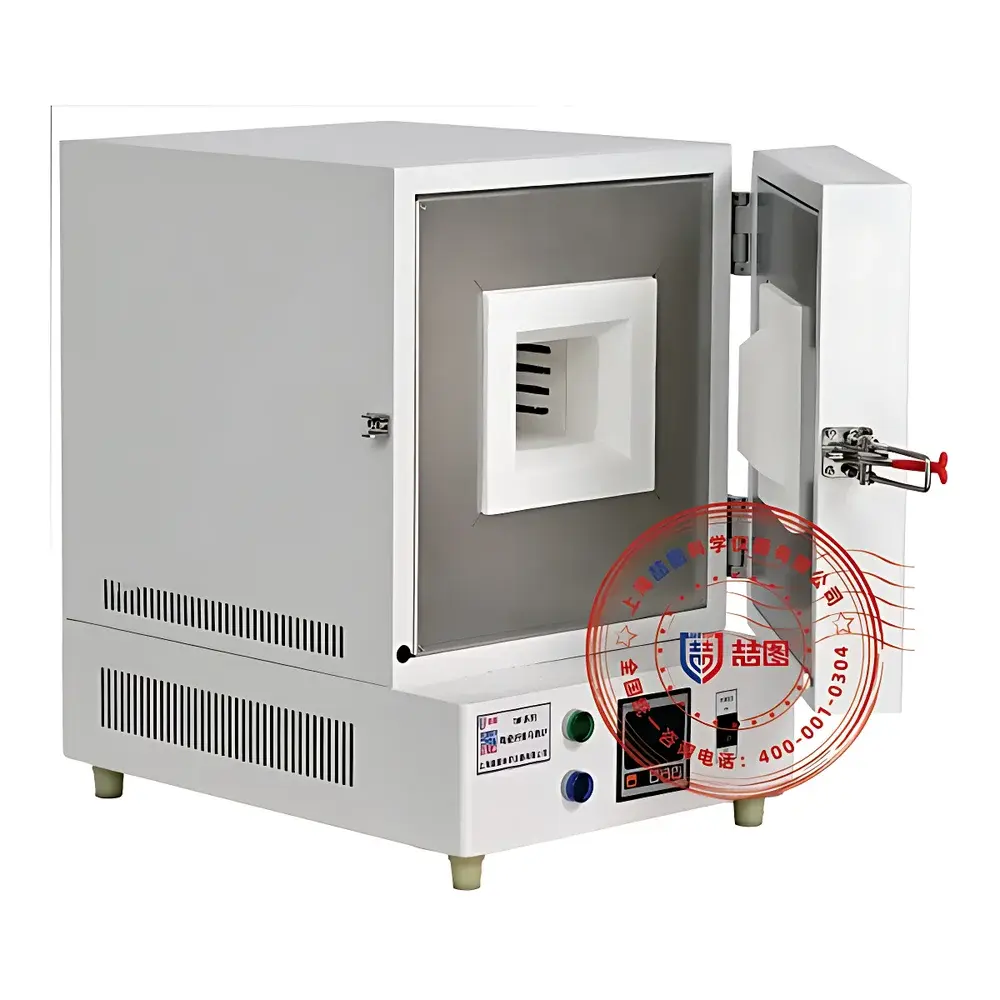
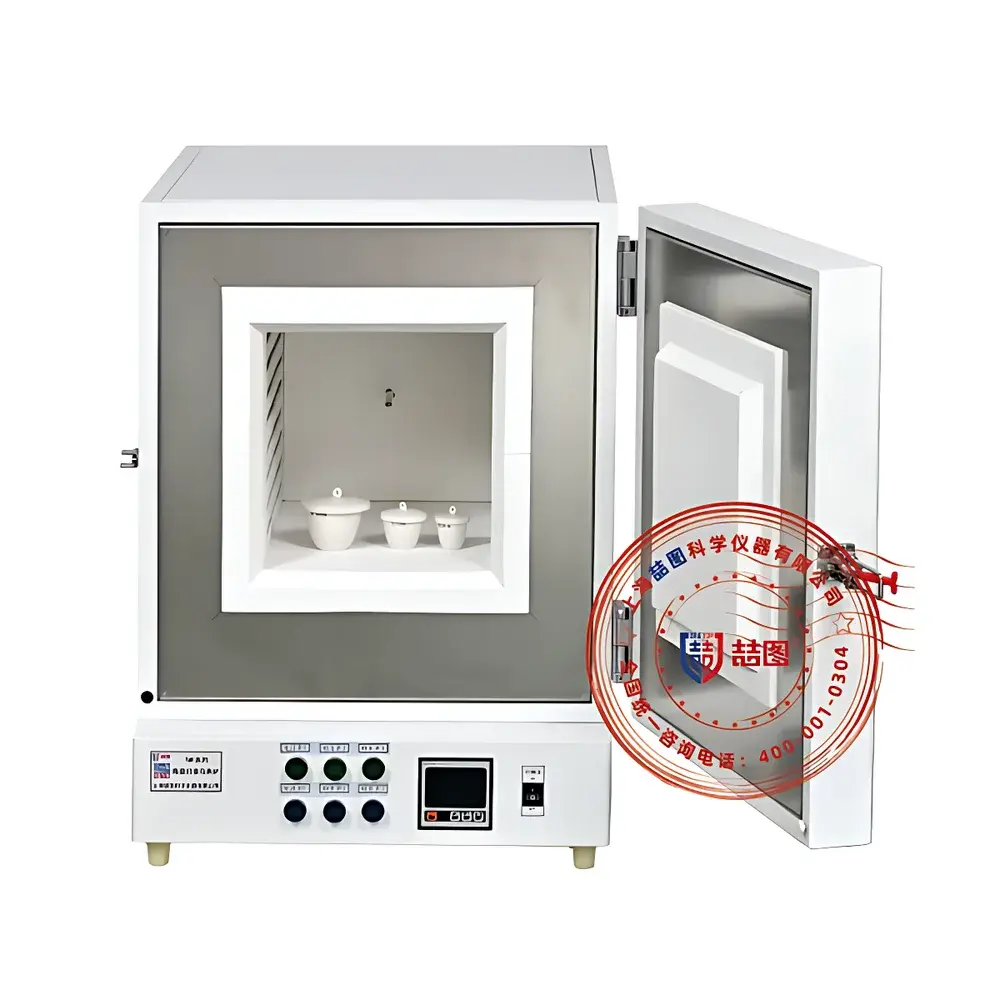
DRETOP TMF-7.2-10TP Ceramic Fiber Muffle Furnace
| Brand | DRETOP |
|---|---|
| Origin | Shanghai, China |
| Manufacturer Type | Direct Manufacturer |
| Product Category | Domestic |
| Model | TMF-7.2-10TP |
| Instrument Type | Box-Type Muffle Furnace |
| Maximum Temperature | 1000 °C |
| Temperature Control Accuracy | ±1 °C |
| Rated Power | 4 kW |
| Heating Rate to Max Temp | 30 min |
| Heating Element | Nichrome Wire |
| Internal Dimensions | 200 × 300 × 120 mm |
| Control System | Microcomputer-Based PID Controller |
| Nominal Chamber Volume | 7.2 L |
Overview
The DRETOP TMF-7.2-10TP is a high-performance ceramic fiber box-type muffle furnace engineered for precision thermal processing in research laboratories, materials science facilities, and quality control environments. Unlike traditional refractory brick furnaces, this model utilizes vacuum-microporous ceramic fiber insulation—offering superior thermal efficiency, rapid heating kinetics, and exceptional temperature uniformity across the working zone. Its operational principle relies on resistive heating via high-stability nichrome wire elements embedded within three-sided furnace walls, enabling symmetrical radiant heat distribution and minimizing axial thermal gradients. Designed for applications demanding repeatable thermal profiles—from ashing and calcination to sintering, annealing, and heat treatment—the TMF-7.2-10TP operates within a controllable range of RT + 50 °C to 1000 °C, with digital PID regulation ensuring stable setpoint maintenance under variable load conditions.
Key Features
- Triple-wall heating architecture with spiral-wound nichrome elements ensures rapid thermal response (reaches 1000 °C in ≤30 minutes) and uniform temperature distribution (±3 °C across chamber volume per ASTM E220-21).
- Microcomputer-based PID controller with large-backlit LCD interface supports intuitive operation, real-time parameter monitoring, and programmable multi-segment thermal profiles (up to 30 segments in TP-series variants).
- Integrated safety architecture includes dual-stage overtemperature protection, open-door power cutoff, phase-loss detection, thermocouple break alarm, and digital voltage/current readouts for continuous electrical health assessment.
- Structural design incorporates phosphate-conversion coated steel housing with high-temp electrostatic powder coating, ergonomic front-access door with precision-machined latching mechanism, and internal stainless-steel lining (2 mm thick) for corrosion resistance and ease of cleaning.
- Ceramic fiber chamber construction reduces thermal mass by >60% versus conventional brick-lined furnaces—resulting in lower energy consumption, reduced standby losses, and improved thermal inertia control during dynamic ramp-hold-cool cycles.
Sample Compatibility & Compliance
The TMF-7.2-10TP accommodates standard crucibles (alumina, quartz, stainless steel), ceramic boats, and powdered or solid-state samples up to 7.2 L nominal volume (200 × 300 × 120 mm internal dimensions). It complies with general laboratory safety standards including IEC 61000-6-3 (EMC emissions) and IEC 61000-6-2 (immunity). While not certified to UL/CSA as a standalone appliance, its electrical architecture meets Class I protection requirements per IEC 61010-1 for laboratory electrical equipment. The furnace supports GLP/GMP-aligned workflows through optional RS485 Modbus RTU interface, audit-trail-capable TC-series touchscreens (with user-level permissions), and configurable data logging compatible with LIMS integration. All thermal profiles adhere to ISO/IEC 17025-relevant traceability principles when paired with NIST-traceable calibration thermocouples.
Software & Data Management
The base model features embedded firmware with non-volatile memory for profile storage and power-failure recovery. Optional TC-series color touchscreen controllers provide graphical real-time temperature curves, multi-user authentication (engineer/operator/admin tiers), password-protected parameter editing, and timestamped event logs—including door openings, alarm triggers, and setpoint changes. Data export is supported via USB flash drive (CSV format) or serial communication (RS485) for integration into SCADA systems or centralized lab informatics platforms. Firmware updates are performed via secure offline protocol to maintain regulatory integrity in validated environments. Optional accessories—including miniature thermal printers and inert gas inlet valves—enable controlled-atmosphere processing and hard-copy record generation compliant with FDA 21 CFR Part 11 requirements when configured with electronic signature modules.
Applications
This furnace serves critical roles in analytical chemistry (e.g., gravimetric ash content determination per AOAC 923.03 and ASTM D3174), metallurgy (annealing of small ferrous/non-ferrous components, tempering trials), ceramics R&D (glaze firing, sintering optimization, thermal expansion coefficient measurement), nanomaterial synthesis (oxide nanoparticle calcination), and pharmaceutical QC (residue-on-ignition testing per USP ). Its rapid thermal cycling capability makes it suitable for iterative process development where time-to-result is constrained. The uniform 3D radiant field enables reproducible microstructural evolution in thin films and coatings, supporting studies aligned with ISO 13322-2 (particle size analysis via thermal behavior) and ASTM C1171 (refractory thermal shock resistance evaluation).
FAQ
What is the typical service life of the ceramic fiber insulation under continuous 1000 °C operation?
Ceramic fiber boards retain structural integrity for ≥12,000 hours at 1000 °C when operated within recommended thermal cycling limits (≤3 cycles/day). Degradation is primarily oxidation-driven; performance retention exceeds 92% after 5,000 hours per manufacturer accelerated aging data.
Can this furnace be used under inert or reducing atmospheres?
Yes—when equipped with the optional inert gas inlet valve and exhaust chimney, the TMF-7.2-10TP supports nitrogen, argon, or forming gas (5% H₂/95% N₂) purging. Note: Hydrogen use requires additional explosion-proof certification and pressure-relief venting per local jurisdiction.
Is the temperature uniformity validated per industry standards?
Temperature uniformity mapping is performed at factory acceptance using 9-point thermocouple array per ASTM E220-21 Annex A3. Typical results show ±2.5 °C deviation at 1000 °C across the usable volume, documented in the Certificate of Conformance supplied with each unit.
Does the PID controller support external temperature feedback from sample-mounted sensors?
No—the system uses only the built-in K-type thermocouple mounted in the chamber wall. For sample-core temperature control, users must implement external cascade control via the RS485 interface using third-party PLCs or DAQ systems.
What maintenance is required to sustain ±1 °C control accuracy over time?
Annual verification with NIST-traceable reference thermometer is recommended. Routine checks include thermocouple continuity, door gasket integrity, and heater resistance symmetry. Calibration adjustments are accessible only via engineer-level password in TP/TC models.



