
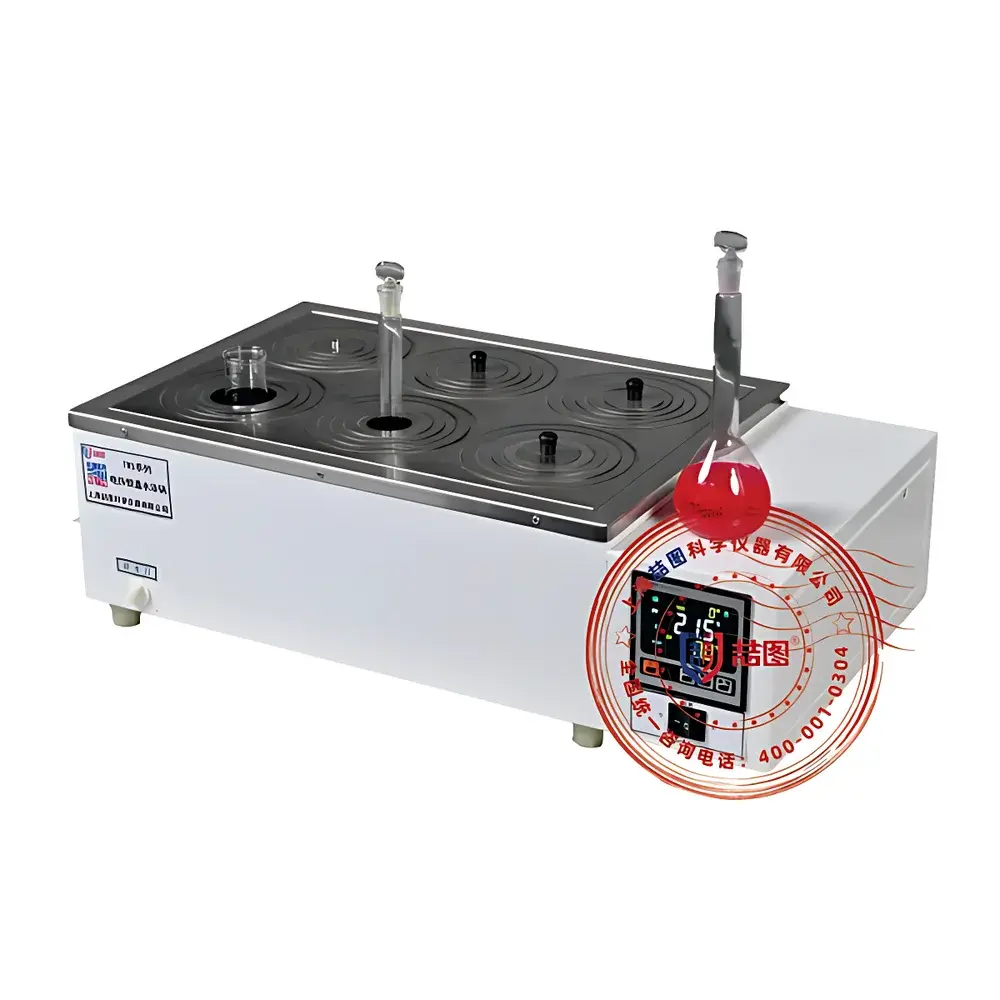
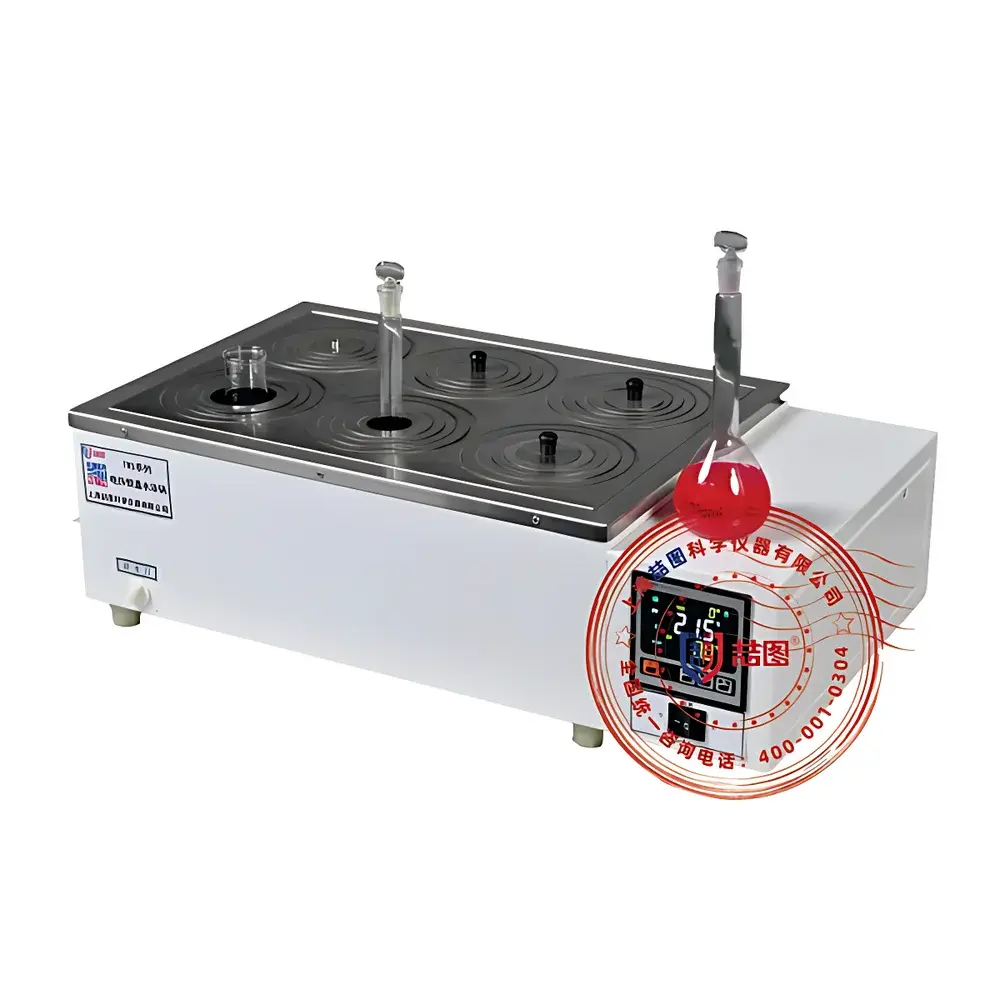
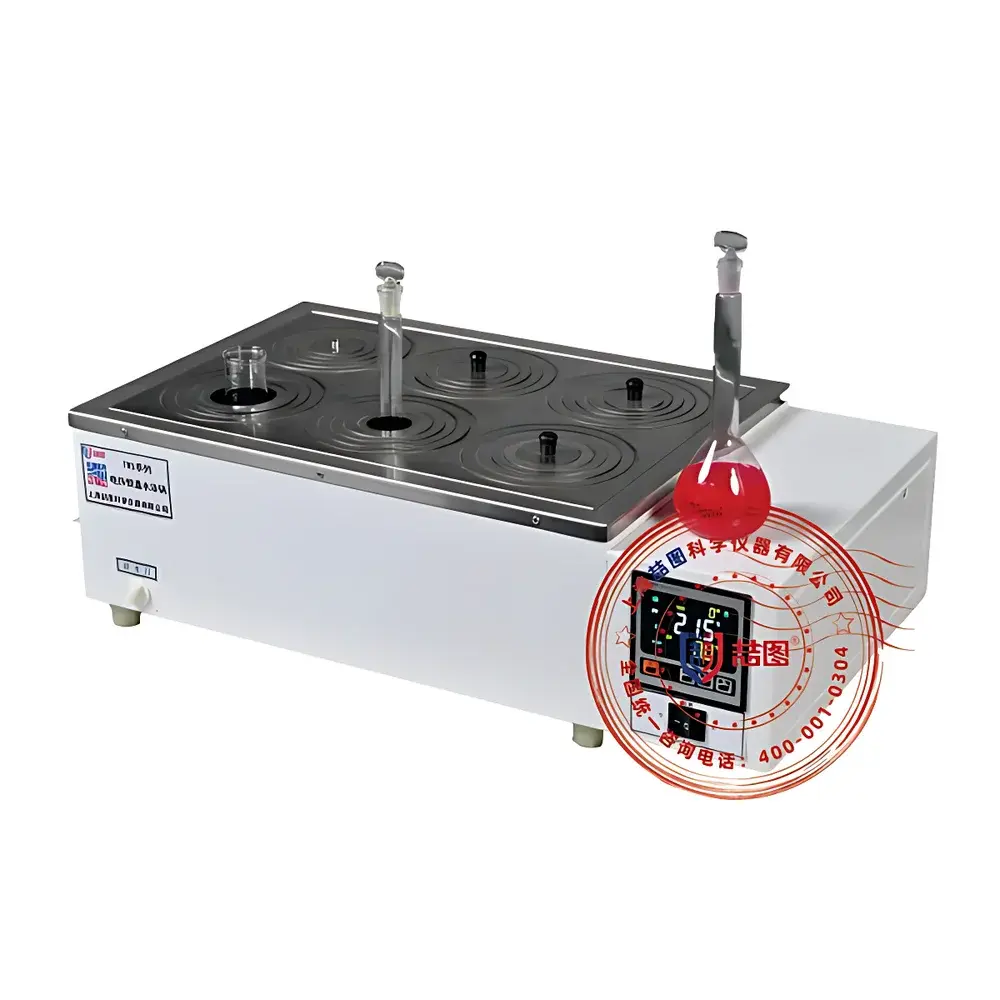
DRETOP TWS-28 Dual-Row Eight-Position Constant-Temperature Water Bath
| Brand | DRETOP |
|---|---|
| Origin | Shanghai, China |
| Manufacturer Type | Direct Manufacturer |
| Model | TWS-28 |
| Operating Temperature Range | RT + 5°C to 100°C |
| Temperature Control Accuracy | ±0.1°C |
| Bath Capacity | 19.8 L |
| Heating Power | 2000 W |
| External Dimensions (W×D×H) | 750 × 330 × 210 mm |
Overview
The DRETOP TWS-28 Dual-Row Eight-Position Constant-Temperature Water Bath is a precision-engineered laboratory thermal management system designed for reproducible, stable heat transfer in aqueous environments. Based on resistive immersion heating and PID-regulated feedback control, it maintains uniform temperature distribution across eight independently usable wells—arranged in two parallel rows—enabling simultaneous processing of multiple samples under identical thermal conditions. Its core architecture integrates a stainless steel water reservoir, high-efficiency heating elements, and a microprocessor-based temperature controller calibrated to meet ISO/IEC 17025 traceable standards for laboratory equipment performance verification. Intended for routine use in academic teaching labs, QC/QA departments, and R&D facilities, the TWS-28 supports critical protocols including enzyme incubation, sample thawing, reagent pre-warming, dissolution testing, and controlled evaporation—without introducing thermal gradients or mechanical agitation that could compromise experimental integrity.
Key Features
- Microprocessor-controlled PID temperature regulation with dual digital display: real-time bath temperature and user-setpoint shown simultaneously on a backlit LCD panel.
- High-accuracy temperature stability: ±0.1°C control accuracy with ≤±0.5°C fluctuation over time, verified per ASTM E2251-22 for laboratory thermal equipment.
- Robust corrosion-resistant construction: 304 stainless steel inner tank and lid; electrophoretic-coated steel outer casing; integrated drain valve for rapid, spill-free water replacement.
- Intelligent safety architecture: auto-detection of low-water level with immediate heater cutoff and audible/visual alarm; power-failure memory retention preserving setpoints and timer values for uninterrupted operation after recovery.
- Configurable thermal alarm: user-definable deviation threshold (±0.1°C adjustable) triggering both audio-visual alert and automatic heating disablement—supporting GLP/GMP-compliant audit trails.
- Ergonomic well design: perforated stainless steel support tray; interchangeable silicone-rubber or PTFE-coated well inserts (optional) for compatibility with varying flask diameters (10–100 mm).
Sample Compatibility & Compliance
The TWS-28 accommodates standard laboratory glassware including Erlenmeyer flasks (50–1000 mL), volumetric flasks, centrifuge tubes, and sample vials—secured via optional diameter-specific well rings. Its open-bath configuration allows direct immersion of containers without sealing constraints, while maintaining full visibility and accessibility during operation. All wetted surfaces comply with USP Class VI biocompatibility requirements for indirect contact with pharmaceutical intermediates. The unit meets CE marking directives (2014/30/EU EMC and 2014/35/EU LVD), conforms to IEC 61010-1:2010 safety standards for electrical equipment in laboratories, and supports 21 CFR Part 11-ready data logging when paired with optional RS485 interface modules.
Software & Data Management
While the base model operates via standalone front-panel controls, optional connectivity enables integration into centralized lab informatics systems. An RS485 serial port supports Modbus RTU protocol for remote parameter setting, real-time temperature streaming, and event-triggered logging (e.g., alarm activation, power loss). When used with DRETOP’s optional 30-segment programmable controller, users define multi-step temperature ramps and holds—including soak durations, ramp rates, and cycle repeats—for applications such as accelerated stability testing or gradient-based solubility assays. All logged data include timestamps, operator IDs (via external authentication), and checksum-verified integrity flags—facilitating FDA audit readiness and internal SOP compliance.
Applications
- Pharmaceutical quality control: dissolution medium conditioning per USP , buffer equilibration prior to HPLC injection, and microbial growth support at defined temperatures.
- Life sciences: DNA denaturation/annealing steps in manual PCR setups, cell culture reagent warming, and histological tissue processing baths.
- Environmental analysis: BOD incubation, extraction solvent preheating for EPA Method 3510C, and standard solution preparation at certified reference temperatures.
- Materials science: polymer solubilization kinetics, surfactant cloud point determination, and viscosity benchmarking of Newtonian fluids.
- Education: undergraduate thermodynamics experiments, calibration of liquid-in-glass thermometers, and demonstration of heat transfer principles under controlled convection.
FAQ
What is the maximum recommended fill level for optimal temperature uniformity?
For consistent thermal performance across all eight wells, maintain water level between 20 mm below the top rim and 10 mm above the bottom of the lowest well insert—typically corresponding to 16–18 L volume.
Can the TWS-28 be used with organic solvents?
No. This unit is validated exclusively for aqueous media. Use of flammable or corrosive solvents voids warranty and violates IEC 61010-1 safety certification.
Is the drain valve compatible with standard laboratory tubing?
Yes—the 1/4″ BSP threaded outlet accepts common silicone or PVC tubing (ID 6 mm) for gravity-fed drainage into sink or waste collection vessels.
Does the device support NIST-traceable calibration?
Yes. A factory-installed PT100 sensor is supplied with individual calibration certificate (ISO/IEC 17025 accredited), and field recalibration procedures are documented in the technical manual.
How often should maintenance be performed?
Inspect water quality weekly; descale every 3 months using 5% citric acid solution if operating above 60°C continuously; verify sensor drift annually using a certified reference thermometer.



