

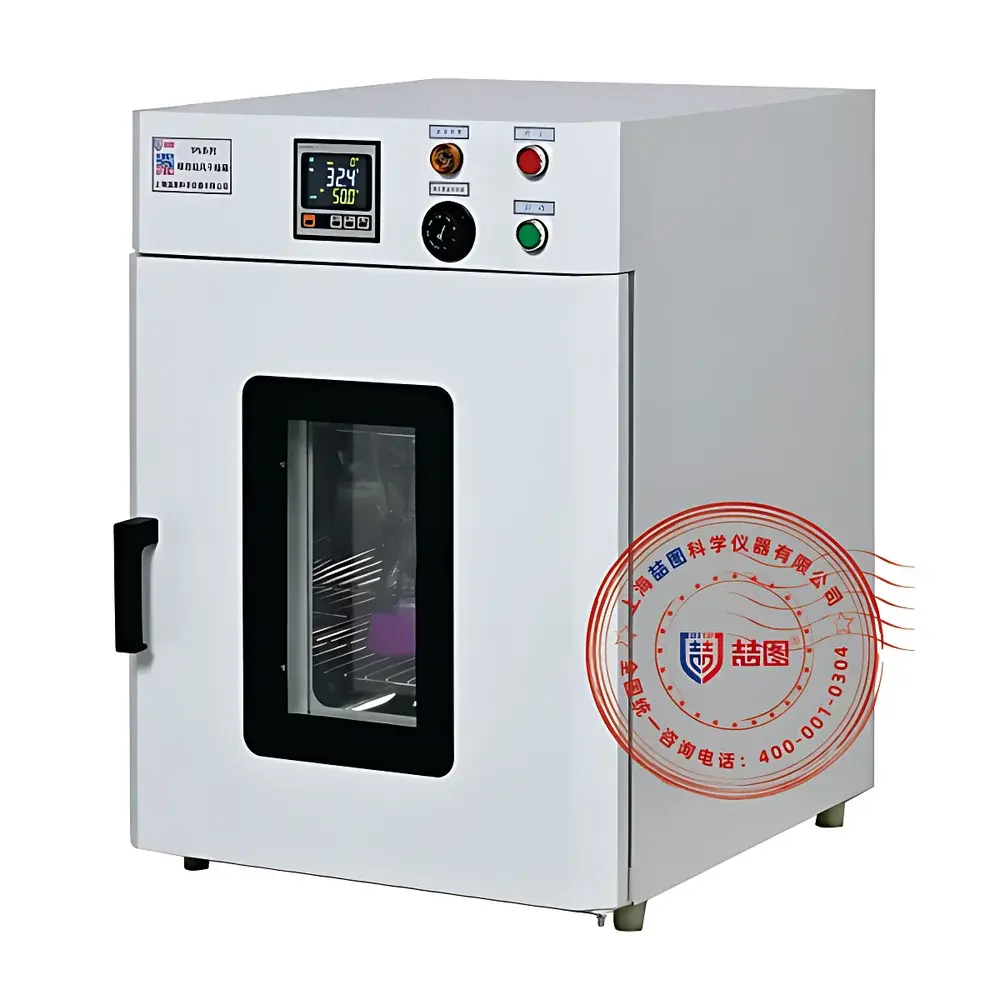
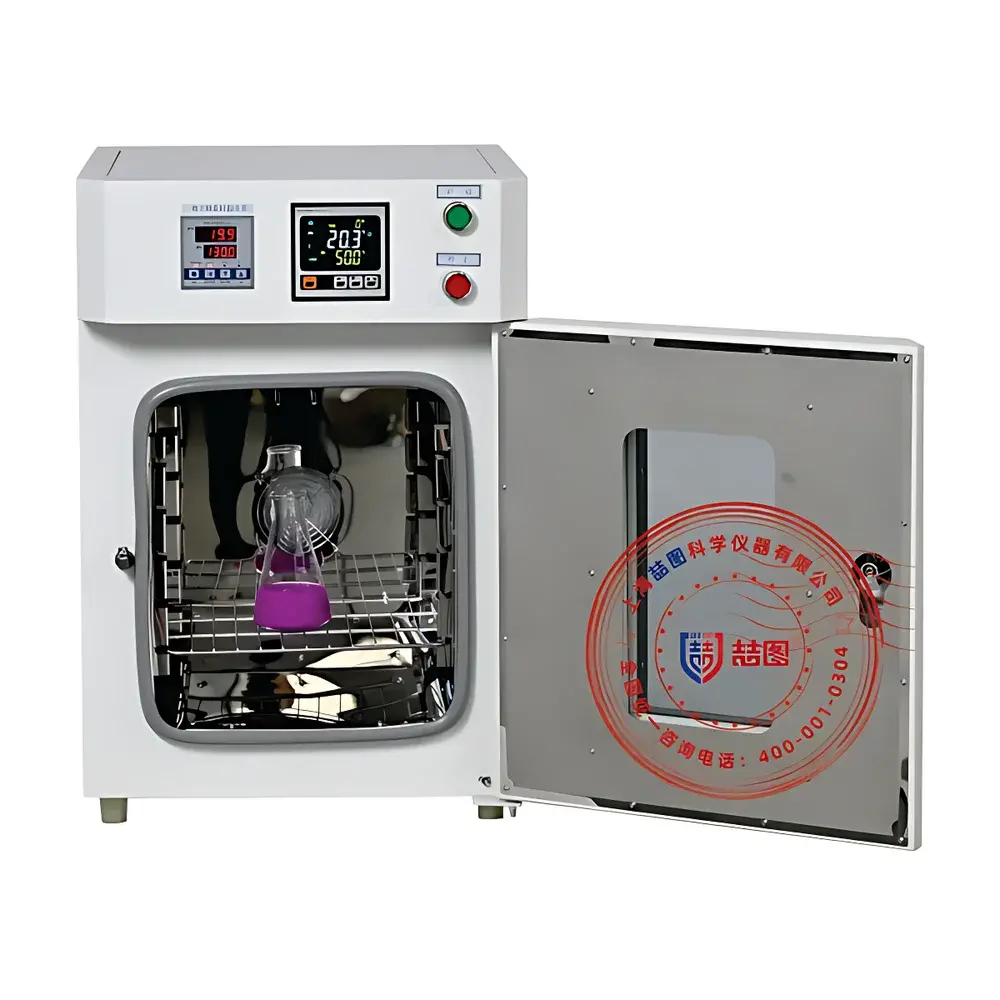
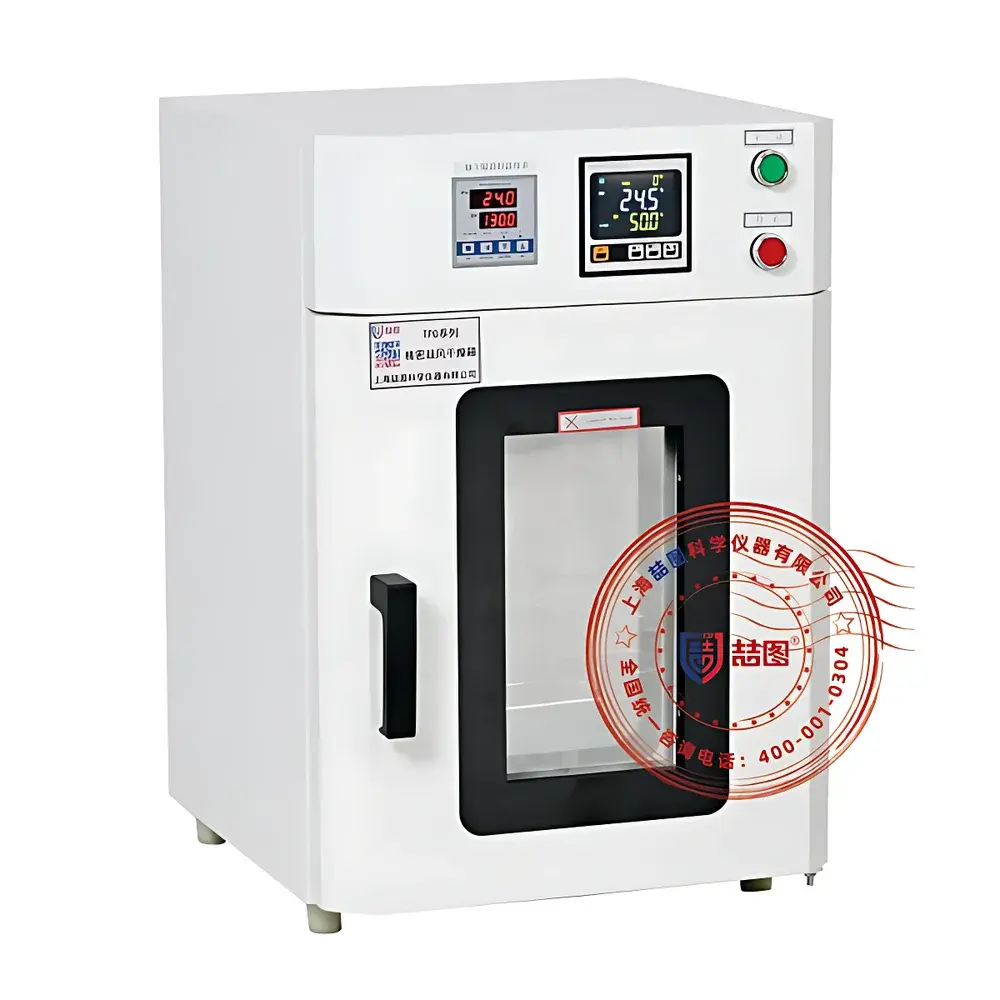
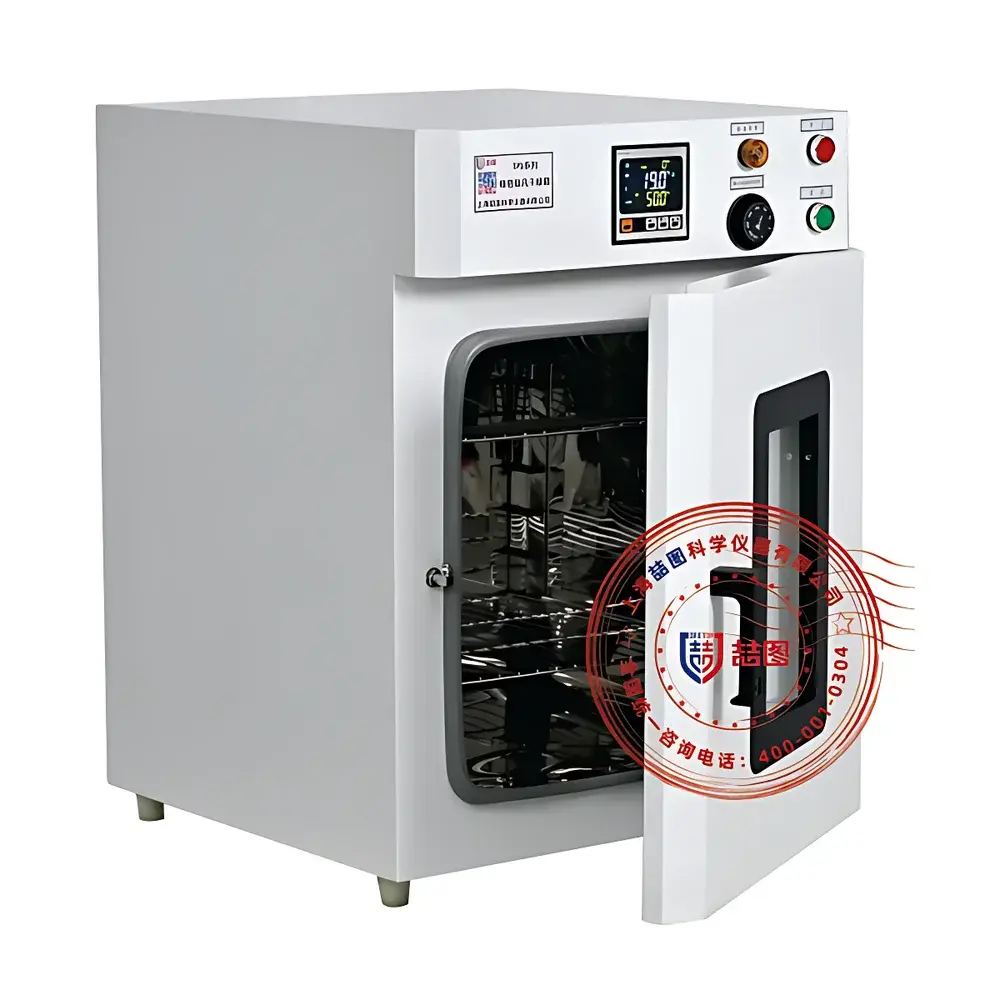
DRETOP TPG-F75A Precision Forced-Air Drying Oven
| Brand | DRETOP |
|---|---|
| Origin | Shanghai, China |
| Manufacturer Type | Direct Manufacturer |
| Product Category | Domestic |
| Model | TPG-F75A |
| Instrument Type | Precision Drying Oven |
| Temperature Range | RT+10°C to 250°C |
| Temperature Uniformity | ±1.5°C (at 100°C) |
| Temperature Fluctuation | ±0.2°C |
| Temperature Resolution | 0.1°C |
| Internal Chamber Dimensions (W×D×H) | 400×400×450 mm |
| External Dimensions (W×D×H) | 545×685×766 mm |
| Chamber Material | Stainless Steel (SUS304) |
| Heating Method | Forced-Air Convection (Hot Air Circulation) |
| Working Ambient Temperature | +5°C to +40°C |
| Power Input | 1550 W |
| Rated Volume | 75 L |
| Standard Shelving | 2 Adjustable Stainless Steel Trays |
| Safety Features | Dual Independent Temperature Limiters, Over-Temperature Alarm, Leakage & Overload Protection, Data Retention After Power Failure |
| Optional Interfaces | RS485, USB, Test Port, Programmable Controller |
Overview
The DRETOP TPG-F75A Precision Forced-Air Drying Oven is an engineered thermal processing instrument designed for high-reproducibility drying, curing, sterilization, and pre-conditioning applications in regulated laboratory and industrial environments. Utilizing a robust forced-air convection system with optimized airflow distribution, the oven maintains precise thermal control across its 75 L stainless steel chamber (400 × 400 × 450 mm). Its microprocessor-based PID temperature controller delivers a resolution of 0.1°C, a fluctuation tolerance of ±0.2°C, and uniformity of ±1.5°C at 100°C — performance metrics aligned with ISO 17025-compliant calibration practices and widely accepted in QC/QA workflows. Unlike natural-convection ovens, the TPG-F75A employs a high-temperature-rated centrifugal blower and multi-directional ducted air channels to eliminate thermal stratification, ensuring rapid heat-up times and spatial consistency critical for ASTM D2240 (Shore hardness conditioning), ISO 527 (polymer tensile specimen conditioning), or USP dry-heat sterilization validation protocols.
Key Features
- Microprocessor-controlled PID temperature regulation with dual-stage over-temperature protection: primary controller + independent mechanical limiter for fail-safe operation
- Large-format backlit LCD display showing real-time temperature, setpoint, elapsed time, and diagnostic fault codes (e.g., E01 = sensor open circuit, E02 = heater failure)
- Double-layer tempered glass observation window with reinforced silicone gasket seal, enabling visual monitoring without thermal loss or safety compromise
- Adjustable and removable stainless steel (SUS304) shelving system — load capacity up to 15 kg per shelf, compatible with standard ISO/IEC 17025 traceable calibration plates
- High-efficiency hot-air circulation architecture: low-noise, continuous-duty motor; aerodynamically shaped impeller; rear-mounted heating elements with SSR (Solid-State Relay) power modulation
- Electrostatically coated carbon steel exterior and seamless welded stainless steel interior — corrosion-resistant, non-porous, and compliant with GLP cleaning validation requirements
- Configurable timer function (1–9999 minutes) with auto-shutdown and parameter memory retention during unexpected power interruption
Sample Compatibility & Compliance
The TPG-F75A accommodates a broad range of sample formats including Petri dishes, crucibles, metal test coupons, polymer specimens, electronic PCB assemblies, and pharmaceutical excipient batches. Its chamber geometry supports simultaneous placement of multiple ISO-standard reference materials for uniformity mapping per IEC 60068-2-2. The unit meets CE marking requirements for electrical safety (EN 61000-6-3, EN 61000-6-4) and conforms to general-purpose laboratory equipment standards under ISO/IEC 17025 clause 6.4.1 (equipment suitability). While not certified for Class II biological safety or explosion-proof operation, it is routinely deployed in GMP-aligned environments for raw material drying, stability testing per ICH Q1A(R2), and moisture content determination (ASTM E1868). All internal surfaces are accessible for swab sampling and residue verification per FDA guidance on cleaning validation.
Software & Data Management
The base configuration includes embedded firmware supporting local data logging (temperature history, alarm events, runtime statistics) stored in non-volatile memory. Optional RS485 interface enables integration into centralized SCADA or LIMS platforms using Modbus RTU protocol. USB port supports firmware updates and export of CSV-formatted temperature logs for audit trail generation. When equipped with the optional programmable controller, users can define multi-step thermal profiles (up to 30 segments), assign unique batch IDs, and generate timestamped reports compliant with FDA 21 CFR Part 11 requirements — including electronic signatures, audit trails, and user-level access controls. Data integrity safeguards include write-protection modes, cyclic redundancy checks (CRC), and automatic backup upon power cycle.
Applications
- Pre-drying of analytical samples prior to gravimetric moisture analysis (ASTM D2231, ISO 787-2)
- Conditioning of polymeric composites and elastomers for mechanical testing (ISO 291, ASTM D618)
- Thermal aging studies of aerospace sealants and adhesives per MIL-STD-810G Method 501.6
- Drying of filter membranes and chromatography media in environmental laboratories
- Curing of powder-coated substrates and printed circuit board conformal coatings
- Stability chamber qualification (IQ/OQ) as auxiliary equipment for long-term storage simulation
- Residue removal from glassware and metal tools in cleanroom maintenance workflows
FAQ
What is the maximum operating temperature of the TPG-F75A?
The unit is rated for continuous operation up to 250°C. It is not designed for 300°C service — that capability is reserved for the TPG-F75B variant.
Does the oven support external data acquisition via analog output?
No analog voltage/current output is provided by default. However, the RS485 interface allows digital temperature streaming at 1 Hz resolution to third-party DAQ systems.
Can the internal fan speed be adjusted manually?
Yes — an optional front-panel fan speed regulator is available as an add-on accessory, permitting airflow modulation for delicate samples or low-mass loads.
Is the stainless steel chamber electropolished or passivated?
The SUS304 chamber undergoes standard acid pickling and passivation per ASTM A967, but electropolishing is not included in the base specification.
How is temperature uniformity verified during factory calibration?
Each unit undergoes a 3-point, 9-sensor uniformity test per VDI/VDE 2632 Sheet 2 at 100°C, with full report supplied upon request.



