
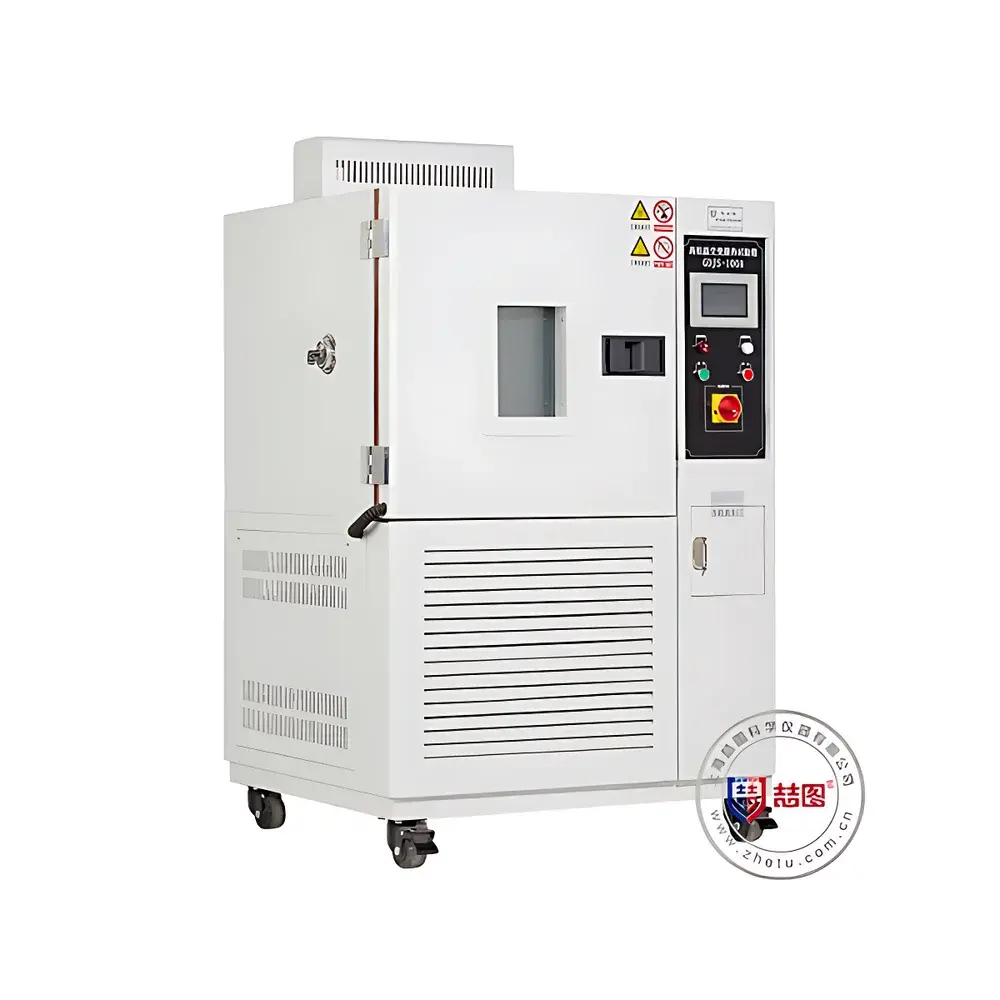
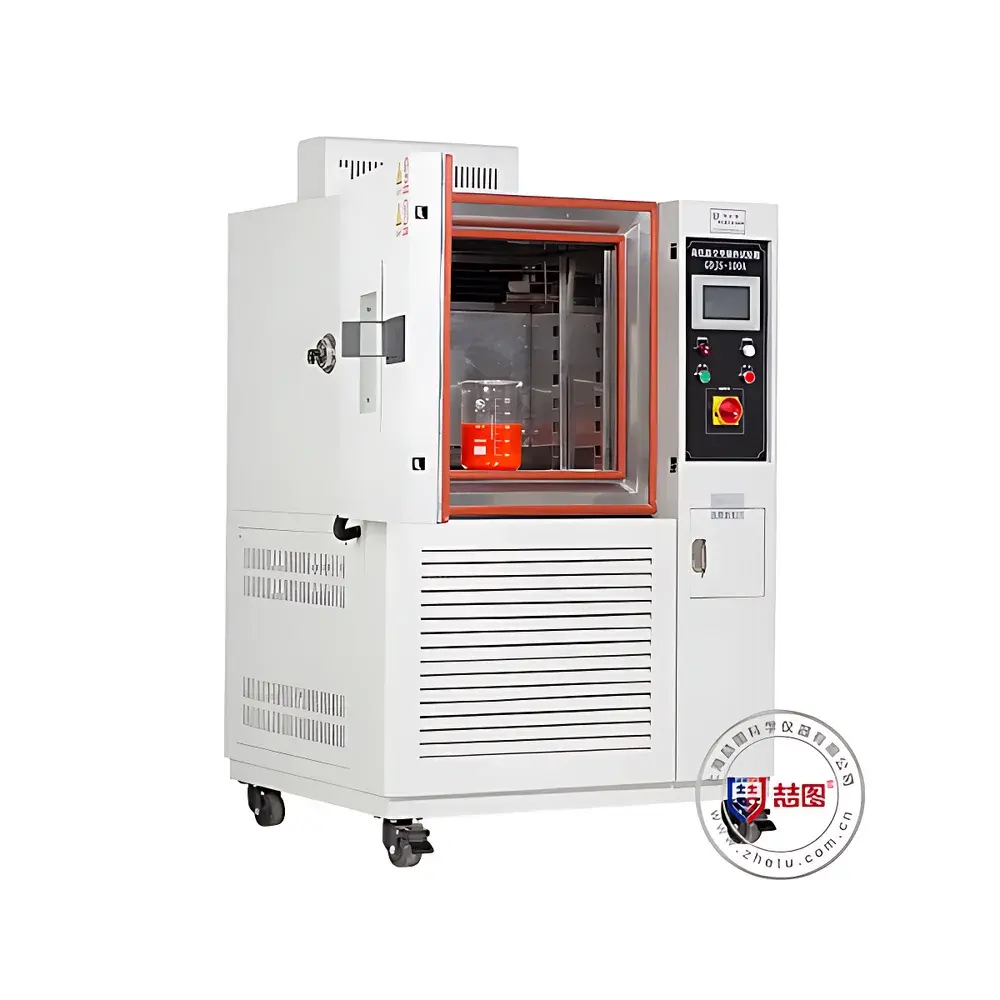
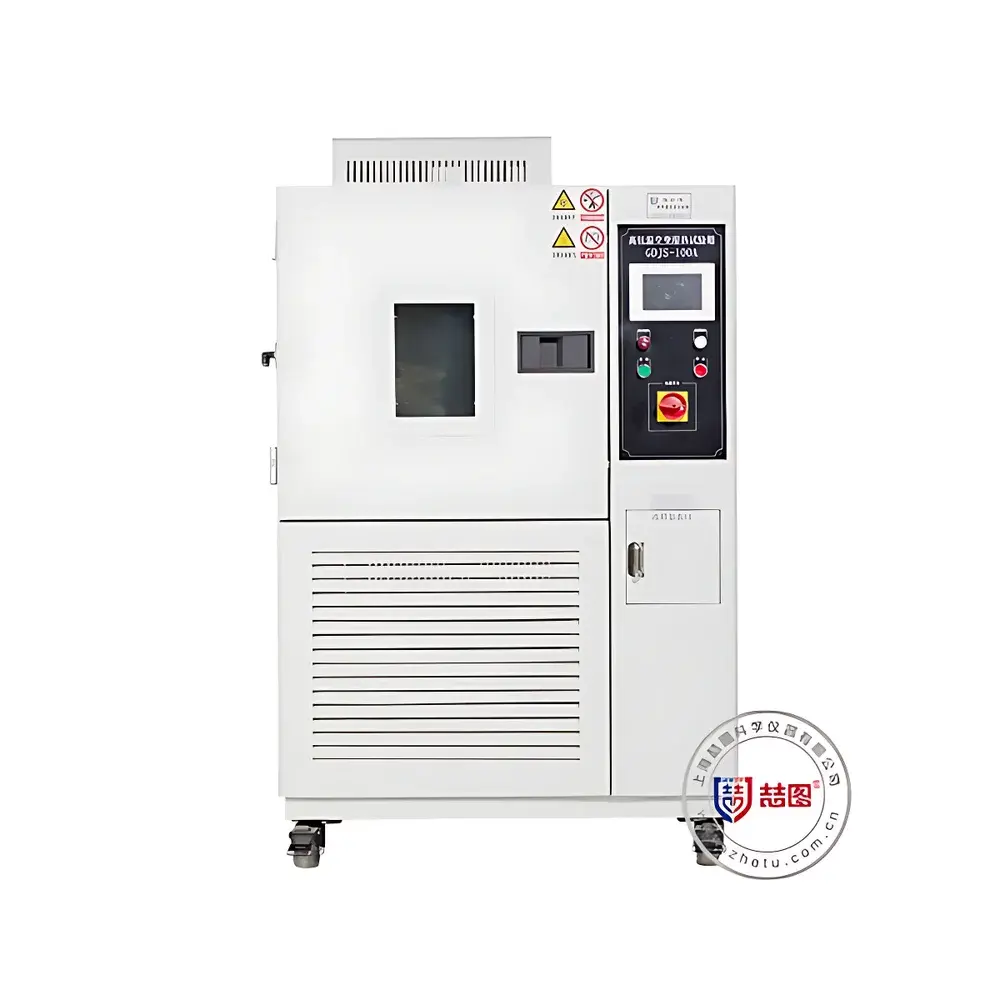
DRETOP THL-D225-II High-Low Temperature Environmental Test Chamber
| Brand | DRETOP |
|---|---|
| Origin | Shanghai, China |
| Manufacturer Type | Direct Manufacturer |
| Model | THL-D225-II |
| Temperature Range | -80 °C to +150 °C |
| Refrigeration Method | Hermetic Compressor Cooling |
| Explosion-Proof | Standard (Non-Explosion-Proof) |
| Temperature Fluctuation | ±0.5 °C |
| Temperature Uniformity | ≤2 °C |
| Heating Rate | 1–3 °C/min (Adjustable) |
| Cooling Rate | 0.7–1 °C/min (Adjustable) |
| Interior Dimensions (W×D×H) | 600 mm × 500 mm × 750 mm |
| Control Interface | Color Touchscreen with Multi-Program Capability |
| Power Supply | AC 220 V / 380 V, 50 Hz |
| Input Power | 6000 W / 6800 W |
| Safety Protections | Over-Temperature, Over-Current, Compressor/Fan Overload, Leakage Protection |
| Compliance | Designed for ASTM D3574, ISO 16750-4, IEC 60068-2-1, IEC 60068-2-2, MIL-STD-810G (Temperature Variation), and GLP/GMP-aligned data integrity practices |
Overview
The DRETOP THL-D225-II High-Low Temperature Environmental Test Chamber is an engineered solution for precise, repeatable thermal stress evaluation of materials and components under controlled cyclic temperature conditions. Based on forced-air convection architecture with dual-stage refrigeration and P.I.D. feedback-controlled heating, the chamber replicates real-world thermal exposure profiles—including rapid transitions between extreme cold (-80 °C) and high heat (+150 °C)—to assess performance degradation, dimensional stability, seal integrity, and functional reliability. Its design adheres to fundamental principles of environmental simulation: uniform airflow distribution, minimized thermal lag, and minimal thermal overshoot during ramp phases. The THL-D225-II is not a general-purpose storage unit but a validated test instrument intended for use in product qualification, design verification, and compliance-driven testing protocols across regulated industries.
Key Features
- High-resolution 7-inch color touchscreen interface supporting up to 1000 programmable test sequences, each containing up to 100 individual segments—enabling complex thermal profiles such as ramp-hold-soak cycles, stepwise gradients, and multi-zone dwell periods.
- Multi-language UI (English/Chinese) with hierarchical password protection (administrator/operator/user levels) to ensure audit-ready access control and prevent unauthorized parameter modification.
- Dual-stage cascade refrigeration system using environmentally compliant R404A/R23 refrigerant blends, featuring imported hermetic compressors, optimized evaporator-condenser coupling, and low-noise centrifugal circulation fans.
- Double-layer tempered glass observation window with integrated anti-frost heating film and LED interior lighting—prevents condensation-induced short circuits while enabling continuous visual monitoring without thermal disturbance.
- Nichrome alloy heating elements combined with precision-balanced forced-air ducting deliver consistent thermal distribution; measured uniformity remains ≤2 °C across the full working volume (600 × 500 × 750 mm).
- Robust sealing system using high-elasticity silicone gaskets ensures long-term integrity over repeated thermal cycling—from cryogenic contraction to high-temperature expansion—without adhesion loss or gas leakage.
- Independent control loops for heating, cooling, and blower systems reduce cross-interference, improve response fidelity, and extend component service life through load balancing and duty-cycle optimization.
- Standard 50 mm diameter test port (with rubber plug and clamping collar) supports live electrical, pneumatic, or signal feedthroughs for in-situ monitoring of powered devices under thermal stress.
- Comprehensive safety architecture including over-temperature cutoff, compressor discharge temperature monitoring, fan failure detection, ground-fault interruption, and automatic power recovery after grid interruption.
Sample Compatibility & Compliance
The THL-D225-II accommodates samples up to 225 L nominal volume, with two adjustable stainless-steel shelves (load capacity: 15 kg per shelf, uniformly distributed). It supports non-hazardous solid and assembled electronic modules, polymer housings, automotive ECUs, PCBAs, battery packs (non-vented), optical assemblies, and mechanical fasteners. The chamber meets essential requirements of ISO 16750-4 (road vehicles—electrical disturbances), IEC 60068-2-1 (cold testing), IEC 60068-2-2 (dry heat), ASTM D3574 (flexible cellular materials), and MIL-STD-810G Method 501.6/502.6 (temperature extremes and variation). While not intrinsically rated for Class I Div 1 environments, its standard configuration complies with UL 61010-1 and CE marking directives for laboratory equipment. Data logging functionality supports traceability aligned with GLP and GMP documentation standards, including time-stamped event logs and user-action audit trails.
Software & Data Management
Onboard firmware enables real-time graphing of chamber setpoint, actual temperature, and ramp rate on the touchscreen display. All test data—including timestamps, segment completion status, deviation alerts, and safety event triggers—are stored internally (≥10,000 records) and exportable via USB 2.0 to CSV or Excel-compatible formats. Optional RS485 Modbus RTU communication allows integration into centralized SCADA or LIMS platforms for remote supervision, alarm forwarding, and automated report generation. Firmware supports 21 CFR Part 11-compliant user authentication and electronic signature workflows when paired with validated third-party software; raw data files include embedded checksums and immutable metadata headers to ensure evidentiary integrity during regulatory review.
Applications
This chamber serves critical roles in pre-compliance screening and formal qualification testing across multiple sectors: accelerated aging of elastomeric seals and adhesives; thermal shock evaluation of solder joints and BGA interconnects; validation of thermal management systems in EV battery modules; environmental stress screening (ESS) of aerospace avionics; cold-start performance assessment of automotive sensors and actuators; moisture resistance testing of encapsulated optoelectronic devices; and material coefficient-of-thermal-expansion (CTE) correlation studies. Universities and national metrology institutes utilize it for inter-laboratory round-robin comparisons and reference material stability assessments under defined thermal cycling regimens.
FAQ
What is the maximum sample weight the THL-D225-II can accommodate?
The internal chamber supports up to 30 kg total load across both shelves, provided mass is evenly distributed and does not obstruct airflow grilles or sensor placement.
Can the chamber perform thermal shock testing?
No—it is configured for controlled ramp-and-soak profiles only. For true thermal shock (e.g., air-to-air or liquid-to-air transfer), a dedicated thermal shock tester with separate hot/cold zones is required.
Is remote monitoring supported out of the box?
Yes—via optional RS485 Modbus interface or USB host mode; no additional hardware is needed beyond standard industrial cabling and compatible host software.
Does the system meet FDA or ISO 13485 requirements for medical device validation?
The THL-D225-II provides the physical platform and data traceability features necessary for IQ/OQ execution; however, final validation must be performed by the end user per their quality management system and applicable Annex 11 or ISO 13485 clause 7.5.10 requirements.
What maintenance intervals are recommended?
Compressor oil inspection every 24 months; condenser coil cleaning every 6 months in dusty environments; door gasket integrity check before each qualification run; calibration of chamber sensor against NIST-traceable reference probe annually or per internal SOP.



