

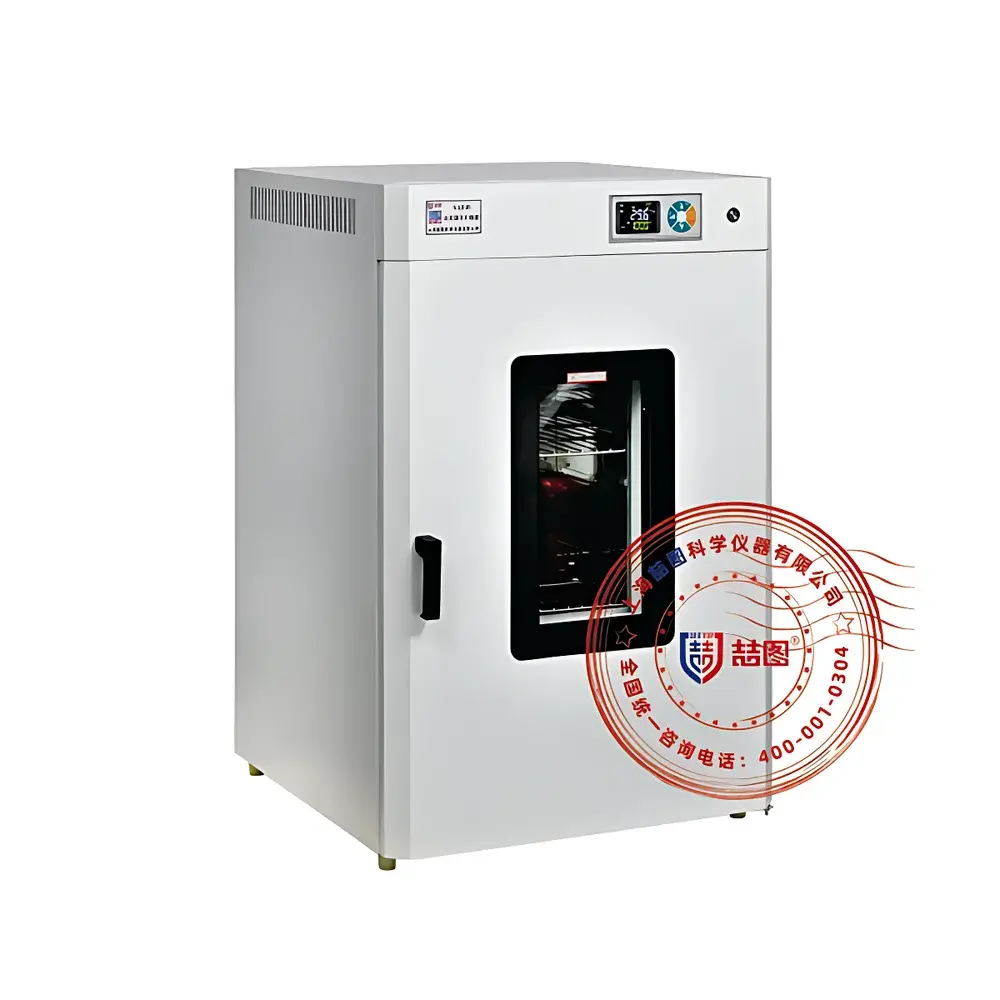
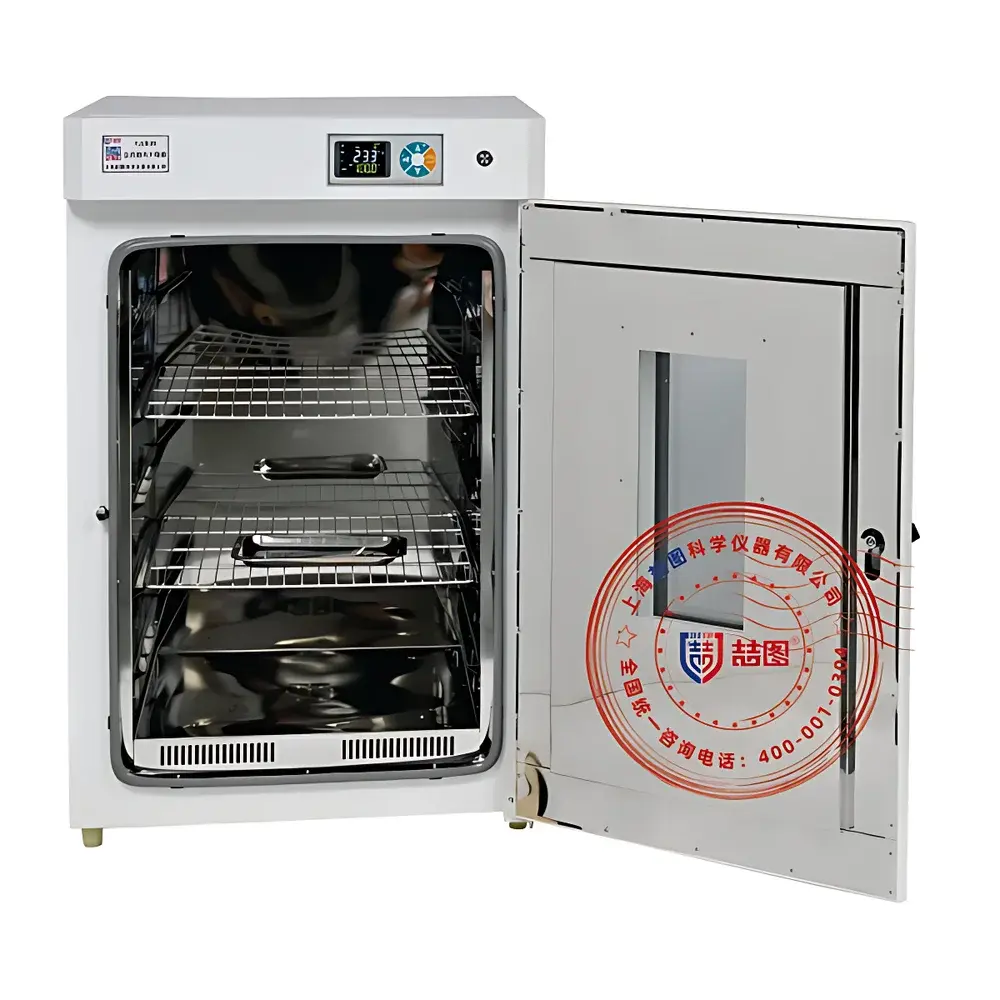
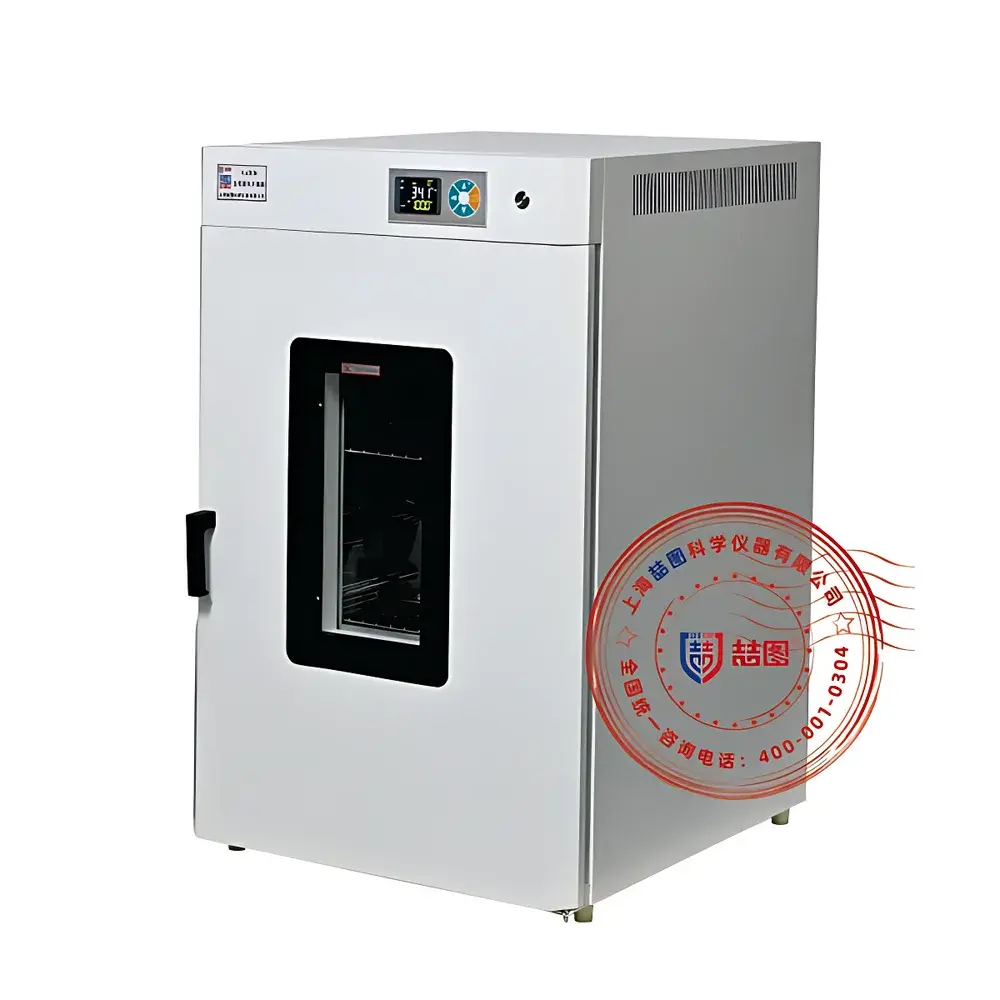
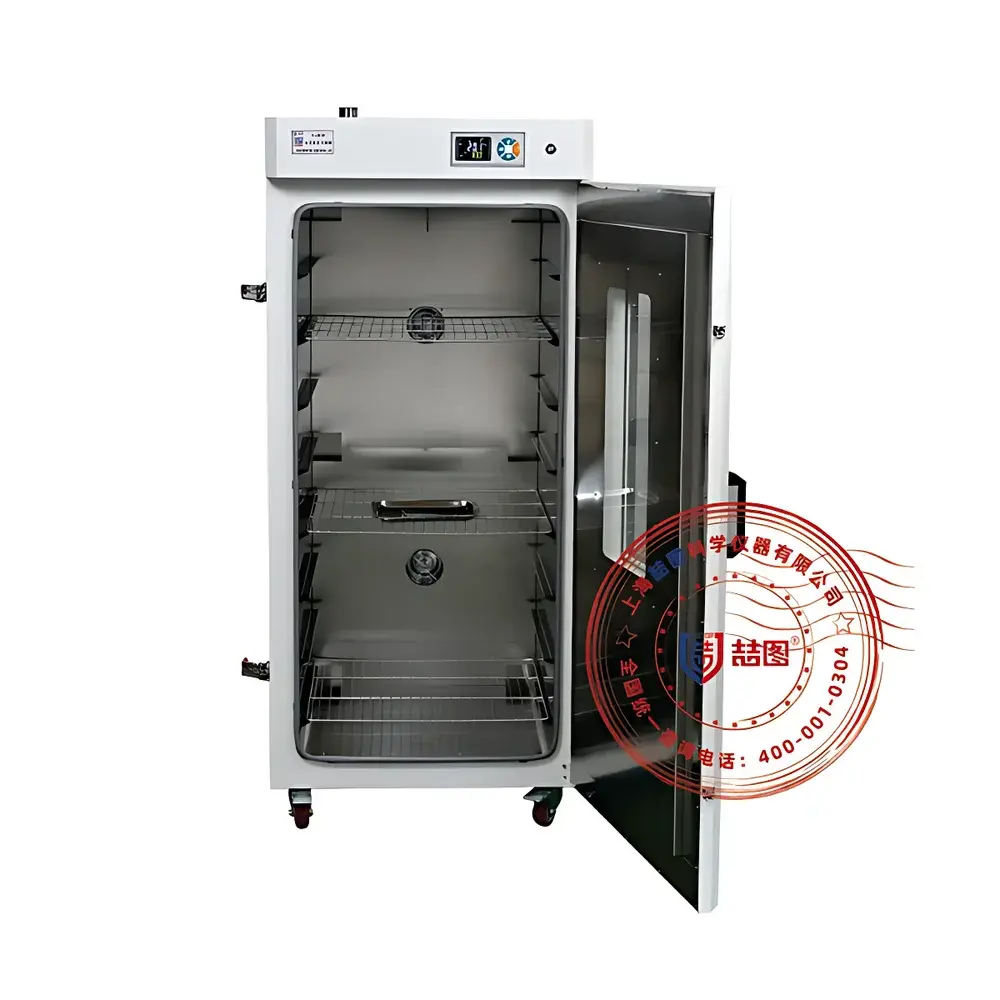
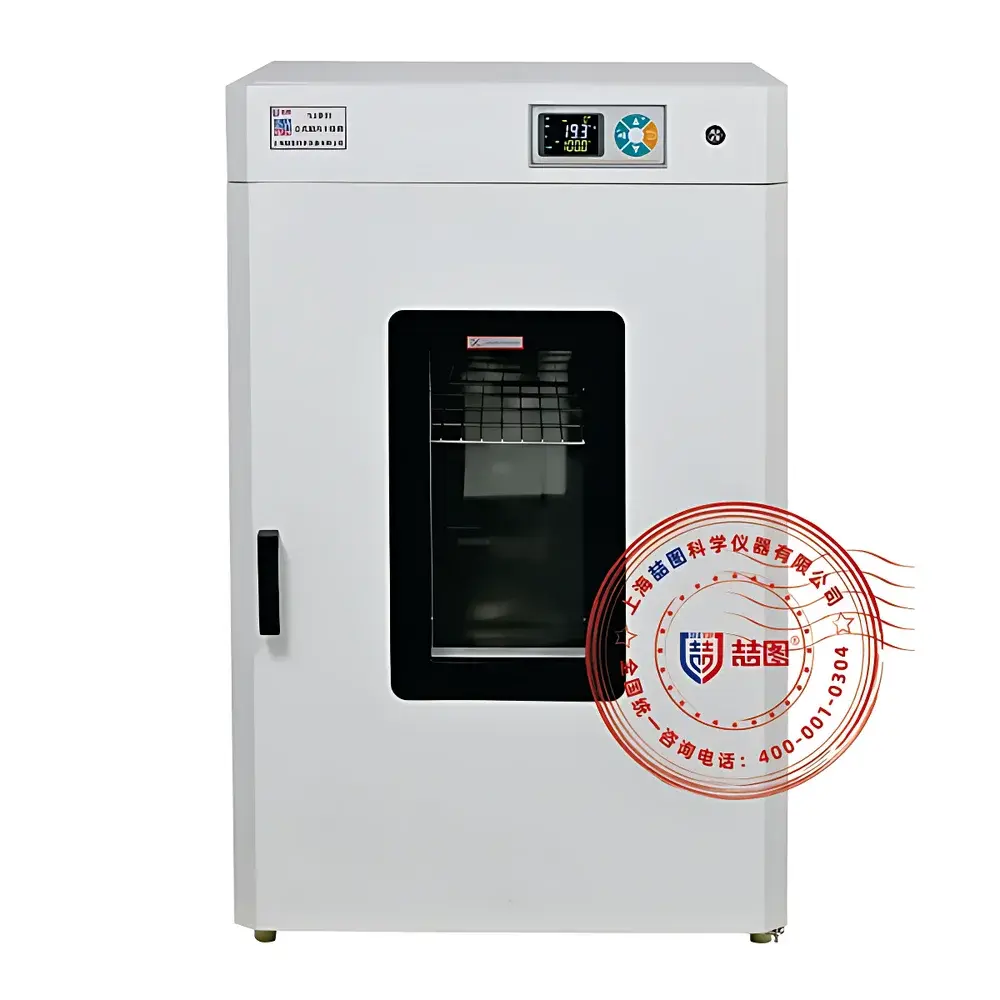
DRETOP TLG-9145A Vertical Forced-Air Drying Oven
| Brand | DRETOP |
|---|---|
| Origin | Shanghai, China |
| Manufacturer Type | Direct Manufacturer |
| Product Category | Domestic |
| Model | TLG-9145A |
| Instrument Type | High-Temperature Oven |
| Temperature Range | RT+10°C to 300°C |
| Temperature Uniformity | ±2.5°C (empty chamber @ 100°C) |
| Temperature Fluctuation | ±0.5°C |
| Temperature Resolution | 0.1°C |
| External Dimensions | 660 × 760 × 910 mm |
| Internal Chamber Dimensions | 450 × 550 × 550 mm |
| Operating Ambient Temperature | 5–45°C |
| Interior Material | Stainless Steel (SUS304) |
| Heating Method | Forced-Air Circulation |
Overview
The DRETOP TLG-9145A Vertical Forced-Air Drying Oven is an engineered solution for precise, repeatable thermal processing in research laboratories, quality control environments, and industrial R&D settings. Based on the principle of forced convection heating—where a high-temperature-rated centrifugal blower circulates heated air through optimized internal ductwork—the oven ensures rapid thermal response and uniform temperature distribution across its 140 L stainless steel chamber. Designed for applications requiring stable thermal conditions over extended durations—including moisture removal, pre-baking of electronic components, polymer curing, stability testing per ICH guidelines, and residual solvent evaporation—the TLG-9145A complies with fundamental design expectations for Class II laboratory ovens under ISO 17025-accredited workflows. Its vertical footprint minimizes benchtop space usage while maintaining accessibility for loading/unloading large or stacked samples.
Key Features
- Microprocessor-based P.I.D. temperature controller with digital LCD display, offering real-time three-color screen visualization of setpoint, actual temperature, and elapsed time
- Self-diagnostic system with alphanumeric fault code display for rapid troubleshooting and reduced instrument downtime
- Dual-stage rotary locking mechanism with high-density silicone rubber gasket (heat-resistant up to 350°C), ensuring long-term sealing integrity and energy efficiency
- Double-layer tempered glass observation window with anti-fog coating, enabling continuous visual monitoring without thermal disturbance
- Adjustable, slide-out stainless steel shelves (4 standard positions; fully removable and autoclavable) with reinforced load capacity up to 15 kg per shelf
- Back-mounted exhaust port with optional ducting interface for controlled venting of volatile or odorous compounds—compatible with standard 50 mm laboratory fume extraction systems
- Power-loss recovery function that retains user-defined parameters and resumes operation upon grid restoration, supporting GLP-compliant continuity of thermal protocols
Sample Compatibility & Compliance
The TLG-9145A accommodates a broad range of sample formats—including Petri dishes, crucibles, PCB assemblies, metal coupons, polymer films, and packaged pharmaceutical intermediates—within its corrosion-resistant SUS304 chamber. Its temperature uniformity specification (±2.5°C at 100°C, empty) meets typical acceptance criteria for ASTM E145-22 (Standard Specification for Gravity-Convection and Forced-Ventilation Ovens) and aligns with common internal validation thresholds used in ISO/IEC 17025 calibration labs. While not certified to UL 61010-1 or IEC 61010-1 out-of-the-box, the unit incorporates essential safety elements: independent mechanical overtemperature cut-off (adjustable up to 320°C), audible/visual alarm triggers for deviation >±5°C from setpoint, and grounded chassis construction compliant with CE low-voltage directive requirements.
Software & Data Management
The base configuration includes a programmable timer (1–9999 minutes) and non-volatile memory for up to 10 user-defined thermal profiles. Optional upgrades extend functionality: RS-485 Modbus RTU interface enables integration into centralized LabVantage or LabWare LIMS environments; USB data export supports CSV-formatted temperature logs for post-run analysis in Excel or MATLAB; and the optional color touchscreen controller adds multi-segment ramp-soak programming with audit trail logging compliant with FDA 21 CFR Part 11 requirements when paired with password-protected user roles and electronic signature capability. All firmware versions maintain backward-compatible configuration file structures to ensure long-term protocol reproducibility.
Applications
This drying oven serves validated thermal processes across multiple sectors: moisture content determination per AOAC 950.46 and USP <731>; aging studies of adhesives and coatings per ASTM D3045; pre-conditioning of test specimens prior to tensile or impact testing (ASTM D638, ISO 527); desiccation of hygroscopic reagents in analytical chemistry labs; thermal stabilization of reference standards; and accelerated shelf-life testing of medical device packaging materials (ISO 11607). Its consistent airflow dynamics and minimal thermal overshoot make it suitable for applications where gradient-induced stress must be avoided—such as annealing thin-film sensors or conditioning humidity-sensitive optical components.
FAQ
What is the maximum recommended operating temperature for continuous use?
The TLG-9145A is rated for continuous operation at up to 300°C; however, sustained use above 250°C may reduce gasket service life and requires verification of sample compatibility with prolonged exposure to convective heat.
Can the oven be validated for GMP environments?
Yes—when equipped with the optional data logger module and touchscreen controller, the system supports IQ/OQ documentation packages and satisfies core elements of Annex 15 and EU GMP Chapter 3 for thermal equipment qualification.
Is the interior chamber passivated or electropolished?
The standard SUS304 interior is mechanically polished to Ra ≤ 0.8 µm but not electropolished; electropolishing is available as a custom order for pharmaceutical-grade corrosion resistance.
Does the unit include a calibration certificate?
Factory calibration is performed using NIST-traceable PT100 probes; a basic calibration report is included. UKAS-accredited certificates are available upon request with additional lead time and cost.
What maintenance intervals are recommended?
Blower motor inspection and gasket integrity check every 6 months; full chamber cleaning with citric acid solution after high-salt or high-residue applications; annual verification of temperature uniformity and controller accuracy per ISO/IEC 17025 internal procedure templates.



