
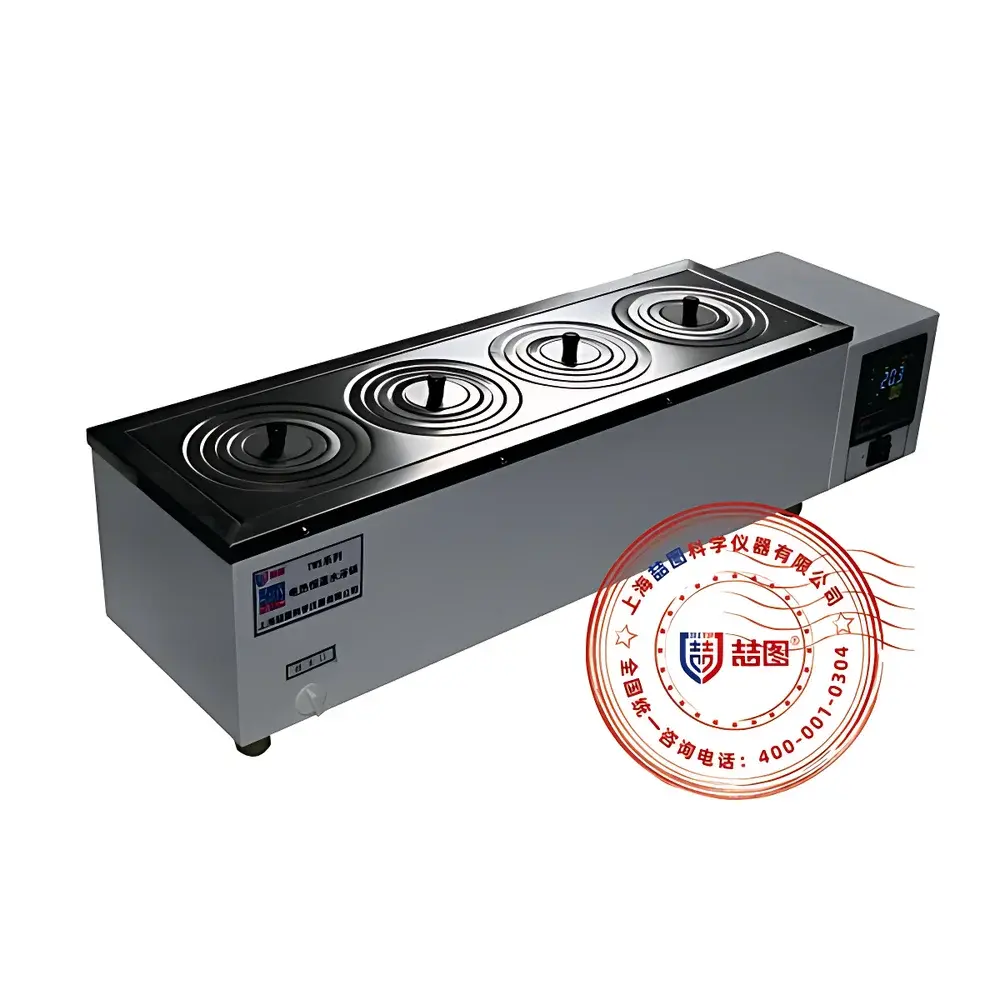
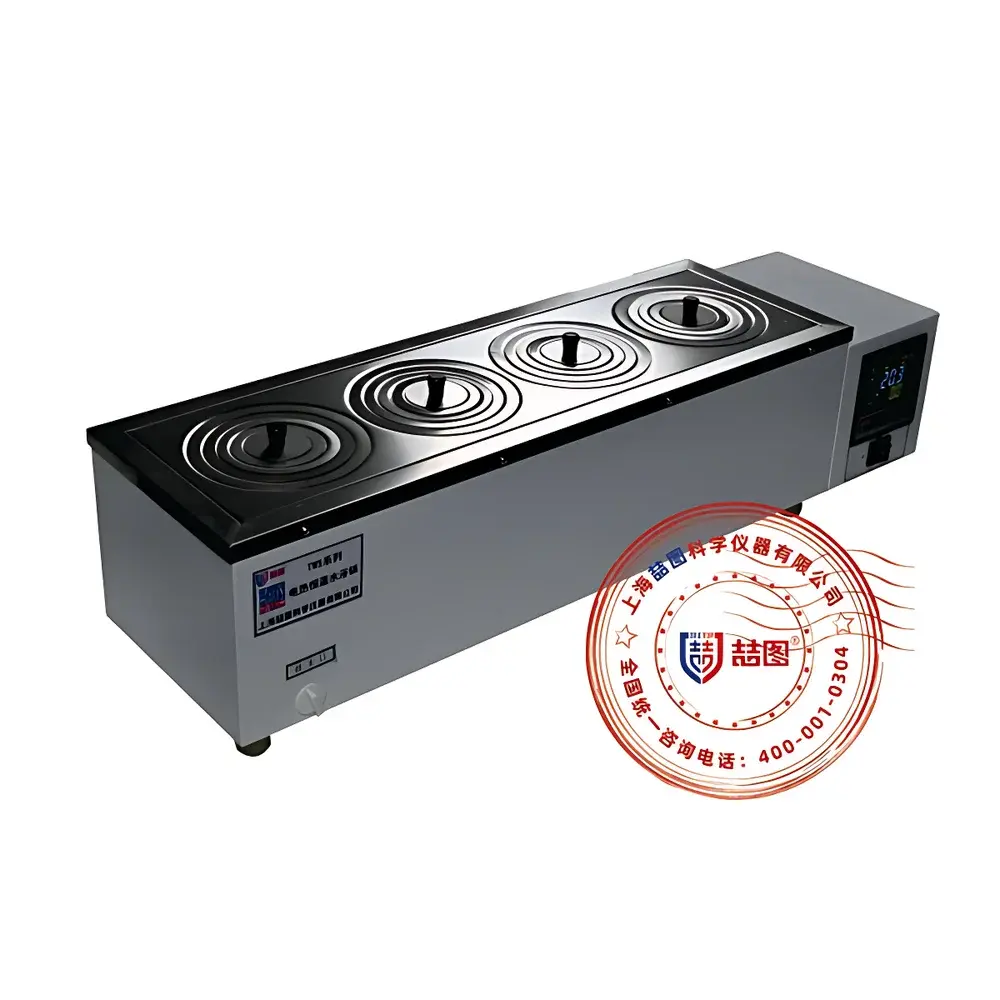
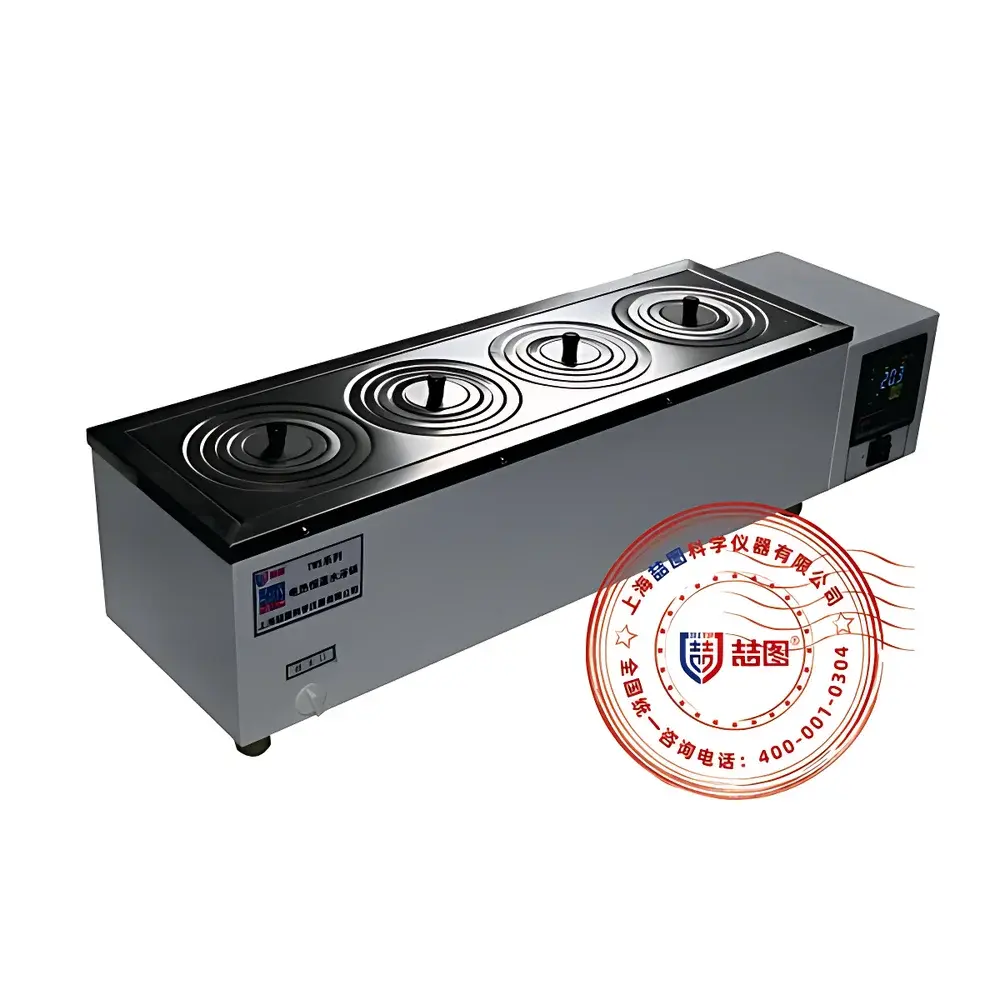
DRETOP TWS-14 Precision Electric Constant-Temperature Water Bath
| Brand | DRETOP |
|---|---|
| Origin | Shanghai, China |
| Manufacturer Type | Direct Manufacturer |
| Product Category | Domestic |
| Model | TWS-14 |
| Operating Temperature Range | RT + 5°C to 100°C |
| Temperature Control Accuracy | ±0.1°C |
| Bath Capacity | 9.9 L |
| Heating Power | 1000 W |
| External Dimensions (W×D×H) | 735 × 200 × 210 mm |
Overview
The DRETOP TWS-14 Precision Electric Constant-Temperature Water Bath is a laboratory-grade thermal stabilization instrument engineered for reproducible, stable heat transfer via liquid-phase convection. It operates on the principle of resistive heating combined with closed-loop PID temperature regulation, delivering uniform thermal energy distribution across the stainless-steel water bath chamber. Designed for continuous-duty operation in analytical, biochemical, and quality control environments, the TWS-14 maintains setpoint stability within ±0.1°C under standard ambient conditions (20–25°C, no drafts), making it suitable for applications requiring strict thermal compliance—including enzymatic assays, sample incubation prior to HPLC or GC analysis, dissolution testing per USP , and controlled evaporation of volatile solvents. Its construction adheres to fundamental safety and performance expectations outlined in IEC 61010-1 (Safety Requirements for Electrical Equipment for Measurement, Control, and Laboratory Use) and supports alignment with GLP and GMP documentation workflows.
Key Features
- Microprocessor-based PID temperature controller with dual digital display—simultaneously showing setpoint and real-time bath temperature—with 0.1°C resolution and programmable timer (1–9999 minutes).
- High-stability platinum resistance sensor (PT100-class equivalent) integrated into the bath floor for rapid thermal response and minimal hysteresis.
- Stainless-steel inner chamber (304 grade) with electropolished finish and optional PTFE-coated variant (ASTM B117 certified for 500-hour salt-spray resistance), ensuring long-term corrosion resistance against acidic, alkaline, or saline solutions.
- Integrated anti-dry-burn protection: automatic heater cutoff triggered by ultrasonic-level sensing when water volume falls below minimum operational threshold; accompanied by audible alarm and visual LED indicator.
- Intelligent power-loss recovery: embedded non-volatile memory retains all active parameters—including temperature setpoint, elapsed time, and timer status—enabling seamless resumption after grid interruption or unexpected shutdown.
- Ergonomic design: front-mounted drain valve with quick-release coupling, powder-coated steel exterior, and removable perforated stainless-steel support rack compatible with multiple flask diameters via interchangeable silicone-ringed collars.
Sample Compatibility & Compliance
The TWS-14 accommodates standard laboratory glassware up to Ø150 mm (e.g., 1000 mL round-bottom flasks, 500 mL Erlenmeyer flasks, and multi-well plates mounted on custom platforms). Its open-bath configuration allows direct immersion of reaction vessels, probe thermometers, or external sensors. The unit complies with electromagnetic compatibility (EMC) requirements per EN 61326-1 and meets Class II insulation standards for operator safety. While not intrinsically rated for hazardous locations, its sealed electronics compartment and drip-proof housing meet IP20 environmental protection criteria. For regulated environments, audit trails can be generated manually or via optional RS485/Modbus RTU interface (when paired with third-party SCADA systems), supporting traceability under FDA 21 CFR Part 11 when combined with validated electronic lab notebook (ELN) integration.
Software & Data Management
The TWS-14 operates as a standalone instrument with no embedded operating system. All control logic resides in a dedicated microcontroller unit (MCU) with firmware calibrated at factory using NIST-traceable reference standards. Optional accessories include a 30-segment programmable controller (sold separately) enabling ramp-soak profiles for multi-stage thermal protocols—for example, simulating accelerated stability conditions per ICH Q1A(R3). Data logging requires external USB or RS232-connected chart recorders or PC-based acquisition software (e.g., LabVIEW or DASYLab). Raw temperature output is available as analog 0–5 V or 4–20 mA signals upon request, facilitating integration into centralized facility monitoring systems.
Applications
- Pre-incubation of culture media and reagents prior to microbial enumeration (ISO 4833-1, AOAC 977.27).
- Controlled hydrolysis of ester-based prodrugs during pharmaceutical development.
- Constant-temperature conditioning of viscosity standards before Brookfield rheometer calibration.
- Dissolution testing of solid oral dosage forms (USP Apparatus I & II water baths).
- Thermal equilibration of calibration standards for IR spectroscopy and UV-Vis spectrophotometry.
- Enzyme kinetic studies requiring precise thermal initiation (e.g., lactate dehydrogenase activity at 37°C).
FAQ
What is the maximum recommended operating temperature for continuous use?
The TWS-14 is rated for sustained operation at 100°C; however, prolonged exposure above 95°C may accelerate evaporative loss and require more frequent refilling. For extended high-temperature protocols, use of a lid or silicone bath cover is advised.
Can the TWS-14 be used with corrosive solutions such as 10% HCl or 30% NaOH?
Standard units feature 304 stainless steel; for routine exposure to aggressive chemicals, specify the PTFE-coated variant (TWS-14-PTFE), which passes ASTM B117 500-hour neutral salt spray testing and exhibits contact-angle >110° for aqueous solutions.
Is the temperature sensor user-replaceable?
Yes—the PT100-equivalent sensor is housed in a threaded brass well and can be replaced without disassembling the bath chamber; replacement part number is DRT-SEN-TWS-01.
Does the device support remote monitoring or network connectivity?
No native Ethernet or Wi-Fi capability exists; however, analog voltage output (0–5 V) and Modbus RTU over RS485 are available as factory-configurable options for integration into building management or LIMS ecosystems.
How often should calibration verification be performed?
Per ISO/IEC 17025 recommendations, verify accuracy annually using a NIST-traceable thermometer; additional checks are advised before critical experiments or after mechanical shock or extended storage.



