
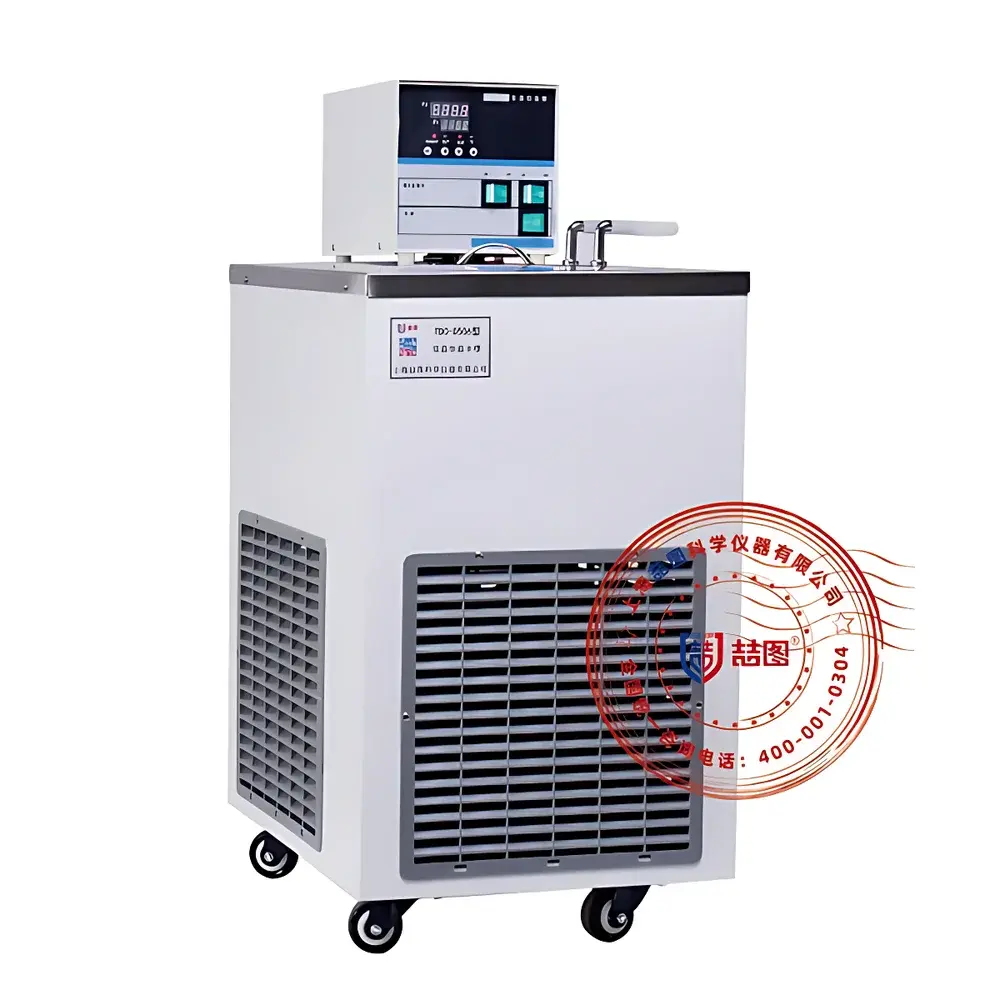
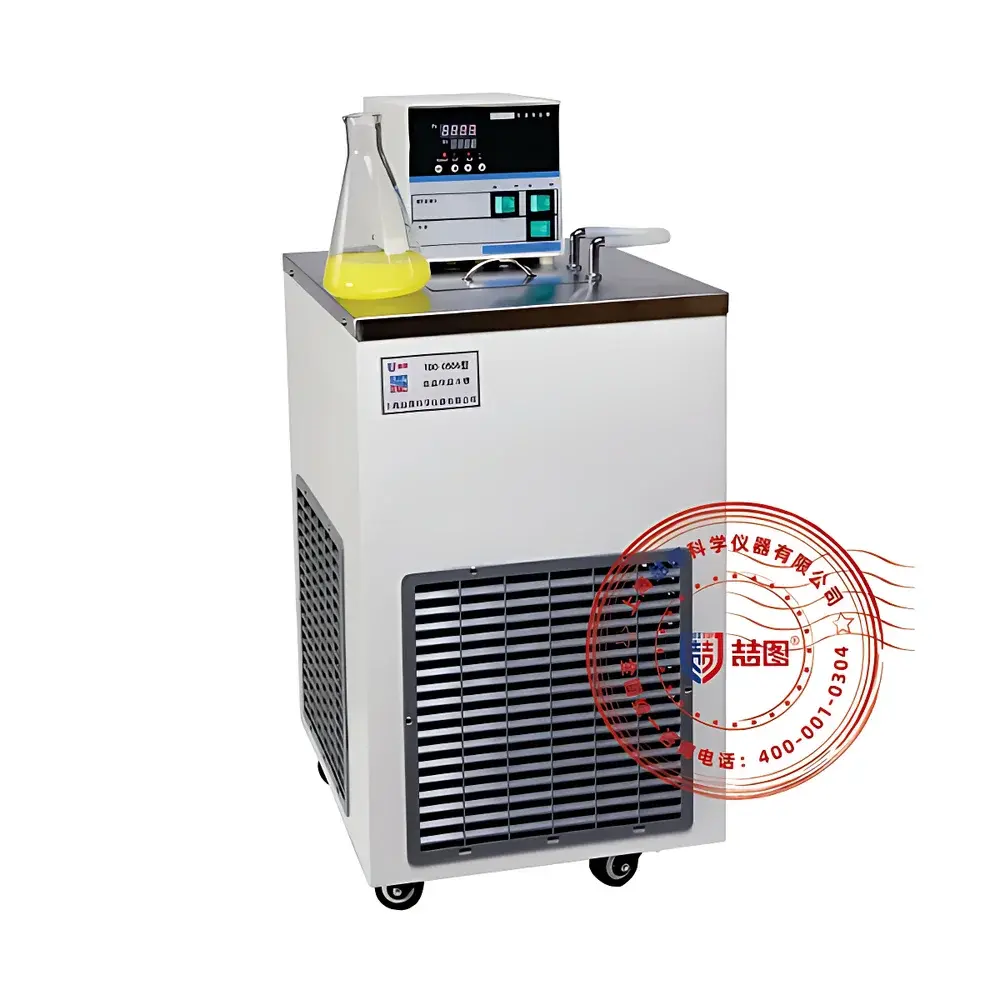
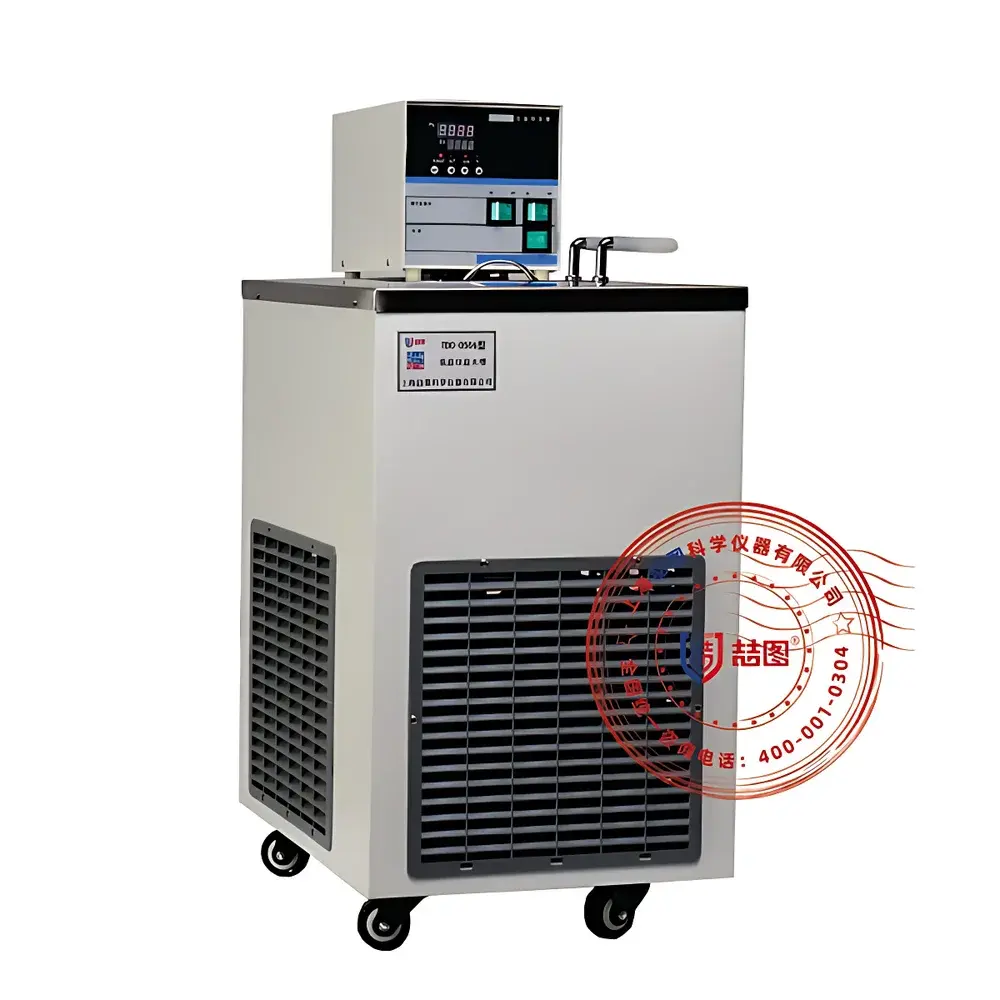
DRETOP TDCW-0510 Horizontal Low-Temperature Constant Temperature Bath
| Brand | DRETOP |
|---|---|
| Origin | Shanghai, China |
| Manufacturer Type | OEM/ODM Manufacturer |
| Product Category | Domestic |
| Model | TDCW-0510 |
| Instrument Type | Constant-Temperature Bath |
| Circulation Mode | Internal & External Circulation |
| Temperature Control | Refrigeration & Heating |
| Bath Volume | 10 L |
| Temperature Range | −5 °C to 100 °C |
| Temperature Stability | ±0.5 °C |
| Temperature Resolution | 0.1 °C |
| Input Power | 1500 W |
| Voltage | 220 V AC |
Overview
The DRETOP TDCW-0510 Horizontal Low-Temperature Constant Temperature Bath is a compact, benchtop-integrated thermal control system engineered for precision temperature maintenance across demanding laboratory and industrial applications. Utilizing a dual-mode refrigeration–heating thermodynamic cycle with a hermetically sealed compressor and PID-controlled electric heating element, the unit delivers stable, uniform thermal environments in liquid media—enabling accurate thermal conditioning of samples, reactors, analytical instrumentation, and process equipment. Its horizontal footprint minimizes bench space requirements while maintaining full accessibility to the bath chamber and circulation ports. Designed for continuous operation under variable ambient conditions, the TDCW-0510 supports both internal recirculation (for bath homogeneity) and external closed-loop circulation (for remote temperature control of reactors, condensers, or synthesis modules), making it suitable for integration into automated workflows compliant with GLP and GMP practices.
Key Features
- Intuitive 4.3-inch color LCD touchscreen interface with programmable PID temperature control algorithm, enabling ramp-soak profiles and real-time parameter monitoring.
- Robust construction: electrostatically sprayed powder-coated steel exterior and 304 stainless-steel inner tank and work surface—resistant to corrosion, thermal fatigue, and routine chemical exposure.
- Dual-circuit fluid management: integrated inlet/outlet ports with quick-connect fittings; flexible silicone tubing enables seamless switching between internal recirculation and external loop configurations.
- High-efficiency circulation system: low-heat-generation centrifugal pump ensures minimal self-heating interference, preserving bath temperature field integrity (±0.5 °C uniformity across 10 L volume).
- Comprehensive safety architecture: includes over-temperature cutoff, low-level fluid detection, compressor overheat protection, current overload relay, and automatic power recovery after brownout events.
- Drain valve and removable reservoir design facilitate rapid media replacement and cleaning—critical for multi-solvent protocols or long-term stability validation studies.
Sample Compatibility & Compliance
The TDCW-0510 accommodates a wide range of heat-transfer media—including deionized water, ethylene glycol/water mixtures (1:1 to 1:3 v/v), anhydrous ethanol (≥99.5%), isopropanol, and specialty low-temperature synthetic fluids—subject to compatibility with stainless-steel wetted surfaces and application-specific thermal/chemical constraints. Media selection must adhere to fundamental thermophysical criteria: freezing point ≤ −10 °C for −5 °C operation; boiling point ≥ 110 °C for 100 °C use; and flash point > 60 °C where ventilation is limited. The unit complies with IEC 61010-1:2010 (Safety Requirements for Electrical Equipment for Measurement, Control, and Laboratory Use) and meets CE marking requirements for electromagnetic compatibility (EMC Directive 2014/30/EU). While not certified for hazardous location use (e.g., ATEX), its design incorporates grounding continuity, insulation resistance > 2 MΩ, and double-insulated motor windings per EN 60335-1.
Software & Data Management
The TDCW-0510 operates autonomously via embedded firmware without requiring PC connectivity; however, optional RS485 Modbus RTU interface (with included protocol documentation) permits integration into SCADA systems or centralized lab data acquisition platforms. All temperature setpoints, actual bath readings, alarm status, and runtime hours are logged internally with non-volatile memory retention (>10,000 cycles). For regulated environments, optional audit-trail-enabled firmware upgrade supports 21 CFR Part 11-compliant electronic records—including user authentication, timestamped event logging, and immutable parameter change history—when deployed with validated third-party software solutions. Calibration traceability is maintained through factory-certified NIST-traceable temperature sensors (PT100 Class B, ±0.12 °C at 0 °C).
Applications
- Thermal conditioning of viscometers, rheometers, and density meters requiring stable bath immersion.
- Temperature control of jacketed glass reactors, flow chemistry modules, and automated synthesis platforms (e.g., ChemSpeed, Uniqsis).
- Calibration of temperature-sensitive sensors (RTDs, thermistors, infrared pyrometers) per ASTM E74 and ISO/IEC 17025 requirements.
- Stability testing of pharmaceutical formulations under ICH Q1A(R2) accelerated conditions (e.g., 40 °C/75% RH support via auxiliary humidity chambers).
- Material property characterization—including coefficient of thermal expansion (CTE), thermal conductivity, and phase transition analysis—using coupled DSC or TMA setups.
- Biological incubation support for enzymatic assays, cell culture equipment pre-conditioning, and cryopreservation step-down protocols.
FAQ
What is the recommended heat-transfer fluid for operation at −5 °C?
Deionized water is unsuitable below 0 °C. Use a 1:2 (v/v) ethylene glycol–water mixture (freezing point ≈ −34 °C) or anhydrous ethanol (≥99.5%, freezing point −114 °C). Confirm compatibility with your connected equipment seals.
Can the TDCW-0510 be used for external circulation with a 500 mL jacketed reactor?
Yes—provided the reactor’s jacket volume and flow resistance fall within the pump’s operating curve (max head: 4 m H₂O; max flow: 12 L/min at zero backpressure). Use 6 mm ID silicone tubing and ensure air purge before startup.
Is the temperature stability specification (±0.5 °C) guaranteed across the full 10 L volume?
Yes—verified per ISO 17025-accredited test method using nine calibrated PT100 probes positioned per ASTM E1137 Annex A1 spatial grid. Uniformity holds under static and circulating conditions.
Does the unit support remote start/stop via digital I/O?
Not natively—but the RS485 interface allows discrete command execution (e.g., “Start”, “Stop”, “Set Temp”) via Modbus function code 06. Custom PLC integration is supported with provided register map.
How often should the heat-transfer fluid be replaced during continuous operation?
For aqueous glycol solutions: every 6 months. For anhydrous ethanol: replace immediately if discoloration or odor develops. Always flush system with isopropanol prior to refilling to remove residual moisture.



