

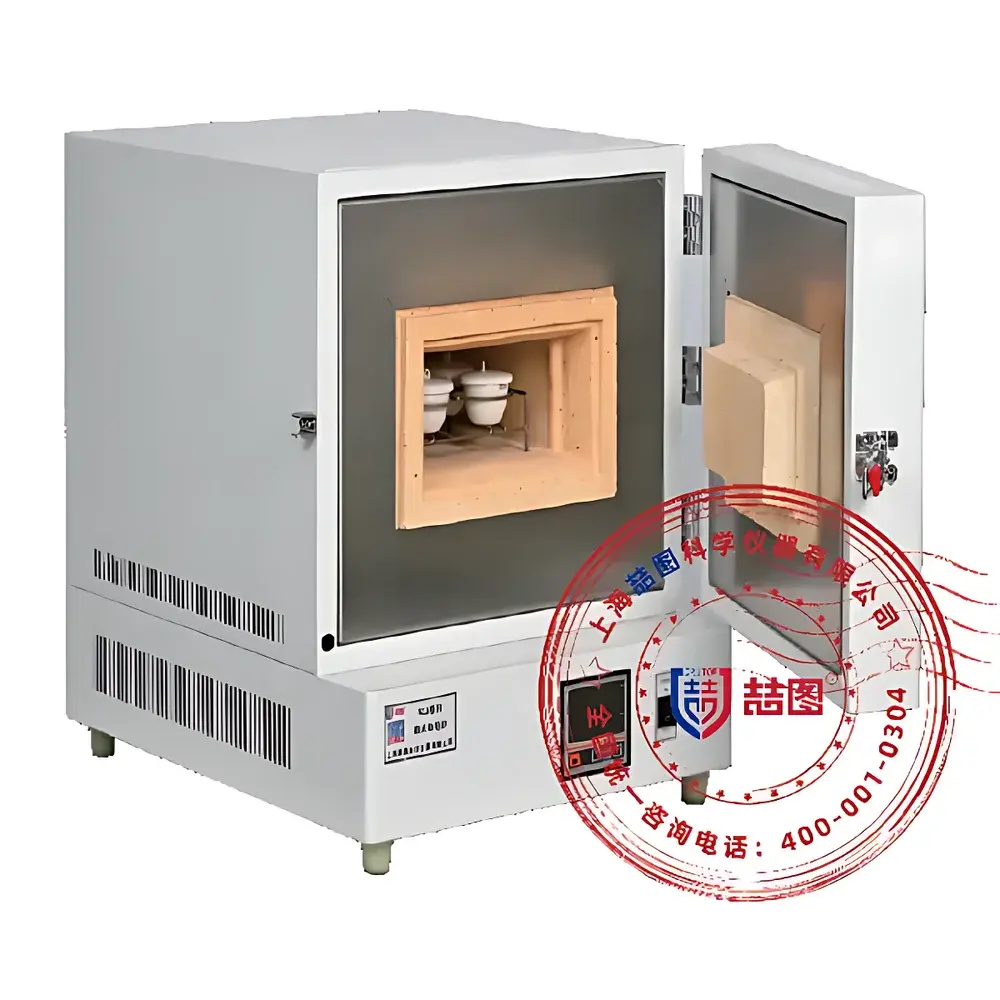
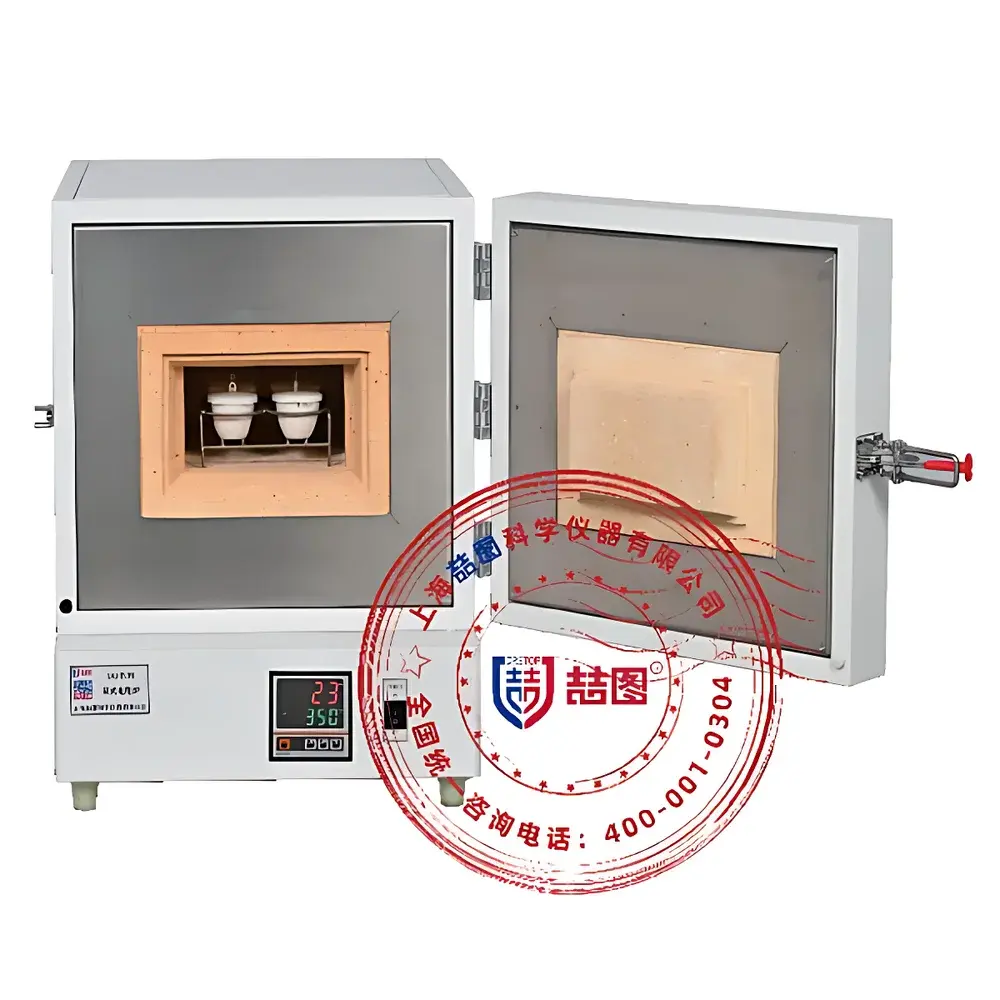
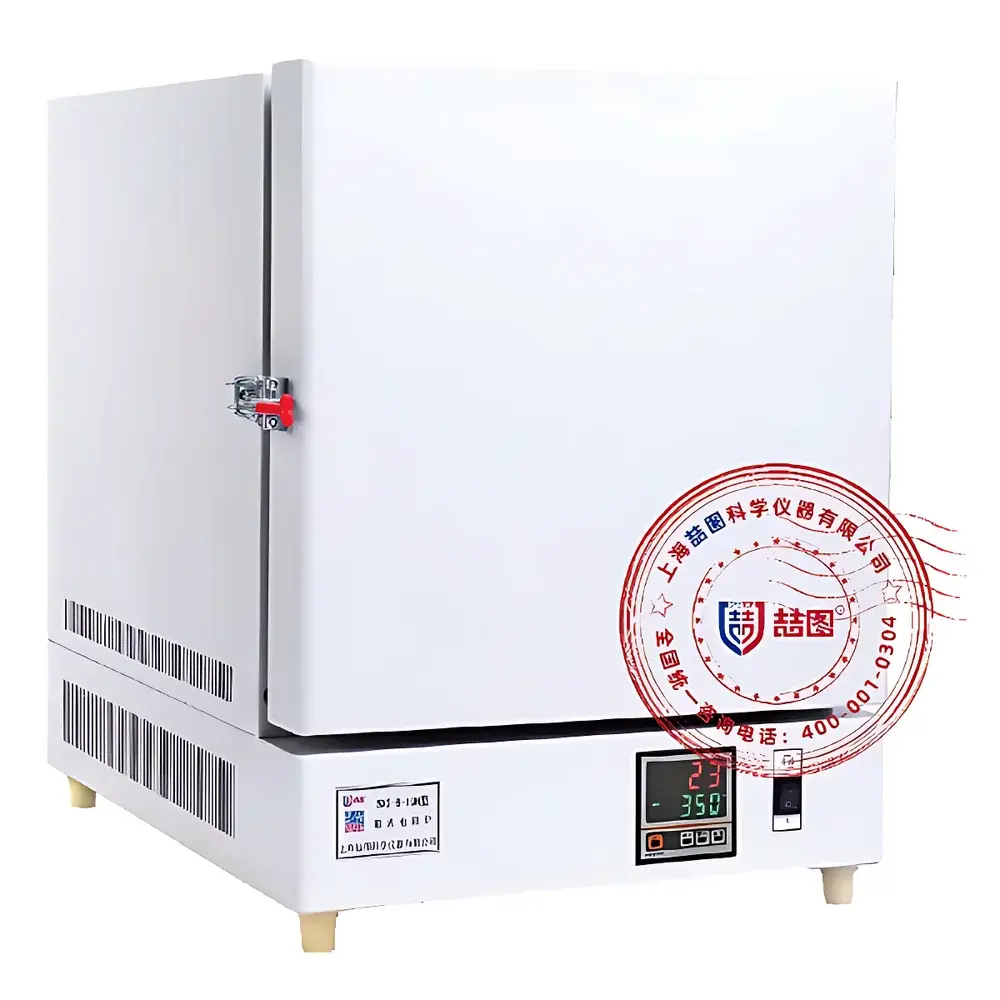
DRETOP SX3-4-13N High-Temperature Box-Type Muffle Furnace
| Brand | DRETOP |
|---|---|
| Origin | Shanghai, China |
| Manufacturer Type | Direct Manufacturer |
| Instrument Type | Box Furnace |
| Max Temperature | 1300°C |
| Temperature Control Accuracy | ±1°C |
| Rated Power | 4 kW |
| Heating Time to Max Temp | 50 min |
| Heating Element | Silicon Carbide Rods |
| Internal Chamber Dimensions | 150 × 250 × 100 mm (W×D×H) |
| Control System | Microcomputer-Based PID Controller |
| Nominal Volume | 3.75 L |
| Programmable Ramp/Soak | 30-Stage Profile Capability (NP Series) |
| Safety Features | Dual-Stage Over-Temperature Protection, Door-Interlocked Power Cut-off, Real-Time Voltage/Current Monitoring |
| Insulation | Refractory Brick Lining with Stainless Steel Inner Sealing (2 mm) |
| Compliance | Designed for ASTM E1112, ISO 8573-1 (thermal stability class), and GLP-aligned operation |
Overview
The DRETOP SX3-4-13N is a precision-engineered high-temperature box-type muffle furnace designed for laboratory-scale thermal processing under controlled atmospheric conditions. Operating on the principle of resistive heating via silicon carbide (SiC) rod elements embedded symmetrically in all four chamber walls, it delivers uniform radiant heat distribution—critical for reproducible calcination, ashing, sintering, and heat-treatment protocols. With a maximum operating temperature of 1300°C and a certified control accuracy of ±1°C across its full range (RT + 50°C to 1300°C), the SX3-4-13N meets stringent requirements for materials science research, quality control in metallurgy and ceramics, and standardized analytical procedures such as ASTM D3174 (ash content in coal) and ISO 1171 (determination of ash in solid mineral fuels). Its rigid refractory brick chamber, combined with optimized thermal mass and multi-directional heating geometry, ensures minimal radial and axial temperature gradients—typically <±3°C across the usable volume at 1200°C—enabling reliable inter-laboratory comparability.
Key Features
- Four-wall silicon carbide heating configuration for rapid, homogeneous thermal field development and reduced hot-spot formation.
- Microprocessor-based PID controller with large-digit LED display; supports 30-segment programmable ramp/soak profiles (NP-series variant) for complex thermal cycles including pre-heating, dwell, cooling, and stepwise annealing.
- Integrated door safety interlock: automatic power cutoff upon door opening, with seamless resumption of heating sequence after closure—eliminating thermal shock risks during sample handling.
- Dual-stage over-temperature protection: primary limit set via controller software, secondary hardware-based cut-off triggered independently by redundant S-type thermocouple monitoring.
- Real-time electrical diagnostics: built-in digital voltmeter and ammeter provide continuous feedback on line voltage stability and current draw—essential for detecting element degradation or phase imbalance in AC380V configurations.
- Structural integrity enhancements: 2 mm stainless steel inner sealing at furnace mouth prevents carbon deposition buildup and facilitates post-run cleaning; phosphate conversion coating + high-temp epoxy powder coating on outer casing ensures corrosion resistance and operator safety.
Sample Compatibility & Compliance
The SX3-4-13N accommodates standard crucibles (alumina, silica, platinum, graphite) up to Ø90 mm × 60 mm height within its 3.75 L nominal chamber. It complies with fundamental thermal safety and metrological traceability expectations for Class II laboratory furnaces per IEC 61000-6-3 (EMC emissions) and UL 61010-1 (electrical safety). While not intrinsically rated for inert or reducing atmospheres, optional inlet/outlet ports (available as add-on accessories) permit connection to nitrogen purge systems or low-flow argon lines—enabling semi-controlled atmosphere operation compatible with ASTM E831 and ISO 11358 protocols. The furnace’s thermal stability profile satisfies GLP documentation requirements when paired with external data loggers (e.g., compliant with FDA 21 CFR Part 11 via third-party validation packages).
Software & Data Management
The base N-series model features standalone microcontroller firmware with non-volatile memory retaining last-used settings and alarm history. The NP-series adds RS485 Modbus RTU interface for integration into centralized lab automation networks (e.g., LabVantage, Thermo Fisher SampleManager). Optional NV-series color touchscreen controllers include embedded audit trail functionality—recording user ID, timestamped parameter changes, start/stop events, and fault logs—with password-protected access tiers (Operator, Technician, Administrator). All digital variants support CSV export of temperature vs. time datasets for post-processing in MATLAB, Python (NumPy/Pandas), or Excel—facilitating statistical process control (SPC) charting and uncertainty budgeting per GUM (JCGM 100:2018).
Applications
- Quantitative ash determination in coal, biomass, and petrochemical feedstocks per ASTM D3174, ISO 1171, and USP <281>.
- Calcination of catalyst precursors, battery cathode materials (e.g., LiCoO₂, NMC), and ceramic oxides requiring precise thermal decomposition kinetics.
- Thermal gravimetric analysis (TGA) pre-conditioning and residue quantification in polymer composites and pharmaceutical excipients.
- Heat treatment of metallographic specimens prior to microstructural etching and SEM/EDS evaluation.
- Calibration verification of thermocouples and RTDs using fixed-point reference materials (e.g., Al, Zn, Sn ITS-90 points) in conjunction with secondary standard thermometers.
FAQ
What is the recommended maintenance interval for silicon carbide heating elements?
Silicon carbide rods typically maintain stable resistance and emissivity for >2000 h at ≤1200°C. We recommend quarterly visual inspection for cracking or localized whitening, and annual resistance measurement (using 4-wire ohmmeter) against baseline values recorded at installation.
Can this furnace be used under vacuum or controlled gas flow?
The standard SX3-4-13N is not vacuum-rated. However, optional flanged ports (M12 or KF16) can be factory-installed to support low-pressure (<50 mbar) inert gas purging or continuous N₂ sweep at ≤1 L/min—sufficient for oxide suppression during high-temp sintering.
Is the temperature uniformity validated across the working zone?
Yes. Per internal qualification protocol (DRETOP-QC-017), uniformity is mapped using 9-point thermocouple array at 1000°C and 1200°C; typical deviation is ≤±2.5°C within central 70% volume, meeting ISO/IEC 17025 calibration lab acceptance criteria.
Does the controller support remote monitoring via Ethernet or Wi-Fi?
Native Ethernet/Wi-Fi is not included, but RS485 output allows connection to industrial gateways (e.g., Moxa EDS-G205A) for secure TLS-enabled cloud telemetry using MQTT or OPC UA protocols.
What documentation is provided for regulatory compliance audits?
Each unit ships with Factory Calibration Certificate (traceable to NIM China), Electrical Safety Test Report (UL/IEC 61010-1), and Firmware Version Log. Full IQ/OQ documentation templates are available upon request for GMP/GLP implementation.



