

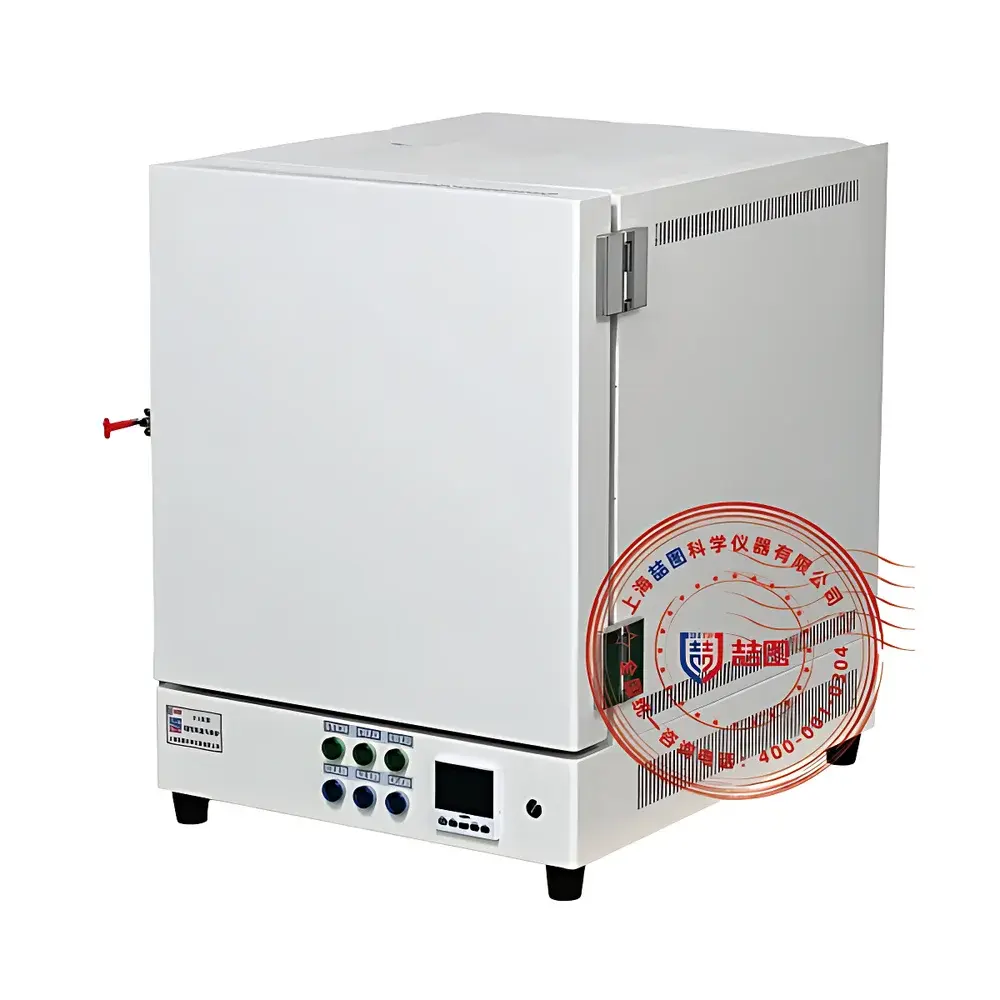
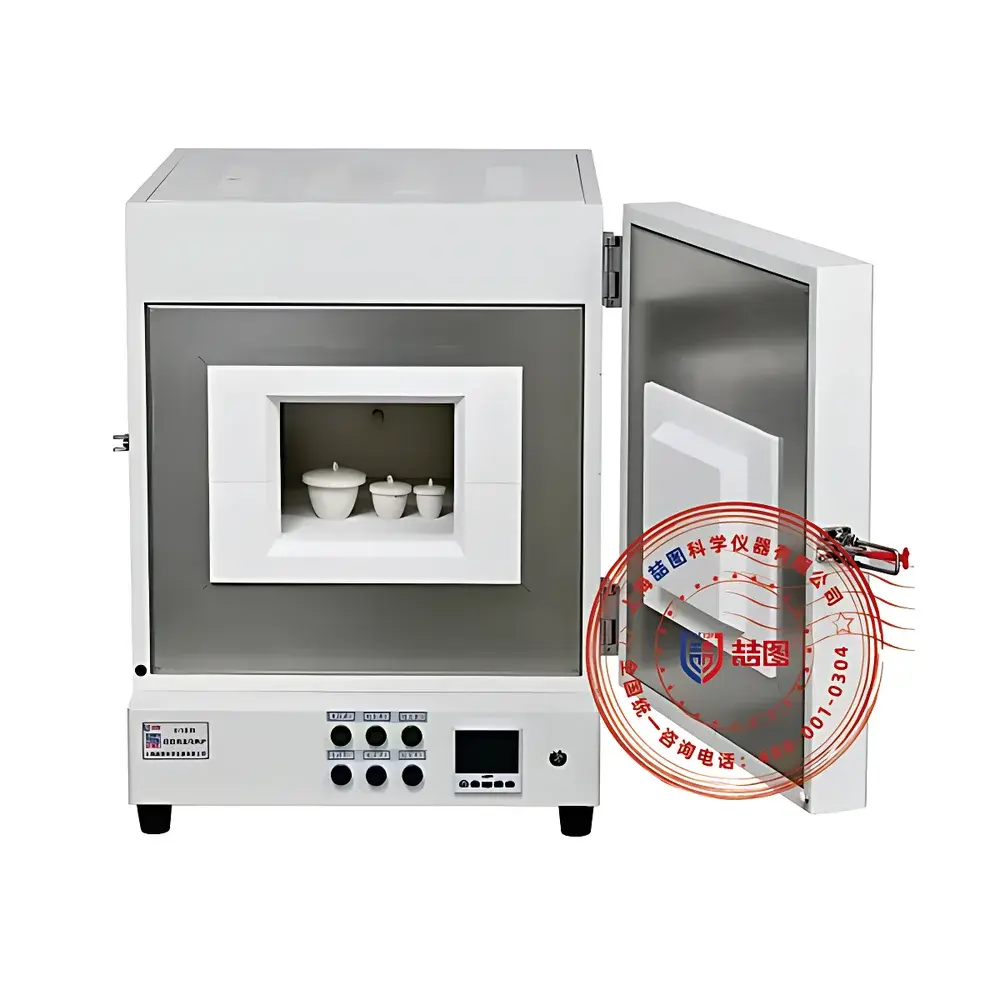
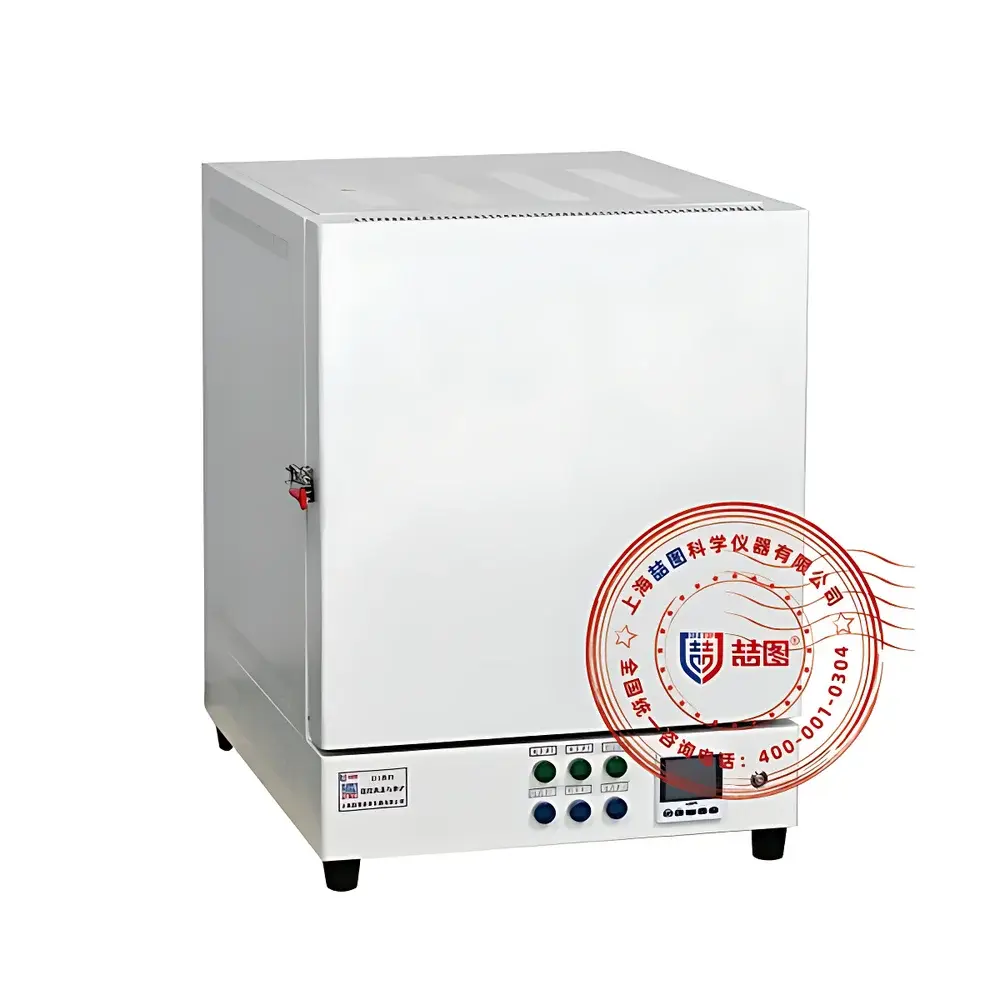
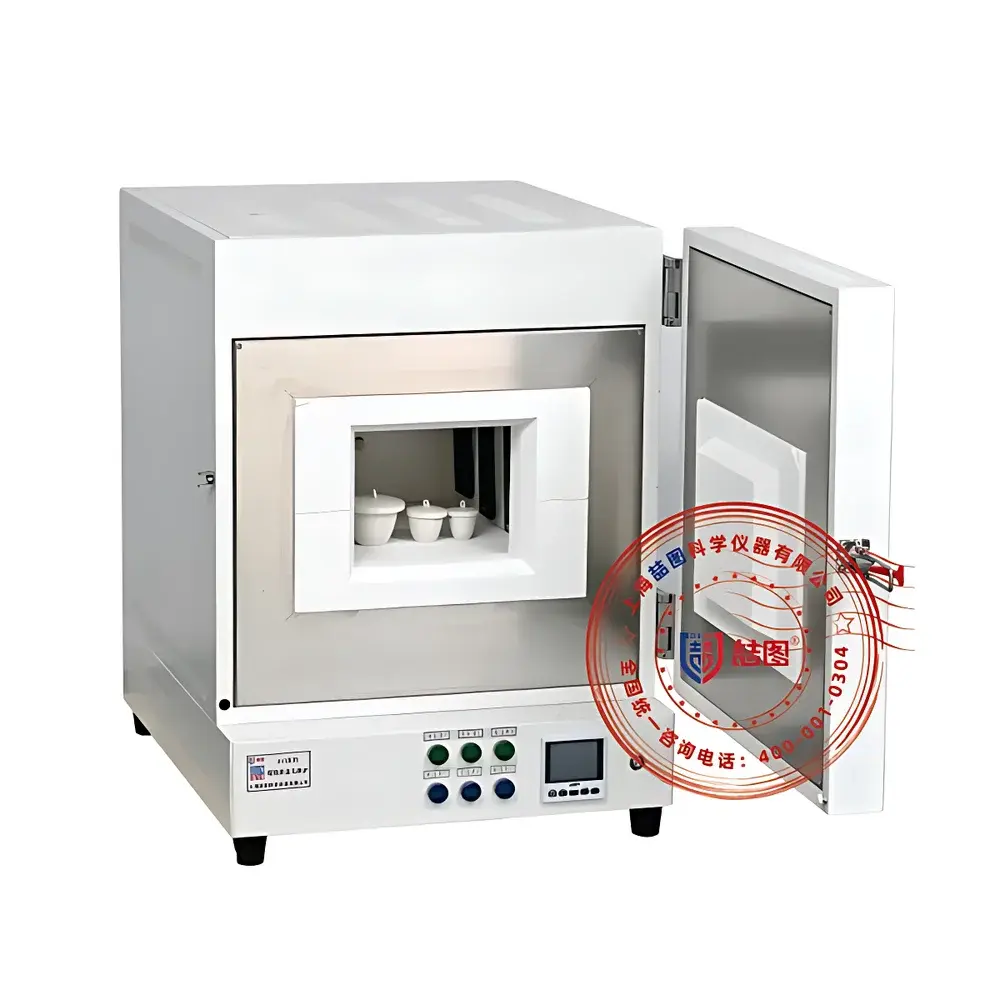
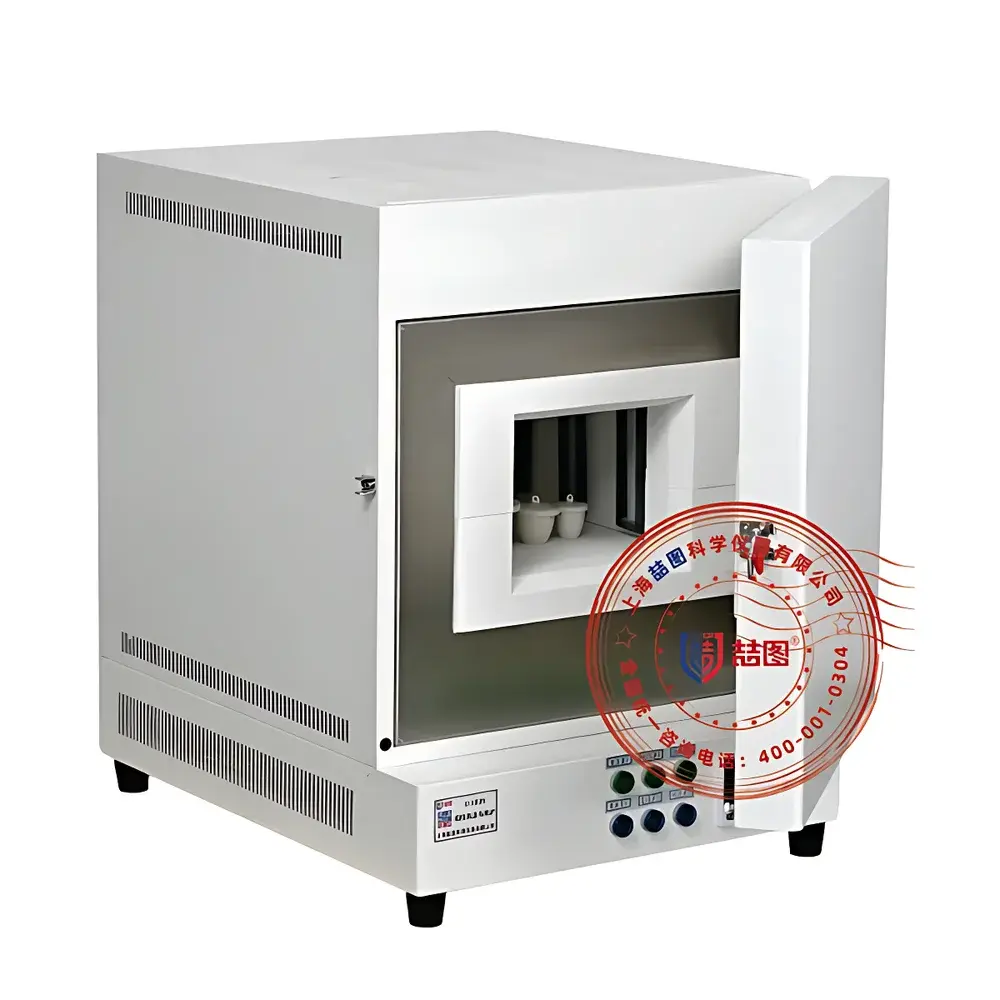
DRETOP S14-7P Programmable High-Temperature Muffle Furnace
| Brand | DRETOP |
|---|---|
| Origin | Shanghai, China |
| Manufacturer Type | Direct Manufacturer |
| Instrument Type | Box-Type Muffle Furnace |
| Maximum Temperature | 1400 °C |
| Temperature Control Accuracy | ±1 °C |
| Rated Power | 6 kW |
| Time to Max Temperature | 60 min |
| Heating Element | Silicon Carbide Rods |
| Internal Chamber Dimensions | 150 × 300 × 150 mm |
| Nominal Volume | 7 L |
| Control System | Programmable Digital Display Controller |
| Heating Configuration | Triple-Sided Radiant Heating |
| Insulation Material | Vacuum-Microporous Ceramic Fiber Board |
| Safety Features | Dual-Stage Overtemperature Protection, Door-Interlocked Power Cut-off, Thermocouple Break Detection, Phase Loss Monitoring |
Overview
The DRETOP S14-7P Programmable High-Temperature Muffle Furnace is a precision-engineered box-type thermal processing system designed for controlled heat treatment, ashing, calcination, sintering, and annealing applications in research laboratories, quality control facilities, and industrial R&D environments. Operating on the principle of radiant heating via silicon carbide (SiC) rod elements embedded in triple-sided furnace walls, the S14-7P delivers uniform thermal distribution across its 7 L chamber—critical for reproducible material transformation and quantitative residue analysis. Its programmable digital controller enables multi-step thermal profiles with ramp rate specification, dwell time definition, and automatic cooldown sequencing—eliminating manual intervention and ensuring protocol fidelity across repeated runs. The furnace complies with fundamental thermal safety architecture standards expected in ISO/IEC 17025-accredited labs and supports GLP-aligned operational traceability when paired with optional data logging interfaces.
Key Features
- Triple-sided SiC rod heating configuration ensures radial thermal symmetry and minimizes axial temperature gradients; measured uniformity ≤ ±3 °C at 1400 °C across the working zone.
- Intelligent PID algorithm with auto-tuning capability dynamically adjusts control parameters based on load mass and ambient drift, maintaining ±1 °C stability during extended holds.
- Door-interlocked power cutoff halts heating immediately upon opening and resumes from the programmed setpoint upon closure—preserving thermal history integrity without manual reprogramming.
- Vacuum-microporous ceramic fiber insulation reduces standby heat loss by >40% compared to conventional refractory brick linings, contributing to energy efficiency and surface temperature <50 °C under full-load operation.
- Dual-stage overtemperature protection includes primary limit control (settable up to 1450 °C) and independent mechanical high-limit switch (1480 °C), both wired in series with main power feed.
- Front-panel voltage and current meters provide real-time electrical status monitoring—essential for preventive maintenance and detection of element aging or phase imbalance.
Sample Compatibility & Compliance
The S14-7P accommodates standard crucibles (alumina, quartz, platinum, graphite) up to Ø90 mm × 60 mm height, supporting ASTM E171 (standard atmospheres), ASTM D3174 (ash content), ASTM D3175 (volatile matter), and ISO 1171 (determination of ash) methodologies. Its sealed muffle design isolates samples from combustion byproducts, enabling clean ash residue collection required in pharmaceutical residual solvent testing (USP ) and environmental solid waste analysis (EPA Method 3050B). The furnace meets CE electromagnetic compatibility (EMC) Directive 2014/30/EU and Low Voltage Directive 2014/35/EU requirements. While not intrinsically rated for hazardous atmosphere use, optional inert gas inlet (N₂/Ar) and exhaust chimney facilitate oxygen-sensitive processes compliant with ISO 8501-1 surface preparation standards.
Software & Data Management
The standard P-series controller provides local program storage for up to 16 multi-segment profiles (each with ramp, hold, and cooling steps), accessible via intuitive keypad navigation and large-digit LED display. Optional RS485 Modbus RTU interface enables integration into LabVantage, STARLIMS, or custom SCADA systems for centralized scheduling and audit trail generation. When equipped with the PV-II series touch panel upgrade, the unit supports 21 CFR Part 11–compliant electronic signatures, user role-based access (Operator, Technician, Administrator), and encrypted USB export of temperature/time logs with timestamped metadata. All firmware revisions are field-upgradable via secure bootloader protocol.
Applications
- Thermal gravimetric analysis (TGA) sample pre-conditioning and residue quantification in cement clinker, coal, and biomass feedstocks.
- Pharmaceutical excipient dryness validation per USP , including loss-on-drying (LOD) determination for hygroscopic APIs.
- Metallurgical powder sintering trials under controlled oxidizing or inert atmospheres using optional gas manifold kits.
- Geochemical sample fusion for XRF pellet preparation, where consistent flux-melt homogeneity depends on precise soak temperature maintenance.
- Calibration of thermocouples and RTDs via fixed-point annealing (e.g., Zn, Al, Cu freezing points) within NIST-traceable thermal zones.
- Accelerated aging studies of polymer composites and battery electrode materials under ISO 4892-2 cyclic thermal exposure protocols.
FAQ
What is the maximum recommended continuous operating temperature?
The S14-7P is rated for continuous operation at 1400 °C; sustained use above this threshold accelerates SiC rod oxidation and compromises long-term calibration stability.
Can the furnace be used under vacuum or reducing atmospheres?
No—this model is designed exclusively for ambient air or inert gas purging; vacuum sealing or hydrogen-containing atmospheres require specialized furnace variants with modified seals and cooling manifolds.
Is the controller compatible with third-party data acquisition software?
Yes—via RS485 Modbus RTU, the furnace responds to standard function codes (03h, 06h) for reading setpoints, PV values, and alarm states; custom drivers are available upon request.
How often should thermocouple calibration be verified?
We recommend quarterly verification against a NIST-traceable reference thermometer at three points: 500 °C, 1000 °C, and 1350 °C—especially after extended high-temperature cycling or mechanical shock events.
Does the unit include documentation for IQ/OQ qualification?
Yes—factory-supplied documentation includes Factory Acceptance Test (FAT) report, wiring schematics, component traceability lists, and blank IQ/OQ templates aligned with ASTM E2500 and EU Annex 15 guidelines.



