
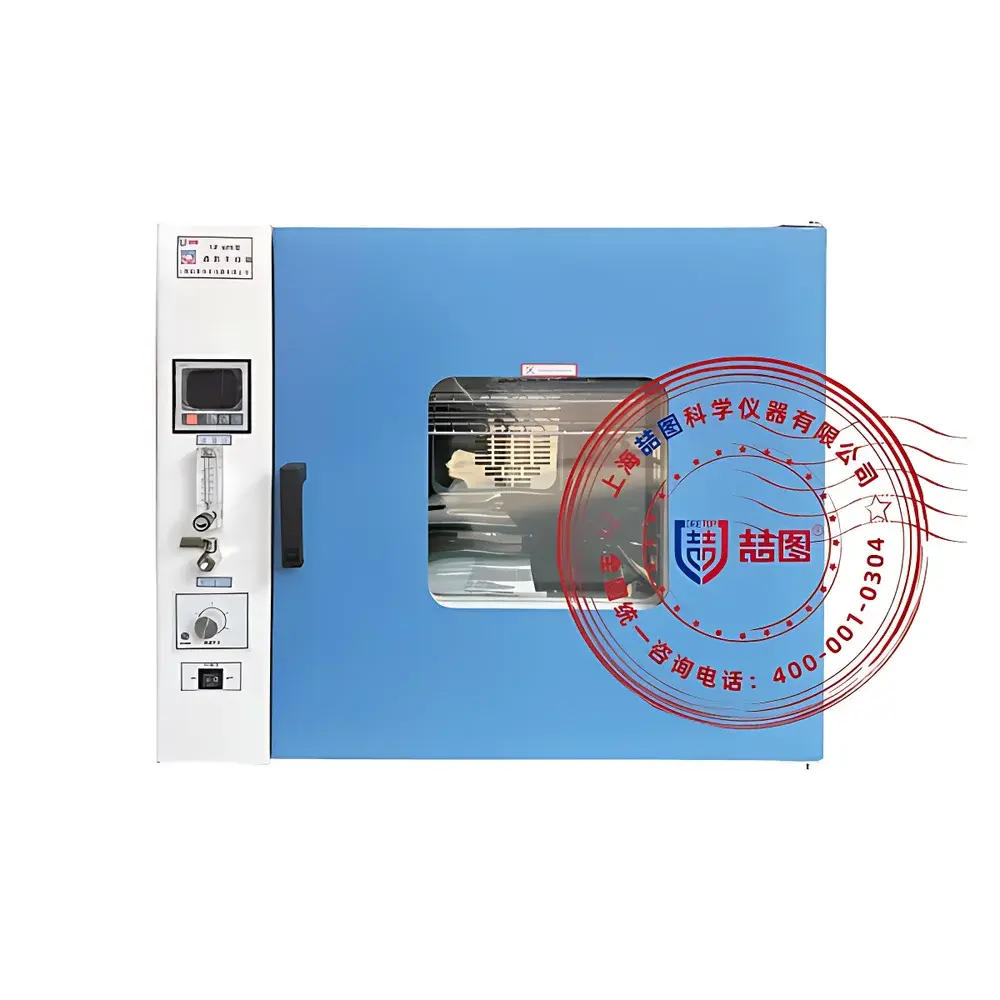
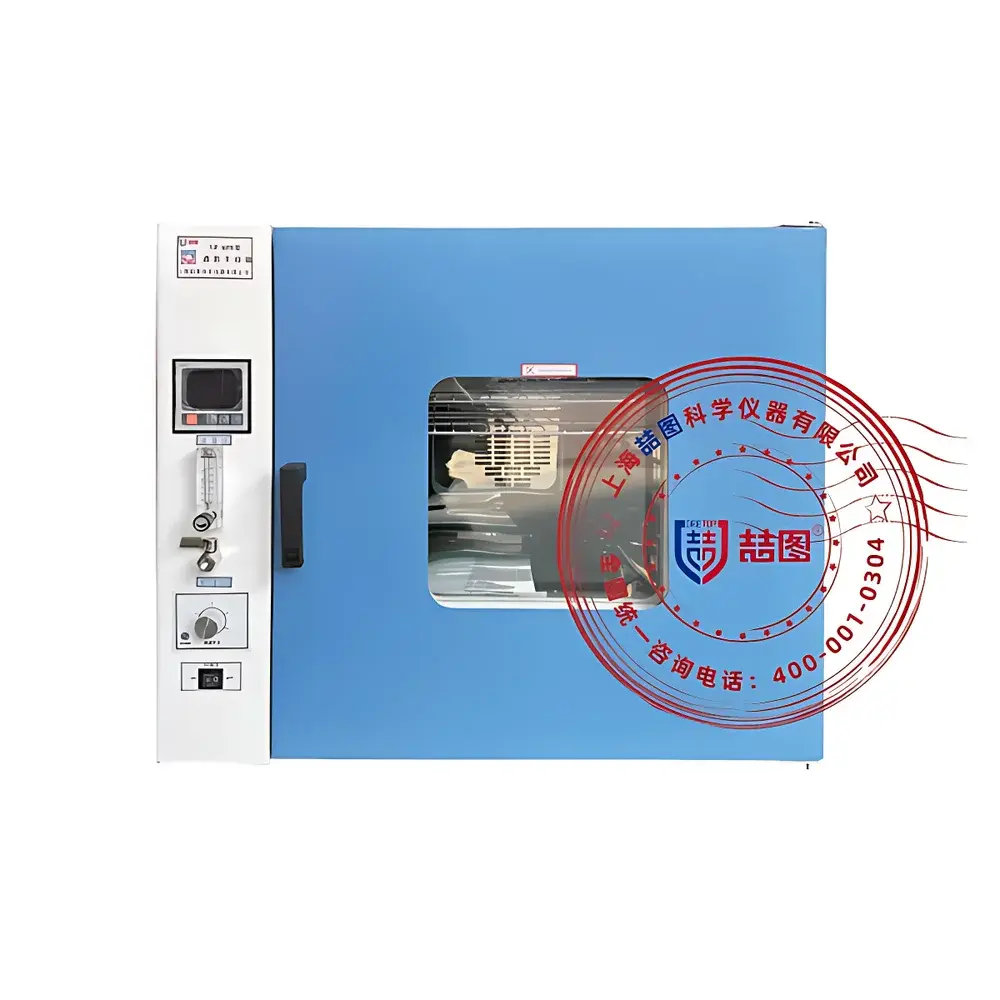
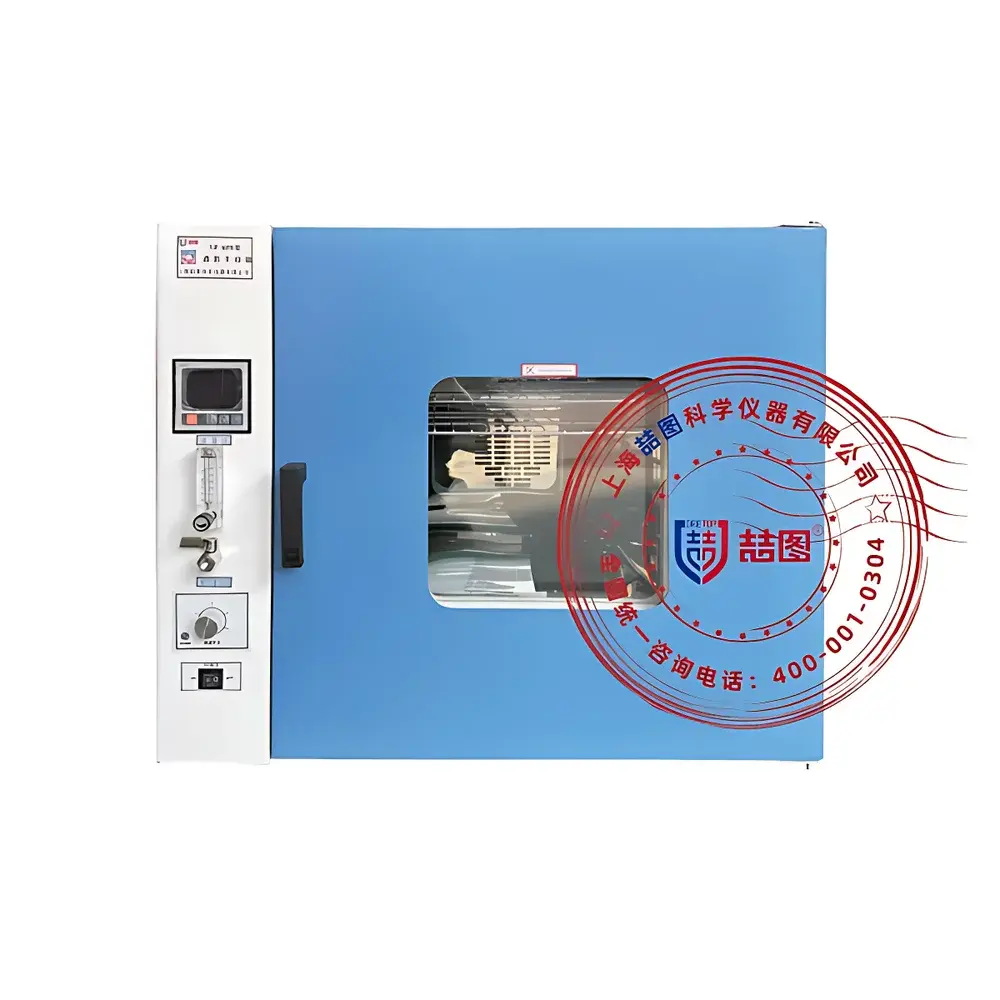
DRETOP TDZ-V30 Vacuum & Nitrogen-Purged Drying Oven
| Brand | DRETOP |
|---|---|
| Origin | Shanghai, China |
| Manufacturer Type | Direct Manufacturer |
| Product Category | Domestic |
| Model | TDZ-V30 |
| Instrument Type | Vacuum Drying Oven |
| Temperature Range | RT+10°C to 250°C |
| Temperature Fluctuation | ±0.5°C |
| External Dimensions | 615 × 500 × 505 mm |
| Internal Chamber Dimensions | 320 × 320 × 300 mm |
| Temperature Resolution | 0.1°C |
| Operating Ambient Temperature | 0–45°C |
| Chamber Material | Stainless Steel (AISI 304) |
| Heating Method | Forced-Air Circulation with Adjustable Fan Speed |
| Temperature Uniformity | Compliant with JB/T 5520–1991 (±2.0°C at 100°C, typical) |
| Vacuum Capability | Integrated Vacuum Pump (Optional), Ultimate Vacuum ≤10 Pa (with optional dual-stage rotary vane pump) |
Overview
The DRETOP TDZ-V30 Vacuum & Nitrogen-Purged Drying Oven is an engineered solution for controlled thermal processing under inert or reduced-oxygen atmospheres. It integrates dual operational modes—vacuum drying and continuous nitrogen purging—within a single robust stainless-steel chamber. Unlike conventional hot-air ovens, the TDZ-V30 eliminates oxidative degradation by enabling precise atmospheric control: nitrogen flow is regulated via dual-stage electromagnetic valve and rotameter, while vacuum mode removes residual oxygen prior to inert gas introduction. This dual-path architecture supports applications requiring strict oxygen exclusion (e.g., <0.1% O₂), such as thermal stabilization of photoactive compounds, sintering of noble metal powders, or moisture removal from hygroscopic pharmaceutical intermediates. The system operates on the principle of convective heat transfer under controlled partial pressure, with temperature maintained via PID-controlled resistive heating elements and real-time feedback from Class A platinum RTD sensors (Pt100). Its design conforms to fundamental thermodynamic constraints governing mass transfer in low-convection environments, ensuring reproducible drying kinetics across batch runs.
Key Features
- Stainless steel (AISI 304) interior chamber with full weld seams and fluororubber door gasket—achieving helium leak rate <1.0 × 10⁻⁶ mbar·L/s, minimizing nitrogen consumption and maintaining inert integrity.
- Dual-mode operation: switchable between nitrogen-purged forced convection (fan speed adjustable 0–100% via potentiometer) and silent vacuum-drying (fan disabled, magnetic-field-assisted natural convection).
- PID temperature controller with 0.1°C resolution and auto-tuning capability; temperature overshoot suppressed to <0.3°C during ramp-up per ISO 8573-1 stability protocol.
- Integrated safety architecture: independent over-temperature cut-off (mechanical bimetal switch), pressure relief valve (for nitrogen overpressure scenarios), and audible/visual alarm for vacuum loss or temperature deviation >±2.0°C.
- Programmable multi-segment temperature profile (up to 32 steps), supporting ICH Q1A(R3)-compliant stability testing protocols including isothermal holds, linear ramps, and stepwise gradients.
- Vacuum-ready configuration includes analog vacuum gauge (0–760 Torr), solenoid valve interlock, and optional two-stage oil-sealed rotary vane pump (ultimate vacuum ≤10 Pa, pumping speed 1.8 m³/h).
Sample Compatibility & Compliance
The TDZ-V30 accommodates samples ranging from 10 mg lyophilized biologics to 5 kg ceramic green bodies, provided dimensional fit within the 30 L chamber (320 × 320 × 300 mm). Its inert atmosphere capability meets ASTM E145–22 requirements for “Standard Specification for Gravity-Convection and Forced-Ventilation Ovens” when operated in nitrogen mode, and aligns with USP guidelines for sterile product drying where oxygen scavenging is critical. For regulated environments, the unit supports 21 CFR Part 11-compliant data logging when paired with optional RS485-modbus interface and validated software (e.g., DRETOP LabControl Suite v3.2). It satisfies GLP audit requirements for traceability: all temperature setpoints, actual readings, nitrogen flow rates (0–10 L/min), and vacuum levels are timestamped with operator ID and stored in encrypted .csv format. Mechanical construction complies with JB/T 5520–1991 (Technical Specifications for Drying Ovens) and GB/T 211–2017 (Methods for Determination of Total Moisture in Coal), making it suitable for accredited materials testing labs.
Software & Data Management
While the base model features a monochrome LCD controller with manual parameter entry, optional firmware upgrade enables Ethernet/WiFi connectivity and remote monitoring via web-based HMI. Logged data—including chamber temperature, nitrogen flow rate, vacuum pressure, and elapsed time—is exportable in CSV or PDF report formats compliant with ISO/IEC 17025 documentation standards. Audit trail functionality records all user actions (e.g., setpoint changes, mode switches, alarm acknowledgments) with immutable timestamps and SHA-256 hash verification. For GMP environments, optional validation packages include IQ/OQ documentation templates, sensor calibration certificates (NIST-traceable RTDs), and electronic signature support per Annex 11 requirements. No cloud storage is enabled by default; all data resides locally on internal flash memory (16 GB) unless explicitly configured otherwise.
Applications
- Pharmaceutical R&D: Accelerated stability studies (ICH Q1A), residual solvent removal from APIs under nitrogen blanket, and moisture content determination of excipients per USP .
- Electronics manufacturing: Oxidation-free baking of solder pastes, pre-conditioning of PCB substrates, and thermal aging of polymer encapsulants.
- Advanced materials: Degassing of metal-organic frameworks (MOFs), pyrolysis of precursors for battery cathode materials, and annealing of graphene oxide films without carbon defect formation.
- Food science: Low-oxygen dehydration of anthocyanin-rich botanicals to preserve color stability; lipid oxidation inhibition during nut roasting simulation.
- Academic research: Controlled atmosphere thermogravimetric pre-treatment, catalyst activation under reducing gas mixtures, and calibration of humidity sensors using saturated salt solutions.
FAQ
Does the TDZ-V30 meet FDA or EU GMP requirements for use in regulated manufacturing?
Yes—when equipped with optional data logging, electronic signatures, and 21 CFR Part 11–compliant firmware, the system supports GMP-compliant process validation. Full qualification documentation (IQ/OQ/PQ) is available upon request.
Can the nitrogen flow rate be calibrated and verified traceably?
Yes—the integrated rotameter is factory-calibrated against NIST-traceable mass flow meters (accuracy ±1.5% FS). Optional external MFC integration provides higher accuracy (±0.5% FS) with digital feedback.
What vacuum performance can be expected with the optional pump?
With the standard two-stage rotary vane pump, ultimate vacuum reaches ≤10 Pa after 30 minutes at room temperature. Ultimate pressure improves to ≤1 Pa when combined with optional cold trap (–40°C).
Is the chamber volume truly 30 L, and how is it calculated?
Yes—the nominal volume is derived from internal dimensions (320 × 320 × 300 mm = 30.72 L) per JB/T 5520–1991 definition, excluding shelf volume. Usable volume decreases by ~12% when two stainless steel shelves (included) are installed.
How does the system prevent thermal shock during vacuum-to-nitrogen transition?
A programmable gas-fill sequence delays nitrogen introduction until chamber pressure stabilizes at ≤500 Pa, then initiates slow fill (0.5 L/min ramp) to avoid turbulence-induced sample displacement or thermal gradient spikes.
Related Products



