
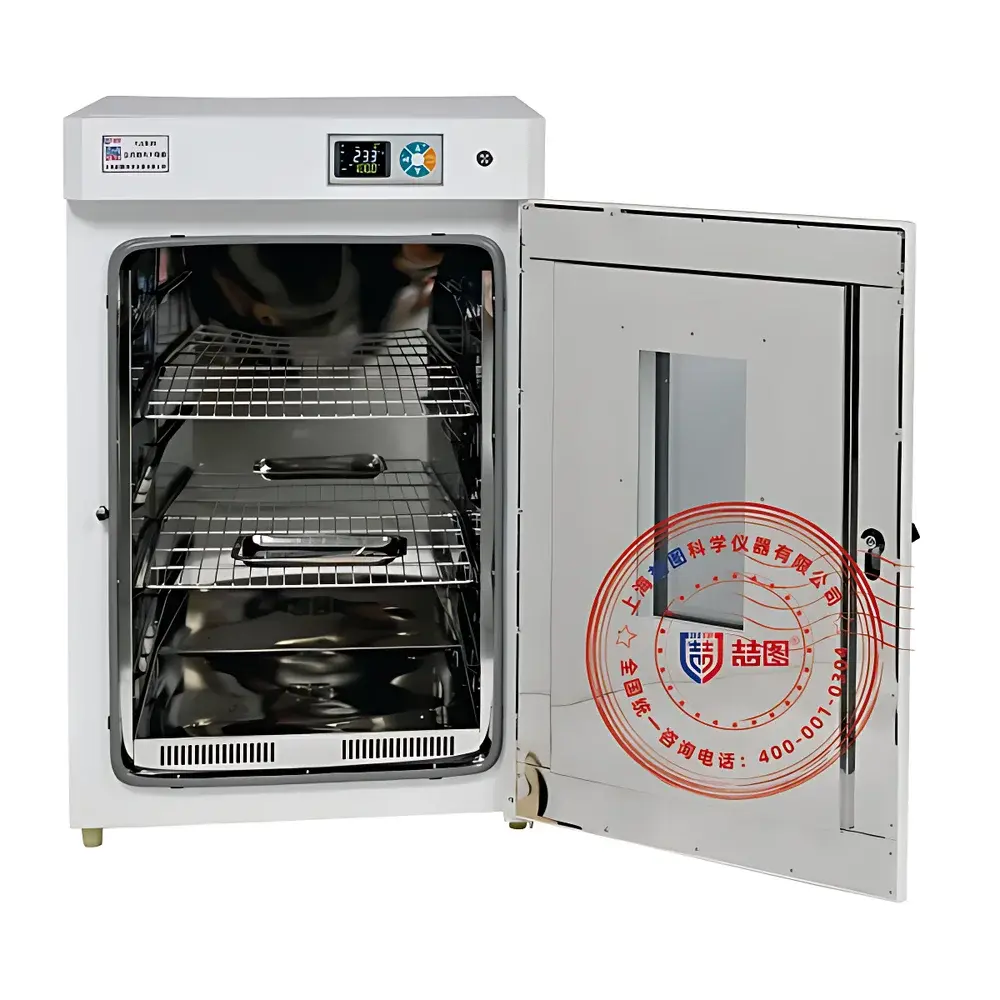
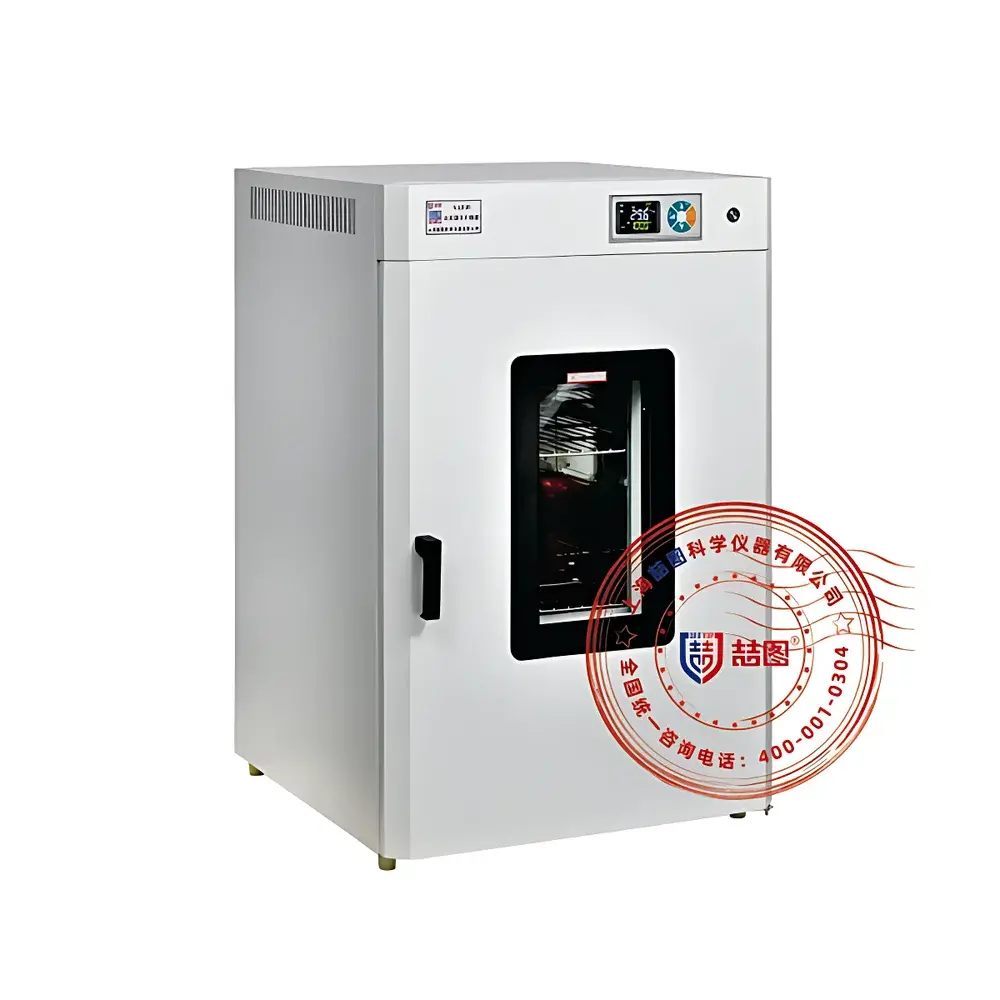
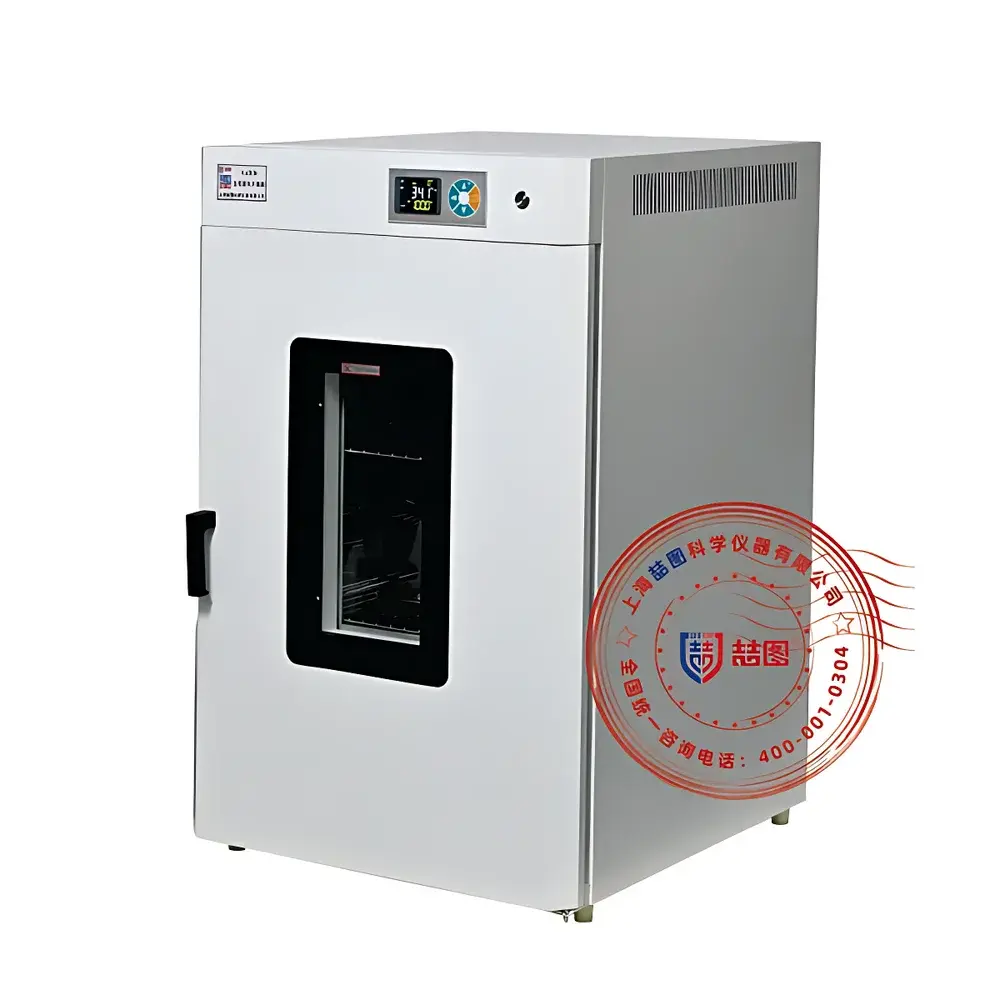
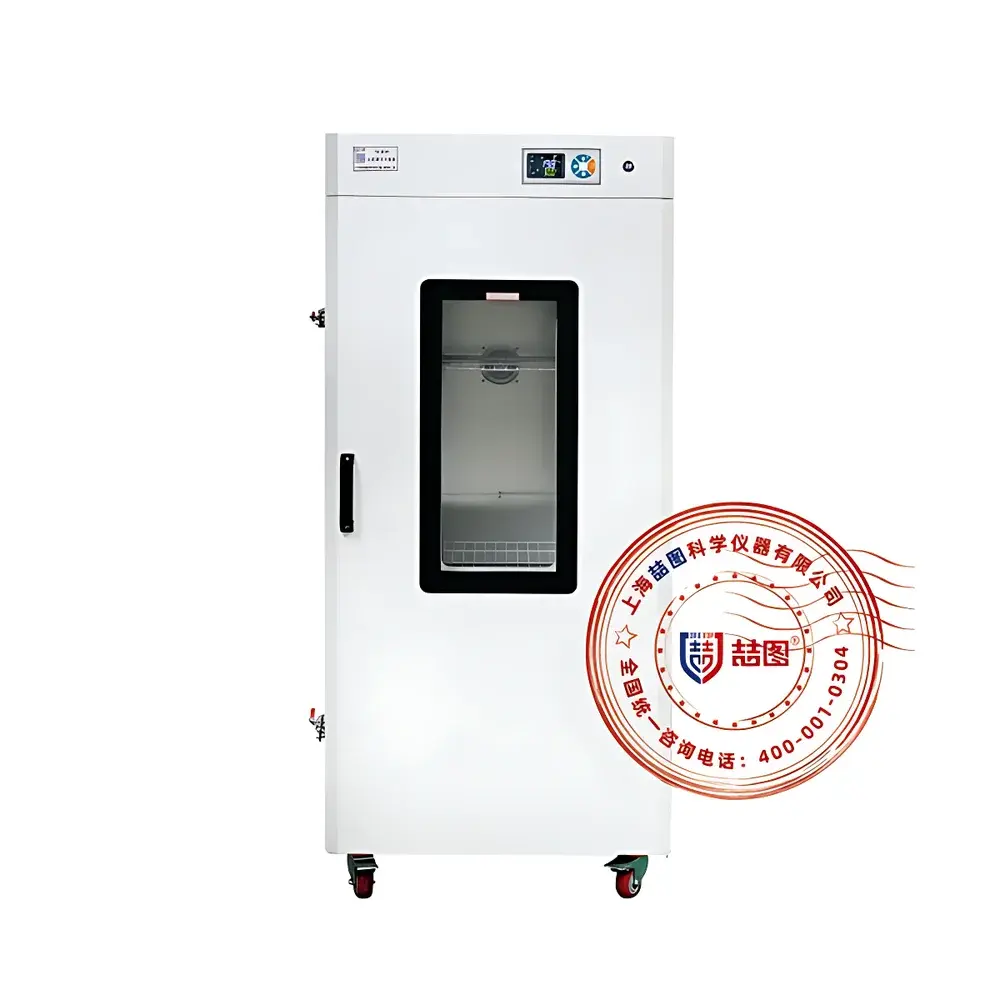
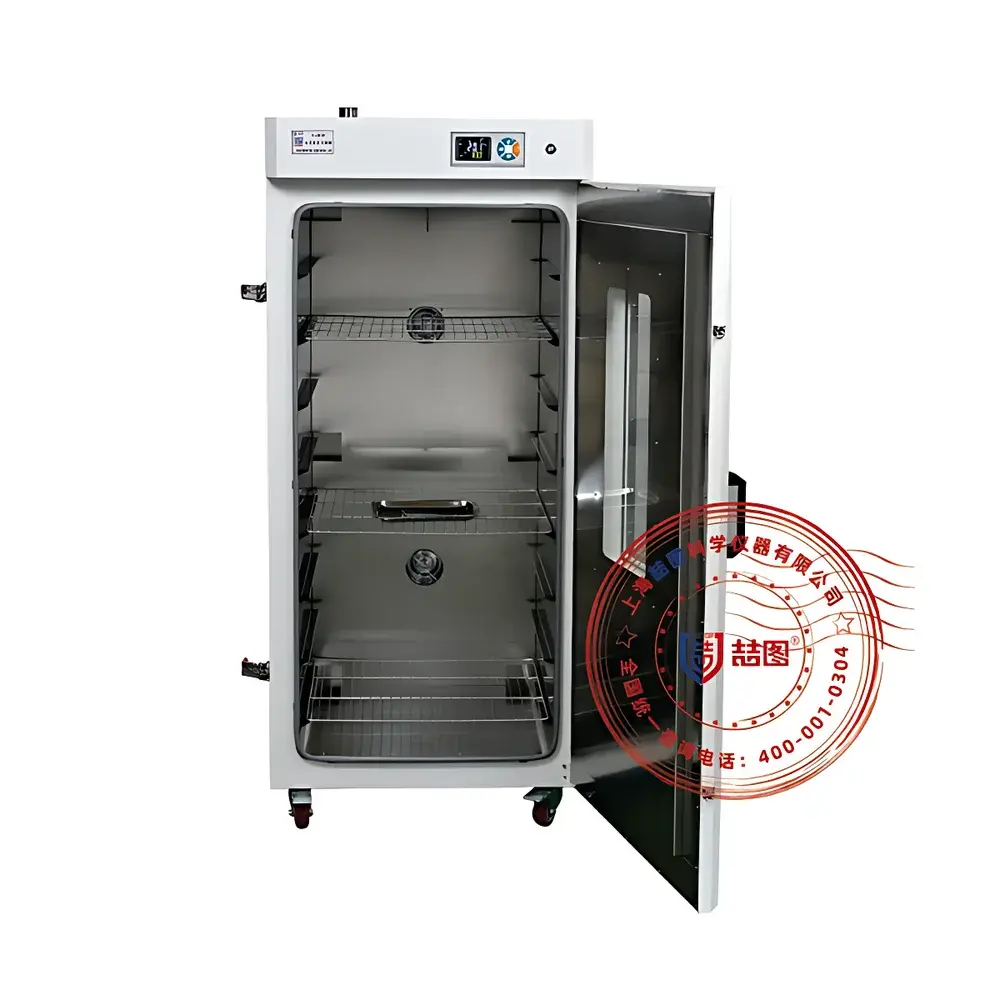
DRETOP TLG-9640A Vertical Forced-Air Drying Oven
| Brand | DRETOP |
|---|---|
| Origin | Shanghai, China |
| Manufacturer Type | Direct Manufacturer |
| Product Category | Domestic |
| Model | TLG-9640A |
| Instrument Type | Standard Benchtop/Free-Standing Drying Oven |
| Temperature Range | RT+10°C to 250°C |
| Temperature Uniformity | ±2.5°C (empty chamber @ 100°C) |
| Temperature Fluctuation | ±1°C |
| Temperature Resolution | 0.1°C |
| External Dimensions (W×D×H) | 985×1080×1412 mm |
| Internal Chamber Dimensions (W×D×H) | 800×800×1000 mm |
| Operating Ambient Temperature | 5–45°C |
| Interior Material | Stainless Steel (SUS304) |
| Heating Method | Forced-Air Circulation with High-Temperature Resistant Fan |
| Vacuum Capability | Not Integrated — Optional Vacuum Interface Available Upon Request |
Overview
The DRETOP TLG-9640A Vertical Forced-Air Drying Oven is an engineered solution for precise, repeatable thermal processing in research laboratories, quality control environments, and industrial R&D facilities. Designed around the principle of convective heat transfer via a high-efficiency, continuously operating centrifugal fan system, the TLG-9640A ensures uniform temperature distribution across its 640 L stainless steel working chamber. Its vertical free-standing architecture optimizes floor space while maintaining ergonomic access—ideal for applications requiring frequent sample loading/unloading or integration into multi-instrument lab workflows. The oven operates within a certified temperature range of RT+10°C to 250°C, supporting standard drying, curing, sterilization validation pre-steps, moisture content determination (per ASTM E1217 and ISO 787-2), and thermal stability testing of materials such as polymers, pharmaceutical excipients, electronic components, and composite substrates.
Key Features
- Microprocessor-based P.I.D. temperature controller with real-time deviation compensation, enabling stable setpoint maintenance with minimal overshoot and ±1°C fluctuation tolerance.
- Triple-layer safety design: dual-stage mechanical door lock with high-temperature silicone gasket (rated to 300°C), reinforced double-glazed observation window (tempered glass), and independent over-temperature cut-off circuitry compliant with IEC 61000-4-2 immunity standards.
- Intelligent diagnostics interface: LCD display shows active fault codes (e.g., E01 = sensor open-circuit, E03 = heater failure), facilitating rapid troubleshooting without service dispatch.
- Programmable timer function (1–9999 minutes) with auto-shutdown and power-loss recovery memory—retains last-used parameters after interruption per GLP-compliant data integrity requirements.
- Adjustable, slide-out stainless steel shelves (4 standard trays included) with 25 mm pitch adjustment; all interior surfaces electropolished for corrosion resistance and ease of decontamination.
- Horizontal rear exhaust port (Ø50 mm) supports optional ducting to fume hoods or external ventilation systems—critical when processing volatile solvents or odor-emitting samples under OSHA 1910.1200 guidelines.
Sample Compatibility & Compliance
The TLG-9640A accommodates diverse sample formats including Petri dishes, crucibles, beakers, PCB assemblies, molded plastic parts, and coated metal specimens. Its 800 × 800 × 1000 mm chamber volume enables batch processing of up to 12 standard ISO 9001-certified calibration test plates simultaneously. All internal components meet RoHS Directive 2011/65/EU material restrictions. The unit complies with EN 61010-1:2019 (Safety Requirements for Electrical Equipment for Measurement, Control, and Laboratory Use) and carries CE marking. While not intrinsically rated for explosive atmospheres, optional ATEX-compatible variants are available upon technical consultation. For regulated industries, the oven supports 21 CFR Part 11-compliant audit trails when integrated with optional RS485-to-USB gateway modules and validated third-party software platforms.
Software & Data Management
Standard configuration includes analog output (0–5 V DC) for external data loggers. Optional accessories expand digital functionality: a USB data export module enables direct CSV file transfer to removable flash drives, capturing time-stamped temperature profiles at user-defined intervals (1 s to 60 min). The programmable controller variant supports up to 30 segment ramp-soak cycles, with event-triggered alarms logged to non-volatile memory. When connected via RS485 (Modbus RTU protocol), the oven integrates into centralized SCADA systems for remote monitoring, alarm forwarding via email/SMS, and automated report generation aligned with ISO/IEC 17025 documentation frameworks.
Applications
- Moisture loss quantification in foodstuffs (AOAC 950.46), pharmaceutical powders (USP <1251>), and soil samples (ASTM D2216).
- Pre-conditioning of test specimens prior to tensile, impact, or adhesion testing (ISO 291, ASTM D618).
- Curing of epoxy resins, silicone encapsulants, and conformal coatings used in aerospace electronics (MIL-STD-883 Method 1008.8).
- Accelerated aging studies per IEC 60068-2-2 (Test B: Dry Heat) and IPC-TM-650 2.6.7.2.
- Residual solvent removal from lithium-ion battery electrode slurries during pilot-scale manufacturing.
- Stabilization of reference standards and volumetric glassware before calibration (ISO/IEC 17025 Clause 6.4.10).
FAQ
Is the TLG-9640A suitable for use in cleanroom environments?
Yes—the stainless steel interior, absence of particle-shedding insulation, and smooth-welded chamber seams meet ISO Class 7 (Class 10,000) particulate requirements when operated with HEPA-filtered air intake (optional accessory).
Can the oven be validated for GMP compliance?
Absolutely—its traceable Pt100 sensor, calibrated P.I.D. controller, and optional IQ/OQ documentation packages support qualification per Annex 15 and EU GMP guidelines.
What is the maximum load weight per shelf?
Each 800 mm × 800 mm shelf supports up to 25 kg uniformly distributed load; total chamber load capacity is 100 kg.
Does the unit include calibration certification?
A factory-issued calibration certificate (NIST-traceable at three points: 50°C, 100°C, 200°C) is provided with every shipment; UKAS-accredited certificates are available upon request.
How is temperature uniformity verified during installation qualification?
Per ISO 14644-3, a 9-point thermocouple mapping study (center + eight corners) is conducted at 100°C and 250°C; results are archived with spatial deviation reports and uncertainty budgets.
Related Products



