
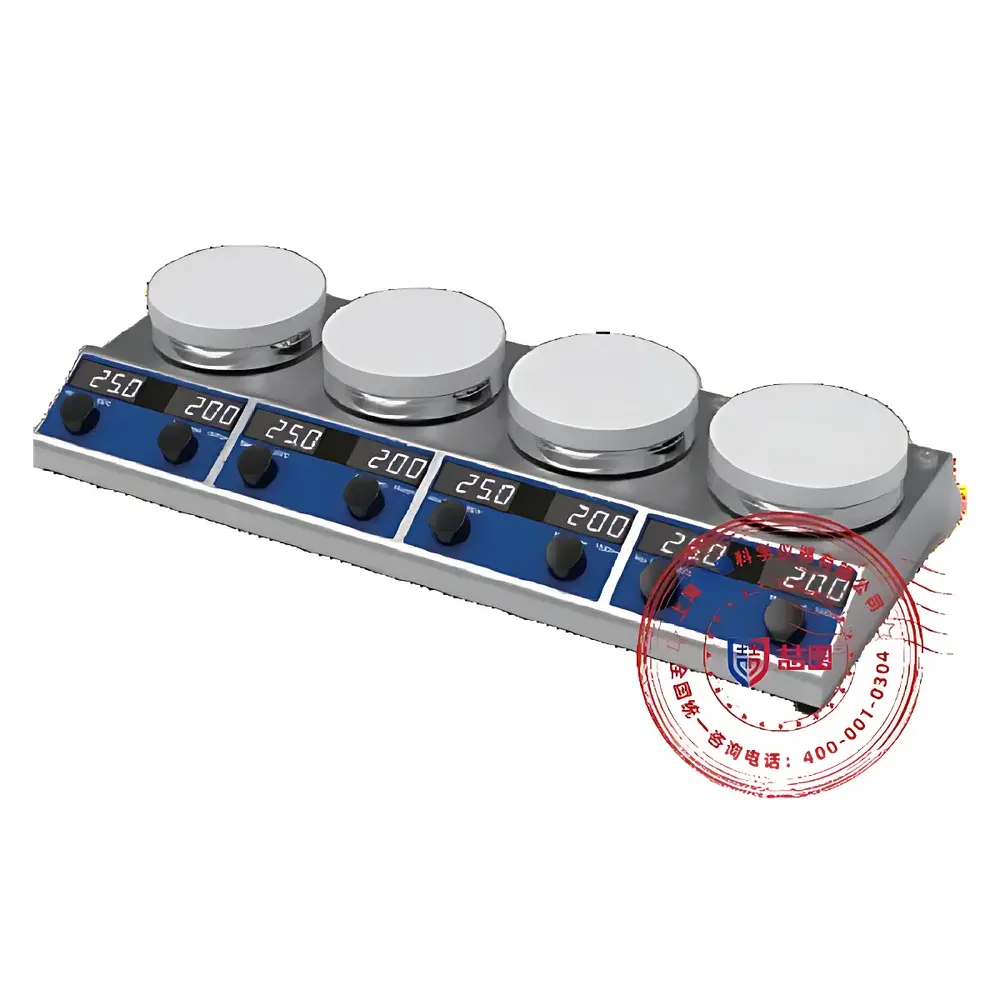
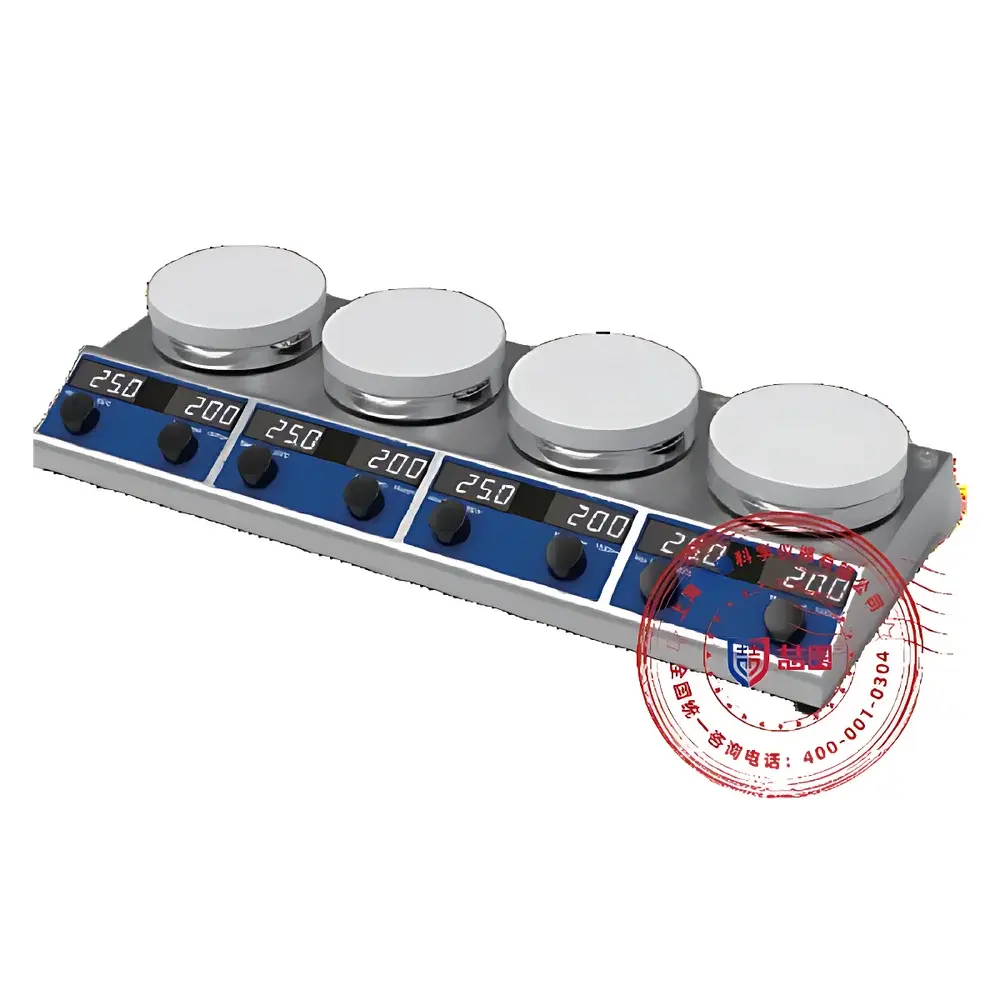
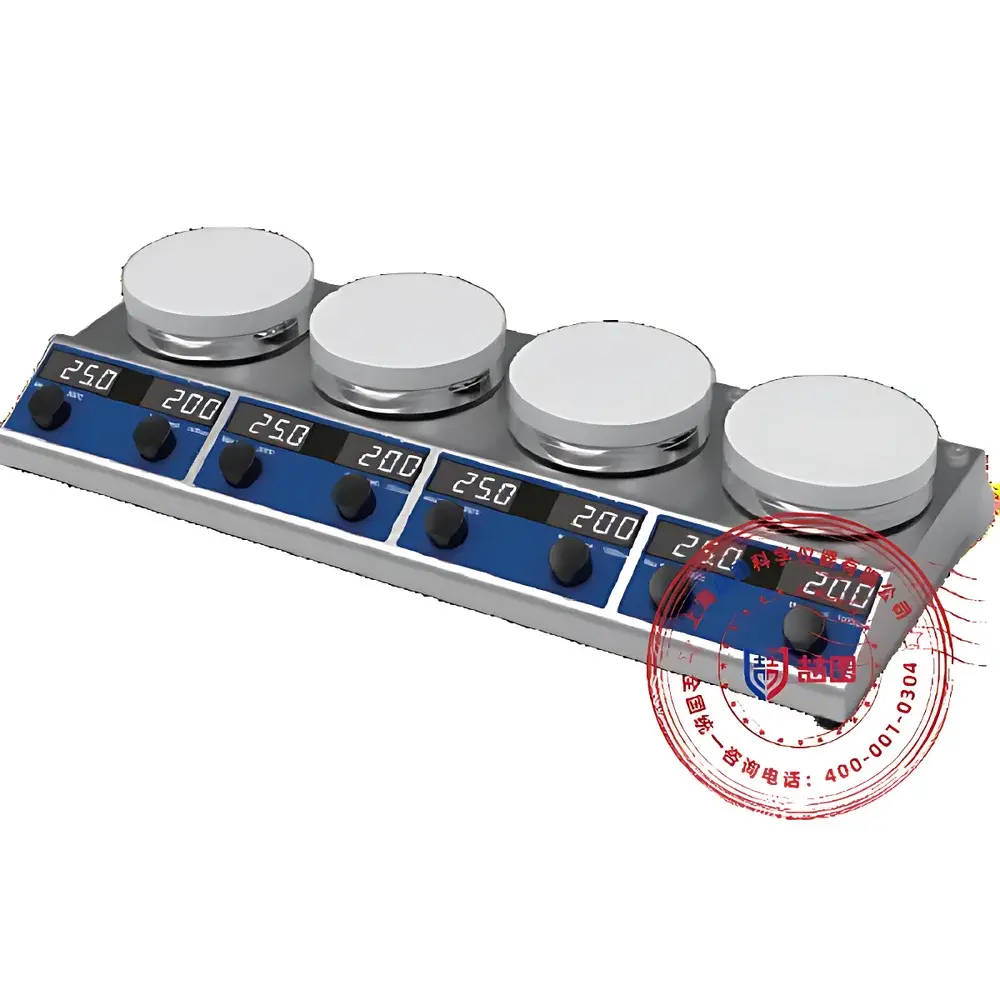
DRETOP MCH-4D Constant-Temperature Magnetic Stirrer
| Brand | DRETOP |
|---|---|
| Origin | Shanghai, China |
| Manufacturer Type | Direct Manufacturer |
| Product Category | Domestic |
| Model | MCH-4D |
| Instrument Type | Magnetic Stirrer |
| Max Stirring Volume | 3 L (per position) |
| Temperature Control Range | RT to 300 °C |
Overview
The DRETOP MCH-4D Constant-Temperature Magnetic Stirrer is a precision-engineered benchtop laboratory instrument designed for simultaneous temperature-controlled stirring across four independent workstations. It operates on the principle of magnetic coupling—where a rotating permanent magnet beneath the heating plate induces synchronous rotation of a magnetic stir bar immersed in the sample—combined with resistive ceramic/PTFE-coated heating for uniform thermal delivery. This dual-function architecture enables reproducible kinetic and thermodynamic studies, including dissolution testing, reaction monitoring, buffer equilibration, and viscosity-sensitive mixing protocols under controlled thermal conditions. Engineered for routine QC labs, academic research facilities, and pilot-scale formulation development, the MCH-4D supports method standardization across multiple samples without cross-contamination or thermal crosstalk between positions.
Key Features
- Four independently controllable stirring stations—each with dedicated digital PID temperature regulation, adjustable speed control (0–1500 rpm), and programmable timer (1 s to 99 min 59 s)
- Ceramic/PTFE-coated heating plate: chemically inert surface resists acid, alkali, and organic solvent exposure; facilitates rapid thermal response and easy decontamination
- Brushless DC motor drive: delivers consistent torque at low noise levels (20,000 hours of operational lifespan
- High-strength high-temperature resistant magnets: maintain stable coupling up to 300 °C ambient plate temperature, supporting continuous operation with Teflon- or glass-coated stir bars
- 304 stainless steel housing: corrosion-resistant enclosure compliant with ISO 14644-1 Class 8 cleanroom-compatible surface finish standards
- Digital LED interface with real-time display of setpoint/actual values for both temperature and rotational speed per station
Sample Compatibility & Compliance
The MCH-4D accommodates standard laboratory glassware—including beakers (50–1000 mL), Erlenmeyer flasks, and jacketed reactors—up to 3 L volume per station when using appropriately sized stir bars (e.g., 30–50 mm elliptical or cross-shaped). Its design conforms to IEC 61010-1:2010 safety requirements for electrical equipment used in laboratory environments. Temperature accuracy is maintained within ±1 °C over the full RT–300 °C range (calibrated at 100 °C and 200 °C), meeting ASTM E2251-22 criteria for thermal uniformity in heated stir plates. The unit supports GLP-compliant workflows through non-volatile parameter memory retention and sequential timestamped operation logging (via optional RS-232/USB data export).
Software & Data Management
While the MCH-4D operates as a standalone instrument with local digital controls, it supports external data acquisition via its TTL-level serial interface (RS-232, optional USB-to-serial adapter). Integration with LabVIEW™, MATLAB®, or custom Python-based SCADA systems enables automated protocol execution, multi-point temperature ramping, and synchronized speed profiling. Audit trail functionality—including user ID tagging, parameter change timestamps, and session start/stop logs—is achievable when paired with validated third-party laboratory information management systems (LIMS) compliant with FDA 21 CFR Part 11 requirements.
Applications
- Controlled-temperature dissolution testing of pharmaceutical APIs in USP Apparatus II configurations
- Homogenization of nanoparticle suspensions and colloidal dispersions requiring precise thermal stabilization
- Buffer preparation and pH adjustment workflows where temperature-dependent ionization must be minimized
- Accelerated stability studies involving thermal stress exposure during mixing
- Multi-variable screening experiments in catalyst development, polymer synthesis, and electrochemical electrolyte formulation
- Teaching laboratories conducting calorimetry pre-equilibration or Arrhenius kinetic analysis
FAQ
What is the maximum recommended vessel diameter for optimal stirring performance?
For uniform vortex formation and minimal splashing, use vessels with bottom diameters ≤120 mm—compatible with the 140 mm heating plate footprint.
Can the MCH-4D be used under inert atmosphere conditions?
Yes—when placed inside gloveboxes or sealed enclosures, provided ventilation pathways for heat dissipation remain unobstructed and ambient humidity remains below 80% RH.
Is calibration documentation available for ISO/IEC 17025 traceability?
Factory calibration certificates (NIST-traceable reference standards) are provided upon request and include temperature uniformity maps and speed verification reports.
Does the unit support external temperature probe input for sample-core feedback control?
No—the MCH-4D uses built-in surface-sensing PT100 sensors only; closed-loop sample-core temperature control requires integration with an external PID controller and immersion probe.
What maintenance intervals are recommended for long-term reliability?
Inspect stir bar alignment and plate surface integrity every 6 months; clean heating surface with ethanol-dampened lint-free cloth after each use; verify motor cooling fan operation annually.



