
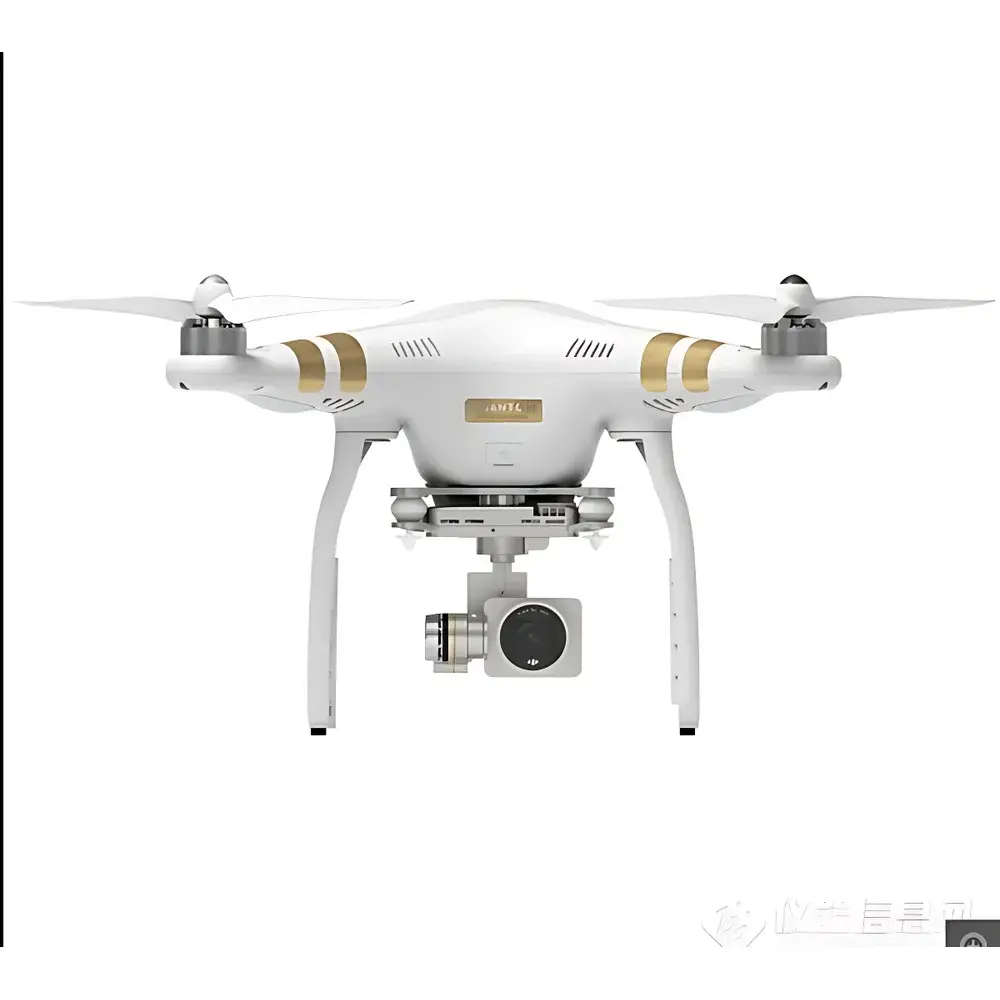
SKA AeroMonitor UAV-Mounted Atmospheric Heavy Metal & Multi-Gas Monitoring System
| Origin | Beijing, China |
|---|---|
| Manufacturer Type | Authorized Distributor |
| Origin Category | Domestic (China) |
| Model | UAV-Mounted Integrated Sensor Payload |
| Price Range | USD 140,000 – 210,000 |
| Product Category | Atmospheric Heavy Metal & Particulate Matter Online Analyzer |
| Measurement Principle | Laser Scattering (PM), Electrochemical (SO₂, NO₂, CO, O₃), Photoionization (VOC), Optical Absorption (optional heavy metal speciation via integrated micro-XRF or LIBS module*) |
| Measurement Range | TSP, PM₁₀ (0–1999 µg/m³), PM₂.₅ (0–999 µg/m³), O₃/SO₂/NO₂ (0–1 ppm), CO (0–200 ppm), VOC (0–50 ppm) |
| Detection Limit | 1–10 ppb (gas species) |
| Filter Replacement Interval | 30 days (under typical urban ambient conditions) |
| Operating Temperature | −30 °C to +60 °C |
| Operating Humidity | 15–95% RH (non-condensing) |
| Ambient Pressure Range | 80–106 kPa |
| Power Supply | 12–24 V DC |
| Weight | 950 g (7-parameter standard configuration) |
| Dimensions | 220 × 145 × 60 mm |
| Battery Endurance | ≥10 h continuous operation (with onboard LiPo power management) |
| Data Transmission | Dual-mode GPRS + 2.4 GHz RF telemetry (AES-128 encrypted) |
| Compliance | ISO 9001-certified manufacturing |
Overview
The SKA AeroMonitor UAV-Mounted Atmospheric Heavy Metal & Multi-Gas Monitoring System is an integrated airborne environmental sensing payload engineered for high-spatial-resolution atmospheric profiling in inaccessible, hazardous, or topographically complex zones—including industrial perimeters, landfill boundaries, wildfire plumes, and post-disaster zones. Unlike ground-based fixed stations, this system enables dynamic vertical and horizontal sampling across defined flight corridors, delivering three-dimensional concentration gradients of regulated pollutants. Its core measurement architecture combines laser scattering for real-time particulate mass concentration (TSP, PM₁₀, PM₂.₅), electrochemical cells for reactive gases (SO₂, NO₂, O₃, CO), photoionization detection for volatile organic compounds (VOCs), and optional on-board micro-X-ray fluorescence (µ-XRF) or laser-induced breakdown spectroscopy (LIBS) modules for elemental speciation of airborne heavy metals (e.g., Pb, Cd, As, Cr, Ni). All sensors are calibrated traceably to NIST SRMs and validated per ISO/IEC 17025 requirements at the point of integration. The system operates autonomously during flight while synchronizing sensor timestamps with GNSS position, IMU attitude, and barometric altitude—enabling georeferenced, metrologically coherent datasets compliant with regulatory air quality modeling frameworks.
Key Features
- Modular multi-sensor architecture supporting field-swappable gas and particulate modules without recalibration
- Real-time dual-channel data transmission: encrypted RF telemetry (for low-latency local monitoring) + redundant GPRS uplink (for cloud persistence and remote dashboard access)
- Onboard edge-processing unit performing automatic baseline drift correction, humidity/temperature compensation, and outlier rejection using IEC 61508-compliant algorithms
- Integrated power management system with intelligent voltage regulation and battery health monitoring—enabling stable operation across full 12–24 V input range
- Ruggedized carbon-fiber enclosure rated IP65 for dust/water resistance, with thermal-stable internal mounting to minimize mechanical stress-induced sensor drift
- Pre-certified compatibility with Pixhawk-based autopilot platforms (e.g., ArduPilot, PX4) and seamless integration with Mission Planner for synchronized flight-path–pollutant correlation
Sample Compatibility & Compliance
The AeroMonitor is designed for ambient air sampling under ISO 7708-defined inhalable and thoracic fractions. Its inlet geometry and flow control meet EN 12341 requirements for PM sampler equivalence. Gas sensors comply with EN 50104 (electrochemical CO detectors) and EN 14625 (O₃ analyzers). The system supports configurable averaging intervals (1 s to 60 s) aligned with EU Directive 2008/50/EC and US EPA 40 CFR Part 53 reference equivalency criteria. All firmware and cloud software adhere to FDA 21 CFR Part 11 for electronic records and signatures, including full audit trail logging of calibration events, sensor replacements, and data edits. Certificates of Conformance (CoC) and calibration reports—including uncertainty budgets per GUM (JCGM 100:2008)—are provided with each unit shipment.
Software & Data Management
The AeroMonitor Cloud Platform is a secure, role-based SaaS application accessible via web browser or native mobile app. It ingests time-synchronized streams from multiple UAVs simultaneously, applies spatial interpolation (inverse distance weighting and kriging), and renders 3D pollutant isosurfaces overlaid on orthomosaic maps. Raw data exports support CSV, NetCDF, and HDF5 formats for third-party modeling (e.g., CALPUFF, AERMOD). The platform includes built-in statistical tools for trend analysis (Mann-Kendall), exceedance reporting (per WHO/EU thresholds), and automated alerting (SMS/email) upon threshold breach. All data storage follows ISO/IEC 27001 security controls; encryption-at-rest uses AES-256, and TLS 1.3 secures all API endpoints.
Applications
- Regulatory compliance monitoring near emission sources (power plants, smelters, refineries) where ground access is restricted or legally contested
- Rapid-response environmental emergency assessment (e.g., chemical spills, illegal dumping, volcanic SO₂ plumes)
- Vertical profiling of boundary layer chemistry to validate satellite-derived aerosol optical depth (AOD) and model boundary layer height
- Source apportionment studies using spatiotemporal clustering of VOC/PM₂.₅ co-emission signatures
- Long-term trend analysis of heavy metal deposition in sensitive ecological zones (wetlands, alpine lakes, protected forests)
FAQ
Does the system support real-time heavy metal quantification?
Yes—when equipped with the optional µ-XRF or LIBS module, it delivers semi-quantitative elemental composition (ppm-level detection) of filter-collected aerosols in situ; full quantification requires lab-based validation against ICP-MS.
Can data be exported for regulatory submission to national agencies (e.g., MEP, EPA)?
Yes—the platform generates audit-ready PDF reports compliant with China’s HJ 653-2013 and US EPA QA/G-5 guidelines, including metadata on calibration history, instrument ID, and environmental conditions.
Is the sensor payload compatible with DJI Matrice 300 RTK or custom VTOL platforms?
Yes—mechanical, electrical, and communication interfaces follow STANAG 4671 and MAVLink v2.0 standards; SDK documentation and ROS2 drivers are available under NDA.
What is the recommended maintenance interval for sensor recalibration?
Electrochemical sensors require zero/span verification every 30 days; laser PM modules undergo optical alignment check every 90 days; full factory recalibration is recommended annually or after exposure to >1000 µg/m³ PM concentrations.
How is data integrity ensured during intermittent GPRS connectivity?
Onboard 16 GB industrial-grade eMMC stores raw sensor logs with timestamped CRC32 checksums; data syncs automatically upon reconnection without loss or duplication.







