
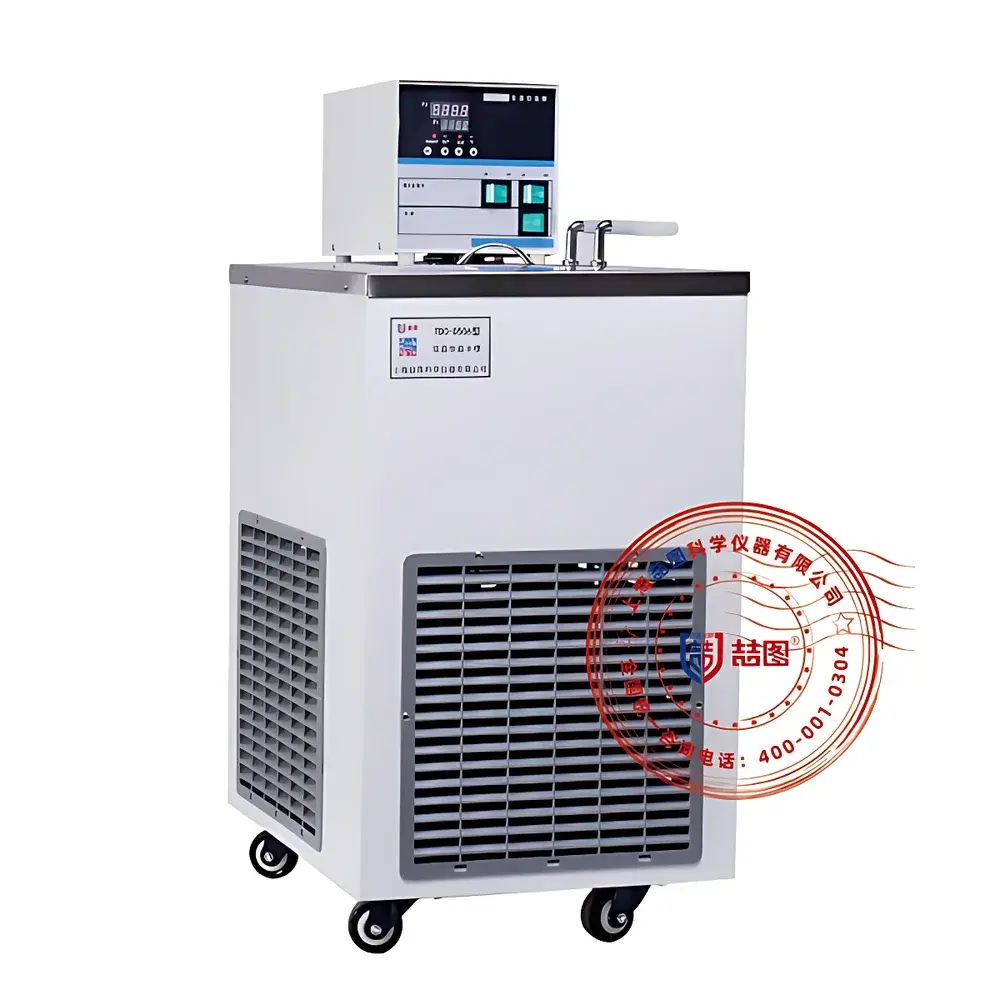
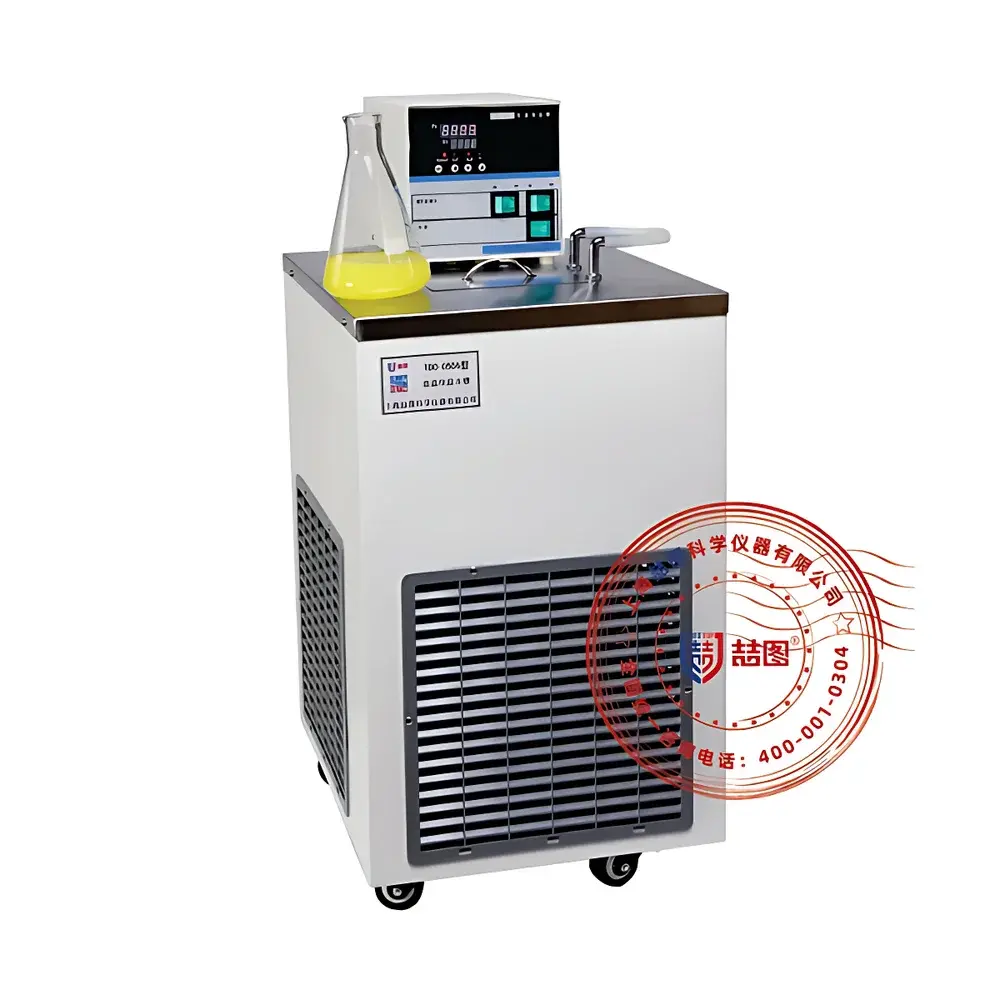
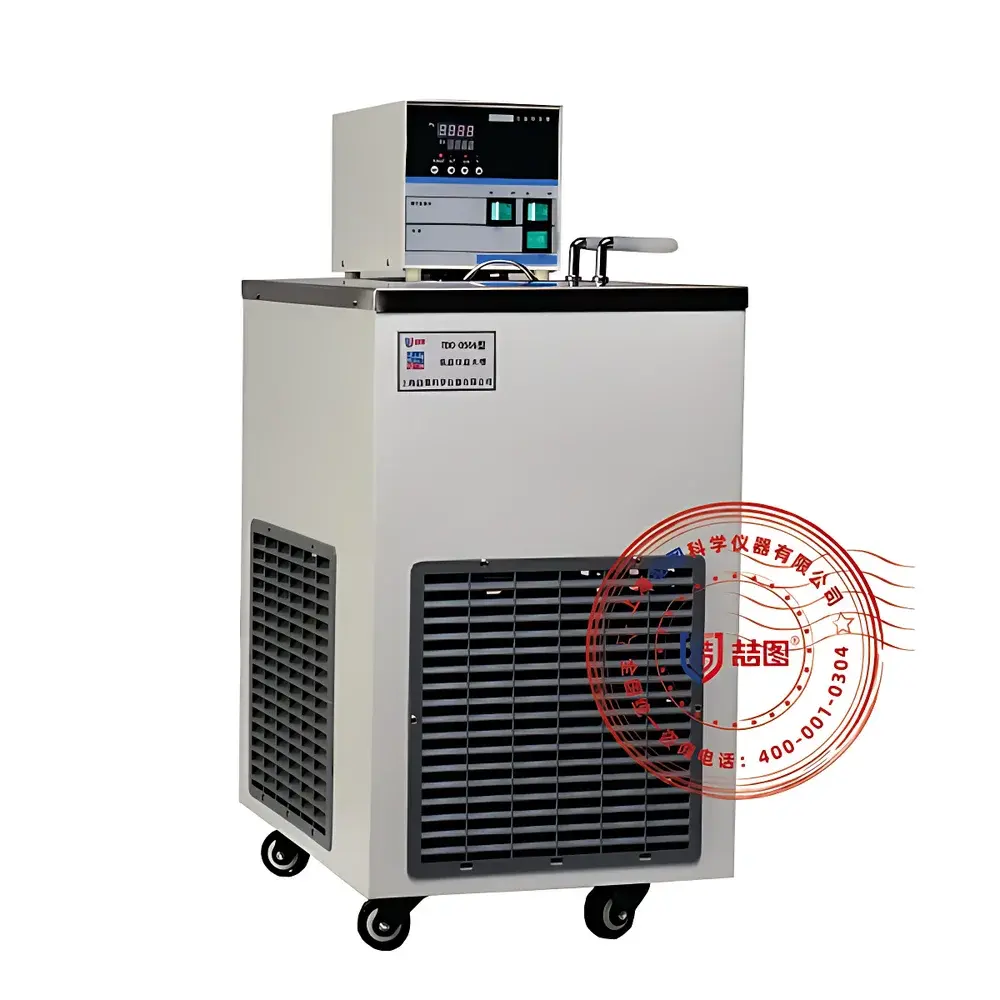
DRETOP TDC-2050 Low-Temperature Constant-Temperature Bath
| Brand | DRETOP |
|---|---|
| Origin | Shanghai, China |
| Manufacturer Type | Direct Manufacturer |
| Product Category | Domestic |
| Model | TDC-2050 |
| Instrument Type | Constant-Temperature Bath |
| Circulation Mode | Internal & External Circulation |
| Temperature Control | Refrigeration & Heating |
| Bath Volume | 50 L |
| Temperature Range | −20 °C to 100 °C |
| Temperature Stability | ±1 °C |
| Temperature Resolution | 0.1 °C |
| Power Supply | 220 V, 50 Hz |
Overview
The DRETOP TDC-2050 Low-Temperature Constant-Temperature Bath is a precision-engineered, self-contained thermal control system designed for laboratory and industrial applications requiring stable, uniform, and programmable liquid temperature environments. Utilizing a dual-mode refrigeration-heating architecture with high-efficiency compressors and PID-controlled heating elements, the TDC-2050 maintains precise thermal setpoints across its full operating range of −20 °C to 100 °C. Its horizontal bath configuration optimizes benchtop footprint while enabling direct immersion testing or external circulation to auxiliary equipment—including reaction vessels, condensers, automated synthesis platforms, and analytical instrumentation. The system operates on the principle of forced convection via a low-heat-generation centrifugal pump, ensuring minimal self-heating interference and superior thermal field homogeneity—critical for reproducible physical property measurements, kinetic studies, and calibration traceability.
Key Features
- High-contrast LCD touchscreen interface with intuitive PID temperature programming and real-time parameter monitoring.
- 304 stainless steel inner tank and work surface, combined with electrostatically sprayed powder-coated outer casing—corrosion-resistant, non-porous, and easily sanitized.
- Dual-circuit fluid management: integrated inlet/outlet ports support both internal recirculation (via supplied silicone tubing) and external closed-loop circulation to peripheral devices.
- Drain valve assembly enables rapid, complete medium replacement—essential for multi-protocol labs using diverse heat-transfer fluids (e.g., water, ethylene glycol mixtures, anhydrous ethanol, or specialty low-temperature oils).
- Multi-layer safety architecture includes over-temperature cutoff, low-level fluid detection, compressor thermal overload protection, and current-fault interruption—compliant with IEC 61010-1 electrical safety requirements.
- U-shaped multi-orifice return manifold design promotes turbulent flow dynamics within the bath chamber, achieving ≤±0.5 °C spatial uniformity (measured per ASTM E747) across the 500 × 370 × 300 mm working volume.
Sample Compatibility & Compliance
The TDC-2050 accommodates a broad spectrum of sample containers—from standard glassware (e.g., jacketed reactors, Dewar flasks) to custom-engineered metal or PTFE housings—provided thermal expansion coefficients and chemical compatibility with selected heat-transfer media are verified. Recommended media selection follows ISO 8502-12 guidelines for thermal stability and toxicity assessment: deionized water (5–80 °C), 1:2 ethylene glycol/water (−35 to 100 °C), ≥99.5% anhydrous ethanol (−80 to 20 °C), or certified low-volatility silicone-based fluids (−80 to 100 °C). All wetted components conform to USP Class VI biocompatibility standards. The unit supports GLP/GMP workflows through configurable audit trails (when paired with optional DRETOP LabLink™ software) and meets essential clauses of FDA 21 CFR Part 11 for electronic record integrity when operated in validated configurations.
Software & Data Management
While the TDC-2050 operates autonomously via its embedded controller, optional integration with DRETOP LabLink™ PC software enables remote temperature profiling, data logging at user-defined intervals (down to 1-second resolution), and export to CSV or Excel formats for statistical process control (SPC) analysis. The software supports alarm event timestamping, trend charting with overlay capability, and customizable report generation—including compliance-ready summaries aligned with ISO/IEC 17025 documentation requirements. Firmware updates are delivered via USB port and retain all user-calibration offsets post-installation.
Applications
- Calibration of thermometers, RTDs, and thermocouples per ASTM E230/E747 protocols.
- Viscosity measurement support for rotational rheometers and capillary viscometers requiring temperature-stabilized baths.
- Controlled cooling/heating of chromatographic columns, detector cells, and autosampler trays in HPLC and GC systems.
- Thermal conditioning of polymer samples prior to tensile, DSC, or DMA testing.
- Stabilization of laser sources, photodetectors, and optical interferometers sensitive to thermal drift.
- Biological incubation support for enzyme kinetics, cell culture viability assays, and protein folding studies under defined thermal stress conditions.
FAQ
What heat-transfer fluids are compatible with the TDC-2050 at −20 °C?
Deionized water is unsuitable below 0 °C; use a 1:2 volume ratio ethylene glycol/water mixture (freezing point ≈ −35 °C) or ≥99.5% anhydrous ethanol (freezing point −114 °C). Ensure fluid flash point exceeds ambient lab temperature by ≥20 °C.
Can the TDC-2050 maintain ±0.1 °C stability at 100 °C?
Yes—the system achieves ±1 °C stability across its full range; however, for applications demanding tighter control (e.g., metrology), consider the TDC-2050U variant (±0.01 °C stability) with enhanced sensor redundancy and thermal shielding.
Is external circulation pressure sufficient for a 3-meter closed loop?
The built-in centrifugal pump delivers up to 0.3 bar head pressure at 12 L/min flow rate—adequate for typical bench-scale loops ≤5 m total length with ≤2 elbows and one heat exchanger. For longer or higher-resistance circuits, consult DRETOP’s auxiliary pump compatibility matrix.
How often should the heat-transfer fluid be replaced?
Deionized water: every 3–6 months. Ethylene glycol solutions: annually or after visible discoloration/pH shift (>0.5 unit). Anhydrous ethanol: replace immediately upon odor change or >5% water content (verified by Karl Fischer titration).
Does the unit support RS-232 or Ethernet communication?
Standard configuration includes RS-232; optional Ethernet (TCP/IP) and USB-to-serial adapters are available for SCADA or LIMS integration. Modbus RTU protocol is supported in firmware v2.4+.



