
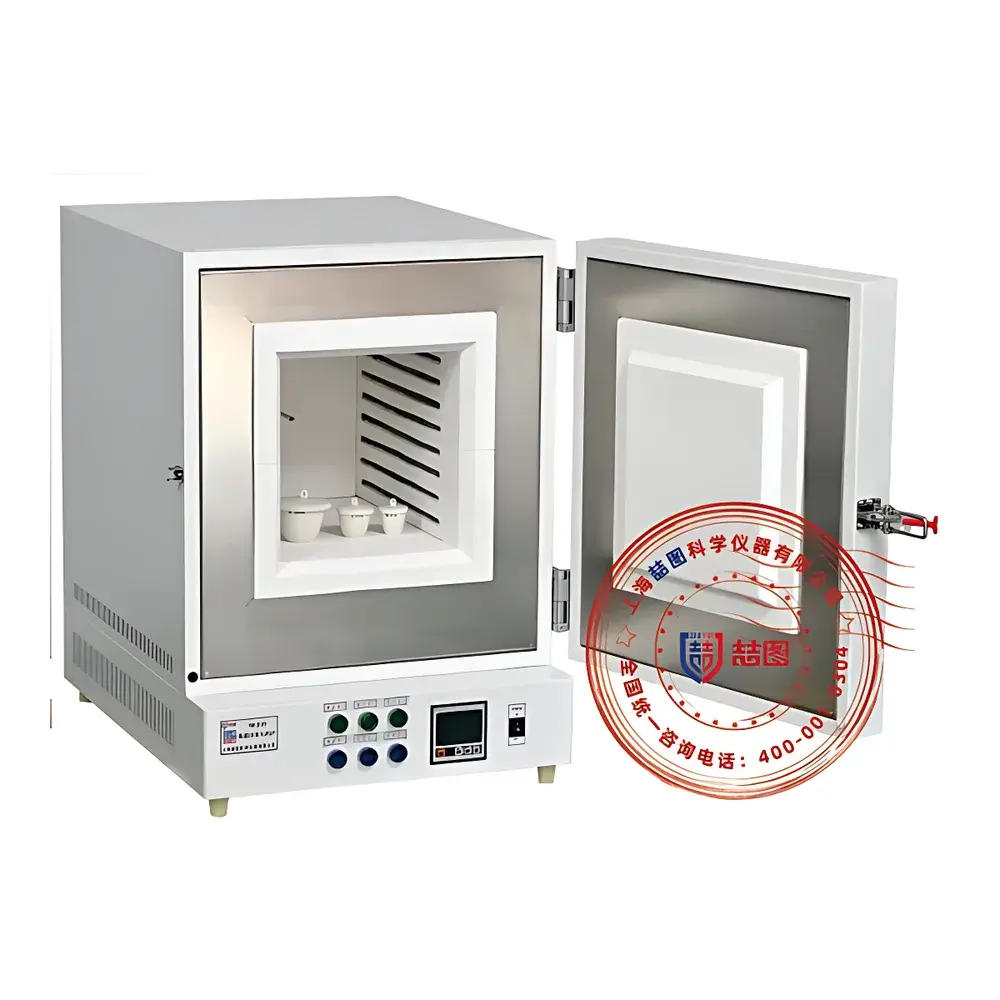
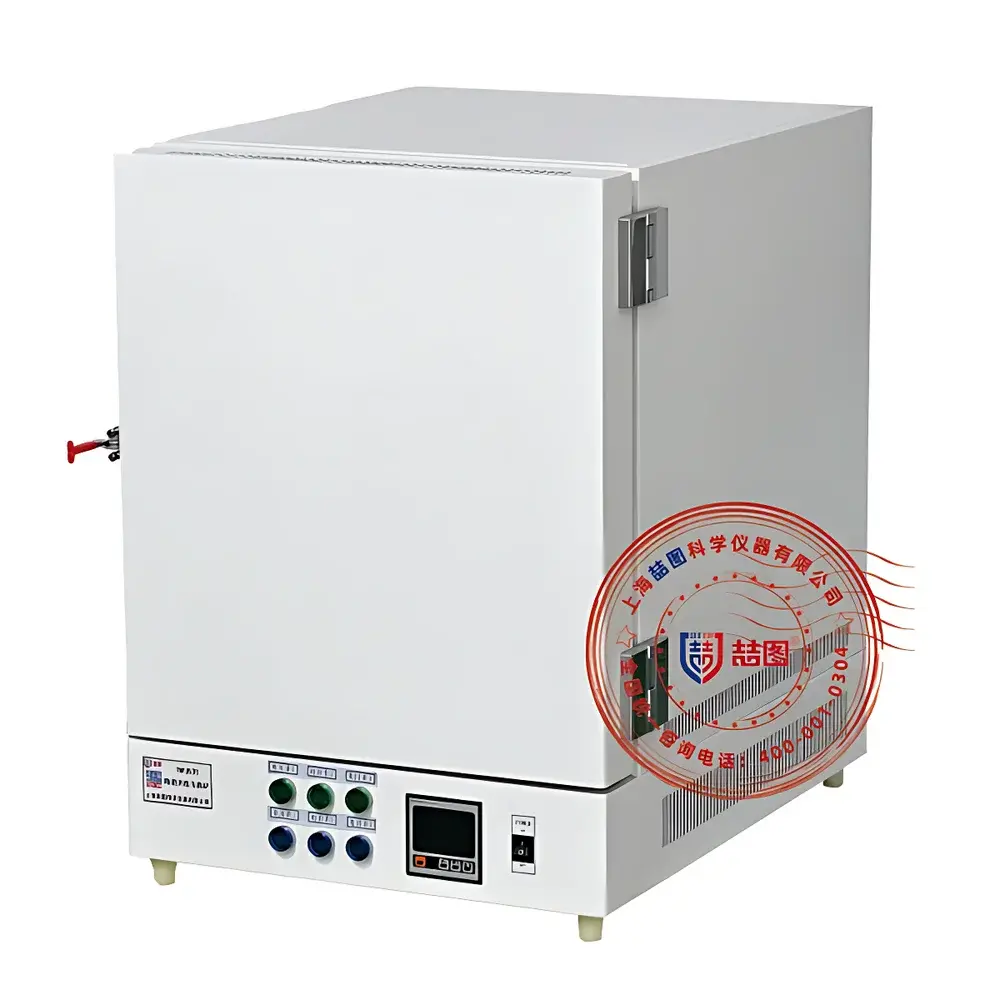
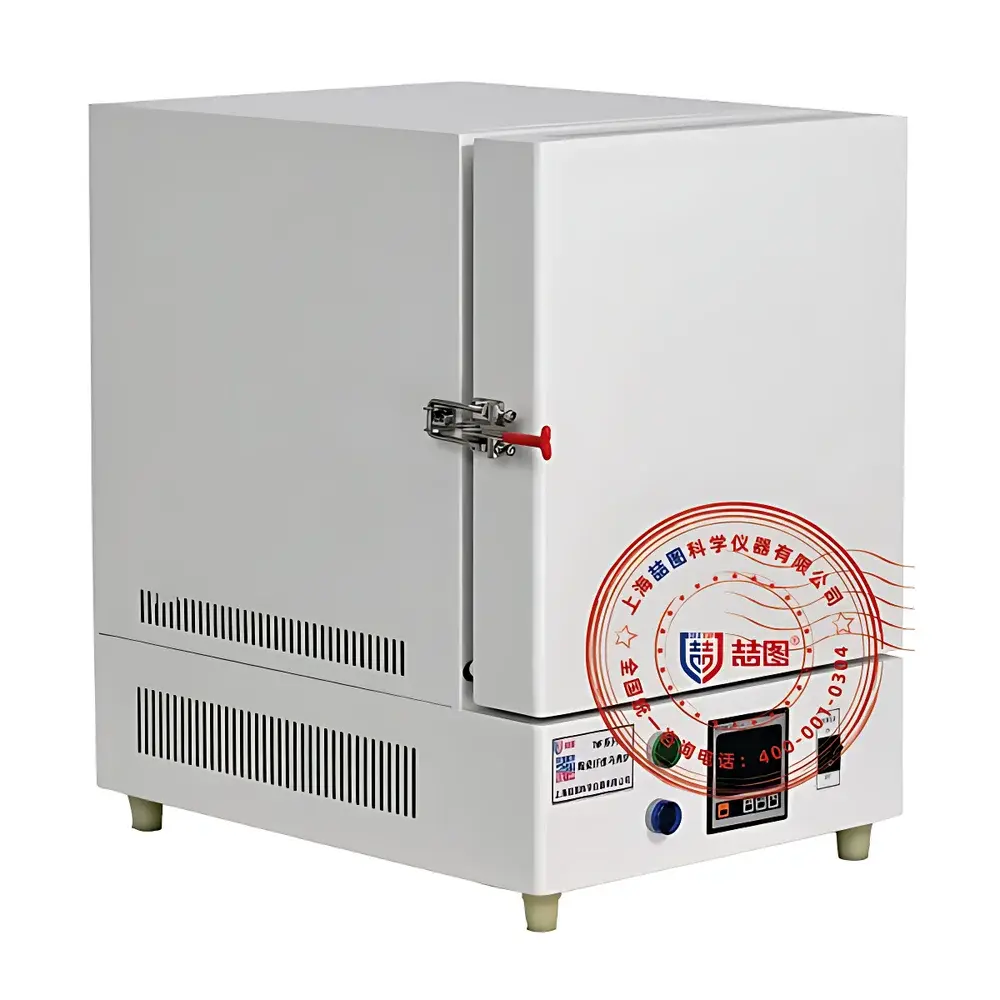
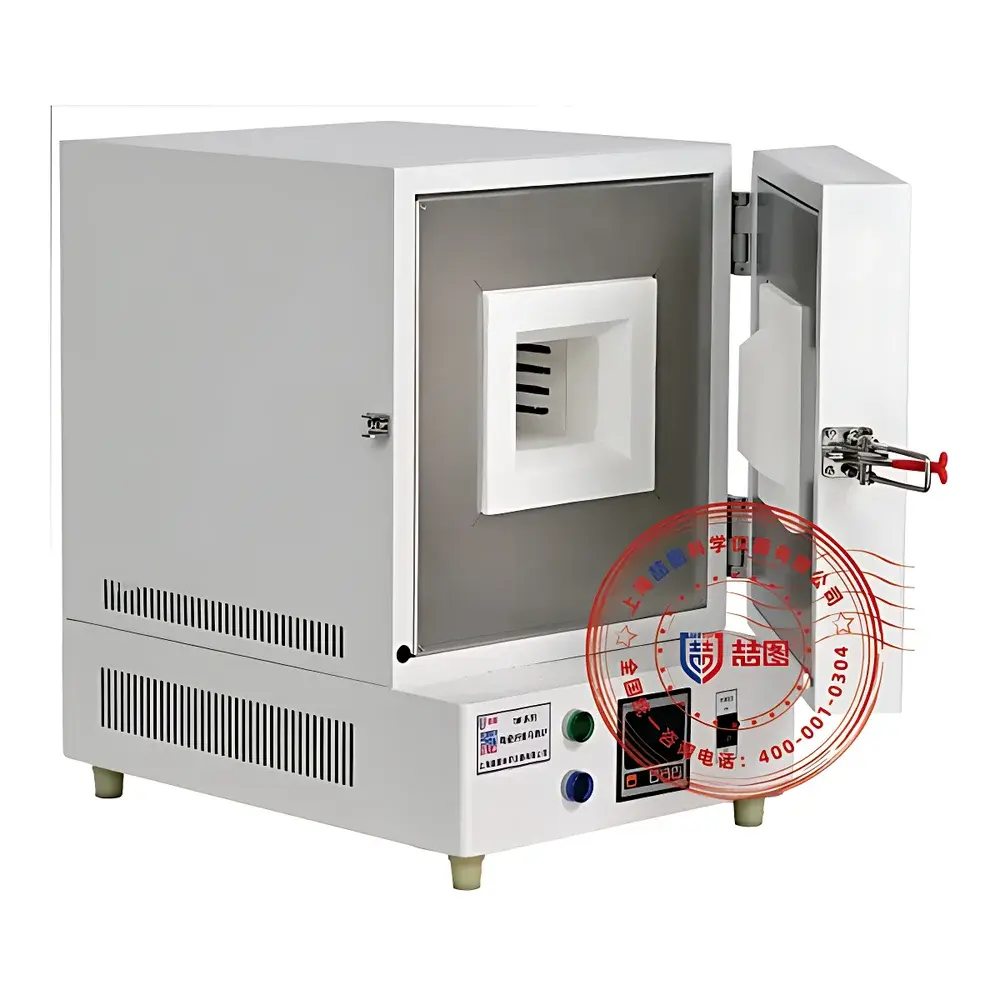
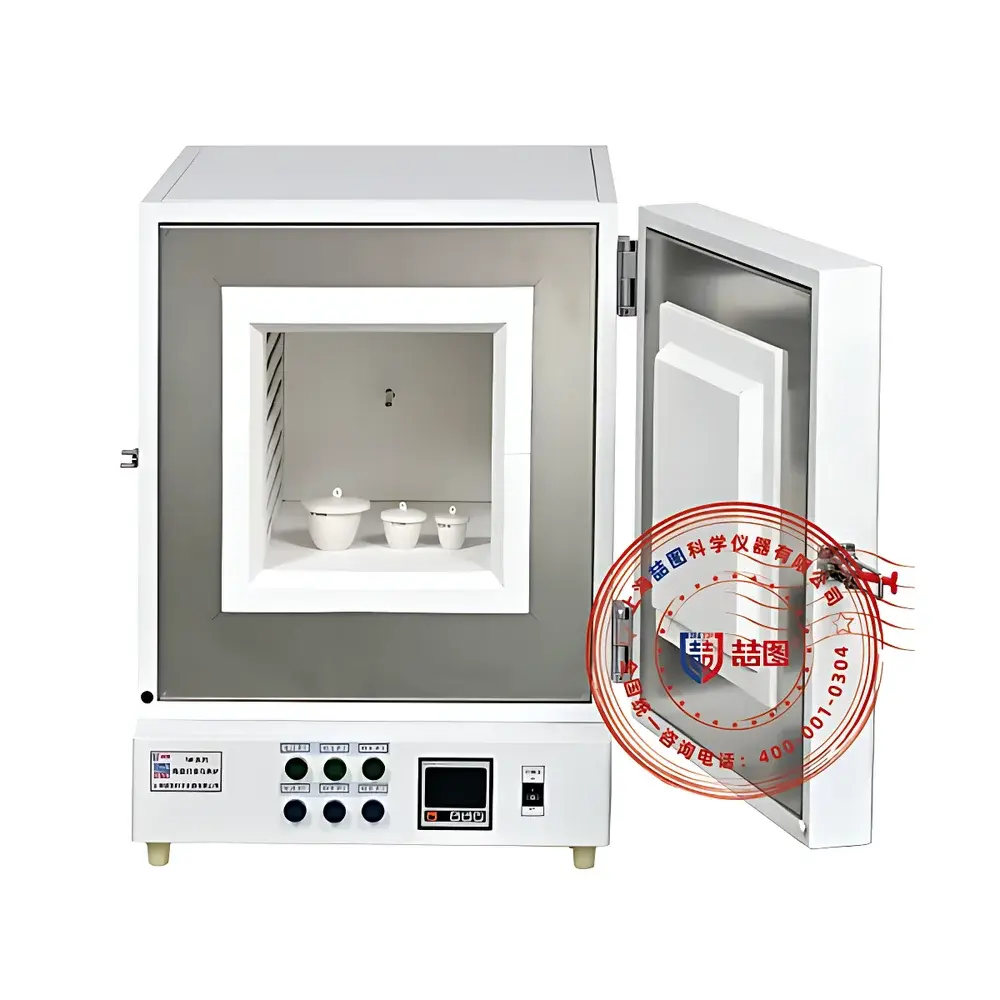
DRETOP TMF-80-12T Ceramic Fiber Muffle Furnace
| Brand | DRETOP |
|---|---|
| Origin | Shanghai, China |
| Manufacturer Type | Direct Manufacturer |
| Product Category | Domestic |
| Model | TMF-80-12T |
| Instrument Type | Box-Type Muffle Furnace |
| Maximum Temperature | 1200 °C |
| Temperature Control Accuracy | ±1 °C |
| Rated Power | 16 kW |
| Heating Time to Max Temp | 45 min |
| Heating Method | High-Temperature Alloy Heating Elements |
| Internal Dimensions (W×D×H) | 400×500×400 mm |
| Control System | Microcomputer-Based PID Controller |
| Nominal Chamber Volume | 80 L |
Overview
The DRETOP TMF-80-12T Ceramic Fiber Muffle Furnace is a high-performance box-type thermal processing instrument engineered for precision laboratory and industrial heat treatment applications. Designed around advanced ceramic fiber insulation technology, it replaces traditional refractory brick or metal-sheathed furnace architectures with a lightweight, low-thermal-mass chamber that enables rapid thermal response, superior energy efficiency, and exceptional temperature uniformity across the 80 L working volume. Its operating range spans from ambient +50 °C to 1200 °C, making it suitable for critical thermal protocols including ashing, calcination, sintering, annealing, and heat treatment of ceramics, metals, composites, and advanced functional materials. The furnace employs triple-wall radiant heating—via high-strength, high-resistivity superalloy heating elements embedded in the side and rear walls—ensuring symmetrical heat distribution and minimizing axial and radial thermal gradients (<±3 °C at 1200 °C per ASTM E220 calibration methodology). All structural and control systems comply with IEC 61000-6-3 (EMC) and IEC 61000-6-4 (immunity), with electrical safety conforming to IEC 61010-1.
Key Features
- Triple-zone ceramic fiber chamber constructed from vacuum-formed, low-conductivity alumina-silica boards (density: ~128 kg/m³; service life >10,000 h at 1200 °C), reducing standby heat loss by >65% versus conventional brick-lined furnaces.
- Microcomputer-based PID temperature controller with large backlit LCD interface, supporting 30-segment programmable ramp/soak profiles—including rate-limited heating (0.1–30 °C/min), dwell time control (1–9999 min), and automatic cooldown sequencing.
- Dual-stage overtemperature protection: primary solid-state relay cutoff at setpoint +15 °C; secondary independent mechanical limiter at 1250 °C, both integrated into a fail-safe circuit with visual/audible alarm and non-volatile memory retention (power-loss recovery).
- Intelligent door interlock system: automatic power interruption upon door opening, with immediate resumption upon closure—eliminating thermal shock to samples and extending element lifespan.
- Robust mechanical design featuring phosphate-treated steel chassis, high-temp powder-coated exterior (200 °C rated), and reinforced stainless-steel inner lining (304 SS, 2 mm thickness) for corrosion resistance and easy cleaning of carbonaceous residues.
- Integrated digital voltmeter and ammeter for real-time monitoring of line voltage (AC 380 V ±10%) and current draw—enabling predictive maintenance and compliance verification during GLP/GMP audits.
Sample Compatibility & Compliance
The TMF-80-12T accommodates standard crucibles (alumina, quartz, silicon carbide), graphite boats, and custom fixtures up to Ø150 mm × 100 mm height. Its uniform 3-zone heating architecture ensures reproducible thermal histories for heterogeneous samples—including nanopowders, thin-film substrates, metallurgical specimens, and pharmaceutical excipients—without hot-spot formation. The furnace meets ISO 9001:2015 manufacturing standards and supports regulatory traceability via optional RS485 Modbus RTU interface for integration into LIMS or MES platforms. Optional inert gas purging (N₂, Ar) with mass-flow-controlled inlet valve enables oxygen-sensitive processes compliant with ASTM C1171 (ceramic sintering) and USP (heavy metal testing). Full documentation package includes factory calibration certificate (NIST-traceable thermocouple), electrical safety report, and CE Declaration of Conformity.
Software & Data Management
While the base model operates via standalone PID controller, the optional TC-series color touchscreen upgrade provides full data logging (sampled at 1 Hz), real-time curve visualization, multi-level user authentication (engineer/operator/admin), and export-ready CSV reports. All recorded data—including temperature, power consumption, event timestamps, and alarm logs—are stored locally on encrypted internal flash memory with audit trail functionality meeting FDA 21 CFR Part 11 requirements (electronic signatures, change history, read-only archive mode). Remote monitoring is enabled via Ethernet or optional 4G module (firmware v3.2+), allowing secure access through HTTPS-enabled web dashboard compatible with Chrome, Edge, and Safari browsers.
Applications
- Materials science: sintering of oxide ceramics (Al₂O₃, ZrO₂), densification of SiC composites, crystallization of lithium-ion battery cathodes (NMC, LFP), and thermal stability assessment of MOFs and perovskites.
- Metallurgy: solution annealing of stainless steels, stress-relief of welded components, and controlled oxidation of titanium alloys per AMS 2750E pyrometry requirements.
- Environmental & geochemical analysis: gravimetric determination of total suspended solids (TSS), volatile solids (VS), and ash content in wastewater sludge per APHA Standard Methods 2540F.
- Pharmaceutical QA/QC: residual solvent removal from APIs, excipient dehydration per USP , and thermal degradation profiling for stability-indicating methods.
- Aerospace & defense: pre-oxidation of thermal barrier coatings (TBCs), heat treatment of nickel-based superalloys (Inconel 718), and outgassing validation for vacuum-compatible hardware.
FAQ
What is the recommended maintenance interval for the heating elements?
Heating elements require no scheduled replacement under normal operation; however, annual visual inspection for deformation or surface oxidation is advised. Expected service life exceeds 5,000 h at 1100 °C.
Can the furnace be operated under inert atmosphere without modification?
Yes—when equipped with the optional inert gas inlet valve and exhaust chimney, the unit achieves <10 ppm O₂ residual when purged with nitrogen at 1–2 L/min flow rate.
Is the temperature uniformity validated per industry standards?
Yes—uniformity mapping is performed per ASTM E220 Annex A3 using nine-point thermocouple array; typical results show ±2.5 °C at 1000 °C and ±3.0 °C at 1200 °C across the usable zone.
Does the controller support external trigger inputs for synchronized process automation?
The RS485 interface supports Modbus RTU command sets for start/stop, setpoint update, and status polling; discrete I/O terminals (optional) enable TTL-level triggering from PLCs or data acquisition systems.
What safety certifications does the furnace carry?
CE-marked per Machinery Directive 2006/42/EC and Low Voltage Directive 2014/35/EU; additionally certified to UL 61010-1 (3rd Ed.) and CSA C22.2 No. 61010-1 for North American markets.



