
DRETOP TMF-80-14TP Ceramic Fiber Muffle Furnace
| Brand | DRETOP |
|---|---|
| Origin | Shanghai, China |
| Manufacturer Type | Direct Manufacturer |
| Product Category | Domestic |
| Model | TMF-80-14TP |
| Instrument Type | Box-Type Muffle Furnace |
| Maximum Temperature | 1400 °C |
| Temperature Control Accuracy | ±1 °C |
| Rated Power | 22 kW |
| Heating Time to Max Temp | 60 min |
| Heating Element | Silicon Carbide Rods |
| Internal Chamber Dimensions | 400 × 500 × 400 mm |
| Control System | Programmable LCD Controller |
| Nominal Volume | 80 L |
Overview
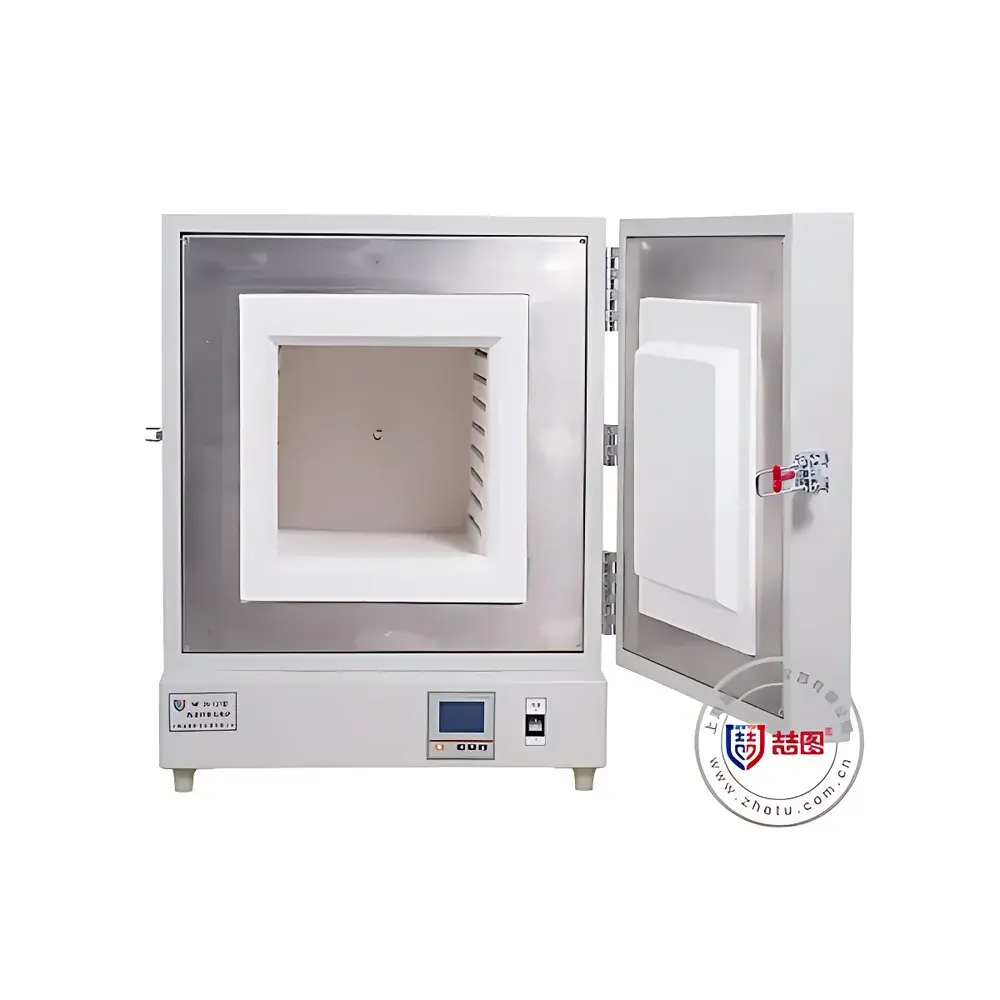
The DRETOP TMF-80-14TP Ceramic Fiber Muffle Furnace is a high-performance box-type thermal processing instrument engineered for precision-controlled high-temperature applications in research laboratories, materials science facilities, and industrial quality control environments. Utilizing lightweight, low-thermal-mass ceramic fiber insulation—vacuum-formed micro-porous boards—the furnace achieves rapid heating rates (≤60 minutes to 1400 °C), superior thermal uniformity (<±3 °C across the working zone at 1300 °C), and minimal external surface temperature rise (<50 °C above ambient at full operating temperature). Its core architecture follows ASTM E220-compliant hot-zone design principles, with an S-type thermocouple (Pt–10Rh/Pt) for accurate temperature sensing and dual-stage overtemperature protection meeting IEC 61000-4-5 surge immunity standards. The furnace operates within a controllable range of RT + 50 °C to 1400 °C, optimized for routine use up to 1300 °C to ensure long-term stability of heating elements and thermal insulation integrity.
Key Features
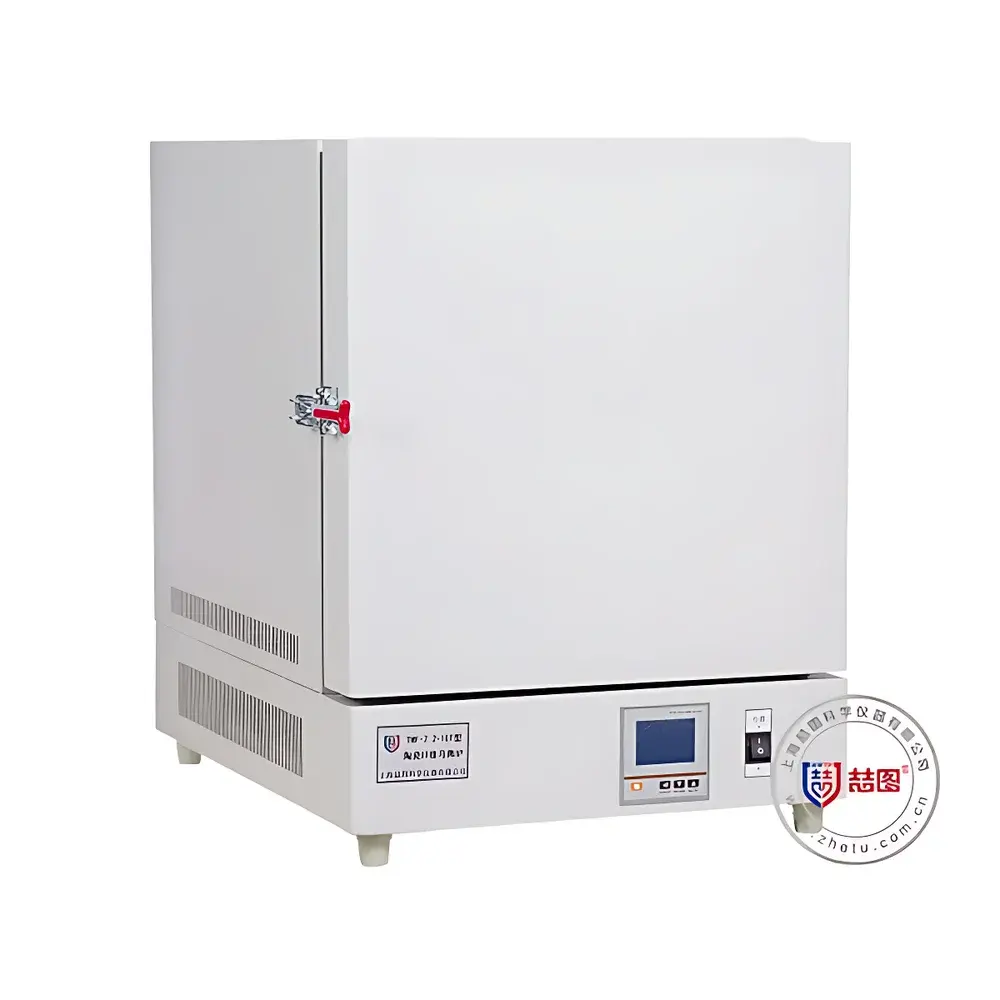
- Integrated structural design with cold-rolled steel outer casing treated via phosphate conversion coating and electrostatic high-temperature powder coating (computer gray finish), ensuring corrosion resistance and mechanical durability.
- Ceramic fiber chamber lined with stainless-steel inner door frame; high-purity alumina-silica fiber walls provide exceptional thermal retention and low heat loss—enabling energy savings of ≥35% compared to traditional refractory brick furnaces.
- High-efficiency silicon carbide (SiC) heating rods arranged symmetrically around the chamber perimeter, delivering uniform radiant heating and minimizing thermal gradients.
- Intelligent PID controller with 30-segment programmable ramp/soak functionality, supporting custom thermal profiles including multi-slope linear ramps, hold periods, and automatic shutdown sequences.
- Real-time ambient temperature compensation algorithm automatically adjusts startup parameters based on measured room temperature, reducing preheat time variability and improving process repeatability.
- Dual independent overtemperature protection: primary controller-based cut-off and secondary hardware-limit relay (setpoint adjustable), both compliant with EN 60519-2 safety requirements for industrial heating equipment.
- Front-loading door with reinforced stainless-steel inner baffle and high-density ceramic fiber gasket ensures consistent sealing and minimizes convection losses at elevated temperatures.
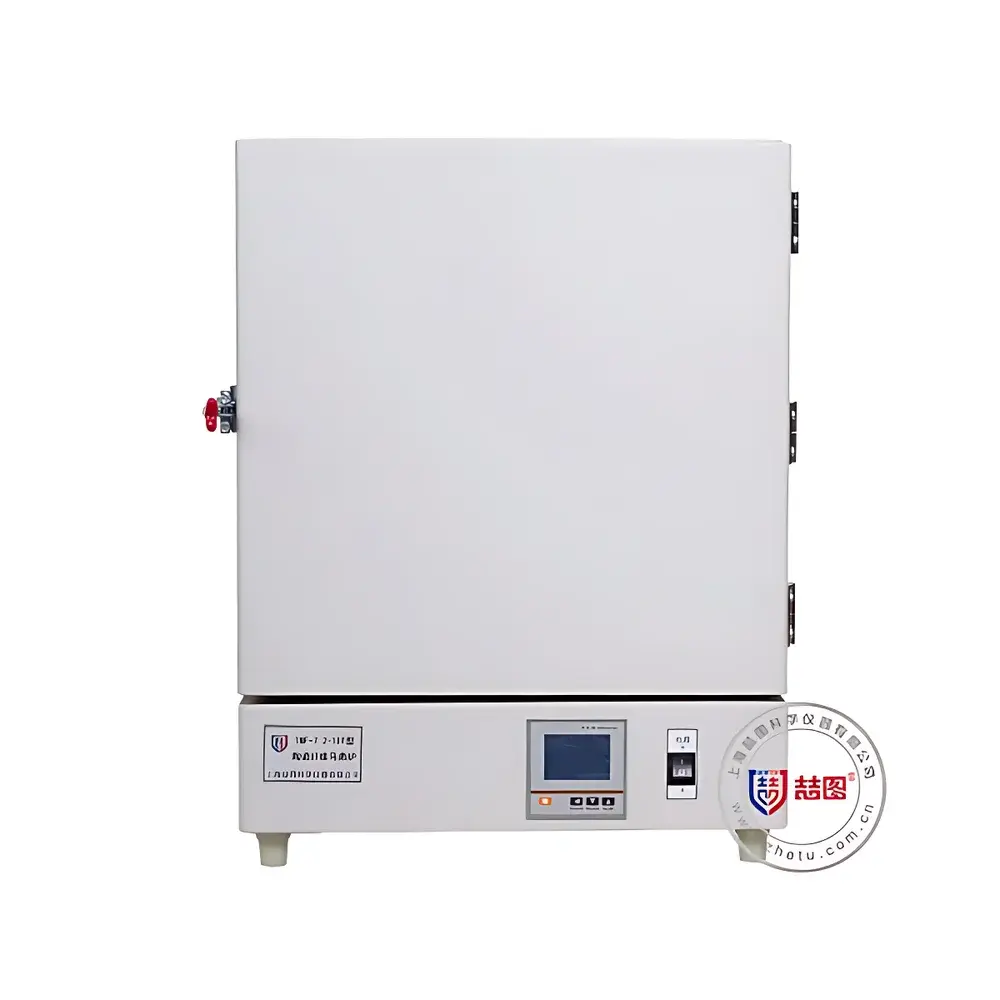
- Modular control panel mounted below the furnace chamber, connected via mineral-insulated compensation cable (IEC 60584-3 Class 1), isolating sensitive electronics from thermal stress and electromagnetic interference.
Sample Compatibility & Compliance
The TMF-80-14TP accommodates standard crucibles (alumina, quartz, silicon carbide, graphite), ceramic setters, and metal trays up to 380 × 480 × 380 mm in footprint. It supports sample masses up to 15 kg under continuous operation at 1300 °C. The furnace complies with ISO/IEC 17025 calibration traceability requirements when used with NIST-traceable thermocouples and certified reference materials. For regulated environments, optional RS485 Modbus RTU interface enables integration into LIMS or SCADA systems with audit-trail-capable data logging (supporting 21 CFR Part 11 electronic signature readiness when paired with validated software). All electrical components meet CE marking directives (EMC Directive 2014/30/EU, Low Voltage Directive 2014/35/EU) and RoHS 2011/65/EU substance restrictions.
Software & Data Management
The programmable LCD controller includes embedded non-volatile memory with power-failure recovery—retaining active program state and setpoints after interruption. Optional RS485 communication allows bidirectional parameter transfer and real-time temperature monitoring via third-party SCADA platforms or custom Python/Node-RED scripts. When configured with the AI-series color touchscreen variant (TMF-80-14AI), users gain access to built-in trend charting, historical curve replay, CSV export capability, and configurable alarm notifications. Firmware updates are performed via USB port using signed binary packages, ensuring integrity verification per IEC 62443-3-3 SL2 security guidelines. Data logs include timestamped temperature readings, power consumption estimates, and event markers (e.g., “Soak Start”, “Ramp Complete”, “Overtemp Alert”).
Applications
This muffle furnace serves critical roles in thermal analysis workflows including ash content determination (ASTM D3174, ISO 1171), loss-on-ignition (LOI) testing (ASTM C114), ceramic sintering (ISO 6474), glass annealing and nucleation studies (ISO 7884-7), powder metallurgy densification (MPIF Standard 35), nanomaterial calcination (e.g., TiO₂, LiFePO₄ precursors), and heat treatment of metallic alloys (annealing, stress relieving, austenitizing per AMS 2750E pyrometry requirements). Its rapid thermal response and tight uniformity make it suitable for method development in USP and Ph. Eur. 2.2.40 thermal validation protocols.
FAQ
What is the recommended maximum continuous operating temperature?
The furnace is rated for continuous operation up to 1300 °C; extended exposure above this threshold accelerates SiC rod oxidation and reduces service life.
Is inert atmosphere operation supported?
Yes—optional integrated gas inlet valve (N₂, Ar, forming gas) enables controlled-atmosphere processing; requires separate mass flow controller and exhaust ducting.
Can the furnace be integrated into a GLP/GMP workflow?
With the AI-series controller and validated data export tools, it supports ALCOA+ data integrity principles; IQ/OQ documentation templates are available upon request.
What maintenance intervals are advised?
Visual inspection of door seal integrity and thermocouple calibration every 6 months; SiC rod resistance check annually; ceramic fiber integrity assessment prior to any thermal shock event.
Does the unit include factory calibration documentation?
Yes—each unit ships with a certificate of conformance and as-found/as-left calibration report against a Fluke 1524 thermometer with 0.1 °C uncertainty (k=2).



