
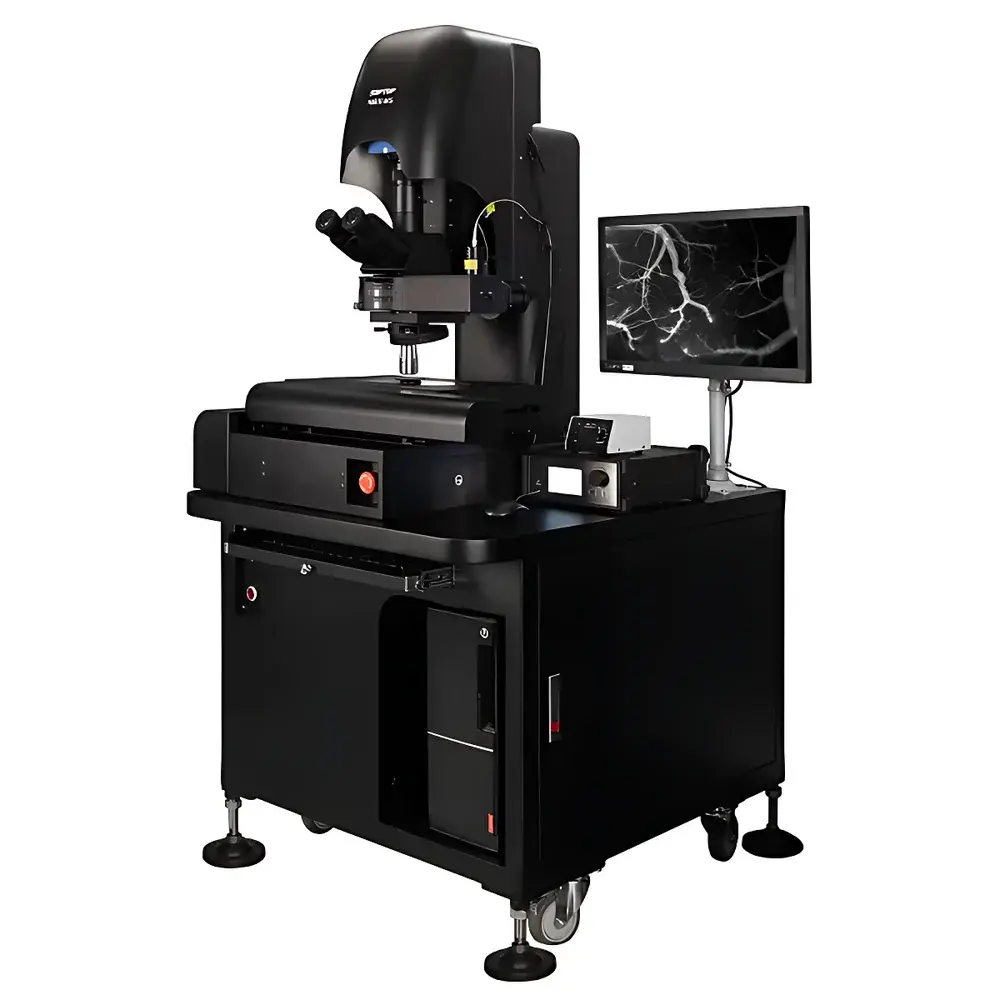
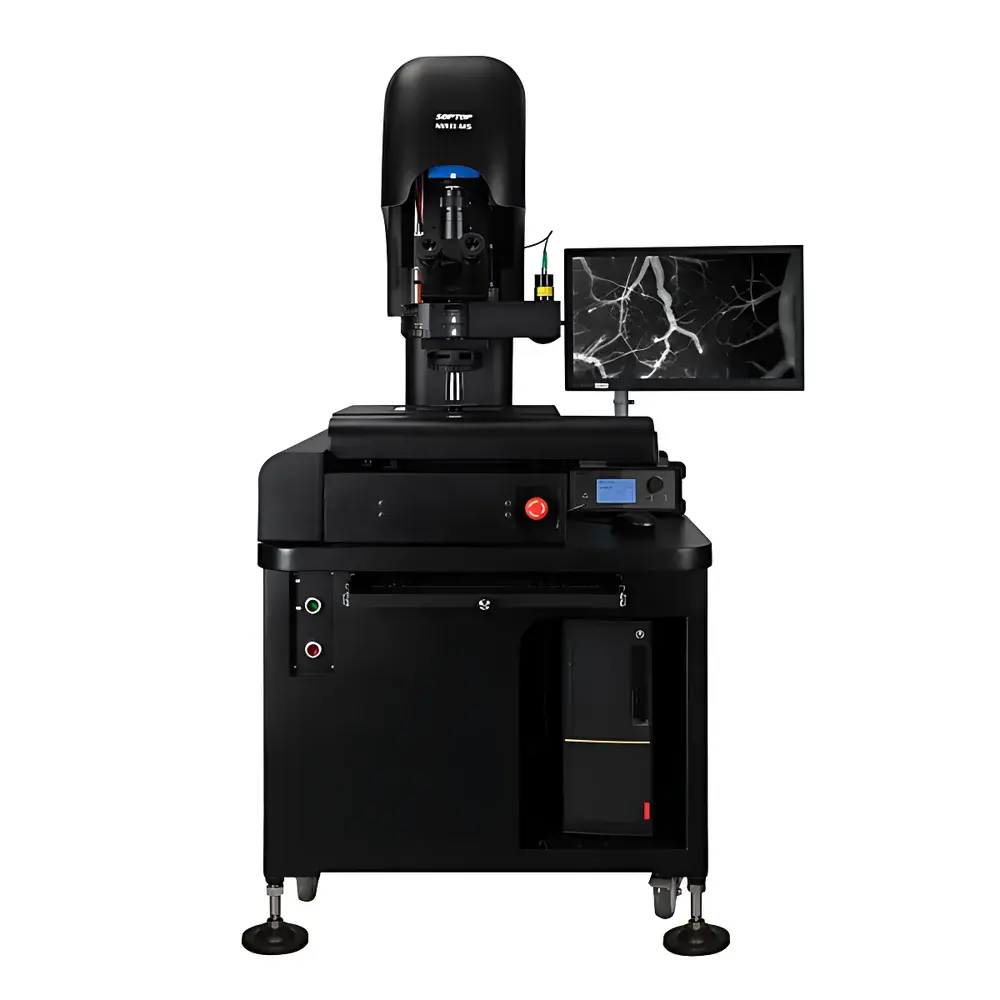
SOPTOP NIR-II-MS Small Animal In Vivo Imaging System
| Brand | SOPTOP |
|---|---|
| Origin | Zhejiang, China |
| Manufacturer Type | Original Equipment Manufacturer (OEM) |
| Regional Classification | Domestic (China) |
| Model | NIR-II-MS |
| Price Range | USD 210,000 – 350,000 |
| Instrument Category | Optical Imaging System |
| Spectral Sensitivity Range | 900–1700 nm |
| Maximum Penetration Depth | Up to 1.4 mm |
Overview
The SOPTOP NIR-II-MS is a purpose-built upright widefield fluorescence microscopy platform engineered for high-resolution, deep-tissue in vivo imaging in the second near-infrared window (NIR-II, 1000–1700 nm). Unlike conventional visible-light or NIR-I (700–900 nm) fluorescence microscopes—whose signals suffer from strong scattering and shallow penetration in biological tissue—the NIR-II-MS leverages the reduced photon scattering and autofluorescence background of the 1000–1700 nm spectral band to achieve unprecedented imaging depth and spatiotemporal fidelity in live small animal models. Developed in collaboration with Zhejiang University, it represents the world’s first commercially available upright NIR-II fluorescence microscope optimized for both macroscopic whole-body imaging and microscopic subcellular observation in intact, living specimens. Its optical architecture integrates a custom-designed excitation delivery path, NIR-II-optimized plan-apochromatic objectives, and a thermoelectrically cooled InGaAs focal plane array camera, enabling quantitative fluorescence detection with sub-2 µm lateral resolution at depths up to 1.4 mm under high-magnification objective conditions.
Key Features
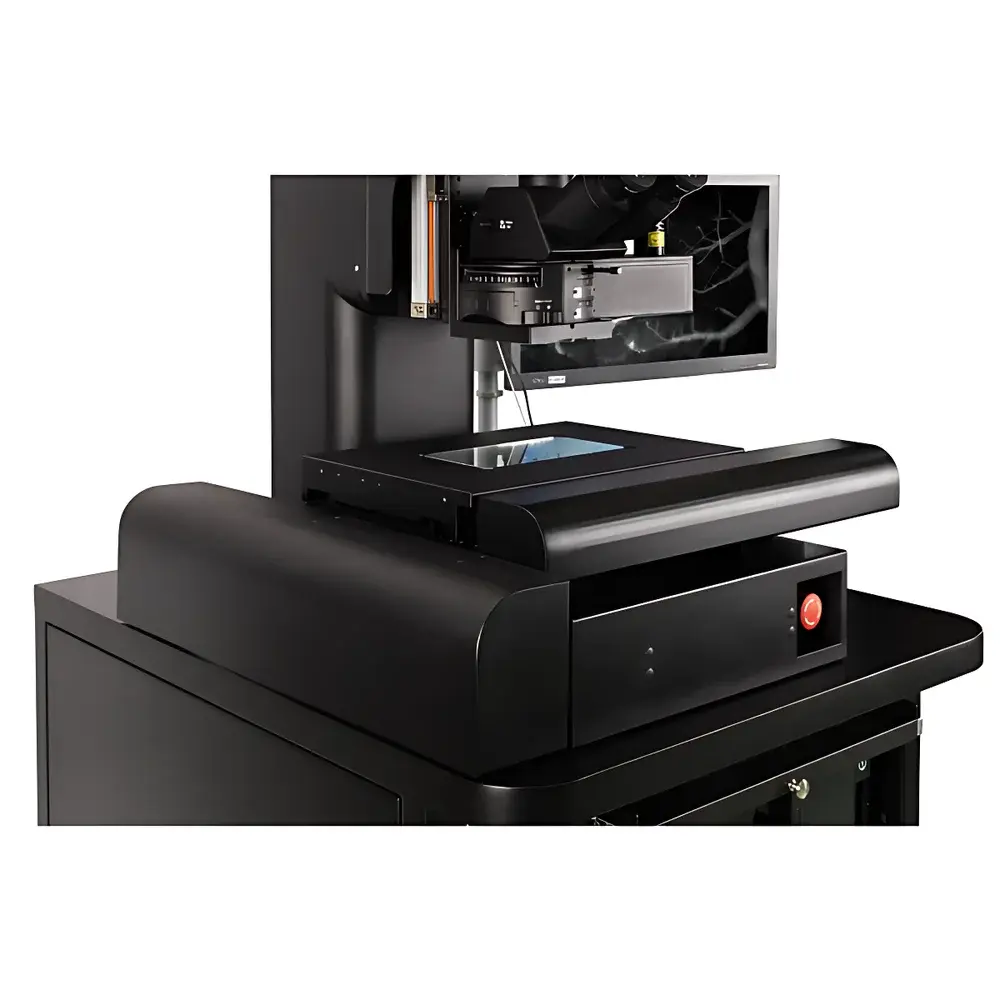
- Upright widefield optical configuration with motorized XYZ stage (μm-level precision via integrated optical encoders), supporting precise 3D volumetric acquisition without manual repositioning.
- Dual-band anti-reflection coated optical train (400–1700 nm), ensuring high transmission efficiency for both excitation lasers and emitted NIR-II photons across the full operational spectrum.
- Modular laser excitation interface accommodating ≥2 independently switchable high-stability diode or fiber-coupled lasers (e.g., 1064 nm, 1310 nm, 1550 nm), enabling multi-wavelength excitation for spectral unmixing and ratiometric quantification.
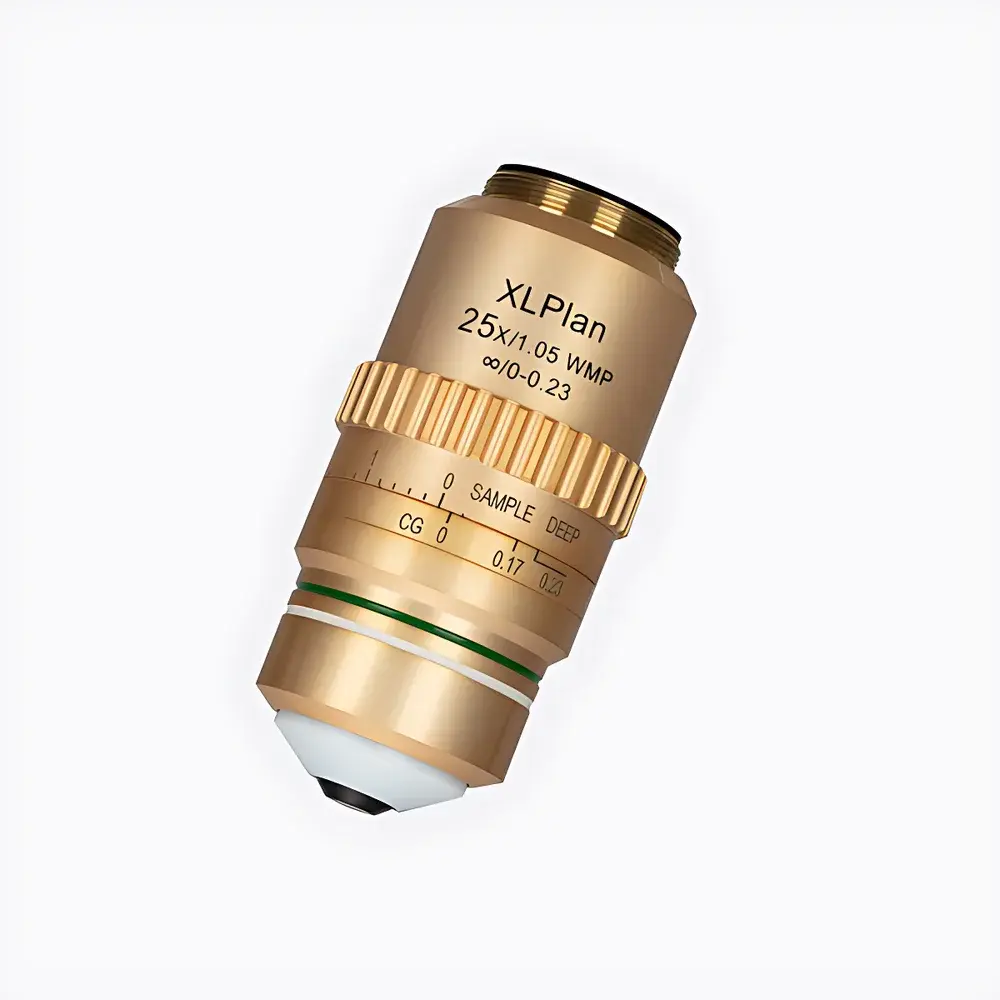
- Plan-apochromatic NIR-optimized objectives with flat-field correction and minimized chromatic aberration across 400–1700 nm, eliminating post-acquisition distortion correction and preserving native signal fidelity.
- Cryogenically stabilized InGaAs camera with quantum efficiency >65% at 1300–1600 nm and read noise <15 e⁻ RMS, enabling low-dose, high-SNR dynamic imaging over extended time courses.
- Fully software-controlled alignment, focus, exposure, and spectral gating—compatible with automated experiment scripting and hardware synchronization for multimodal integration (e.g., concurrent photoacoustic or thermal monitoring).
Sample Compatibility & Compliance
The NIR-II-MS supports longitudinal imaging of murine models (mice, rats), non-human primates, ex vivo thick tissue sections (up to 3 mm), and 3D organoids under physiological conditions. Its non-ionizing optical design enables repeated dosing and monitoring without cumulative phototoxicity or radiation burden. The system conforms to ISO 13485 design control principles for laboratory instrumentation and incorporates audit-trail-capable software logging aligned with GLP-compliant data integrity requirements. While not a medical device, its hardware architecture and firmware traceability support regulatory submission workflows per FDA 21 CFR Part 11 when deployed in preclinical pharmacokinetic, biodistribution, or therapeutic efficacy studies.
Software & Data Management
Acquisition and analysis are managed through SOPTOP ImageStudio Pro—a modular, Windows-based application supporting real-time preview, multi-channel time-lapse registration, intensity calibration against NIST-traceable NIR-II reference standards, and export to TIFF, HDF5, or OME-TIFF formats. Built-in tools include spectral unmixing algorithms for overlapping fluorophore signatures, depth-resolved intensity profiling along Z-stacks, and ROI-based kinetic curve fitting with error propagation. All user actions—including parameter changes, calibration updates, and file exports—are timestamped and logged in an immutable SQLite database, facilitating retrospective validation and audit readiness.
Applications
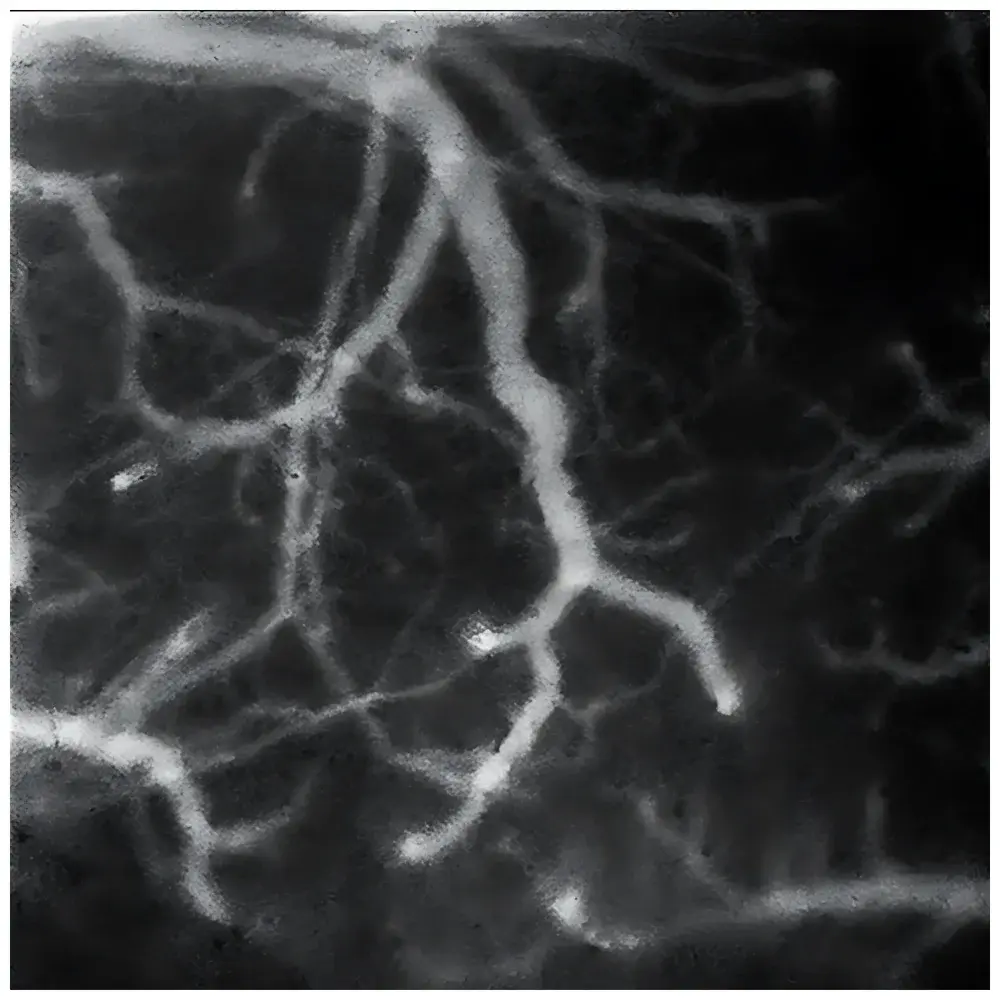
- High-resolution cerebrovascular mapping in mouse and non-human primate cortex, including capillary-level angiography and functional perfusion dynamics.
- In vivo tracking of AIEgens, semiconductor polymer nanoparticles, and quantum dots in tumor targeting, lymph node drainage, and hepatic clearance pathways.
- Real-time monitoring of photothermal therapy efficacy using IR-820 or similar theranostic agents under clinically relevant laser fluences.
- Quantitative assessment of blood-brain barrier permeability using ICG-derived NIR-II probes.
- Material science applications: characterization of SWIR-emitting nanomaterials, thin-film semiconductor defects, and optoelectronic layer uniformity.
FAQ
What distinguishes NIR-II imaging from traditional fluorescence microscopy?
NIR-II imaging operates in the 1000–1700 nm range, where biological tissues exhibit significantly lower scattering and autofluorescence compared to visible or NIR-I bands—enabling deeper penetration (up to 1.4 mm), higher spatial resolution, and improved signal-to-background ratio in live animals.
Is the system compatible with standard NIR-II fluorophores such as Aggregation-Induced Emission Dots (AIE dots) or PbS/CdHgTe quantum dots?
Yes—the optical train and detector are validated for emission spectra spanning 1000–1700 nm, and the modular laser interface supports common excitation wavelengths (e.g., 1064 nm for AIE dots, 1310/1550 nm for quantum dots).
Can the NIR-II-MS be integrated with other modalities like photoacoustic or electrophysiology systems?
The system provides TTL and analog I/O ports for hardware synchronization, and its open API allows third-party software control via Python or MATLAB, facilitating multimodal experimental workflows.
Does the software support automated batch processing for longitudinal study datasets?
Yes—ImageStudio Pro includes scriptable macros for consistent ROI definition, intensity normalization, and kinetic modeling across hundreds of time points, with metadata preservation for FAIR data principles.
What maintenance and calibration protocols are recommended for long-term stability?
Annual optical alignment verification using certified NIR-II point sources and quarterly detector dark-current profiling are advised; all calibration routines are embedded in the software and generate PDF-certified reports.
Related Products




