
Toone Single-Sided Rigid-Wall Sterile Isolation System
| Brand | Toone Biotech |
|---|---|
| Origin | Zhejiang, China |
| Manufacturer Type | Direct Manufacturer |
| Product Category | Domestic |
| Model | Single-Sided Rigid-Wall Sterile Isolation System |
| Pricing | Upon Request |
| Power Supply | 220 V ± 22 V, 50 ± 1 Hz |
| Max. Power Consumption | ≤3000 W |
| Touchscreen | 12.1-inch Industrial Panel PC |
| Internal Pressure Control Range | −80 to +80 Pa (adjustable) |
| Humidity Resolution | 0.1 % RH |
| Temperature Resolution | 0.1 °C |
| Pressure Resolution | 0.1 Pa |
| Airflow Pattern | Vertical Unidirectional Flow |
| Air Velocity | 0.36–0.45 m/s (ISO 14644-1 Class 5 compliant) |
| Chamber Leakage Rate | <0.5 % vol/hour at +60 Pa |
| Gas Supply | Filtered Clean Compressed Air or Nitrogen, 0.4–0.6 MPa |
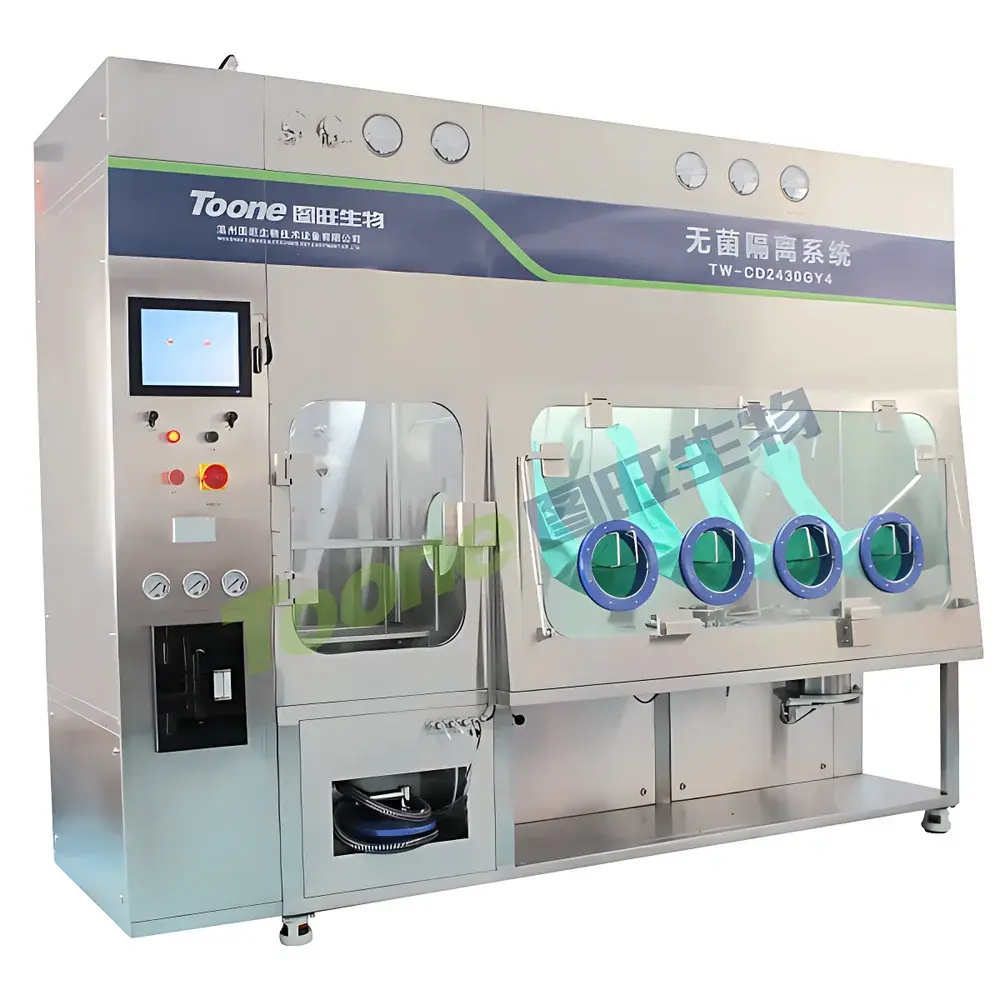
| Overall Dimensions (W×D×H) | 243 × 110 × 217.5 cm |
| Working Volume (W×D×H) | 179 × 67 × 74 cm |
| Airlock Volume (W×D×H) | 60 × 58 × 74 cm |
Overview
The Toone Single-Sided Rigid-Wall Sterile Isolation System is an engineered containment solution designed for aseptic processing environments in pharmaceutical manufacturing, quality control laboratories, and sterile product development facilities. It operates on the principle of physical barrier isolation combined with unidirectional laminar airflow and validated vaporized hydrogen peroxide (VHP®) decontamination. The system maintains a dynamically controlled ISO Class 5 (A-grade) environment inside the working chamber under either negative or positive pressure—configurable per process requirements—ensuring operator protection, product sterility assurance, and environmental separation from surrounding Grade B or C cleanrooms. Its rigid-wall architecture—constructed from electropolished 316L stainless steel and tempered borosilicate glass—provides structural integrity, chemical resistance, and long-term dimensional stability essential for GMP-compliant operations.
Key Features
- Rigid-wall construction using 316L stainless steel and high-transparency tempered glass, enabling full visual monitoring and mechanical robustness against accidental impact or cleaning agent exposure.
- Integrated H14 HEPA filtration (≥99.995% @ 0.3 µm) with PAO scan testing documentation provided per unit, ensuring particulate removal efficiency aligned with ISO 14644-3 Annex B protocols.
- Vaporized hydrogen peroxide (VHP®) decontamination cycle delivering ≥6-log reduction (validated to ≥10-log sporicidal efficacy against Geobacillus stearothermophilus spores) across all exposed internal surfaces and air volume.
- Configurable glove options: reinforced thick-gauge gloves for high-integrity applications or ultra-thin tactile gloves for precision manipulations during aseptic filling or media fill simulations.
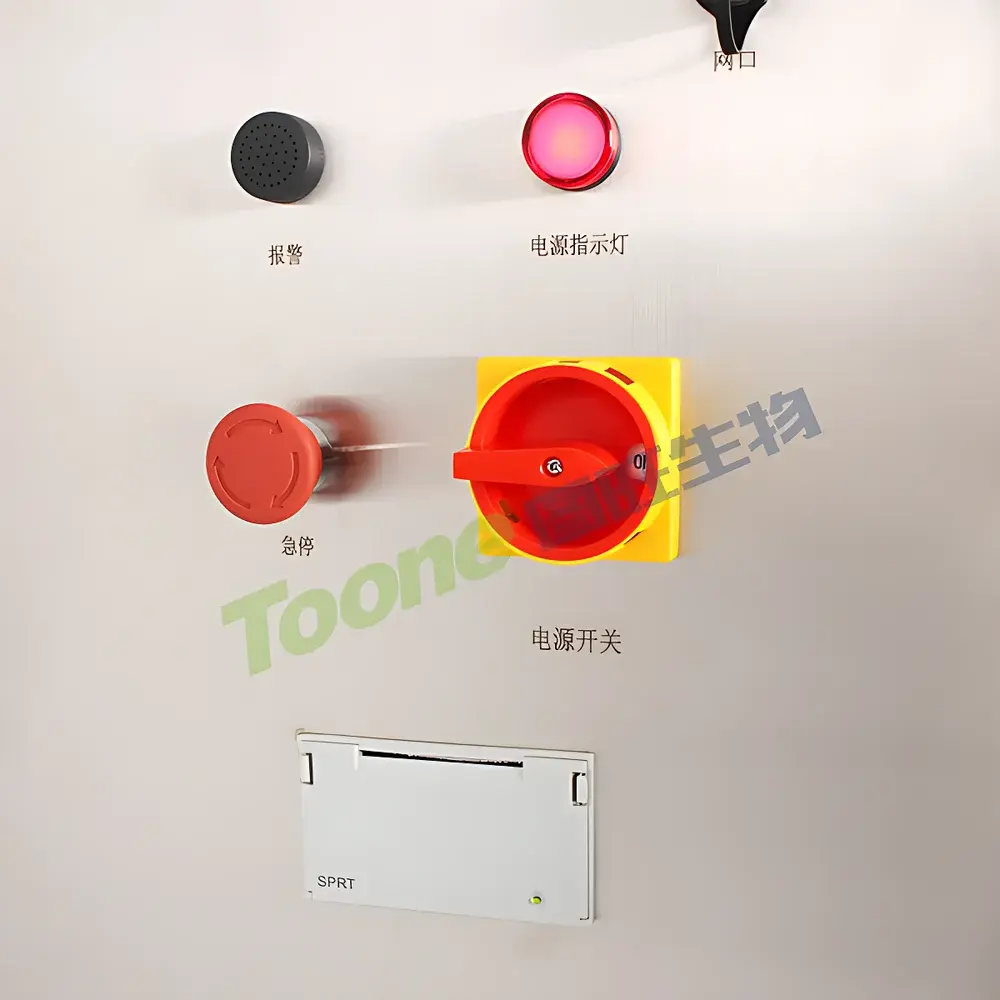
- Automated pressure management via Siemens S7-1200 PLC, continuously regulating supply/exhaust airflow to maintain setpoint pressure within ±2 Pa tolerance; includes audible/visual loss-of-pressure alarm with event logging.
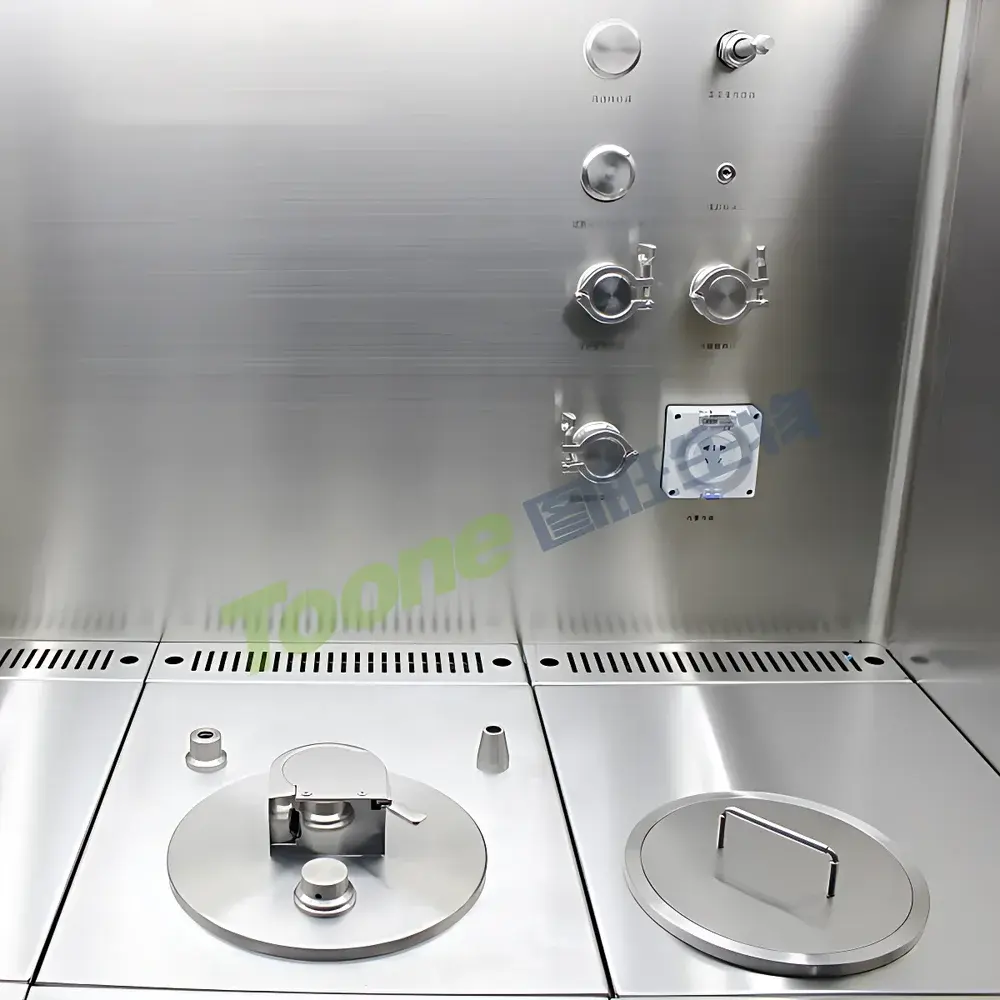
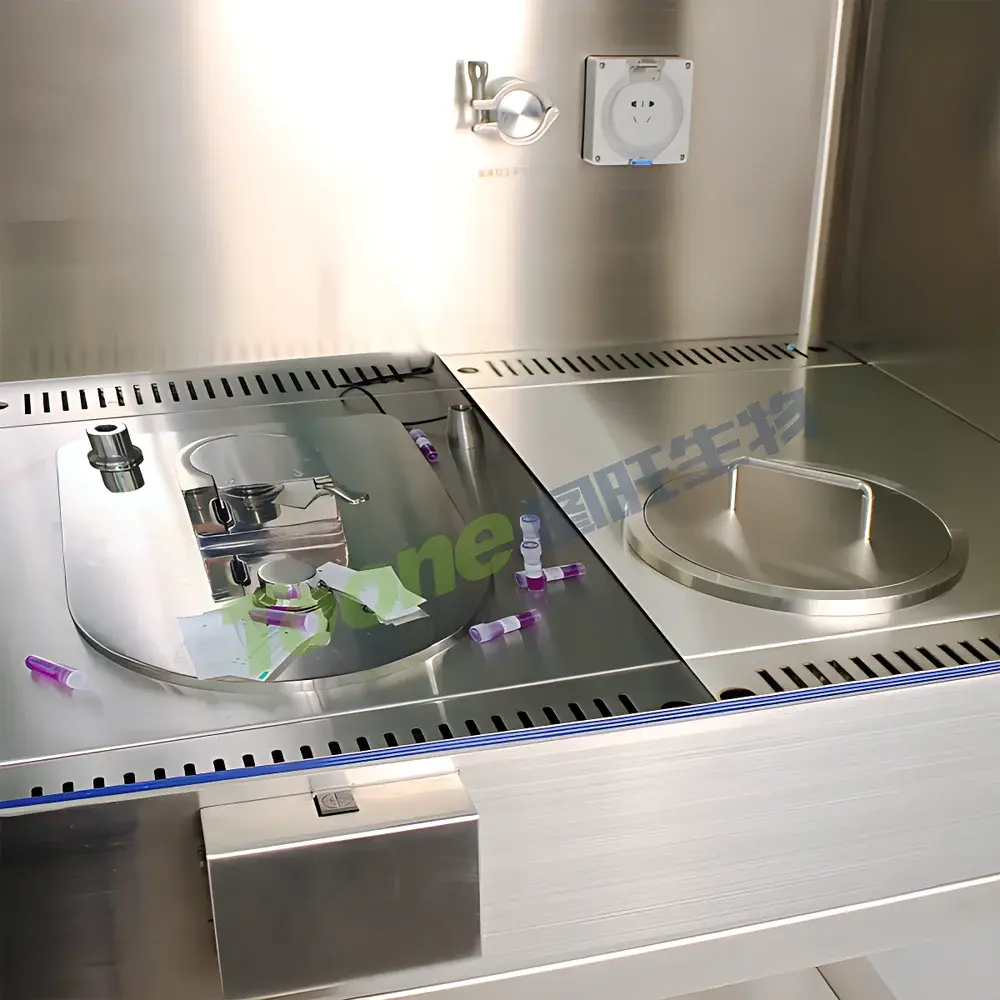
- Modular utility integration: pre-installed valves for compressed air (0.4–0.6 MPa) and purified water (WFI-compatible), plus internal 24 V DC and 220 V AC power outlets with circuit protection.
- 12.1-inch industrial touchscreen running NetSCAD™ control software—fully compliant with Annex 11 (EU GMP), 21 CFR Part 11 (FDA), and ALCOA+ data integrity principles, including electronic signatures, audit trail, and user role-based access control.
Sample Compatibility & Compliance
This isolation system accommodates a wide range of sterile processing activities—including aseptic assembly of lyophilization stoppers, vial filling simulations, filter integrity testing, and environmental monitoring sampling—without compromising containment integrity. All materials in contact with the internal environment meet USP Class VI biocompatibility standards. The system design conforms to ISO 14644-1 (air cleanliness), ISO 14644-3 (test methods), ISO 14698-1 (biocontamination control), and EU GMP Annex 1 (2022 revision). Validation support documentation—including IQ/OQ/PQ protocols, risk assessments (FMEA), and VHP cycle development reports—is available upon request to facilitate client-specific qualification.
Software & Data Management
NetSCAD™ is a validated SCADA platform developed specifically for regulated pharmaceutical environments. It records real-time parameters—including chamber pressure, temperature, relative humidity, airflow velocity, and VHP concentration—with timestamped, immutable entries stored locally and optionally mirrored to networked servers. All data exports are CSV-formatted and digitally signed. The system supports 21 CFR Part 11 compliance through configurable user authentication, electronic signatures, and comprehensive audit trails covering configuration changes, alarm events, and manual overrides. Backup archives are retained for ≥30 days with automatic rotation, and raw data files remain accessible without proprietary software dependencies.
Applications
- Aseptic processing simulation (media fills) under Grade A conditions.
- Pre-sterilization handling of components prior to autoclaving or depyrogenation.
- Isolation of hazardous compounds during formulation development (with optional negative pressure mode).
- Environmental monitoring sample processing—settling plates, contact plates, and active air sampling—within a particle-controlled environment.
- Validation of sterilization cycles for isolator-compatible packaging materials.
- Supporting regulatory submissions requiring documented control of bioburden, particulates, and personnel-derived contamination.
FAQ
What validation documentation is supplied with the system?
Factory-issued DQ/IQ/OQ documentation, including HEPA filter test certificates, VHP cycle mapping reports, and pressure decay test records, is provided. PQ templates aligned with ICH Q5A and EU Annex 1 are included for client execution.
Can the system be integrated into a Building Management System (BMS)?
Yes—via Modbus TCP or OPC UA protocol interfaces, enabling remote monitoring of critical alarms, pressure status, and decontamination cycle completion signals.
Is the NetSCAD™ software qualified for use in FDA-regulated facilities?
Yes—the software is delivered as a vendor-qualified system with full 21 CFR Part 11 assessment, including traceability matrices, change control history, and cybersecurity hardening documentation.
What maintenance intervals are recommended for HEPA filters and VHP generator components?
HEPA filters require integrity testing every 6 months (or after any breach event); VHP generator catalysts are rated for ≥2000 cycles and should be replaced based on performance verification per SOP.
Does the system support both positive and negative pressure operation simultaneously?
No—pressure mode is selected during commissioning and maintained consistently per operational risk assessment; dual-mode capability requires separate chamber zones, not supported in this single-sided configuration.






