
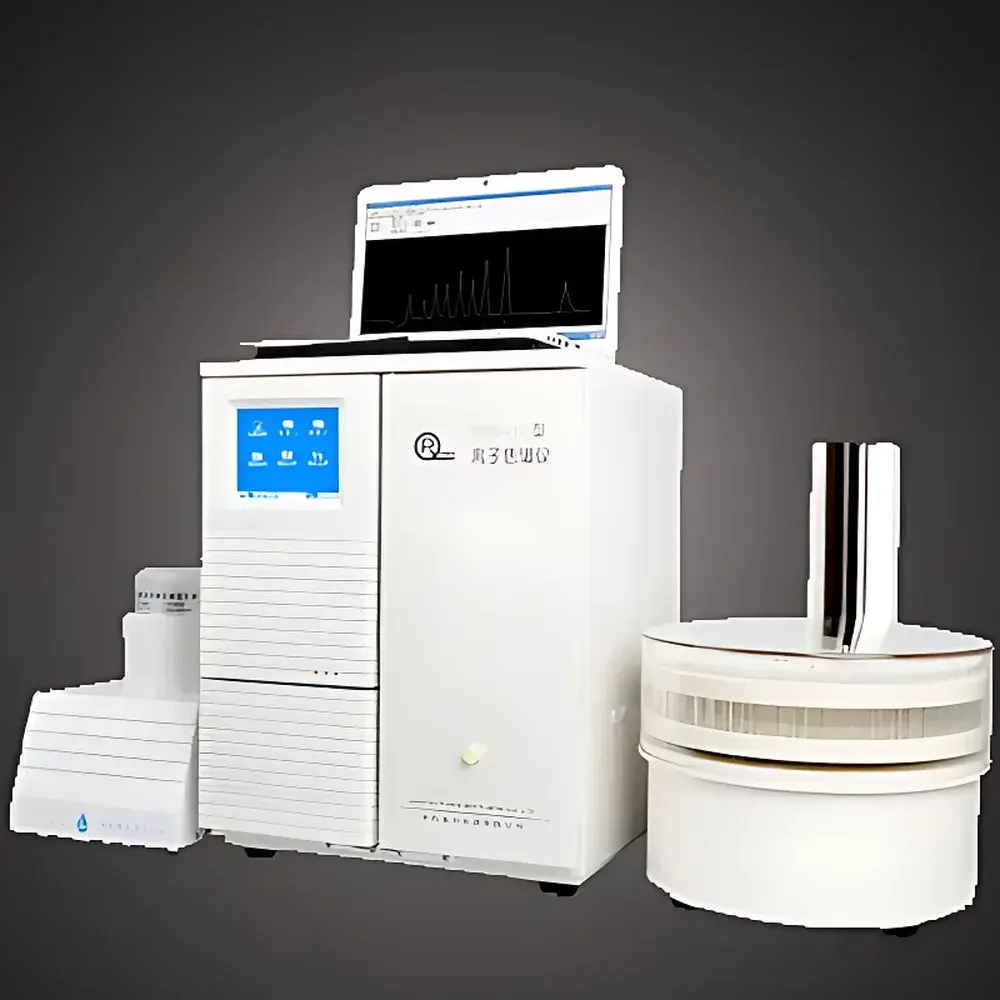
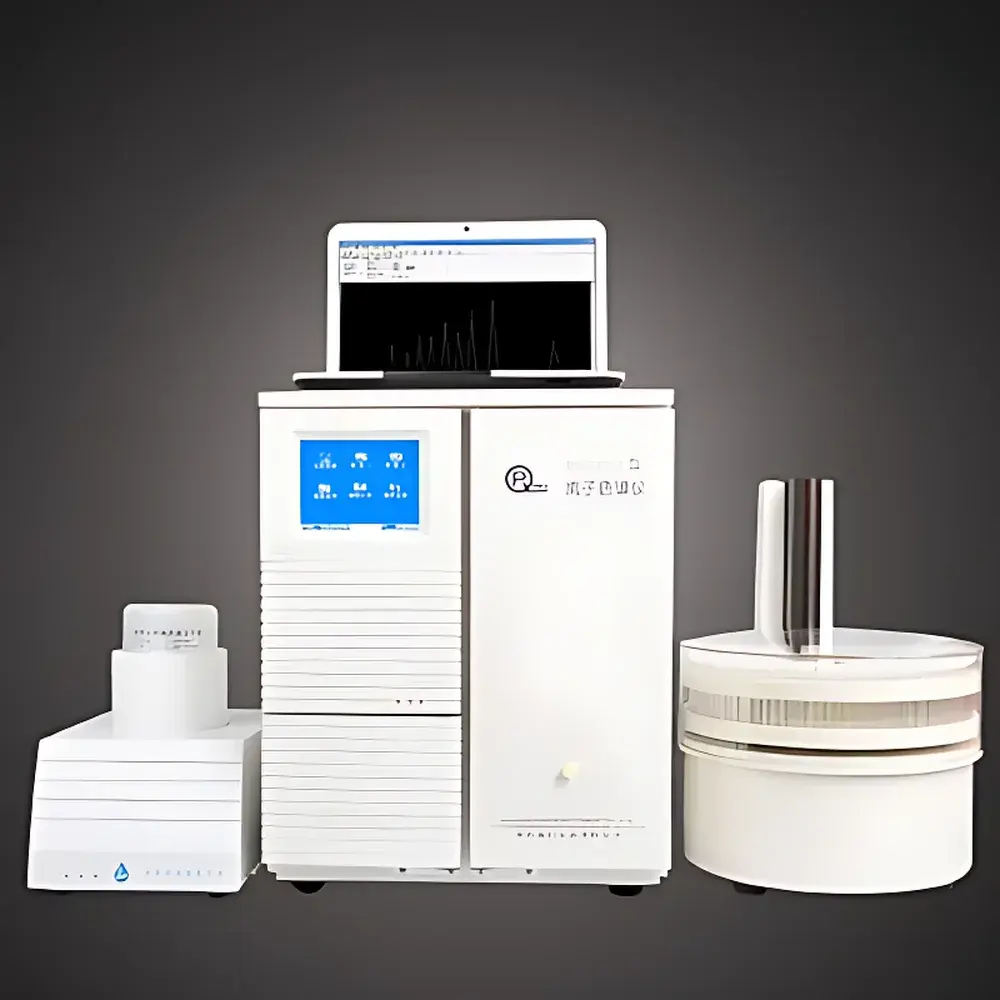
PUREN PIC-10 Dual-System Fully Automated Ion Chromatograph
| Brand | PUREN |
|---|---|
| Origin | Shandong, China |
| Manufacturer Type | Direct Manufacturer |
| Regional Classification | Domestic (China) |
| Model | PIC-10 Dual-System Fully Automated |
| Instrument Type | Laboratory Benchtop |
| Application Scope | Universal |
| Pump Maximum Pressure | 0–42.0 MPa (stainless steel), 0–36 MPa (PEEK) |
| Flow Rate Range | 0.001–9.999 mL/min (adjustable in 0.001 mL/min increments) |
| Eluent Flow Rate | 0.7–1.5 mL/min |
| Max Operating Pressure | 10 MPa (1500 psi) |
| Temperature Control Range | 5–65 °C |
| Temperature Reproducibility | ±0.004 °C |
| Eluent Concentration Range | 1.92–4.8 mM |
Overview
The PUREN PIC-10 Dual-System Fully Automated Ion Chromatograph is an integrated, high-precision benchtop instrument engineered for simultaneous quantitative analysis of anions and cations in a single run. Based on suppressed conductivity detection coupled with electrochemical suppression and optional amperometric detection, the system employs dual independent fluidic paths—each comprising a high-pressure PEEK or stainless-steel pump, electrically actuated injection valve, thermostatically controlled separation column, and dedicated detector—to eliminate cross-system interference while enabling true parallel operation. Its architecture conforms to fundamental ion chromatography principles defined in ISO 14911:2022 (Water quality — Determination of dissolved anions by ion chromatography) and supports compliance-driven workflows under GLP and GMP environments when configured with audit-trail-enabled software and electronic signatures.
Key Features
- Dual independent chromatographic channels: Separately controllable pumps, columns, detectors, and eluent delivery systems allow concurrent anion and cation analysis without signal crosstalk or pressure coupling.
- Modular detection capability: Standard conductometric detection with optional integrated amperometric (voltammetric) module supporting DC amperometry, pulsed amperometry, integrated amperometry, and differential pulse voltammetry for trace-level determination of Br⁻, I⁻, S²⁻, CN⁻, Pb²⁺, Cu²⁺, Zn²⁺, Cd²⁺, and selected organic compounds.
- Intelligent flow control: Microprocessor-driven dual-piston reciprocating pumps utilize adaptive flow compensation algorithms to maintain pulsation < ±0.1% RSD across the full 0.001–9.999 mL/min range; PEEK pump heads tolerate pH 0–14 eluents and 100% organic solvents.
- Integrated thermal management: Patented built-in column-and-detector oven (Patent No. 200820019630.3) maintains temperature stability at ±0.004 °C over 5–65 °C, ensuring retention time reproducibility < 0.15% RSD (n = 10).
- Automated eluent generation: Optional electrolytic eluent generator enables reagent-free operation—producing KOH, MSA, or other eluents on-demand from ultrapure water—reducing preparation error and improving inter-day reproducibility per USP and EP 2.2.47 guidelines.
- On-line degassing: Dual-stage vacuum-based degassing modules (−0.01 MPa) remove dissolved gases pre-pump (P1 line) and post-suppressor (P2 line), lowering baseline noise by up to 3× and enhancing detection limits for sub-ppb analytes.
Sample Compatibility & Compliance
The PIC-10 accommodates aqueous matrices including drinking water, wastewater, pharmaceutical excipients, food extracts, and semiconductor process chemicals. It supports column chemistries from major vendors (e.g., Shodex, Alltech) as well as proprietary high-capacity anion/cation exchange columns compatible with strong acid/base eluents (pH 0–14) and reversed-phase modifiers. The system meets ASTM D4327 (anion analysis in water), ISO 10304-1 (determination of common anions), and ISO 18562-3 (biocompatibility testing of medical device leachables). When equipped with FDA 21 CFR Part 11-compliant software (certified version available), it satisfies data integrity requirements for regulated QC laboratories conducting environmental monitoring or raw material release testing.
Software & Data Management
The embedded high-resolution LCD interface provides real-time display of conductivity, current, backpressure, flow rate, and temperature—enabling standalone operation without external PC. Full remote control and data acquisition are enabled via USB 2.0 or Ethernet using the proprietary IC Workstation software (Software Copyright Registration No. 2012SR037194). Features include automatic peak integration with baseline correction, negative peak recognition, customizable report templates, method validation tracking, and secure user role management. Audit trail functionality logs all parameter changes, data exports, and instrument events with timestamped digital signatures—supporting ALCOA+ principles and facilitating regulatory inspections.
Applications
- Environmental: Simultaneous quantification of F⁻, Cl⁻, NO₂⁻, Br⁻, NO₃⁻, HPO₄²⁻, SO₄²⁻, ClO₃⁻, BrO₃⁻, ClO₄⁻, and organic acids (e.g., oxalate, acetate) in surface water and wastewater per EPA Method 300.1 and ISO 10304-2.
- Pharmaceutical: Residual counterion profiling (Na⁺, K⁺, Ca²⁺, Mg²⁺, NH₄⁺) in APIs and excipients; sulfate and chloride impurity testing aligned with ICH Q2(R2) validation standards.
- Food & Beverage: Nitrate/nitrite in cured meats; phosphate additives in dairy products; iodide in salt; sulfite preservatives in wines.
- Electronics: Trace halide contamination (Cl⁻, F⁻, Br⁻) in ultrapure rinse water used in wafer fabrication.
- Industrial Chemistry: Cationic impurities (Li⁺, Na⁺, K⁺, Ca²⁺, Mg²⁺, Sr²⁺, Ba²⁺) in catalysts, battery electrolytes, and electroplating baths.
FAQ
Does the PIC-10 support gradient elution?
Yes—the dual-pump architecture allows precise binary or ternary gradient programming for complex sample matrices, particularly beneficial for organic acid separations and multi-analyte environmental screening.
Can the system operate without a PC?
Yes—the integrated touchscreen interface enables complete instrument control, real-time chromatogram viewing, peak integration, and method storage without external computing hardware.
What suppression technology is used?
The system employs a continuously regenerated electrochemical micro-membrane suppressor (CR-ERMS), operating across pH 0–14 with zero chemical consumption, low background conductivity (5,000 injections lifetime.
Is the amperometric detector compatible with standard IC columns?
Yes—when installed in series with the conductivity channel or as a standalone flow cell, the amperometric module interfaces seamlessly with standard anion- and cation-exchange columns via universal PEEK fittings and configurable flow-cell electrodes.
What certifications does the instrument hold?
The PIC-10 received formal verification from the National Institute of Metrology (China) in 2007 (Dual-System Certification No. NMIM-IC-2007-001); it was recognized as a “Domestically Produced High-Quality Instrument” by the Chinese Academy of Sciences’ 2013–2014 evaluation panel based on technical performance, reliability, and user-reported operational stability.
Related Products





