
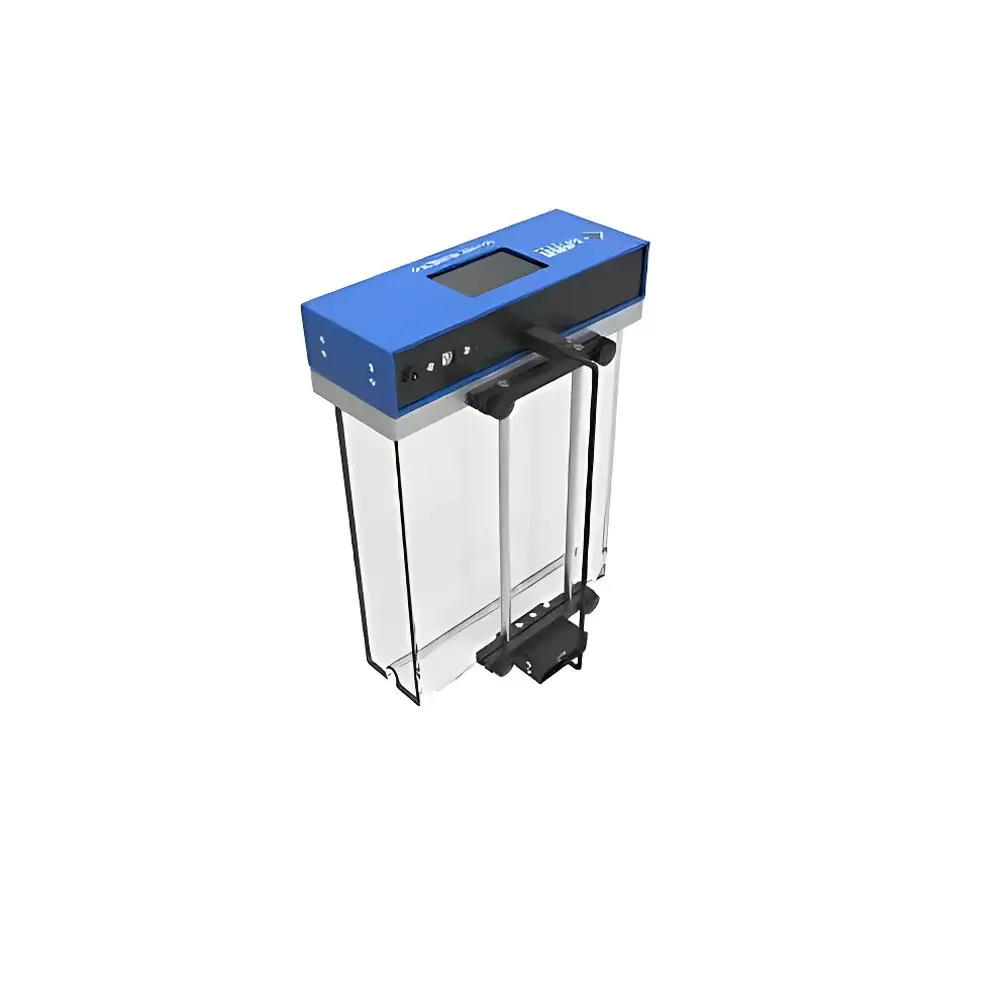
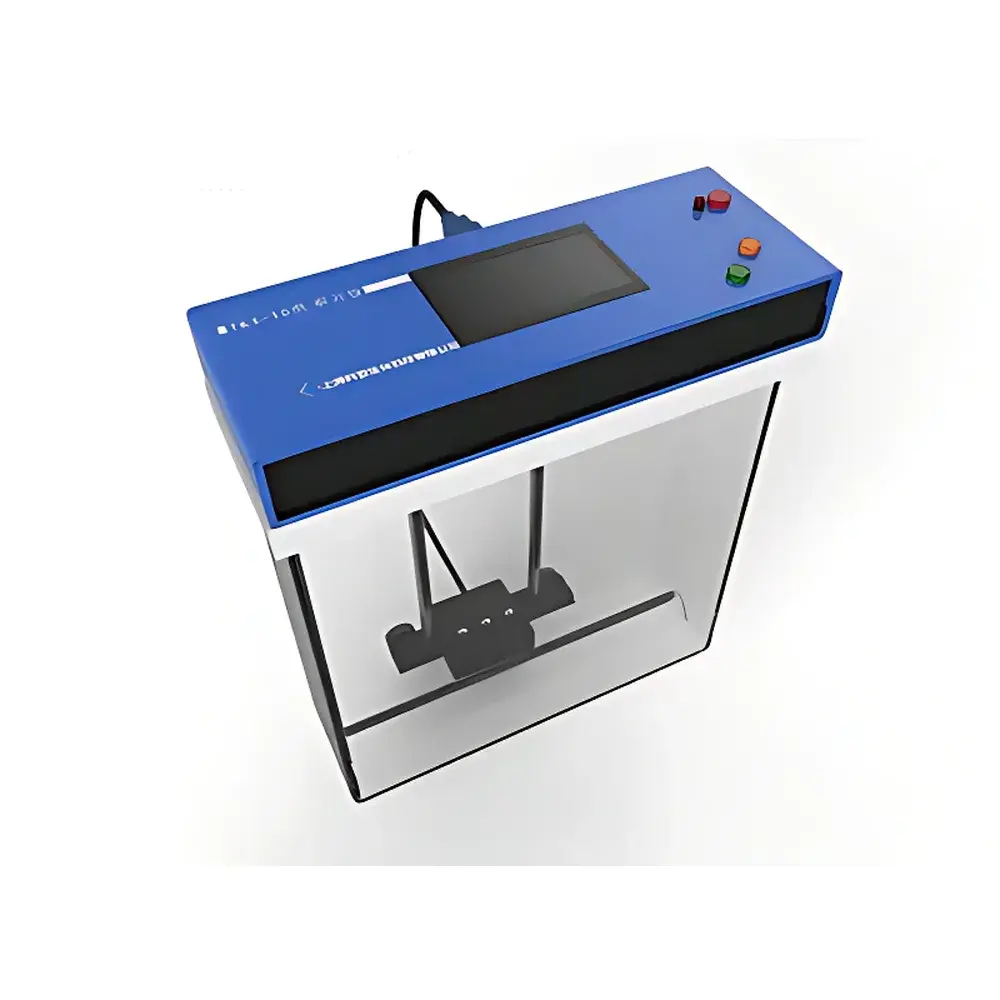
KEZHE SHANGHAI TK-10 Motorized Thin-Layer Chromatography (TLC) Development Instrument
| Brand | KEZHE SHANGHAI |
|---|---|
| Origin | Shanghai, China |
| Manufacturer Type | Direct Manufacturer |
| Instrument Category | Forced-Flow TLC Development System |
| Model | TK-10 |
| Wavelength Options | 254 nm or 365 nm |
| Maximum Plate Size | 200 mm × 200 mm |
| Development Distance Range | 10–200 mm |
| Development Distance Accuracy | ≤1 mm |
| Interface | USB |
Overview
The KEZHE SHANGHAI TK-10 Motorized Thin-Layer Chromatography (TLC) Development Instrument is an engineered solution for controlled, reproducible, and solvent-efficient forced-flow TLC development. Unlike conventional horizontal or vertical chamber-based development—where solvent migration relies solely on capillary action—the TK-10 actively drives mobile phase movement across the stationary phase via precisely regulated mechanical displacement of the TLC plate relative to a sealed, temperature- and humidity-stabilized development chamber. This forced-flow principle minimizes edge effects, suppresses solvent front distortion, and ensures uniform elution kinetics across the entire plate surface—even for high-resolution separations requiring extended development distances or low-polarity solvent systems. Designed for routine QC laboratories, academic research groups, and method development workflows, the TK-10 delivers deterministic control over critical chromatographic variables without requiring operator intervention during run execution.
Key Features
- Motor-driven, programmable plate translation enabling precise development distance control from 10 mm to 200 mm with ≤1 mm positional accuracy
- Integrated environmental monitoring: real-time digital display of chamber temperature and relative humidity during development
- Universal plate compatibility: accommodates square or rectangular TLC plates up to 200 mm × 200 mm (including standard 100 × 100 mm, 100 × 200 mm, and 200 × 200 mm formats)
- Optimized solvent economy: reduces mobile phase consumption by up to 60% compared to saturated-tank static development methods
- USB 2.0 interface for direct connection to Windows-based PCs; supports remote initiation, parameter logging, and firmware updates
- Modular architecture comprising three core subassemblies: motorized stage assembly, climate-controlled development chamber, and embedded microcontroller unit with PID-regulated thermal/hygrometric feedback
Sample Compatibility & Compliance
The TK-10 is compatible with all commercially available silica gel, alumina, cellulose, and reversed-phase (e.g., C18) pre-coated TLC plates—including those manufactured by Merck, Analtech, and Sorbent Technologies. It imposes no chemical restrictions on mobile phases, supporting volatile solvents (e.g., ethyl acetate/hexane), polar mixtures (e.g., methanol/chloroform/water), and corrosive reagents (e.g., acidic or basic modifiers) when used with chemically resistant chamber gaskets. While the instrument itself does not carry CE or FDA 510(k) certification, its operational parameters align with ASTM E2793–22 (Standard Guide for TLC Method Validation) and ICH Q2(R2) principles for analytical procedure robustness. Data integrity features—including timestamped development logs and user ID tagging via connected software—support GLP-compliant documentation practices where required.
Software & Data Management
The TK-10 operates in conjunction with KEZHE’s proprietary TLC Development Control Suite (v3.2+), a Windows-native application providing intuitive setup of development protocols (distance, dwell time, ambient setpoints), live sensor telemetry visualization, and export of structured CSV logs containing plate ID, start/stop timestamps, mean temperature/humidity, and final development distance. All data files are stored locally with optional network share integration. Audit trail functionality records user login events, parameter changes, and run completions—meeting baseline requirements for 21 CFR Part 11 compliance when deployed with institutional IT controls (e.g., domain authentication, encrypted storage). No cloud transmission occurs unless explicitly enabled by the end-user; raw sensor data remains fully under local administrative control.
Applications
- Routine identity testing of pharmaceutical actives and excipients per USP and Ph. Eur. 2.2.27 guidelines
- Reaction monitoring in synthetic organic chemistry labs, particularly for unstable intermediates requiring rapid, repeatable development
- Stability-indicating method development for degradation product profiling under varied humidity conditions
- Qualitative screening of natural product extracts using multi-solvent gradient development sequences
- Teaching laboratory implementation where standardized, hands-off development improves inter-student result comparability
- Preparative TLC fraction collection alignment—where exact Rf positioning is critical for subsequent scraping or elution
FAQ
Does the TK-10 support UV visualization during development?
No. The instrument does not integrate in-chamber UV illumination. Visualization is performed post-development using external UV cabinets (254 nm or 365 nm) or derivatization sprayers.
Can the development chamber be cleaned with acetone or chloroform?
Yes—chamber interior surfaces are constructed from PTFE-coated aluminum and borosilicate glass. Avoid prolonged exposure to strong oxidizers (e.g., nitric acid) or HF-containing solutions.
Is calibration traceable to NIST standards?
Distance calibration is factory-verified using laser interferometry; temperature/humidity sensors are calibrated against NIST-traceable reference probes prior to shipment. A calibration certificate is included with each unit.
What maintenance is required?
Annual verification of motor encoder linearity and chamber seal integrity is recommended. No consumable parts require scheduled replacement within the first 5 years of typical lab use.
Can multiple plates be developed simultaneously?
No—the system is configured for single-plate operation to ensure consistent flow dynamics and environmental uniformity. Sequential runs may be queued via software scheduling.
Related Products





