
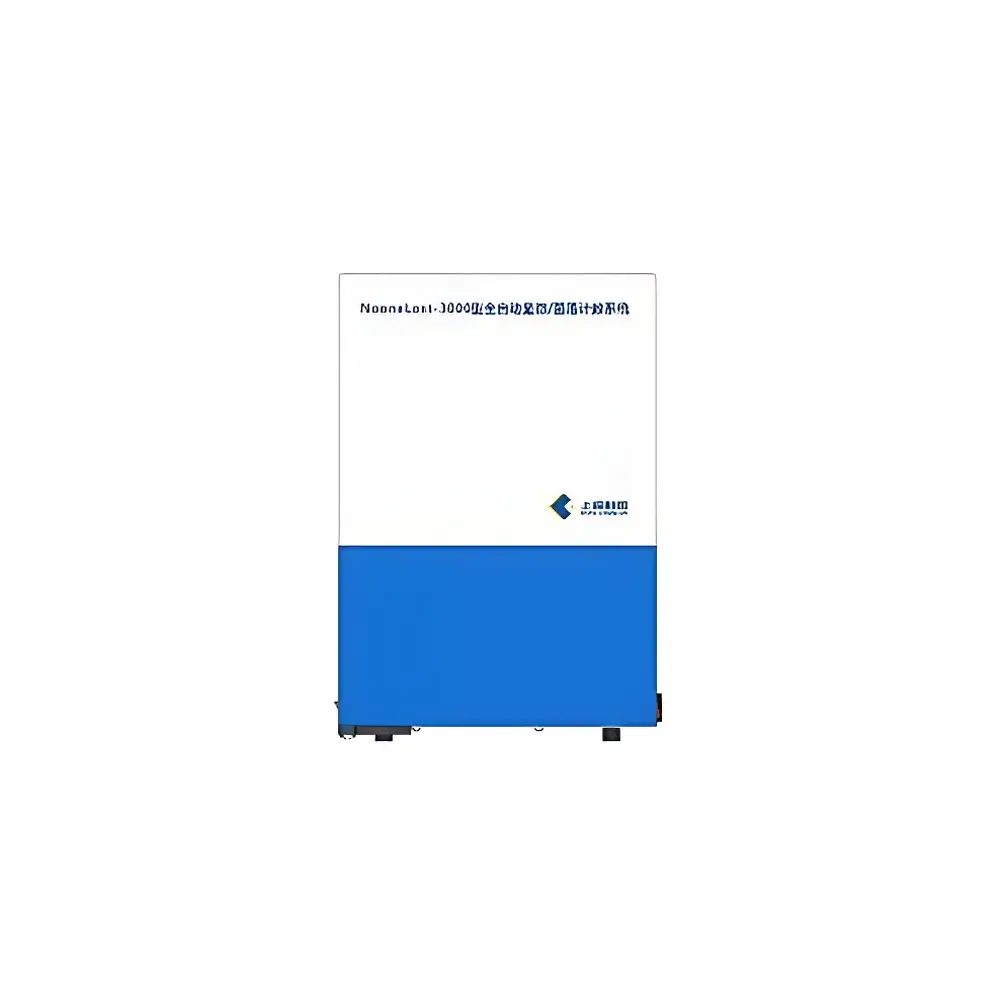
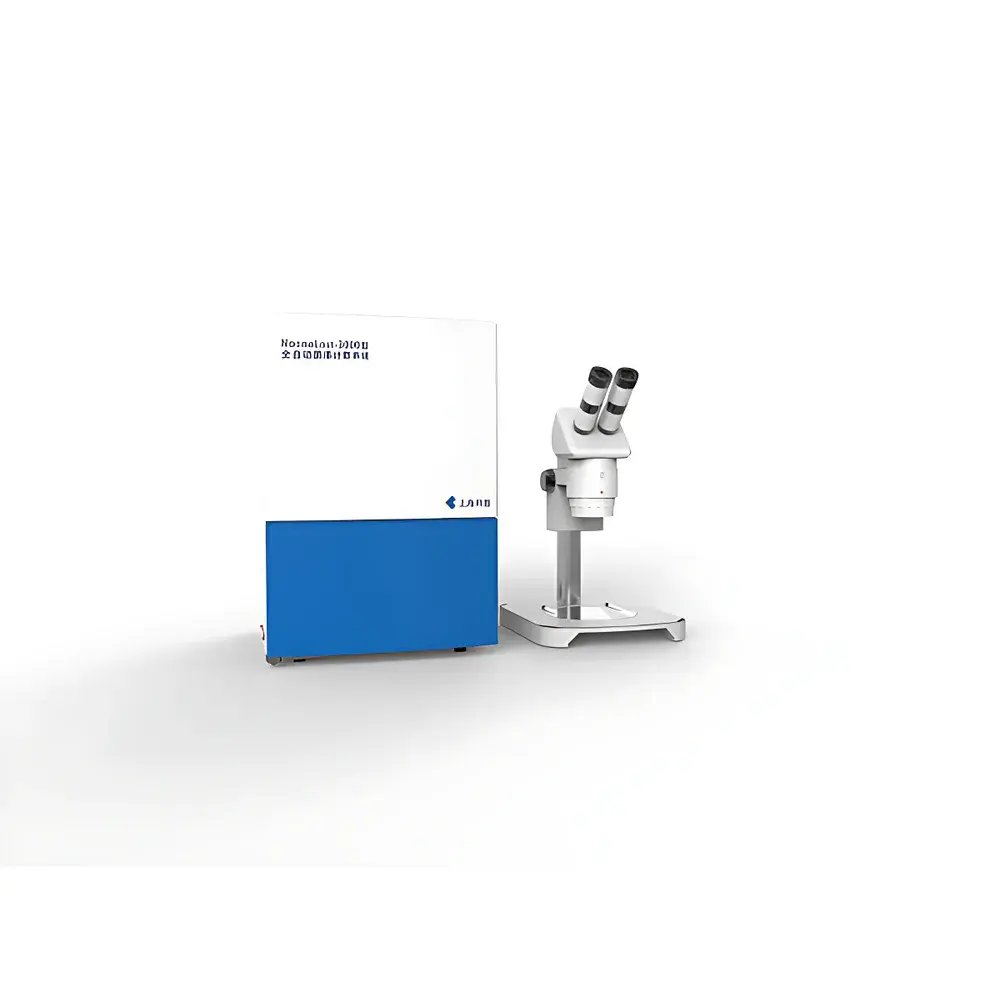
KEZHE NooneLost-3000 Automated Microscopic Colony Counter
| Brand | KEZHE SHANGHAI |
|---|---|
| Origin | Shanghai, China |
| Manufacturer Type | Direct Manufacturer |
| Instrument Type | Fully Automated Colony Counter |
| Counting Speed | >400 Petri Dishes per Hour |
| Imaging Sensor | 20+ Megapixel High-Dynamic-Range CMOS |
| Compatible Dish Diameter | 60–120 mm |
| Light Source | Adjustable White-Light Illumination (Customizable Multi-Spectral Options) |
| Power Supply | 100–240 V AC, 50–60 Hz |
| Software Platform | Windows 7/8/Vista or Later |
| Regulatory Compliance | FDA 21 CFR Part 11 (Audit Trail Enabled), GLP/GMP-Ready, HACCP-Compatible |
| Data Export | CSV, PDF, Excel, TIFF, JPEG |
| Optional Modules | Fluorescence Illumination Kit, Cooled CCD Imaging Module, Barcode Scanner Integration |
Overview
The KEZHE NooneLost-3000 Automated Microscopic Colony Counter is an integrated dual-function platform engineered for precision microbiological quantification and high-resolution microscopic imaging. It operates on a dual-modality principle: colony enumeration via high-fidelity digital image acquisition and analysis—based on contrast-enhanced optical segmentation—and concurrent microscopic observation using a calibrated, motorized optical path. The system employs a sealed dark-field illumination chamber with uniform white-light LED arrays to eliminate ambient interference, ensuring consistent illumination geometry across all dish formats (60–120 mm). Its core algorithmic engine leverages adaptive thresholding, morphological filtering, and region-growing segmentation to resolve confluent colonies, microcolonies, and irregular growth patterns—critical for ISO 4833-1:2013, ISO 7218:2017, and USP compliant workflows. Designed for laboratories requiring traceable, auditable, and repeatable microbial enumeration, the NooneLost-3000 meets the operational rigor of regulated environments without compromising flexibility in research-grade morphological assessment.
Key Features
- 20+ megapixel high-dynamic-range (HDR) CMOS sensor with real-time exposure control—optimized for low-noise capture under variable colony density and agar opacity
- Sealed optical dark box with uniform, spectrally stable white-light illumination—eliminates stray light artifacts and ensures inter-day reproducibility (RSD < 2.5% for triplicate standard plates)
- Automated edge cropping and background normalization—removes dish rim artifacts and corrects for uneven agar thickness or condensation
- Intelligent colony splitting algorithms for fused or overlapping colonies—supports both circular and irregular morphology classification
- Integrated digital microscopy module with calibrated stage, objective turret (4×, 10×, 40× optional), and real-time measurement tools (area, diameter, aspect ratio, Feret’s diameter)
- Optional fluorescence excitation module (365 nm / 470 nm / 535 nm LEDs) and cooled CCD upgrade—enabling GFP/RFP-tagged strain enumeration and low-signal detection
- Onboard barcode scanner (optional)—auto-links plate metadata (batch ID, incubation time, medium type) to counted results for full LIMS traceability
- Adjustable software parameters: brightness, contrast, sensitivity, minimum/maximum colony size, circularity threshold—validated per user-defined SOPs
- Manual correction mode with click-to-add/remove, drag-to-reposition, and polygonal ROI annotation—preserving audit trail integrity
- Embedded scale bar calibration—automatically embedded into exported images and PDF reports with NIST-traceable reference
Sample Compatibility & Compliance
The NooneLost-3000 accepts standard Petri dishes (60–120 mm), including polystyrene, glass, and membrane-filter variants. It supports all conventional solid media—TSA, PCA, VRBA, MRS, Sabouraud Dextrose Agar, and chromogenic formulations—without hardware modification. Image processing is agnostic to agar color, opacity, or surface texture due to multi-level histogram equalization and local adaptive thresholding. The system conforms to international standards for microbiological enumeration: ISO 4833-1:2013 (horizontal method for colony count), ISO 7218:2017 (microbiology of food and animal feeding stuffs—general requirements and guidance for microbiological examinations), and USP (Microbiological Examination of Nonsterile Products). Its software architecture implements full 21 CFR Part 11 compliance—including electronic signatures, role-based access control, immutable audit trails, and event-logged parameter changes—making it suitable for GLP, GMP, and HACCP-certified facilities.
Software & Data Management
KEZHE ColonyAnalyzer v5.2 is a modular, Windows-native application built on a deterministic image-processing pipeline. It features three core modules: Colony Enumeration, Inhibition Zone Analysis (for Kirby-Bauer and cylinder-plate assays), and Microscopic Quantification (cell counting, size distribution, fluorescence intensity profiling). All operations generate timestamped, user-attributed logs stored in encrypted SQLite databases. Raw images, processed masks, and result tables are archived with SHA-256 checksums. Export formats include CSV (for statistical analysis in JMP or R), PDF (with embedded metadata and regulatory headers), TIFF (16-bit lossless), and Excel-compatible XLSX with pivot-ready structured sheets. The workstation includes an Intel Xeon E-22xx series CPU, NVIDIA Quadro RTX A2000 GPU, and 1 TB NVMe SSD—optimized for batch processing of >500 plates/hour without memory bottlenecking.
Applications
- Quantitative aerobic plate counts (APC) in food, beverage, and dairy QC labs per AOAC 977.27 and ISO 4833-1
- Antibiotic susceptibility testing (AST) and zone-of-inhibition measurement per CLSI M02-A13 guidelines
- Yeast and mold enumeration in pharmaceutical cleanrooms (USP ) and environmental monitoring programs
- Morphotype-based colony differentiation (e.g., S. aureus vs. S. epidermidis on CHROMagar) via supervised machine learning templates
- Fluorescent colony screening (e.g., lacZ+ transformants, GFP-expressing probiotics) using optional excitation modules
- Cell viability assays (Trypan Blue exclusion, Calcein-AM staining) and confluence estimation in suspension cultures
- Regulatory submission-ready reporting—fully compliant with FDA, EMA, and PMDA documentation requirements
FAQ
Does the NooneLost-3000 support validation protocols for regulated laboratories?
Yes—it includes IQ/OQ documentation templates, performance qualification checklists, and raw data export formats required for FDA, ISO 17025, and Annex 11 audits.
Can the system differentiate between viable and non-viable colonies based on morphology alone?
No—morphological classification requires correlation with selective/differential media or post-staining; the system provides quantitative metrics (size, shape, texture) but does not infer viability intrinsically.
Is remote software update and license management supported?
Yes—via secure HTTPS-based KEZHE Cloud Portal with version-controlled firmware patches and optional annual software maintenance contracts.
What is the minimum detectable colony size under standard white-light illumination?
Approximately 40 µm in diameter at 10× effective optical magnification—subject to agar clarity, contrast agent use, and focus stability.
Can custom algorithms be deployed for proprietary media or novel organism identification?
Yes—the SDK supports Python-based plugin development with access to preprocessed image tensors and feature vectors, subject to KEZHE’s API licensing agreement.




