
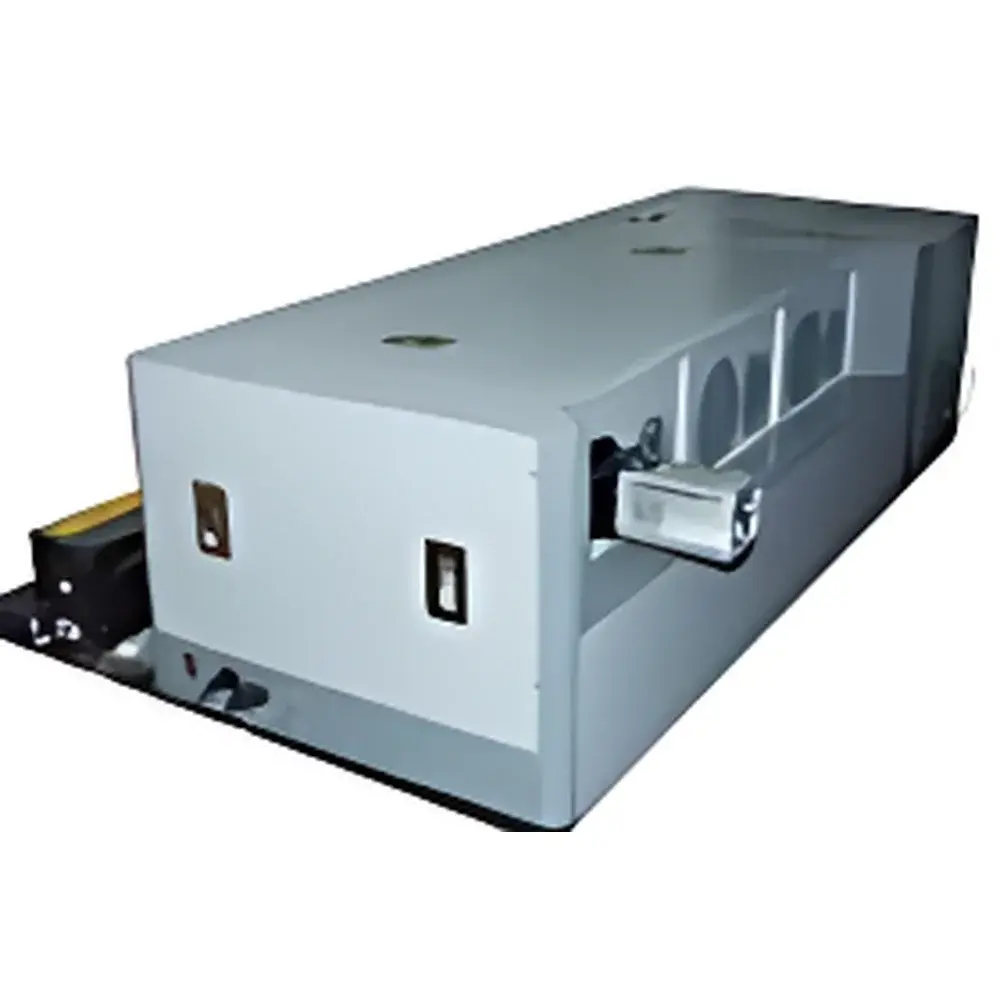
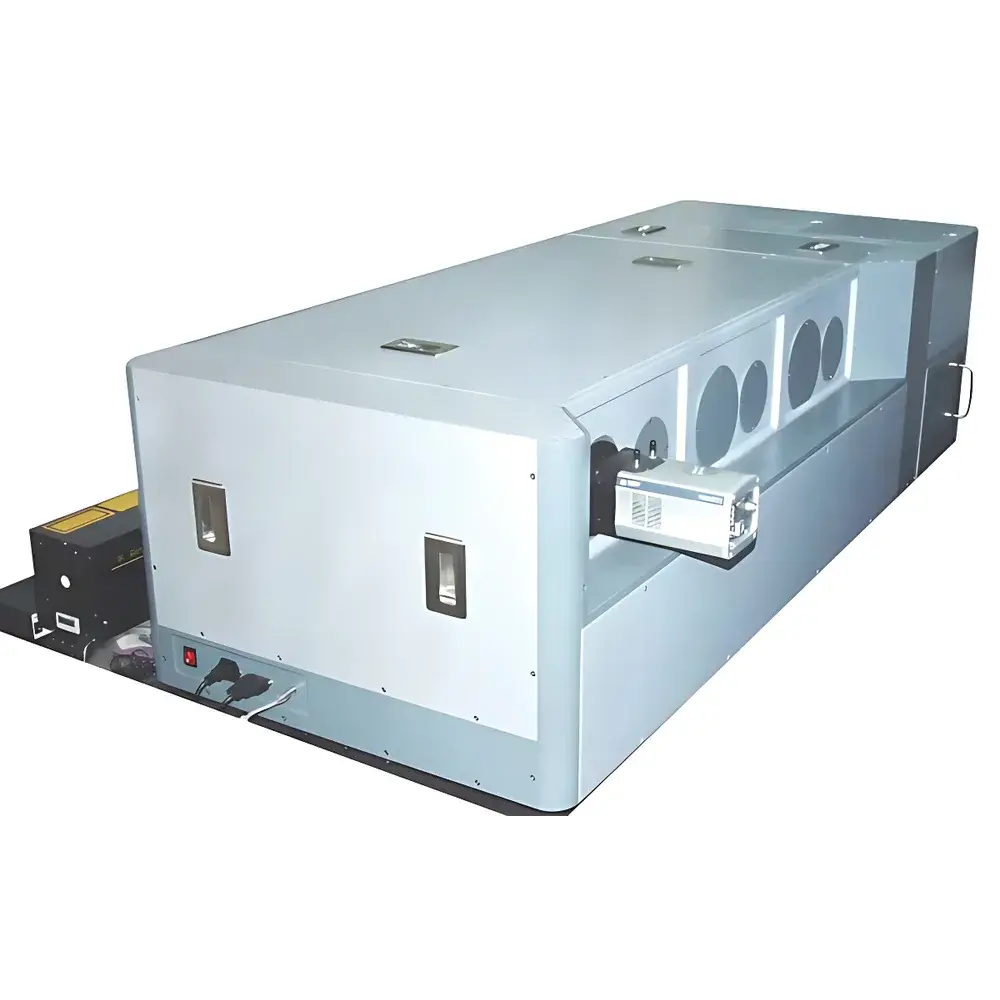
ZOLIX UVRaman100 Ultraviolet Resonance Raman Spectroscopy System
| Brand | ZOLIX |
|---|---|
| Origin | Beijing, China |
| Manufacturer Type | Original Equipment Manufacturer (OEM) |
| Instrument Type | Grating-Based Raman Spectrometer |
| Spectral Range | 50–4000 cm⁻¹ (UV), 25–4000 cm⁻¹ (Visible) |
| Spectral Resolution | 4.0 cm⁻¹ (UV), 3.0 cm⁻¹ (Visible) |
| Wavenumber Repeatability | <0.1 cm⁻¹ |
| Minimum Detectable Wavenumber | 50 cm⁻¹ (UV), 25 cm⁻¹ (Visible) |
| Optical Architecture | Triple Monochromator with High-Reflectivity UV-Optimized Mirrors (≥90% reflectivity in UV/VIS) |
| Detector Options | Back-Illuminated CCD (1024×256, 26 µm pixels, –100 °C), EMCCD (1600×400, 16 µm pixels, –100 °C, electron multiplication gain 1–1000) |
| Laser Excitation Options | 244 nm / 257 nm / 325 nm HeCd or frequency-doubled Ar⁺ |
| 350–480 nm tunable Ti | Sapphire (SHG) |
Overview
The ZOLIX UVRaman100 is a high-performance ultraviolet resonance Raman (UVRR) spectroscopy system engineered for molecular fingerprinting under conditions where conventional visible Raman spectroscopy fails—particularly in the presence of overwhelming fluorescence background or inherently weak Raman cross-sections. Built upon the foundational research of Academician Can Li’s group at Dalian Institute of Chemical Physics, Chinese Academy of Sciences, the UVRaman100 implements a rigorous resonance-enhanced scattering architecture grounded in the Kramers–Heisenberg–Dirac formalism. Its core principle relies on matching excitation laser frequency to electronic transitions of target chromophores—enabling resonance enhancement factors up to 10⁶ and effectively suppressing non-resonant background. Unlike notch-filter-based systems, the UVRaman100 employs a triple monochromator optical path with UV-optimized reflective optics (≥90% reflectivity across 200–700 nm), enabling reliable detection down to 25 cm⁻¹ in visible mode and 50 cm⁻¹ in UV mode while rejecting Rayleigh scatter without spectral truncation.
Key Features
- Triple-monochromator design with 500 mm focal length and f/6.5 optics, optimized for stray-light suppression and high spectral fidelity in deep-UV excitation regimes
- Modular laser excitation platform supporting fixed-wavelength (244 nm, 257 nm, 325 nm) and continuously tunable UV/VIS sources—including frequency-doubled and tripled Ti:sapphire lasers (233–480 nm), all with linewidth <0.1 cm⁻¹ and RMS power stability <3%
- Dual-detector compatibility: scientific-grade back-illuminated CCD (1024×256, –100 °C) for high dynamic range; EMCCD (1600×400, –100 °C, gain 1–1000) for single-photon-level sensitivity in low-flux UVRR experiments
- Wavenumber calibration traceable to NIST-standard atomic emission lines (e.g., Hg/Ar lamp), with repeatability <0.1 cm⁻¹ over 8-hour continuous operation
- UV-reflective mirror coatings and grating substrates certified for >10⁷ shot durability under 244 nm pulsed irradiation (10 Hz, 10 ns)
- Integrated thermal management system maintaining detector and optical bench temperature stability within ±0.1 °C during extended acquisition sequences
Sample Compatibility & Compliance
The UVRaman100 is validated for solid, liquid, and powder-phase samples—including heterogeneous catalysts, biological macromolecules, metal–organic frameworks, semiconductor thin films, and aqueous colloids. Its UV excitation capability eliminates fluorescence interference from organic matrices, oxides, carbonaceous deposits, and biomolecular contaminants—making it compliant with analytical requirements in ASTM E1840 (Raman Spectroscopy Terminology), ISO 8573-9 (optical characterization of nanomaterials), and USP (vibrational spectroscopy for pharmaceutical raw material identification). The system supports GLP/GMP-aligned data integrity via hardware-enforced audit trails, electronic signatures, and 21 CFR Part 11–compliant software modules (available as optional add-on). All optical components meet IEC 61000-4-3 immunity standards for laboratory electromagnetic environments.
Software & Data Management
ZOLIX SpectraSuite™ v5.2 provides full instrument control, real-time spectral preview, multi-laser wavelength mapping, and automated wavenumber calibration. It supports batch processing of time-resolved, mapping, and titration datasets with embedded baseline correction (Asymmetric Least Squares), peak deconvolution (Voigt fitting), and multivariate analysis (PCA, cluster analysis). Raw spectral data are stored in HDF5 format with embedded metadata (laser wavelength, power, integration time, grating position, detector temperature), ensuring FAIR (Findable, Accessible, Interoperable, Reusable) compliance. Export options include ASCII, JCAMP-DX, and mzML-compatible formats for integration with third-party chemometrics platforms (e.g., MATLAB, Python scikit-learn, Unscrambler X).
Applications
- Catalysis Science: In situ/operando identification of surface metal–oxygen bonds (e.g., Ti–O, V=O, Mo=O) in zeolites, MOFs, and supported oxides; quantification of isolated transition metal sites (e.g., Ti⁴⁺ in Ti-MCM-41) at sub-0.1 wt% loading
- Biophysical Chemistry: Conformational analysis of heme proteins, nucleic acid secondary structure, and amyloid fibril polymorphism using selective 220–240 nm excitation targeting aromatic residues and peptide backbone transitions
- Materials Characterization: Surface-phase discrimination in mixed-oxide systems (e.g., anatase vs. rutile TiO₂; monoclinic vs. tetragonal ZrO₂); defect-mode detection in wide-bandgap semiconductors (GaN, AlN, SiC)
- Nanoscience: Plasmon-assisted enhancement mapping in Au/Ag nanostructures; charge-transfer mode resolution in quantum dot assemblies and perovskite thin films
- Geochemistry & Environmental Science: Speciation of humic substances, mineral–organic interfaces, and microplastic polymer identification in complex environmental matrices without extraction or labeling
FAQ
What distinguishes UV resonance Raman from conventional Raman spectroscopy?
UVRR leverages electronic resonance enhancement by tuning excitation into UV absorption bands of target chromophores—yielding signal amplification up to 10⁶× and eliminating fluorescence interference common in visible Raman. This enables detection of otherwise inaccessible vibrational modes in catalytic active sites and biomolecular cofactors.
Can the UVRaman100 perform low-wavenumber measurements below 100 cm⁻¹?
Yes—the triple monochromator architecture achieves reliable detection down to 25 cm⁻¹ in visible mode and 50 cm⁻¹ in UV mode, with no notch filter-induced cutoff. Sub-50 cm⁻¹ extension requires optional high-transmission UV edge filters and extended integration protocols.
Is the system compatible with in situ reaction cells or cryogenic stages?
The optical interface supports standard 25 mm diameter vacuum/pressure-rated sample chambers (up to 10 bar, –196 °C to +300 °C) with UV-grade fused silica or CaF₂ windows. Custom flange adapters (CF-35, KF-40) are available upon request.
How is spectral calibration maintained over long-term operation?
Automated daily calibration uses internal Hg/Ar reference lamp with real-time drift compensation algorithms. Calibration validity is logged with each spectrum and verified against NIST-traceable standards every 30 days per ISO/IEC 17025 recommendations.
Does the system support time-resolved or spatially resolved measurements?
Yes—software-controlled laser pulsing (external TTL sync), motorized XYZ stage integration (±0.5 µm repeatability), and frame-triggered EMCCD acquisition enable kinetic studies (ms–s timescale) and confocal Raman mapping (5 µm lateral resolution with 244 nm excitation).
Related Products






