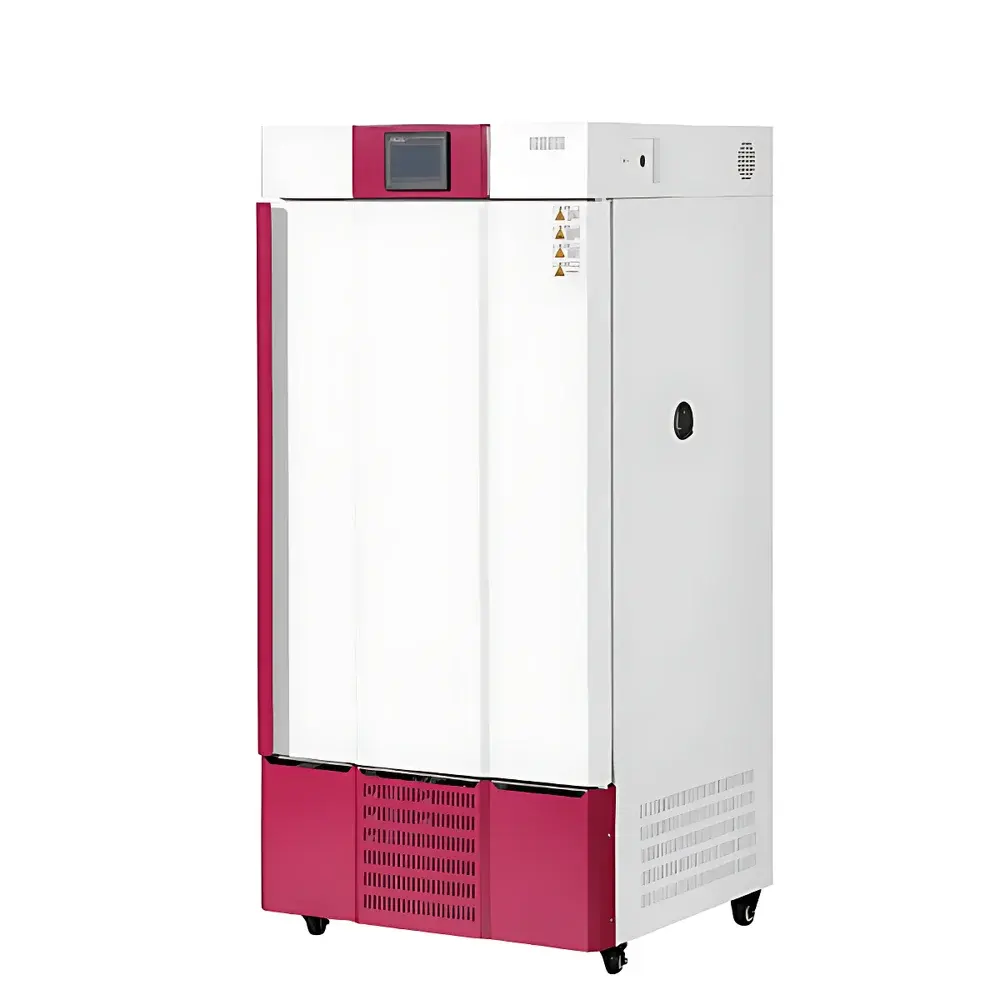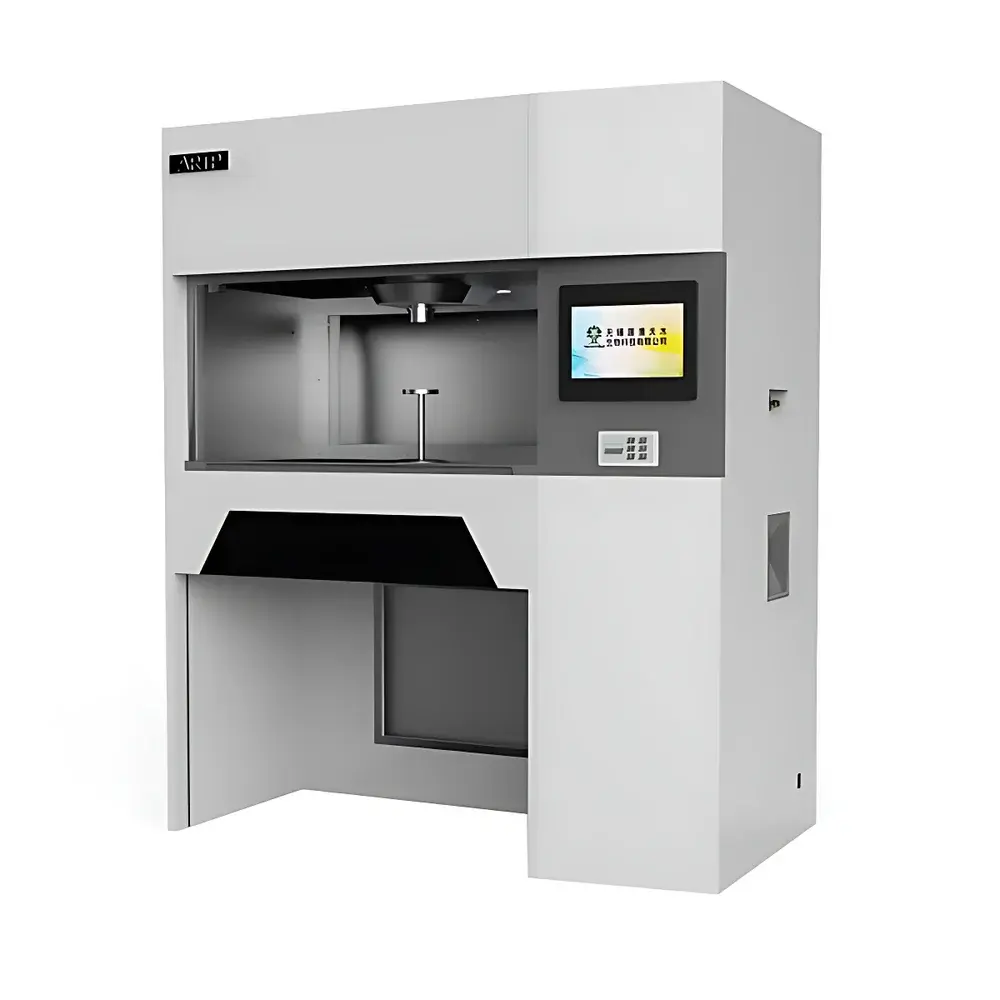
TMAXTREE ARTPⅢS Atmospheric-Pressure Room-Temperature Plasma Mutagenesis Instrument
| Brand | TMAXTREE |
|---|---|
| Origin | Jiangsu, China |
| Manufacturer Type | Direct Manufacturer |
| Origin Category | Domestic |
| Model | ARTPⅢS |
| Instrument Type | Atmospheric-Pressure Plasma Mutagenesis System |
| Function | Microbial Sample Treatment |
| Discharge Technology | Uniform Glow Discharge at Atmospheric Pressure |
| Working Gas | Helium ≥99.999% Purity |
| Mutagenesis Mode | Single-Sample Sequential Treatment |
| Gas Flow Control Range | 0–15 SLM (Standard Liters per Minute) |
| Gas Flow Accuracy | ±1.0% F.S. |
| Sample-to-Nozzle Distance | 2 mm |
| Chamber Environment | ISO Class 5 (100-grade) Cleanroom Airflow |
| Cooling System | Integrated Refrigerated Cooling |
| Plasma Jet Temperature | ≤37 °C |
| Operating Ambient | 15–25 °C, RH ≤60% |
| Organism Compatibility | Prokaryotes (e.g., bacteria, actinomycetes) and Eukaryotes (e.g., yeasts, molds, microalgae, higher fungi) |
| Total Power Consumption | ≤1000 W |
Overview
The TMAXTREE ARTPⅢS Atmospheric-Pressure Room-Temperature Plasma Mutagenesis Instrument is a purpose-built, non-genetic engineering platform engineered for high-efficiency microbial strain improvement via controlled physical mutagenesis. Unlike low-pressure plasma sources requiring vacuum systems, the ARTPⅢS employs stable, uniform atmospheric-pressure glow discharge in ultra-high-purity helium (≥99.999%) to generate a dense, low-temperature (≤37 °C) plasma jet rich in reactive oxygen and nitrogen species (RONS), including atomic He*, excited He metastables, O•, OH•, NO•, and ozone. This chemically active yet thermally benign environment induces targeted DNA damage—including base modifications, single-strand breaks, and clustered lesions—without thermal denaturation or sample desiccation. The instrument’s design adheres to principles of reproducible plasma–biological interface physics: precise 2 mm nozzle-to-sample standoff ensures consistent energy flux delivery, while integrated refrigerated cooling maintains sample viability during exposure. As a Class I biosafety-compatible tool, it enables rapid mutagenesis (typically 1–5 minutes per sample) with mutation frequencies reported up to 10⁻²–10⁻³ per locus—orders of magnitude higher than UV or chemical mutagens—while preserving genomic integrity necessary for downstream screening and industrial scale-up.
Key Features
- Atmospheric-pressure uniform glow discharge architecture eliminating need for vacuum pumps or complex pressure regulation
- High-precision mass flow controller with ±1.0% full-scale accuracy across 0–15 SLM helium range, ensuring repeatable RONS dose delivery
- Integrated ISO Class 5 clean-air chamber with laminar unidirectional airflow (100-grade), minimizing environmental contamination during handling
- Automated 7-position sample carousel enabling sequential, unattended treatment and collection under sterile conditions
- Real-time plasma jet temperature monitoring and closed-loop refrigerated cooling system maintaining ≤37 °C at the biological interface
- Modular, service-accessible design supporting field maintenance with minimal downtime; no consumables beyond helium gas
Sample Compatibility & Compliance
The ARTPⅢS is validated for mutagenesis of diverse microbial cell types—including Gram-positive and Gram-negative bacteria (e.g., Escherichia coli, Enterobacter cloacae), actinomycetes, yeasts (Saccharomyces cerevisiae, Pichia pastoris), filamentous fungi (Aspergillus niger, Trichoderma reesei), microalgae (Chlorella vulgaris), and basidiomycetes. It complies with ISO 14644-1 (cleanroom classification), IEC 61000-6-3 (EMC emissions), and IEC 61000-6-2 (immunity). For regulated environments, operation logs—including gas flow setpoints, treatment duration, ambient temperature/humidity, and operator ID—can be exported in CSV format to support GLP/GMP audit trails. While not FDA-cleared as a medical device, its non-transgenic mechanism aligns with OECD consensus documents on non-GMO strain development (OECD Series on Safety of Novel Foods and Feeds No. 38, 2021).
Software & Data Management
The ARTPⅢS operates via an embedded Linux-based control interface with touch-screen HMI. All process parameters—including gas flow rate, exposure time, sequence order, and environmental sensor readings—are timestamped and stored locally on encrypted internal flash memory (16 GB). Data export supports USB 2.0 and Ethernet (TCP/IP) protocols. Exported logs conform to ASTM E2500-07 (Standard Guide for Specification, Design, and Verification of Pharmaceutical and Biopharmaceutical Manufacturing Systems) metadata conventions. Optional integration with LIMS via RESTful API enables automated transfer of treatment records into enterprise quality management systems. No proprietary software licenses or cloud dependencies are required; firmware updates are delivered via signed OTA packages compliant with IEC 62443-3-3 security requirements.
Applications
- Rapid generation of high-diversity mutant libraries for directed evolution of industrial enzymes (e.g., thermostable proteases, chiral ketoreductases)
- Development of extremophile strains for bioremediation—demonstrated in Enterobacter cloacae mutants exhibiting 2.5× enhanced TPH degradation under 7.5% NaCl stress
- Metabolic engineering of amino acid overproducers—e.g., Corynebacterium glutamicum mutants achieving 2.91× increase in L-leucine titer (18.55 mg/g DCW)
- Secondary metabolite enhancement in filamentous fungi—documented 136% and 43% increases in orange and yellow pigment yields in Monascus purpureus
- Strain stabilization for continuous fermentation processes, where ARTP-induced mutations improve genetic robustness without plasmid dependency
FAQ
What safety certifications does the ARTPⅢS hold?
The instrument meets CE marking requirements per EN 61000-6-2/6-3 and complies with IEC 61010-1 for laboratory electrical equipment safety. It carries no laser or ionizing radiation hazard classification.
Is helium purity critical—and why?
Yes. Impurities >10 ppm (e.g., N₂, O₂, H₂O) quench He metastables and reduce RONS yield. Only ≥99.999% helium ensures reproducible plasma chemistry and mutagenic efficiency.
Can the ARTPⅢS treat spores or biofilms?
Yes—validated for bacterial endospores (Bacillus subtilis) and fungal conidia. Biofilm suspensions require pre-dispersion to single-cell level for uniform exposure.
How is dose calibration performed?
Dose is defined empirically as gas flow × exposure time (SLM·s). Calibration curves linking this parameter to survival rate and mutation frequency are established per organism using serial dilution plating and phenotypic screening.
Does the system support regulatory submission data packages?
Yes. Raw logs, calibration certificates, and IQ/OQ documentation templates are provided to support submissions under USP <71>, EP 5.1.3, or ICH Q5D for cell line development.