
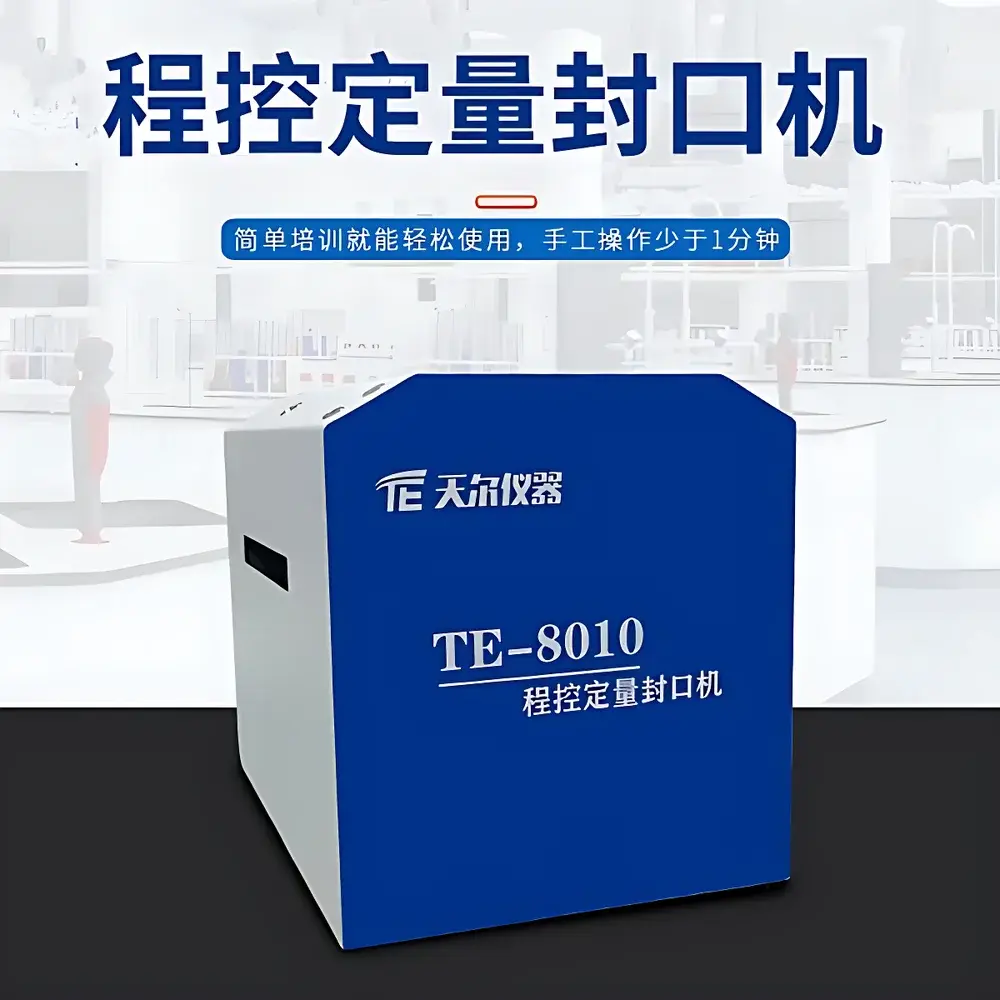
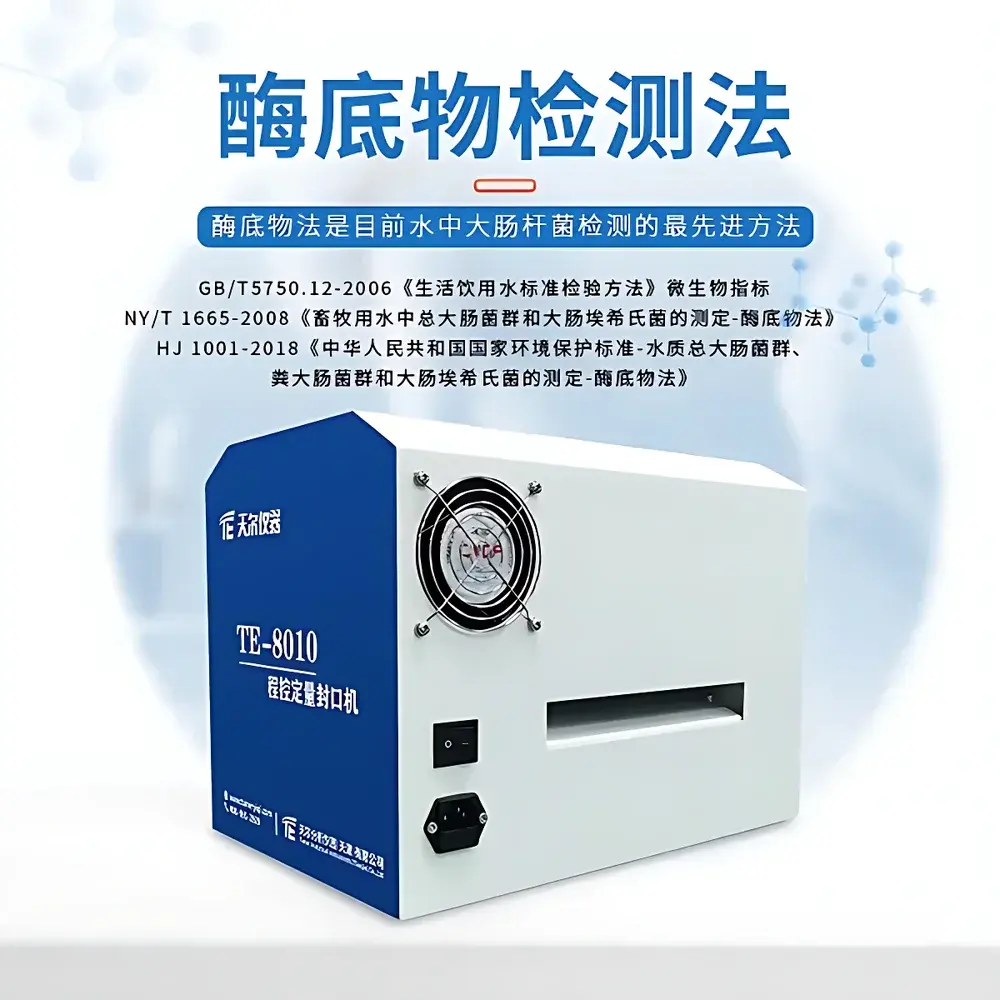
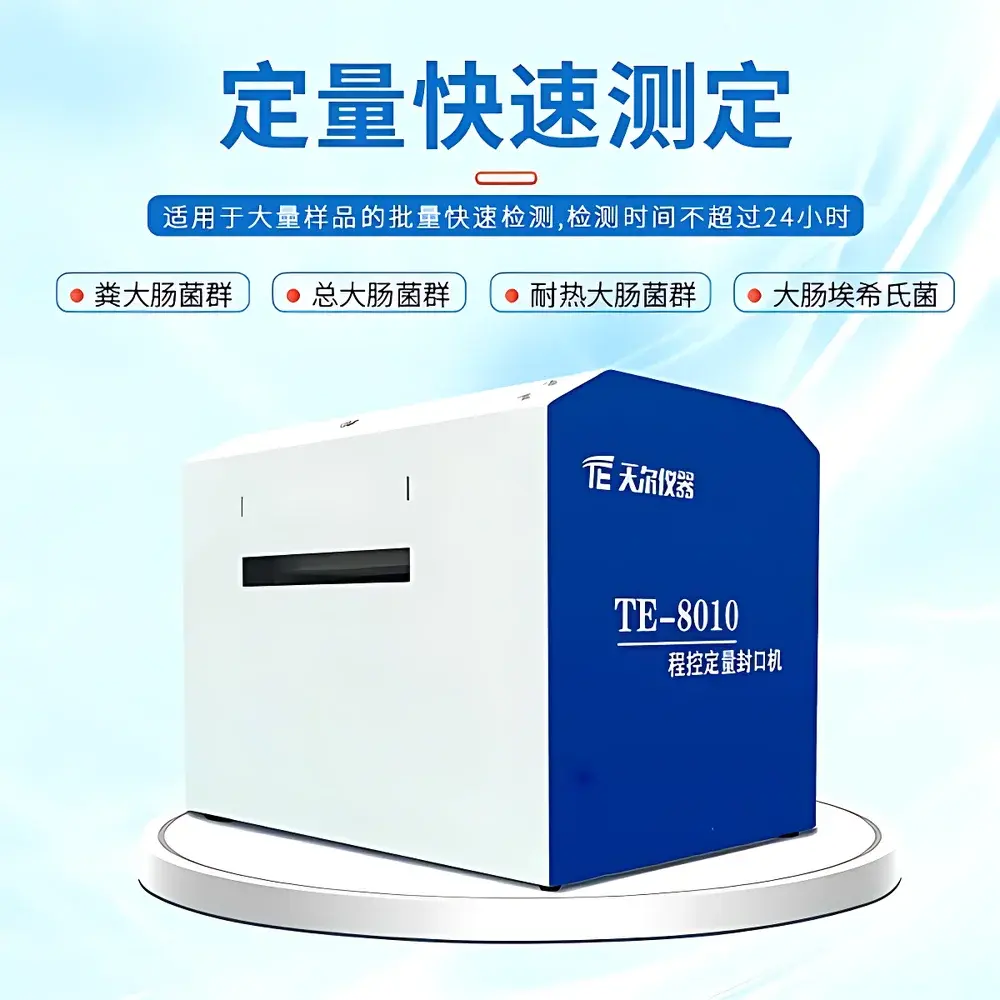
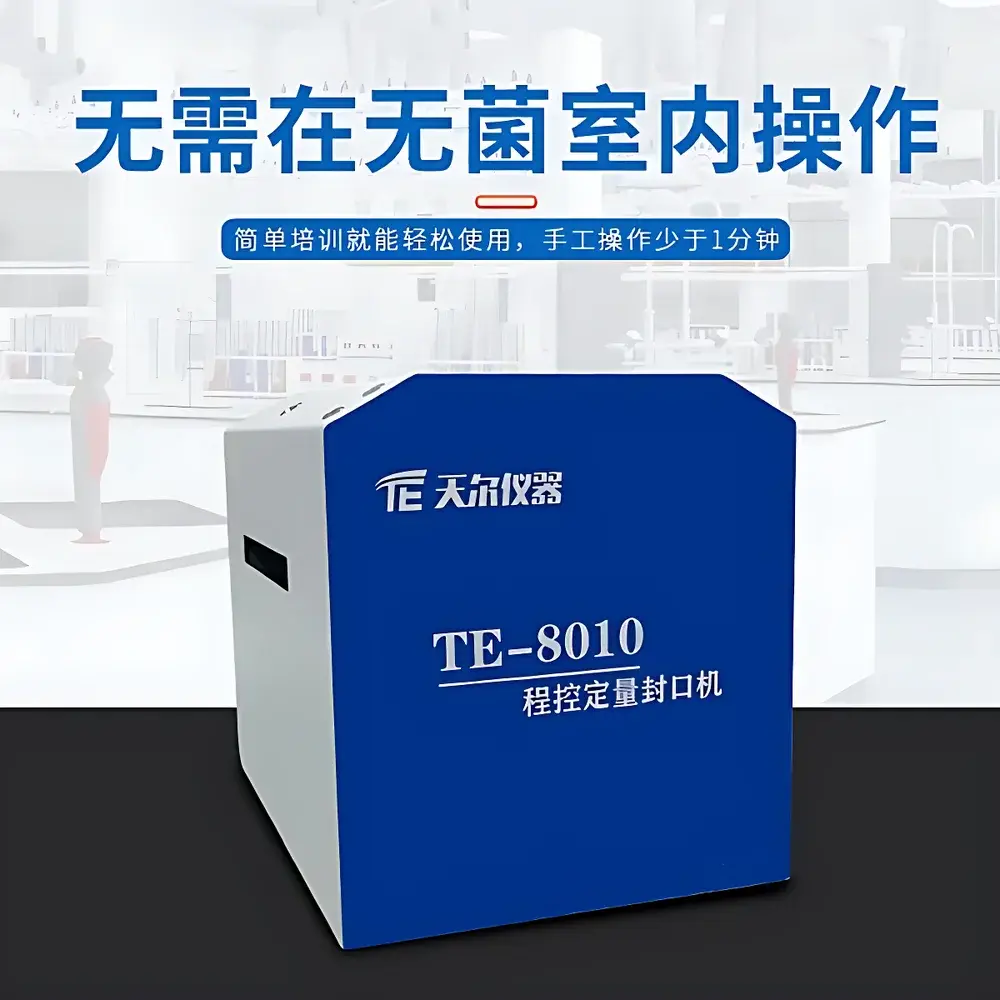
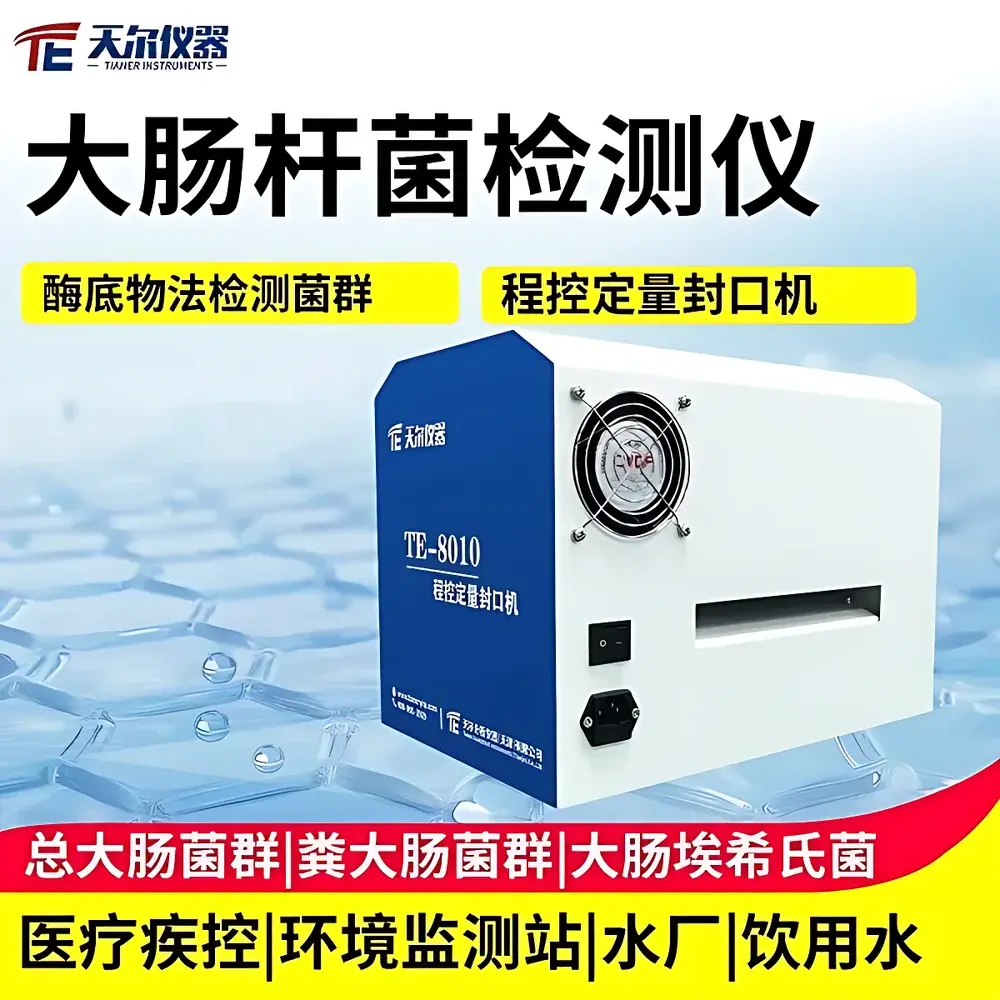
TIANER TE-8010 Escherichia coli Detection System
| Brand | TIANER |
|---|---|
| Origin | Tianjin, China |
| Manufacturer Type | Direct Manufacturer |
| Product Type | Benchtop Instrument |
| Detection Principle | Enzyme-Substrate Method (Most Probable Number, MPN) |
| Sample Type | Liquid Water Samples |
| Detection Range | 0–2419 MPN/100 mL |
| Detection Speed | ≤24 hours |
| Throughput | 51 samples per run |
| Accuracy | ≤5% deviation |
| Compliance | GB/T 5750.12–2006, NY/T 1665–2008, HJ 1001–2018 |
Overview
The TIANER TE-8010 Escherichia coli Detection System is a benchtop microbiological analyzer engineered for rapid, quantitative detection of thermotolerant coliforms, total coliforms, fecal coliforms, and specifically Escherichia coli in water matrices. It implements the standardized enzyme-substrate method—based on the hydrolysis of chromogenic or fluorogenic substrates by β-D-galactosidase (for total/fecal coliforms) and β-D-glucuronidase (for E. coli)—in conjunction with the Most Probable Number (MPN) statistical protocol. Unlike membrane filtration or conventional multiple-tube fermentation, the TE-8010 eliminates subjectivity in colony identification and avoids interference from heterotrophic background flora. Its design adheres to internationally recognized performance criteria for water quality testing, including ISO 9308-1:2014 (water quality — enumeration of E. coli and coliform bacteria), and aligns functionally with EPA Method 1604 and Standard Methods 9223B.
Key Features
- Benchtop footprint optimized for laboratory space efficiency and integration into routine QC/QA workflows.
- MPN-based quantification enabling direct analysis of undiluted 100 mL water samples across a dynamic range of 0–2419 MPN/100 mL.
- High-selectivity enzyme-substrate reagents: each assay unit suppresses >10⁶ CFU/mL of non-target heterotrophic bacteria, minimizing false positives.
- Low false-negative rate due to detection sensitivity at single viable E. coli cell level per 100 mL sample.
- No requirement for confirmatory testing—results are definitive per GB/T 5750.12–2006 and HJ 1001–2018 regulatory frameworks.
- Minimal hands-on time: sample preparation and inoculation completed in under 60 seconds per test.
- No glassware cleaning, no membrane filtration, no colony counting—reducing analyst fatigue and inter-operator variability.
Sample Compatibility & Compliance
The TE-8010 is validated for use with potable water, surface water, groundwater, wastewater effluent, livestock drinking water, and aquaculture systems. It accepts liquid samples without pre-filtration or centrifugation, provided turbidity remains below 10 NTU. The system complies with Chinese national standards GB/T 5750.12–2006 (Standard Methods for Examination of Drinking Water – Microbiological Parameters), NY/T 1665–2008 (Determination of Total Coliforms and E. coli in Livestock Water), and HJ 1001–2018 (Determination of Total Coliforms, Fecal Coliforms, and E. coli in Water – Enzyme-Substrate Method). While not certified to ISO/IEC 17025 under third-party accreditation, its operational protocol supports GLP-aligned documentation practices, including raw data retention, user access logs, and batch-specific reagent traceability.
Software & Data Management
The TE-8010 operates via an embedded microcontroller interface with alphanumeric LCD display and tactile keypad navigation. All MPN calculations are performed internally using pre-loaded statistical tables conforming to ASTM D5673–17 (Standard Practice for MPN Estimation). Results are output as MPN/100 mL with confidence intervals (95%), accompanied by pass/fail indicators relative to regulatory thresholds (e.g., 0 CFU/100 mL for drinking water per GB 5749–2022). Data export is supported via USB 2.0 to CSV format for downstream integration with LIMS or Excel-based reporting. Audit trails—including date/time stamps, operator ID input, and reagent lot numbers—are retained for ≥12 months in non-volatile memory.
Applications
- Drinking water safety monitoring in municipal utilities and bottled water facilities.
- Environmental surveillance of rivers, lakes, and coastal zones under national water quality assessment programs.
- Regulatory compliance testing for agricultural runoff and livestock operation discharge permits.
- Process control in food and beverage production where water is a critical ingredient or rinsing medium.
- Emergency response screening during waterborne disease outbreaks or post-disaster infrastructure assessments.
- Academic and research laboratories conducting microbial source tracking or method comparison studies.
FAQ
Does the TE-8010 require culture incubation? Why is the reported detection time ≤24 hours?
Yes—the system requires controlled temperature incubation (typically 35 ± 0.5°C for total coliforms; 44.5 ± 0.2°C for E. coli) for enzymatic substrate cleavage and signal development. The ≤24-hour timeframe reflects maximum incubation duration inclusive of reagent rehydration and optical readout, consistent with HJ 1001–2018.
Can the TE-8010 differentiate between E. coli and other coliforms in mixed cultures?
Yes—through dual-enzyme specificity: β-D-glucuronidase activity is uniquely expressed by >94% of E. coli strains, while β-D-galactosidase is broadly present in coliforms. The assay uses selective chromogenic substrates to enable simultaneous but distinguishable detection.
Is calibration or daily verification required before sample analysis?
No routine calibration is needed. Each reagent lot undergoes manufacturer QC against NIST-traceable E. coli reference strains (ATCC 11775, ATCC 25922). Users perform positive/negative control checks per batch per HJ 1001–2018 Section 8.2.
What maintenance does the instrument require?
Annual verification of incubation chamber temperature uniformity and display functionality is recommended. No optical alignment or fluidic servicing is required due to solid-state detector architecture.
Is the TE-8010 compatible with FDA 21 CFR Part 11 requirements?
The current firmware does not support electronic signatures or audit trail encryption. For regulated pharmaceutical or clinical applications, supplementary procedural controls must be implemented to meet Part 11 expectations.




