
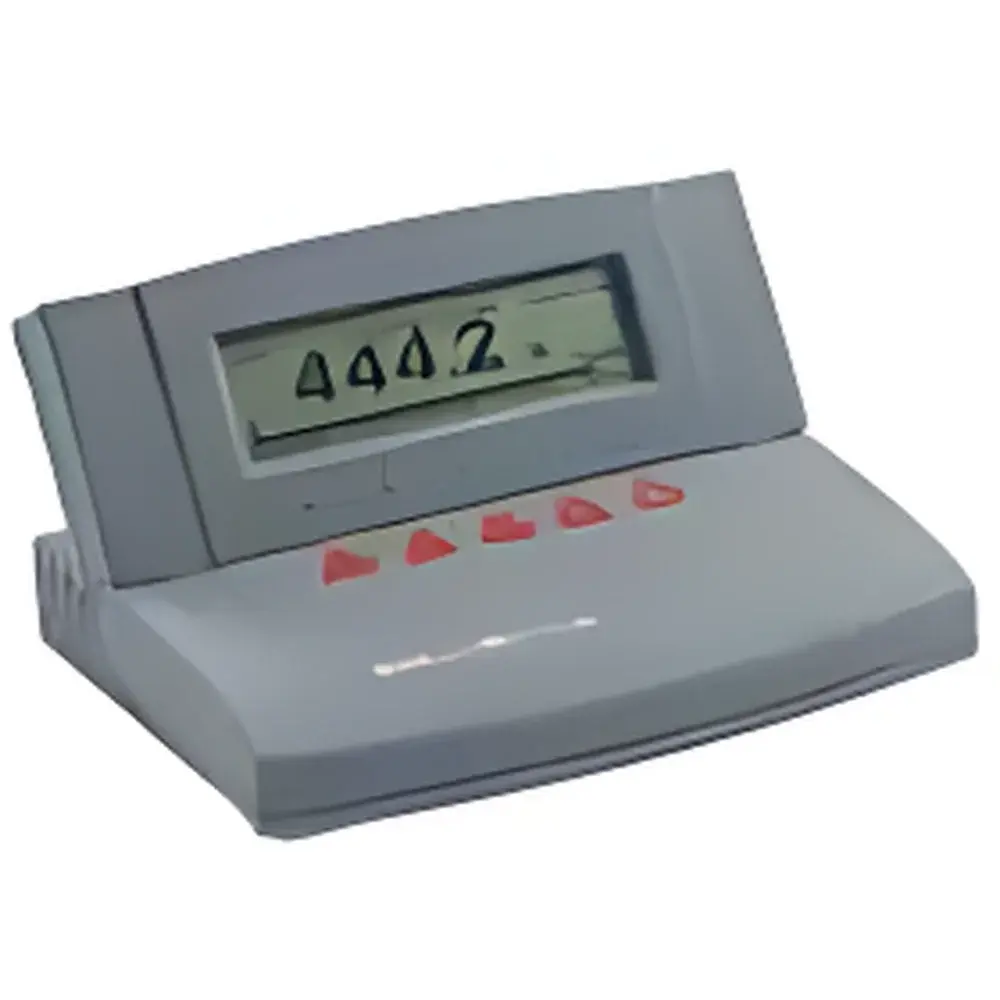
Ophir Nova II & Vega Laser Power and Energy Meter Console
| Origin | Israel |
|---|---|
| Manufacturer Type | Authorized Distributor |
| Origin Category | Imported |
| Models | Nova II, Vega, Nova, Orion, LaserStar Single-Channel |
| Pricing | Available Upon Request |
Overview
The Ophir Nova II and Vega Laser Power and Energy Meter Consoles are precision-engineered digital readout units designed for seamless integration with Ophir’s full range of calibrated laser measurement sensors—including photodiode, thermopile, and pyroelectric detectors. These consoles operate on the fundamental principle of analog-to-digital conversion of sensor output signals, where each detector type delivers a voltage or charge proportional to incident optical power (W) or pulse energy (J). The console applies pre-loaded calibration coefficients—traceable to NIST and PTB standards—to convert raw signals into metrologically valid readings. Unlike standalone meters, these consoles function as intelligent interface hubs: they manage sensor identification via embedded EEPROM, auto-configure measurement ranges, and enforce dynamic range optimization to minimize quantization error. Designed for laboratory, manufacturing QA/QC, and R&D environments, both models comply with ISO/IEC 17025 requirements for measurement uncertainty reporting and support audit-ready data logging for GLP/GMP-regulated workflows.
Key Features
- Universal sensor compatibility: Native support for all Ophir-certified photodiode (e.g., PD300 series), thermopile (e.g., 3A-FS, 10A-P), and pyroelectric (e.g., PE50BF-DIF-C, J-10MB-HE) detectors—no firmware modification required.
- Dual communication interfaces: Integrated USB 2.0 (CDC class) and RS-232 (DB9) ports enable real-time bidirectional data streaming and remote command execution via SCPI-compatible protocol.
- Onboard data acquisition: Nova II stores up to 50,000 timestamped measurement points with automatic sampling rate adjustment (1–100 Hz); Vega adds color graphical display with real-time trend plotting and statistical overlay (mean, std dev, min/max, histogram).
- Calibration traceability: Each unit ships with factory calibration certificate referencing ISO/IEC 17025-accredited lab procedures; calibration data is stored in non-volatile memory and persists across firmware updates.
- Rugged industrial design: IP54-rated enclosure with aluminum front panel, ESD-protected input circuitry, and operating temperature range of 0–40 °C with <±0.05 % reading stability per °C.
Sample Compatibility & Compliance
These consoles accommodate continuous-wave (CW) lasers from 190 nm to 11 µm and pulsed sources with repetition rates up to 25 kHz (pyroelectric mode) or DC-coupled response (thermopile/photodiode). Detector selection determines spectral responsivity, damage threshold, and minimum measurable power (as low as 10 pW with high-gain photodiodes) or energy (down to 10 nJ with pyroelectric sensors). All supported probes meet IEC 60825-1:2014 laser safety classification requirements. The consoles themselves conform to EN 61326-1 (EMC) and EN 61010-1 (safety), and support FDA 21 CFR Part 11-compliant electronic signatures when used with Ophir StarLab software and configured audit trails.
Software & Data Management
Ophir StarLab v4.x (Windows/macOS) provides full GUI control, live visualization, batch export (CSV, TXT, MATLAB .mat), and automated report generation compliant with ISO 10110 and ASTM E2750. Raw data streams include metadata such as sensor serial number, calibration date, wavelength setting, and user-defined notes. The consoles support SCPI command sets for integration into LabVIEW, Python (PyVISA), or MATLAB automation frameworks. Firmware updates are delivered via USB and validated using SHA-256 checksums; version history and update logs are retained internally for regulatory review.
Applications
- Laser system commissioning and periodic verification in photonics manufacturing lines.
- Optical coating reflectance/transmittance validation using dual-channel LaserStar configurations.
- Pulsed laser ablation process monitoring in medical device micromachining (e.g., stent cutting, ophthalmic lens patterning).
- Academic ultrafast optics labs requiring synchronized energy measurement across Ti:sapphire amplifier chains.
- ISO 13694-compliant laser beam profiling system calibration where power/energy reference standards are required.
FAQ
Do Nova II and Vega consoles require separate calibration when paired with different detectors?
No—calibration is detector-specific and stored within each probe’s internal EEPROM; the console automatically loads correction coefficients upon connection.
Can the Vega console display real-time beam position stability when used with a BeamWatch or Pyrocam sensor?
No—Vega and Nova II are power/energy-only readouts; beam profiling requires dedicated systems like BeamGage or StarLab with compatible camera-based sensors.
Is GPIB support available on all models?
Only LaserStar Single-Channel supports optional GPIB (IEEE-488.2) via add-on module; Nova II and Vega rely on USB/RS-232.
What is the maximum sampling rate for continuous logging on Nova II?
50 Hz in standard mode; up to 100 Hz when disabling display refresh and statistical calculations.
Are firmware updates backward-compatible with older Ophir sensors?
Yes—all current console firmware versions maintain full interoperability with Ophir sensors manufactured since 2005, including legacy SPIRICON-branded units acquired post-2006.
Related Products






