
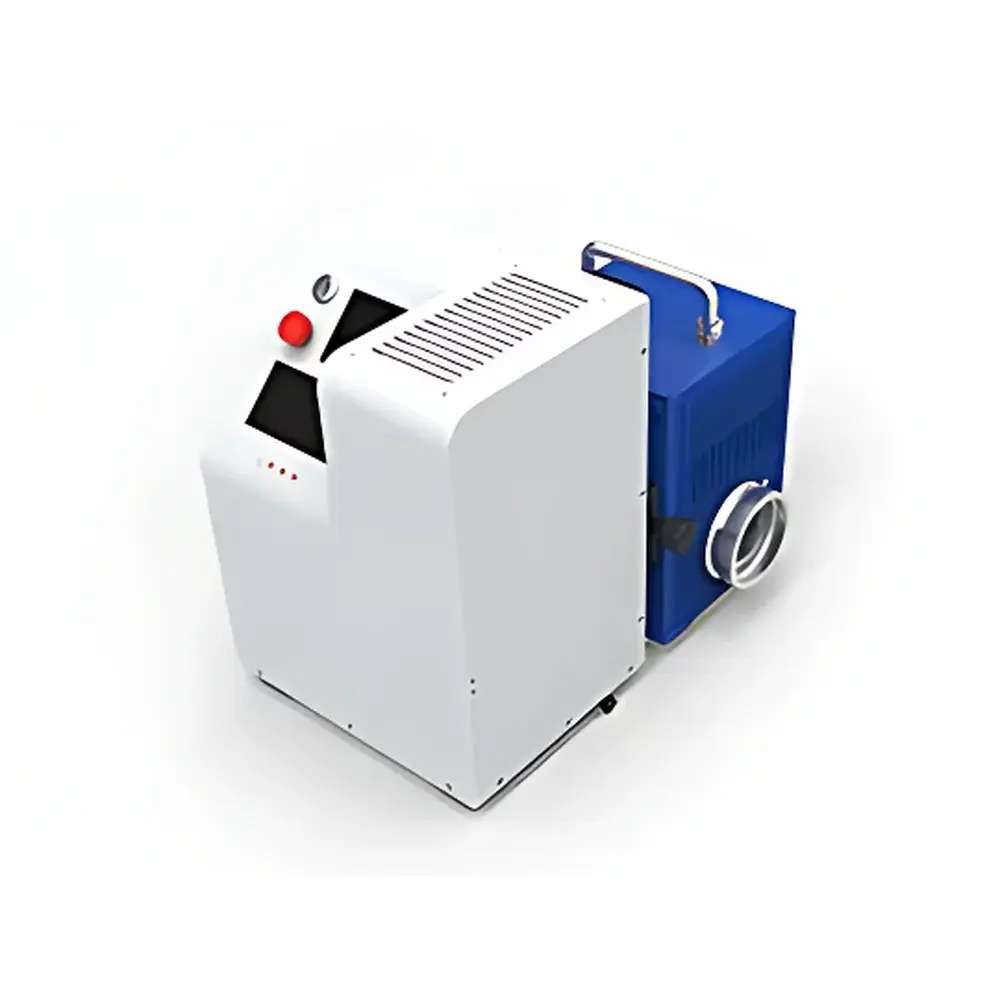
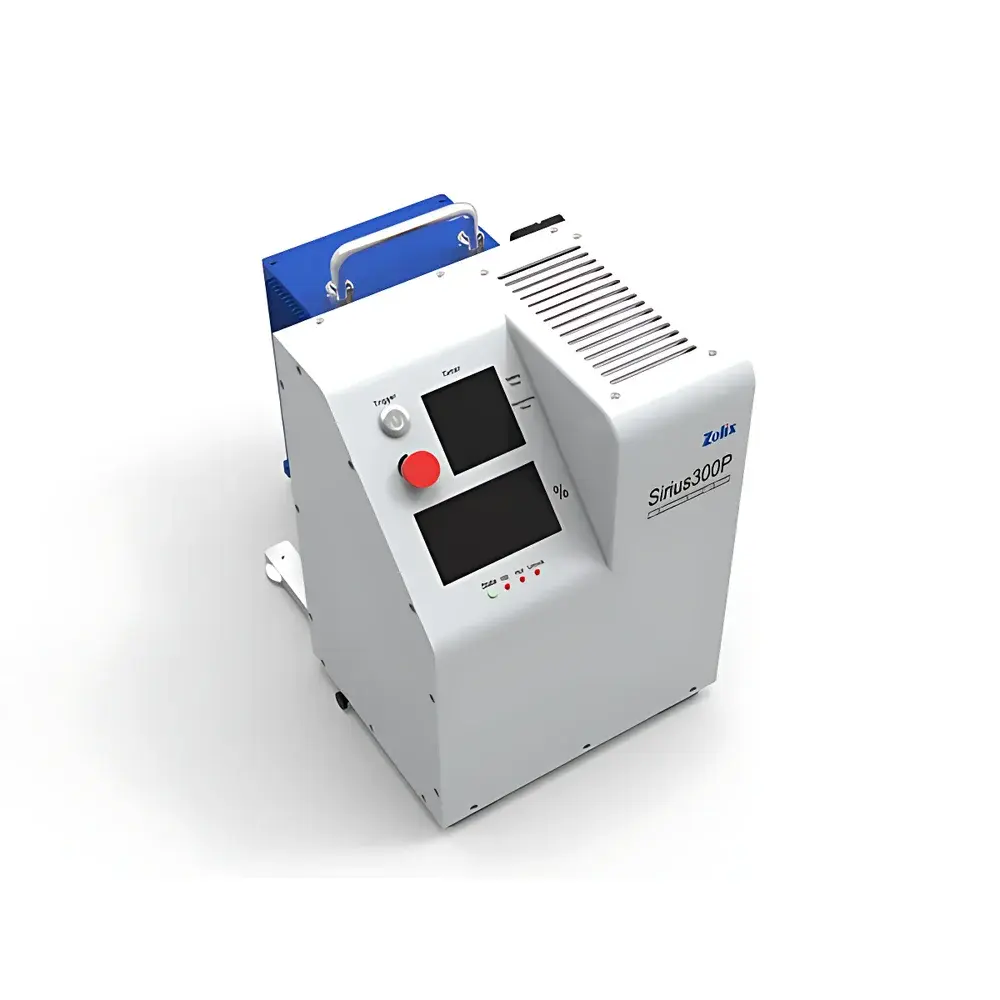
ZOLIX Sirius-300P 300W Xenon Light Source for Photocatalytic Research
| Brand | ZOLIX |
|---|---|
| Model | Sirius-300P |
| Light Source Type | Xenon Arc Lamp |
| Illumination Mode | External Irradiation |
| Spectral Range | 200–2500 nm (UV-Vis-NIR) |
| Total Optical Output Power | 50 W |
| UV Output (<390 nm) | 2.6 W (Sirius-300P-F) / 6.6 W (Sirius-300P-UV) |
| Visible Output (390–770 nm) | 5000 lm / 4500 lm |
| IR Output (>770 nm) | 28.8 W / 26.8 W |
| Radiant Power Density | 5–15 Sun @ 50 mm (measured with Si reference cell, 1 Sun = 1000 W/m²) |
| Beam Collimation | Avg. 5° divergence |
| Adjustable Working Height | 70–220 mm |
| Lamp Lifetime | 1000 h (rated), up to 6000 h (maximum) |
| Cooling Method | Forced-air radial heat dissipation |
| Stability (Constant Power Mode) | <1% RMS fluctuation |
| Dimensions | 341 × 244 × 290 mm |
| Weight | 11 kg |
| Input Voltage | AC 190–240 V, 50 Hz |
| Lamp Operating Voltage/Current | DC 14 V (13–16 V) / 21 A (10–22 A) |
| Color Temperature | 5600 K (Sirius-300P-F) / 5050 K (Sirius-300P-UV) |
Overview
The ZOLIX Sirius-300P is a high-stability, externally irradiating 300W xenon arc light source engineered for precision photocatalytic and photochemical research. It employs a DC-powered short-arc xenon lamp coupled with an integrated parabolic reflector to deliver collimated, spectrally broad output spanning 200–2500 nm — covering deep UV, visible, and near-infrared regions. Unlike broadband halogen or LED sources, the xenon arc provides continuous, solar-spectrum-mimicking irradiance with high radiometric fidelity, making it suitable for quantitative actinometry, quantum yield determination, and accelerated aging studies under controlled irradiance conditions. The system operates in constant optical power mode (<1% instability), ensuring reproducible photon flux delivery critical for kinetic modeling and inter-laboratory comparability. Its modular architecture supports both integrated and split configurations, enabling flexible integration into custom optical benches, environmental chambers, or reactor manifolds.
Key Features
- Parabolic reflector-integrated xenon lamp delivering high collimation (avg. 5° divergence) and uniform irradiance across adjustable beam diameters (Φ30–70 mm at 100 mm working distance)
- Two spectral variants: Sirius-300P-F optimized for visible-range solar simulation (320–2500 nm, 5600 K CCT), and Sirius-300P-UV enhanced for UV continuity (200–2500 nm, 6.6 W UV output below 390 nm)
- Adjustable vertical positioning (70–220 mm) and modular design allowing rapid assembly/disassembly for alignment flexibility in multi-instrument setups
- Digital timer-controlled shutter function with audible alert — enables precise exposure duration control without manual intervention
- Radial forced-air cooling architecture minimizing thermal deformation of the lamp housing, preserving beam collimation and extending lamp service life
- Comprehensive safety suite: automatic power cutoff upon enclosure opening, real-time overtemperature shutdown, ignition failure lockout (after 10 s), and lamp degradation monitoring with visual/audible replacement alerts
Sample Compatibility & Compliance
The Sirius-300P is compatible with standard photocatalytic reactors (e.g., top-irradiated slurry reactors, immobilized film cells, gas-phase flow reactors), quartz cuvettes, integrating spheres, and spectroradiometer calibration targets. Its spectral output meets ASTM G173-03 global reference spectrum requirements within ±15% in the 300–1100 nm range when used with appropriate filtering. For UV-specific applications, optional bandpass filters (e.g., UG11, WG320) and liquid NIR absorbers enable spectral tailoring compliant with ISO 4892-2 (plastics — exposure to laboratory light sources) and IEC 61215-2 (photovoltaic module qualification). The system’s electrical design conforms to IEC 61010-1 for laboratory equipment safety; its optical radiation hazard classification complies with ANSI Z136.1–2022 — Class 4 laser-equivalent UV emission necessitates mandatory use of EN 171-compliant UV-blocking eyewear and skin shielding during operation.
Software & Data Management
While the Sirius-300P operates via front-panel controls, it features RS-232 and TTL-compatible digital I/O ports for external triggering and status feedback. Integration with LabVIEW, Python (PySerial), or MATLAB enables automated exposure scheduling, synchronized data logging with spectroradiometers (e.g., Ocean Insight QE Pro), and closed-loop irradiance regulation using calibrated photodiode monitors. Audit trails for lamp runtime, thermal events, and shutter actuations are stored in non-volatile memory — supporting GLP/GMP-aligned documentation requirements. Firmware updates preserve backward compatibility and may introduce future support for USB-C interface and IEEE 1588 timestamping for time-critical photochemical kinetics experiments.
Applications
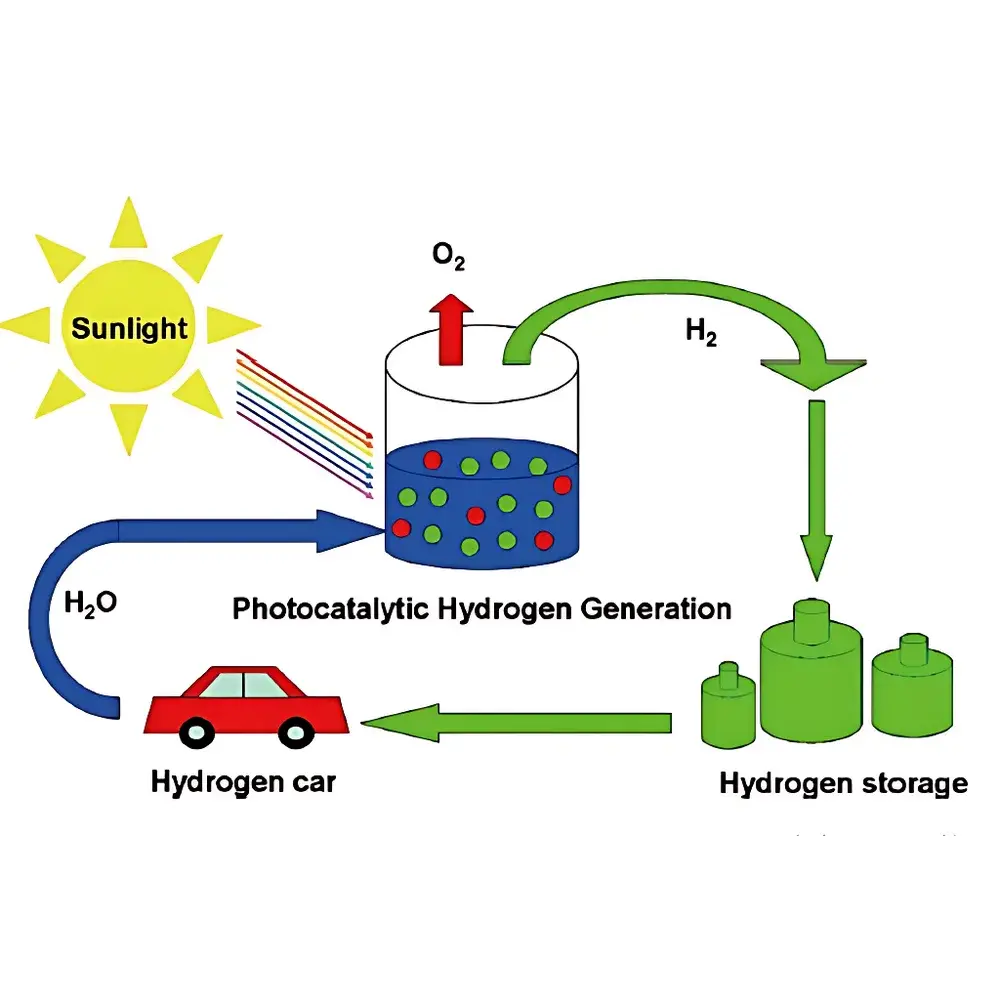
- Quantitative photocatalysis: H₂ evolution from water splitting, CO₂ reduction, and NOₓ degradation under standardized irradiance (5–15 Sun)
- Photochemical synthesis: [2+2] cycloadditions, C–H functionalization, and radical cascade reactions requiring broadband UV-Vis activation
- Environmental remediation studies: Degradation kinetics of pharmaceuticals, dyes, and microplastics under simulated solar or enhanced UV stress
- Material stability testing: Accelerated photodegradation of polymers, perovskites, and organic semiconductors per ISO 4892-3 protocols
- Bio-optical assays: Blue-light-dependent gene expression, photodynamic therapy agent screening, and circadian rhythm entrainment studies
- Instrument calibration: Reference source for spectroradiometer validation, quantum sensor responsivity mapping, and solar simulator classification (Class AAA per IEC 60904-9)
FAQ
What safety certifications does the Sirius-300P meet?
It complies with IEC 61010-1 (electrical safety) and emits optical radiation classified as ANSI Z136.1 Class 4 in the UV range — requiring certified protective eyewear and procedural controls.
Can the output spectrum be filtered to isolate specific wavelength bands?
Yes — ZOLIX offers accessory filter mounts, cold mirrors, UV-pass/Vis-block filters, and liquid NIR absorbers compatible with the standard 25.4 mm optical rail interface.
Is the lamp lifetime affected by frequent on/off cycling?
Excessive cold starts accelerate electrode erosion; the system enforces a 10-second ignition lockout after failed attempts to mitigate this. Recommended minimum on-time is 15 minutes for optimal lamp longevity.
How is irradiance calibrated and verified?
Users must employ NIST-traceable reference cells (e.g., KG5-filtered Si photodiodes) or spectroradiometers. ZOLIX provides factory-measured spectral irradiance data (300–1100 nm) referenced to a 50 mm working distance.
Does the system support remote operation in inert atmospheres?
The power supply and lamp housing are rated for operation in gloveboxes (N₂/Ar); optional quartz viewport adapters and feedthrough-compatible mounting brackets are available upon request.





