
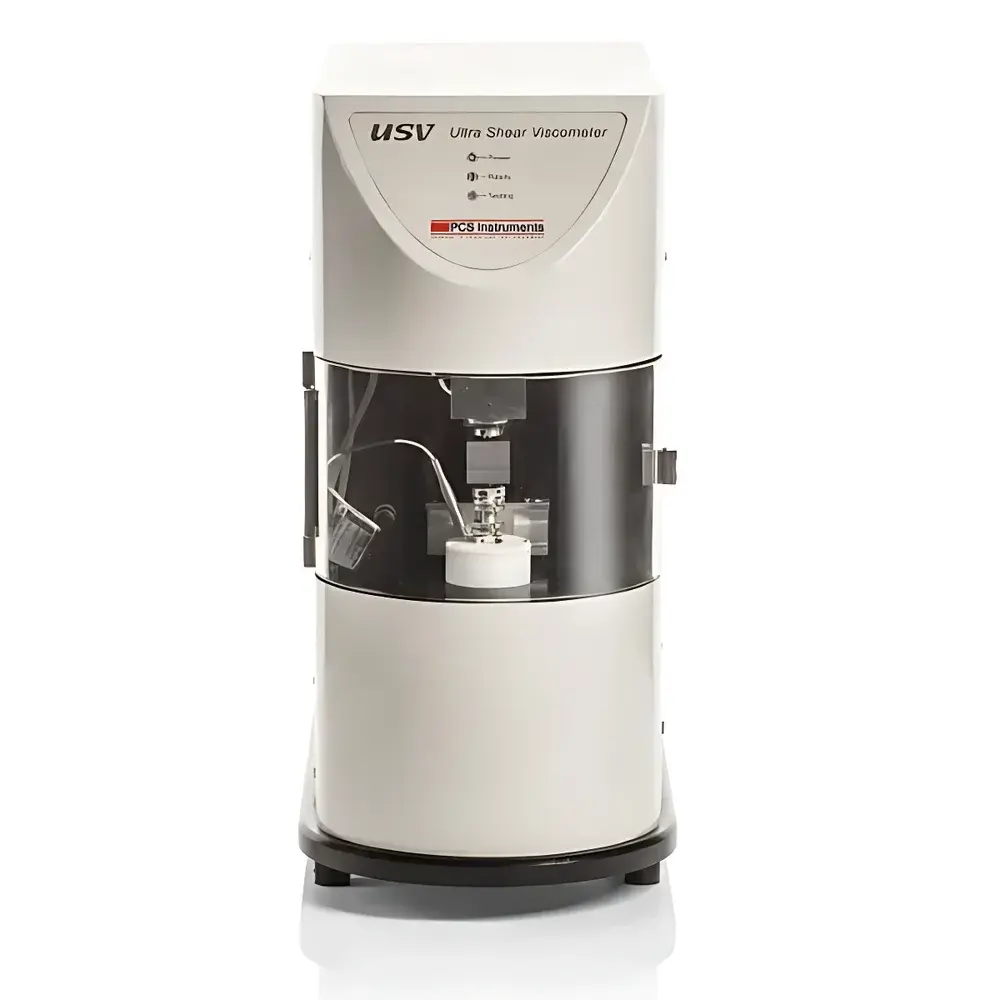
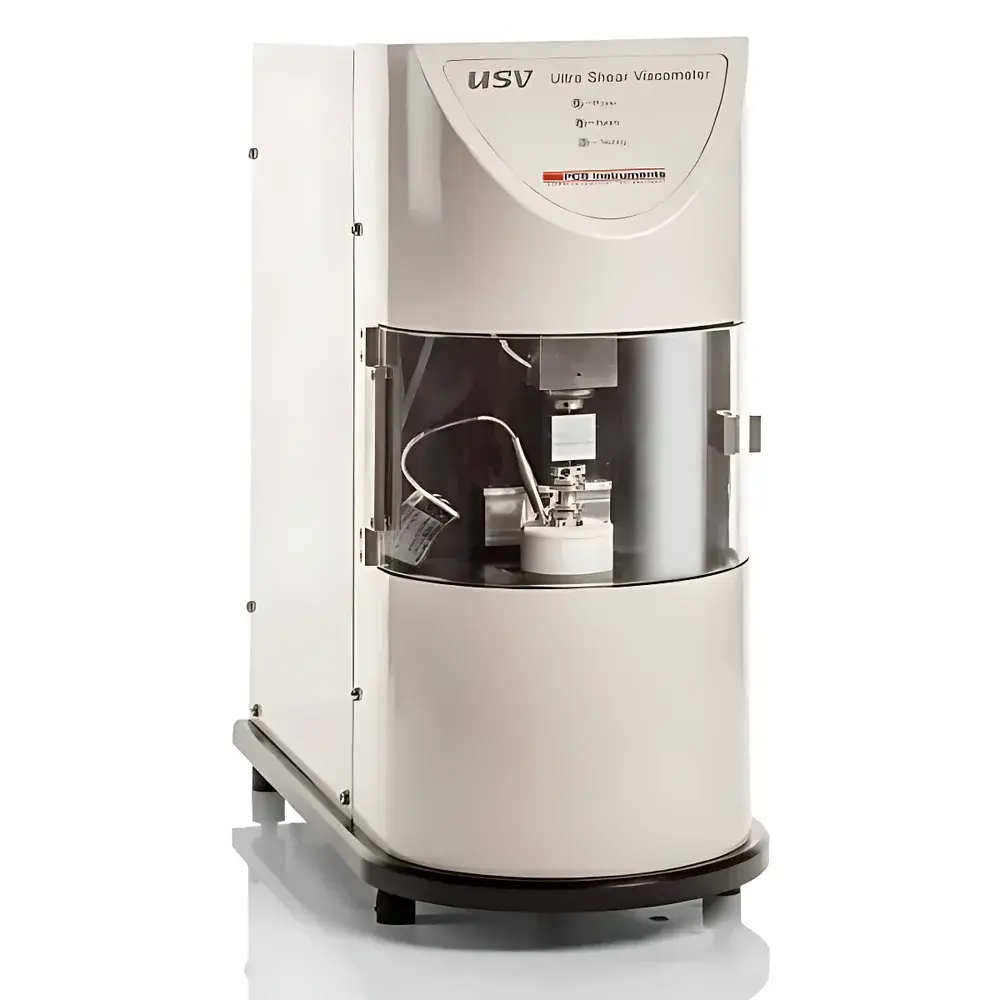
UK PCS USV Ultra-High-Shear Viscometer
| Brand | PCS Instruments |
|---|---|
| Origin | United Kingdom |
| Model | USV |
| Shear Rate Range | up to 1×10⁷ s⁻¹ |
| Temperature Range | 40 °C to 150 °C |
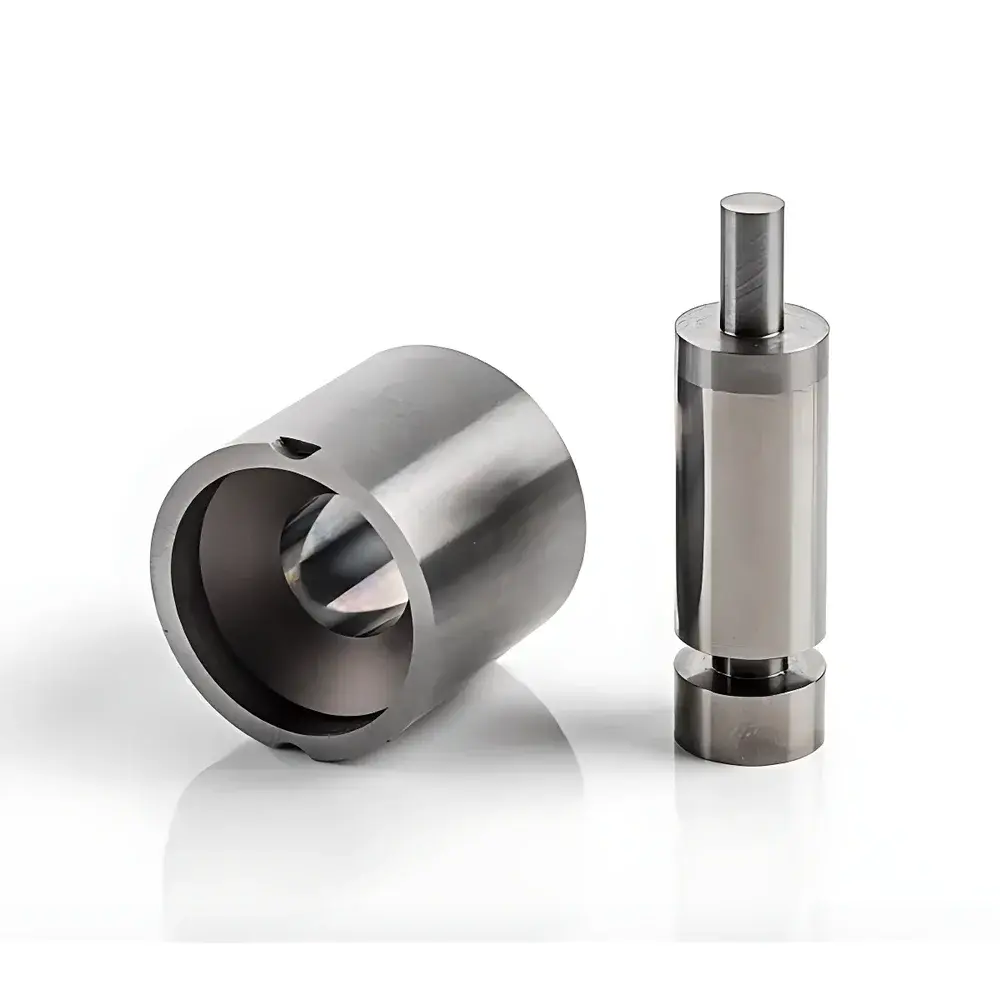
| Rotor/Spindle Material | Tungsten Carbide |
| Stator Material | Tungsten Carbide |
| Gap Setting | Fixed 1 mm |
| Motor Type | DC Servo Motor |
| Max Speed | 20,000 rpm |
| Acceleration Time (0–full speed) | ≤100 ms |
| Torque Measurement | Integrated via microprocessor-controlled motor and electromagnetic clutch |
| Thermal Management | Optimized gap geometry minimizes shear-induced temperature rise |
| Calibration | No routine gap calibration required due to matched thermal expansion coefficients |
Overview
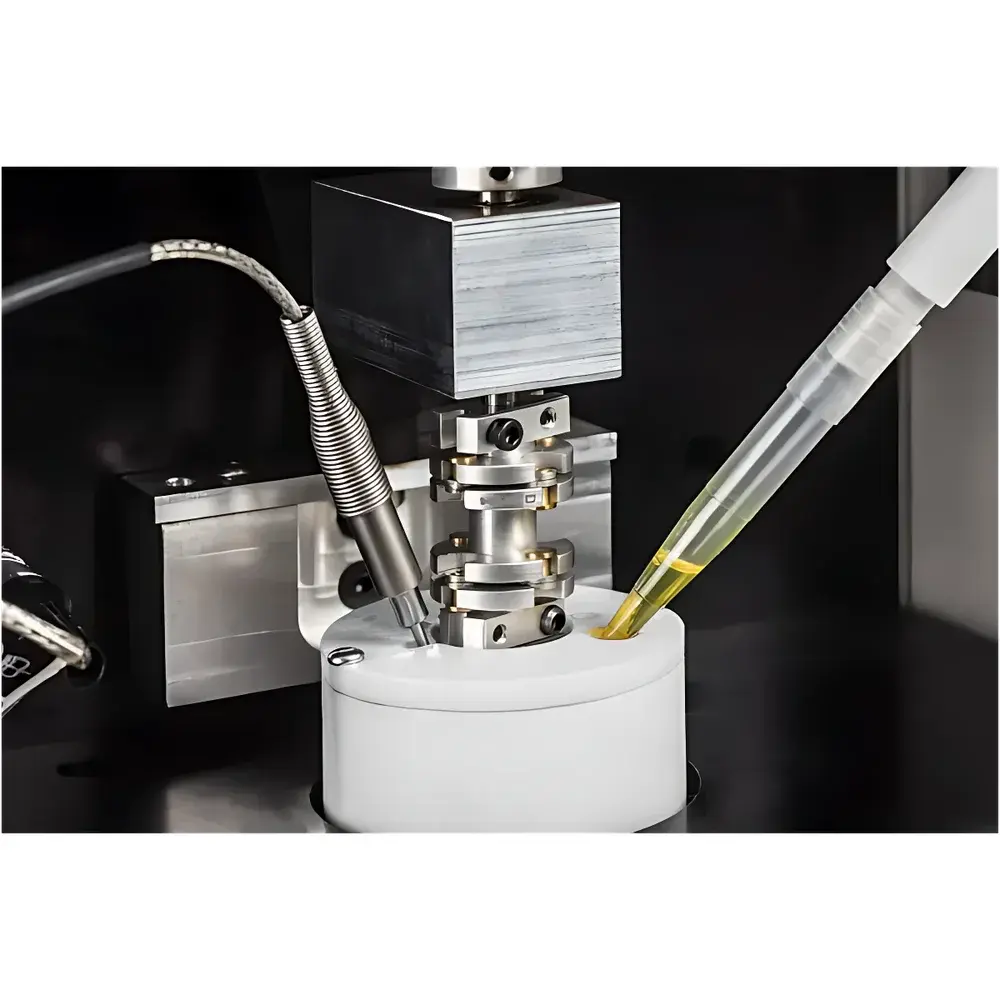
The UK PCS USV Ultra-High-Shear Viscometer is a precision-engineered rotational viscometer specifically designed for measuring the high-temperature, high-shear (HTHS) viscosity of engine oils under conditions replicating critical in-service lubrication regimes. Unlike conventional cone-and-plate or concentric-cylinder geometries that rely on variable mechanical gaps and require frequent recalibration to compensate for thermal drift, the USV employs a fixed-gap, coaxial cylinder configuration with matched thermal expansion characteristics between rotor and stator—both fabricated from tungsten carbide. This architecture enables stable, reproducible shear rate generation up to 1×10⁷ s⁻¹ at temperatures ranging from 40 °C to 150 °C, directly addressing ASTM D6617, ISO 21602, and SAE J300 HTHS requirements for modern engine oil specifications. The instrument operates on Couette flow principles, where viscosity is derived from the ratio of applied torque to angular velocity under defined shear geometry—ensuring traceability to SI units without reliance on reference oil interpolation.
Key Features
- Fixed 1 mm radial gap between tungsten carbide rotor and stator—eliminates thermal gap drift and removes need for periodic gap verification or correction against standard oils
- DC servo motor with electromagnetic clutch enabling full-speed engagement in ≤100 ms, ensuring rapid transient response and minimizing pre-shear history effects
- Integrated torque sensing via motor current and angular position feedback, controlled by an embedded real-time microprocessor for synchronized data acquisition
- Thermally optimized geometry reduces viscous heating during measurement, maintaining sample temperature stability within ±0.1 °C at steady-state HTHS conditions
- Compliant with ISO/IEC 17025–recommended practices for method validation, including repeatability assessment per ASTM D6617 Annex A1
- Modular bath integration supports external temperature control systems meeting ASTM D445 and D2983 thermal uniformity criteria
Sample Compatibility & Compliance
The USV accommodates neat engine oils (including API SP, CK-4, FA-4 formulations), re-refined base stocks, and additive-treated blends without modification to hardware or procedure. Its fixed-geometry design ensures consistent shear field distribution across sample batches, supporting statistical process control (SPC) in QC laboratories operating under ISO 9001 or IATF 16949 frameworks. Data output complies with FDA 21 CFR Part 11 requirements when paired with validated PCS ViscoSoft™ software—including electronic signatures, audit trails, and user-access controls. Instrument performance verification follows documented protocols aligned with ISO/IEC 17025 Clause 6.5.2 for equipment suitability assessment.
Software & Data Management
ViscoSoft™ v5.2 (included) provides automated test sequencing, real-time viscosity calculation, and multi-point temperature ramping with dwell stabilization. Raw torque, angular velocity, and bath temperature are logged at ≥10 Hz resolution. Export formats include CSV, XML, and PDF reports compliant with GLP documentation standards. The software supports method templates for ASTM D6617, ISO 21602, and internal OEM specifications—with configurable pass/fail limits, trend charting, and deviation alerts. All data modifications are recorded in an immutable audit trail with timestamp, operator ID, and reason-for-change fields.
Applications
- HTHS viscosity validation for API, ACEA, and JASO engine oil licensing submissions
- Formulation screening of viscosity index improvers (VIIs) and shear-stable polymer additives
- In-service oil monitoring to assess mechanical shear degradation in fleet lubricants
- Research into nano-additive dispersion stability under extreme shear stress
- Correlation studies between bench-scale HTHS data and engine dynamometer wear metrics
- Supporting OEM-specific material approval processes requiring traceable, gap-independent rheological data
FAQ
Does the USV require daily calibration with reference oils?
No. Due to the matched thermal expansion coefficient of the tungsten carbide rotor and stator, gap variation over the 40–150 °C range is <±0.3 µm—well below the threshold requiring recalibration per ISO 21602 Annex B.
Can the USV measure used engine oils with soot or oxidation by-products?
Yes. The 1 mm gap and robust tungsten carbide surfaces resist clogging and abrasive wear, enabling reliable measurement of heavily degraded samples without geometry cleaning between runs.
How is compliance with ASTM D6617 ensured?
The USV’s fixed geometry, torque resolution (<0.01 µN·m), and temperature control accuracy (±0.05 °C) meet all apparatus specification clauses in ASTM D6617 Section 6, and its data processing algorithm implements the exact viscosity calculation formula specified in Section 11.
Is third-party certification available for IQ/OQ/PQ validation?
Yes. PCS Instruments provides GMP-compliant installation qualification (IQ), operational qualification (OQ), and performance qualification (PQ) documentation packages, including test protocols, acceptance criteria, and raw data worksheets aligned with ASTM E2500 and Annex 11.




