
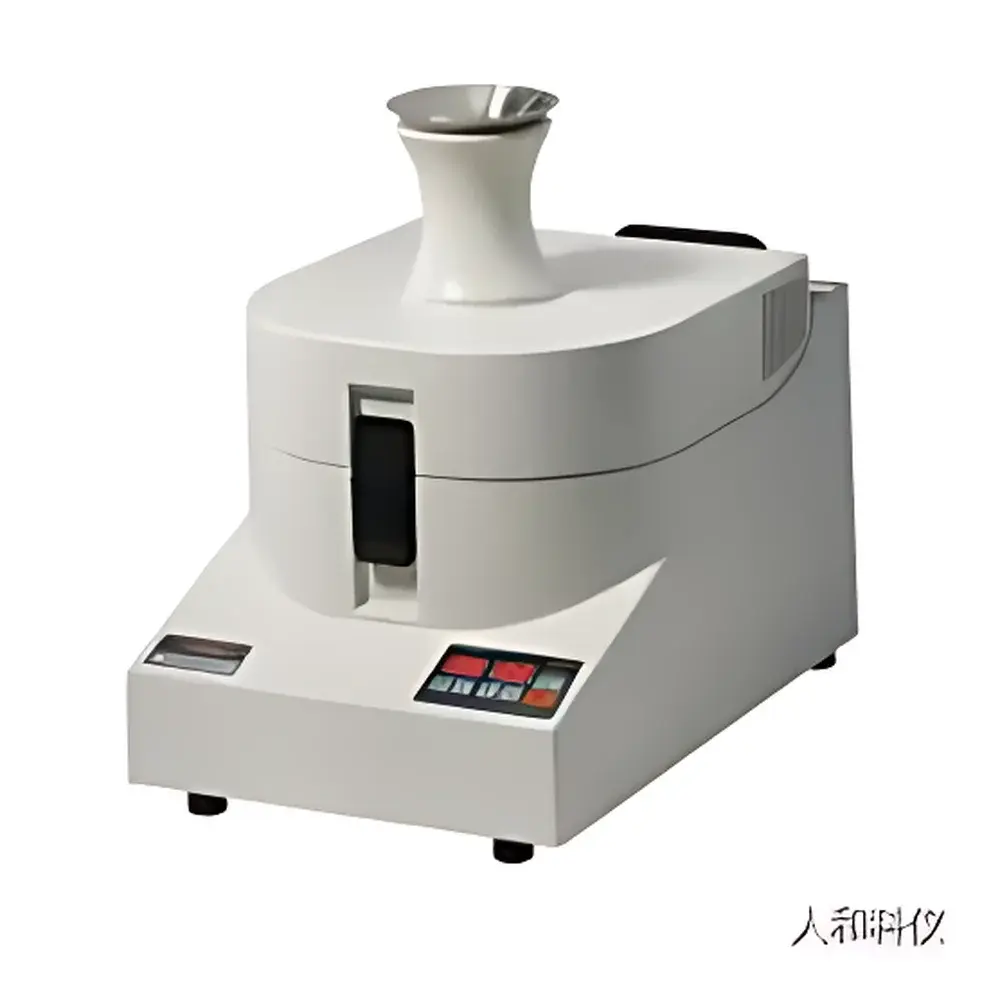
Fritsch Pulverisette 14 Variable-Speed High-Speed Rotor Mill
| Brand | Fritsch |
|---|---|
| Origin | Germany |
| Model | Pulverisette 14 |
| Sample Type | Soft to Medium-Hard Materials |
| Feed Size | ≤ 10 mm |
| Final Particle Size (D50) | ≤ 40 µm |
| Output Granularity Range | 0.01–0.5 mm |
| Throughput | 0.5–5 L/h |
| Rotor Speed | 6,000–20,000 rpm |
| Motor Power | 550 W (bearing motor), 1150 W (total electrical input) |
| Voltage/Frequency | 200–240 V / 1~ / 50–60 Hz |
| Net Weight | 23 kg |
| Dimensions (L×W×H) | 31 × 48 × 47 cm |
| Compliance | EN 61010, CE Marked |
| Construction | Stainless Steel Housing & Rotor, Titanium Rotor Option Available |
| Safety Certification | TÜV-tested per EN 61010 |
Overview
The Fritsch Pulverisette 14 is a high-speed rotor mill engineered for precise, reproducible size reduction of soft to medium-hard, brittle, and fibrous materials in laboratory and pilot-scale environments. It operates on the principle of high-velocity impact and shear comminution: a dynamically balanced, multi-edged stainless steel rotor rotates at speeds between 6,000 and 20,000 rpm inside a fixed grinding chamber, subjecting feed material to intense cutting, friction, and compression forces against an adjustable stainless steel sieve ring. The resulting particles pass through the sieve aperture and are collected in a removable stainless steel receiving pan. Its modular design supports cryogenic operation—compatible with liquid nitrogen pre-cooling—for thermolabile or elastic samples (e.g., polymers, herbs, pharmaceutical tablets), enabling sub-40 µm D50 particle distributions without thermal degradation. Unlike planetary ball mills or jaw crushers, the Pulverisette 14 delivers rapid, single-step size reduction with minimal heat accumulation and no cross-contamination risk when cleaned in situ or externally.
Key Features
- Variable-speed digital control interface with membrane-protected keypad and microprocessor-based monitoring for precise speed selection (6,000–20,000 rpm in 100-rpm increments)
- Tool-free interchangeability of rotor configurations: 8-, 12-, or 24-edge hardened stainless steel rotors optimized for varying hardness, elasticity, and throughput requirements
- Cryogenic-ready grinding chamber with optional liquid nitrogen port integration for low-temperature embrittlement of rubbery or waxy samples
- Three operational modes: standard sieve-assisted grinding, sieve-free coarse milling (for medium-hard or high-fat content materials), and external bag collection via large-batch adapter (up to 5 L/h throughput)
- Overload protection circuitry compliant with VDE 0530 and EN 60034 standards; automatic shutdown upon thermal or mechanical overload
- Titanium rotor + polymer-coated sieve option available for iron-free grinding—critical for trace-metal analysis in geochemical, pharmaceutical, or battery-material applications
- CE-marked and TÜV-certified per EN 61010-1:2019 for electrical safety and mechanical hazard mitigation in laboratory settings
Sample Compatibility & Compliance
The Pulverisette 14 accommodates a broad spectrum of organic and inorganic matrices—including botanicals (leaves, roots, spices), pharmaceutical dosage forms (coated tablets, capsules), agricultural products (grains, feed pellets), polymers (PP, PVC, PE foils), soils (rock-free), clays (kaolin), and carbonaceous materials (coal, charcoal). It is unsuitable for highly abrasive, metallic, or extremely hard mineral samples (> Mohs 6). All wetted components are constructed from electropolished AISI 304 stainless steel, ensuring corrosion resistance and compliance with ISO 8573-1 (compressed air purity) and USP particulate matter requirements for pharmaceutical preprocessing. When used with titanium rotor kits, it meets ASTM E1097–22 criteria for non-ferrous comminution in elemental analysis workflows. Routine operation adheres to GLP documentation protocols, supporting audit-ready records when integrated with Fritsch’s optional LabSoft software.
Software & Data Management
While the base Pulverisette 14 operates via standalone hardware controls, it is fully compatible with Fritsch LabSoft v5.2—a validated data acquisition and instrument management platform compliant with FDA 21 CFR Part 11 Annex 11 requirements. LabSoft enables parameter logging (speed, runtime, temperature if equipped with optional IR sensor), electronic signature authentication, user access tiering, and automated report generation (PDF/CSV) with timestamped metadata. When coupled with the L24 vibratory feeder, LabSoft synchronizes real-time feed rate adjustments with rotor speed modulation to maintain constant specific energy input—essential for method transfer across batches and regulatory submissions. Audit trails are encrypted and immutable, satisfying GMP-aligned quality system requirements for QC labs in pharma, food, and environmental testing.
Applications
This mill serves as a primary sample preparation tool in accredited laboratories performing pharmacopeial testing (USP , EP 2.9.12), agronomic nutrient analysis (AOAC 984.27), polymer rheology pre-conditioning, forensic botanical identification, and environmental soil screening (EPA Method 3050B). Its ability to achieve D50 ≤ 40 µm without agglomeration supports subsequent laser diffraction particle sizing (ISO 13320), XRD phase quantification, or ICP-MS digestion efficiency validation. In R&D settings, it enables rapid formulation screening—e.g., optimizing disintegration profiles of modified-release tablets or assessing fiber dispersion in composite feedstocks.
FAQ
What is the minimum final particle size achievable with the Pulverisette 14?
Under optimal conditions (cryogenic treatment, 24-edge rotor, 20,000 rpm, fine-sieve configuration), the D50 is consistently ≤ 40 µm; the lower limit of the output range is 0.01 mm (10 µm), though sub-20 µm requires careful parameter tuning and may reduce throughput.
Can the Pulverisette 14 be used for wet grinding?
No—it is designed exclusively for dry grinding. Introduction of liquids compromises rotor balance, induces corrosion, and violates EN 61010 insulation safety requirements.
Is method validation support available for regulated industries?
Yes. Fritsch provides IQ/OQ documentation templates, calibration certificates traceable to DAkkS-accredited standards, and application notes aligned with USP, EP, and ISO grinding validation guidelines.
How often does the rotor require replacement?
With routine use on soft-to-medium samples, the stainless steel rotor typically exceeds 2,000 operating hours before measurable wear affects particle size distribution repeatability; titanium rotors extend service life by ~3× in abrasive-sensitive applications.
Does the instrument meet requirements for Good Manufacturing Practice (GMP) environments?
When operated with LabSoft v5.2 and configured with electronic log archiving, user permissions, and audit trail functionality, it fulfills core GMP data integrity expectations per PIC/S PI 041-2 and EU GMP Annex 11.



