
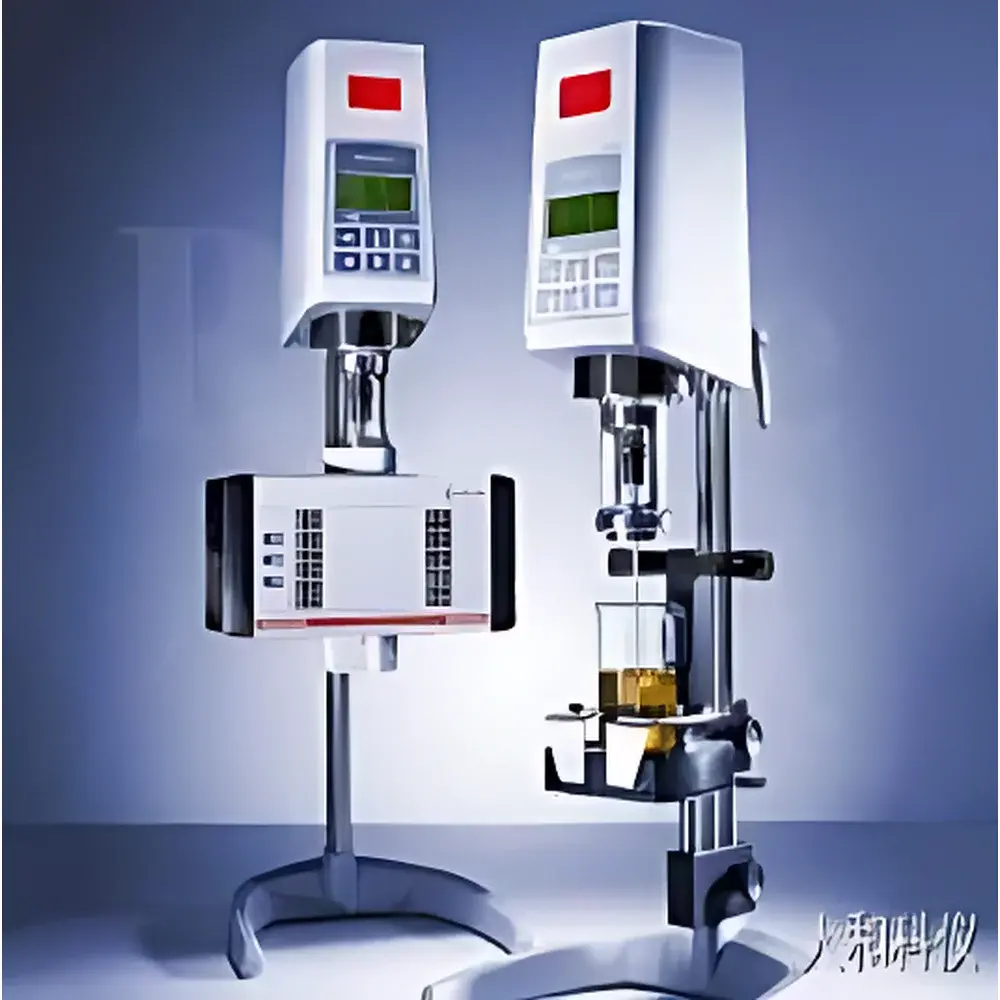
Anton Paar RheolabQC Advanced Rotational Rheometer
| Brand | Anton Paar |
|---|---|
| Origin | Austria |
| Model | RheolabQC |
| Instrument Type | Rotational Rheometer |
| Sample State | Liquid |
| Minimum Speed | 0.01 rpm |
| Maximum Speed | 1200 rpm |
| Torque Range | 0.20 mN·m to 75 mN·m |
| Shear Stress Range | 0.5–3×10⁴ Pa |
| Shear Rate Range | 10⁻²–4000 s⁻¹ |
| Viscosity Range | 1–10⁹ mPa·s (dependent on geometry) |
| Temperature Range | −20 °C to +180 °C |
| Angular Displacement Resolution | 2 µrad |
| Compliance | FDA 21 CFR Part 11, ISO 16520, ASTM D2196, D445, D1093 |
Overview
The Anton Paar RheolabQC is a high-performance rotational rheometer engineered for precision characterization of viscoelastic and flow behavior in liquid and semi-liquid materials. Based on Couette and cone-plate rheological principles, it applies controlled shear stress or shear rate to quantify dynamic viscosity, yield stress, thixotropy, and time-dependent deformation under defined thermal conditions. Designed for both routine quality control and advanced R&D applications, the RheolabQC delivers traceable, reproducible data across an exceptionally broad operational envelope—spanning shear rates from 0.01 s⁻¹ to 4000 s⁻¹ and torque from 0.20 mN·m to 75 mN·m. Its modular architecture supports seamless integration with temperature-controlled accessories, enabling compliant testing across pharmaceutical formulations, coatings, food emulsions, polymer melts, and personal care products.
Key Features
- High-dynamic EC motor system with closed-loop torque and speed control for exceptional accuracy and repeatability
- Dual operation modes: Controlled Rate (CR) and Controlled Stress (CS), supporting steady-state, transient, and oscillatory measurements
- Toolmaster™ auto-recognition technology: Patented interface that detects and configures measurement geometries (cone-plate, parallel-plate, concentric cylinder) and accessories without manual input
- Integrated quick-connect mechanism: Enables single-handed attachment/detachment of measuring systems with mechanical and electrical coupling verified in real time
- Standalone capability: Onboard memory stores up to 100 preloaded test methods; results viewable via built-in display and exportable via USB or Ethernet
- Expandable hardware ecosystem: Compatible with Peltier temperature units (−20 °C to +180 °C), solvent trap modules, humidity chambers, and automated sample changers
Sample Compatibility & Compliance
The RheolabQC accommodates a wide range of liquid and soft-solid samples—including Newtonian and non-Newtonian fluids, gels, pastes, suspensions, and thermosensitive formulations. Optional accessories extend applicability to coarse particulates (>200 µm) via the spherical measuring unit and industrial coatings using Krebs-type spindles. All measurement protocols adhere to internationally recognized standards: ISO 16520 (rotational rheometry), ASTM D2196 (Krebs viscosity), D445 (kinematic viscosity), and D1093 (paint consistency). Software validation supports GLP/GMP environments, with full audit trail functionality, electronic signatures, and secure user role management per FDA 21 CFR Part 11 requirements.
Software & Data Management
The RheoCompass™ software suite provides intuitive workflow-driven operation—from method creation and real-time visualization to statistical analysis and report generation. Predefined application templates cover yield point determination (e.g., Herschel-Bulkley fitting), flow curve acquisition, creep-recovery, and amplitude sweep testing. Raw data are stored in vendor-neutral HDF5 format, ensuring long-term accessibility and third-party compatibility. Export options include CSV, PDF, and XML; batch processing enables comparative analysis across multiple samples or time points. The software architecture complies with 21 CFR Part 11 through encrypted database logging, timestamped event tracking, and configurable access controls.
Applications
- Pharmaceutical development: Gel strength profiling, injectable suspension stability, ointment extrudability, and mucoadhesive formulation screening
- Paints & coatings: Thixotropic recovery assessment, sag resistance evaluation, and spray atomization prediction
- Food science: Yogurt structure breakdown, chocolate tempering kinetics, and plant-based beverage sedimentation modeling
- Polymers & composites: Melt viscosity mapping, crosslinking kinetics, and filler dispersion homogeneity quantification
- Personal care: Shampoo shear-thinning response, toothpaste extrusion force, and sunscreen film formation dynamics
FAQ
What temperature control options are available for the RheolabQC?
Peltier-based temperature units provide precise regulation from −20 °C to +180 °C, with ramp rates up to 10 °C/min and stability within ±0.1 °C.
Can the instrument perform oscillatory tests?
Yes—the RheolabQC supports frequency sweeps, strain sweeps, and time sweeps in oscillatory mode, delivering storage modulus (G′), loss modulus (G″), and tan δ values.
Is calibration traceable to national standards?
All torque and angular displacement calibrations are traceable to PTB (Physikalisch-Technische Bundesanstalt) and NIST-certified reference standards.
How does Toolmaster™ improve measurement reliability?
Toolmaster™ eliminates configuration errors by automatically loading geometry-specific parameters—including gap settings, correction factors, and valid shear rate ranges—upon physical attachment.
Does the system support automated sample handling?
When integrated with the Anton Paar MultiDrive or RoboVisco accessories, the RheolabQC enables unattended sequential testing of up to 48 samples with barcode-triggered method execution.



