
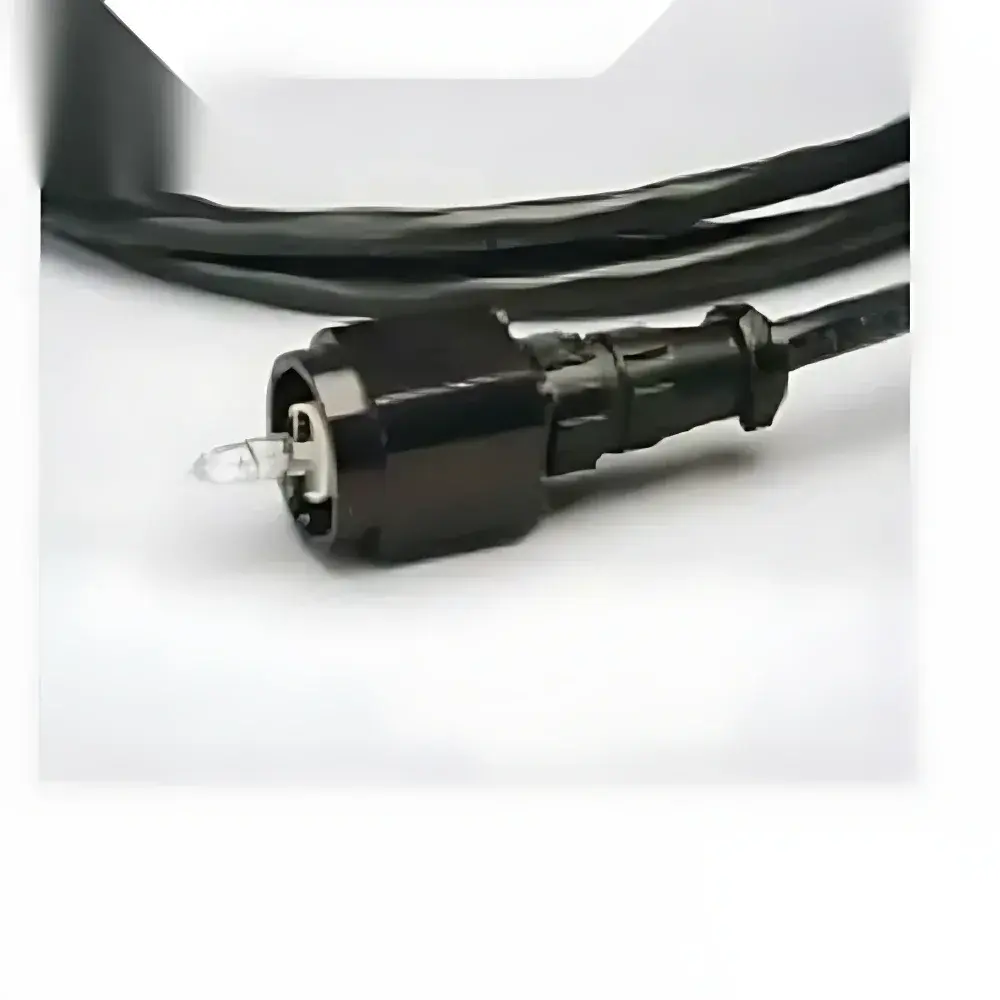
Labsphere AUX Absorption Calibration Lamp
| Brand | Other brands |
|---|---|
| Origin | Imported |
| Manufacturer Type | General Distributor |
| Pricing | Upon Request |
| Current Ratings | AUX-35: 3.07 A |
| AUX-50 | 4.17 A |
| AUX-100 | 8.33 A |
| Operating Voltage | 12–13.3 V DC |
| Color Temperature | 3000 K |
| Rated Lifetime | 600–2000 hrs |
| Mounting | 1-inch flange interface |
| Software Compatibility | LightMtrx® |
| Power Supply Requirement | Labsphere adjustable DC power supply |
Overview
The Labsphere AUX Absorption Calibration Lamp is a precision-engineered reference source designed to correct self-absorption errors inherent in integrating sphere photometric and radiometric measurements—particularly when characterizing solid-state lighting (SSL) devices such as LEDs, OLEDs, and luminaires with geometries or spectral emissive profiles distinct from standard reference lamps. Self-absorption arises when light emitted by the device under test (DUT) is partially reabsorbed by its own packaging, phosphor layer, or heat sink before reaching the sphere’s detector; this leads to systematic underestimation of total flux, especially in UV–VIS–NIR broadband measurements. The AUX series implements a validated two-lamp correction methodology per IES LM-79, CIE S 025/E:2015, and ISO/CIE 19476:2014, where the auxiliary lamp—mounted coaxially inside the sphere—is used to quantify the sphere’s effective absorption coefficient at the DUT’s emission profile. Unlike generic calibration sources, the AUX lamps are spectrally stable, spatially uniform, and thermally optimized for repeatable operation within sphere environments.
Key Features
- Engineered for high-fidelity self-absorption correction in 1-inch flanged integrating spheres, requiring no mechanical realignment after installation
- Three standardized models (AUX-35, AUX-50, AUX-100) delivering calibrated DC currents of 3.07 A, 4.17 A, and 8.33 A respectively, enabling scalable irradiance matching across sphere sizes and detector sensitivities
- Stable 3000 K correlated color temperature (CCT) output, optimized for spectral overlap with common white LED phosphor blends and minimizing thermal drift during extended measurement cycles
- Fully compatible with Labsphere’s LightMtrx® photometric software suite, which automates dual-lamp acquisition, absorption coefficient derivation, and corrected flux calculation per ASTM E308-22 Annex A5
- Compact, low-thermal-mass design with integrated heatsinking ensures <±0.2% output stability over 30-minute warm-up and <0.5% drift over 2-hour continuous operation
- Modular accessory support—including collimating apertures, neutral density filters, and spectral bandpass kits—for tailored UV (250–400 nm), VIS (400–780 nm), and NIR (780–1600 nm) calibration workflows
Sample Compatibility & Compliance
The AUX lamps are validated for use with all Labsphere integrating spheres equipped with 1-inch optical ports (e.g., Ulbricht, Spectralon-coated, or PTFE-lined models), as well as third-party spheres meeting IES TM-21 and CIE 127:2007 geometric tolerances. Each lamp is supplied with NIST-traceable spectral irradiance data (350–1050 nm) and factory calibration certificates compliant with ISO/IEC 17025:2017. The system supports GLP/GMP-aligned measurement protocols: LightMtrx® logs full audit trails—including lamp ID, current setpoint, integration time, ambient temperature, and correction factor application—satisfying FDA 21 CFR Part 11 requirements for electronic records and signatures when deployed with validated software configuration.
Software & Data Management
LightMtrx® v5.3+ provides native recognition of AUX lamp models via embedded EEPROM identifiers, auto-loading corresponding calibration coefficients and spectral responsivity curves. The software executes sequential measurements: first with the AUX lamp alone (to map sphere absorption geometry), then with the DUT, followed by algorithmic correction using the ratio-of-ratios method defined in CIE Technical Note TN 007:2020. All raw and corrected datasets export to CSV, HDF5, or XML formats with metadata tags compliant with ASTM E2758-21 for interoperability with LMS (Laboratory Management Systems) and enterprise QA databases. Optional API integration enables automated batch processing of production-line SSL test reports aligned with IATF 16949 traceability standards.
Applications
- Accurate total luminous flux (lm) and radiant flux (W) measurement of non-standard LED packages, COB arrays, and smart luminaires where physical form factor deviates from A19 or PAR38 reference geometries
- UV-curing lamp validation in semiconductor lithography and medical device manufacturing, where self-absorption in quartz envelopes skews irradiance dose calculations
- NIR emitter characterization for automotive LiDAR and driver monitoring systems, requiring correction across 850 nm and 940 nm bands
- Calibration transfer between primary sphere systems (e.g., NIST-traceable national labs) and secondary production-floor integrators
- Validation of spectral power distribution (SPD) uncertainty budgets per ILAC-G8:2022 guidelines for accredited photometric laboratories
FAQ
How does the AUX lamp differ from a standard incandescent reference lamp?
It is not a replacement for spectral calibration but a dedicated tool for geometric and absorption error correction—operating at fixed current/voltage to maintain reproducible spatial emission characteristics within the sphere.
Can AUX lamps be used in spheres with non-Labsphere coatings?
Yes, provided the sphere’s internal coating reflectance exceeds 95% between 350–1050 nm and geometric symmetry complies with CIE 127:2007 Class A specifications.
Is firmware update required for LightMtrx® to recognize new AUX models?
No—each lamp contains programmable memory storing model-specific coefficients; software auto-detects and applies corrections without manual configuration.
What is the recommended recalibration interval?
Annual recalibration is advised for metrology-grade applications; lifetime degradation is tracked via built-in hour counters and logged in LightMtrx® maintenance history.
Are AUX lamps suitable for pulsed or modulated LED testing?
They operate in DC mode only; for dynamic measurements, users must apply time-gated correction factors derived from steady-state AUX characterization per IES LM-80-15 Annex B.





