
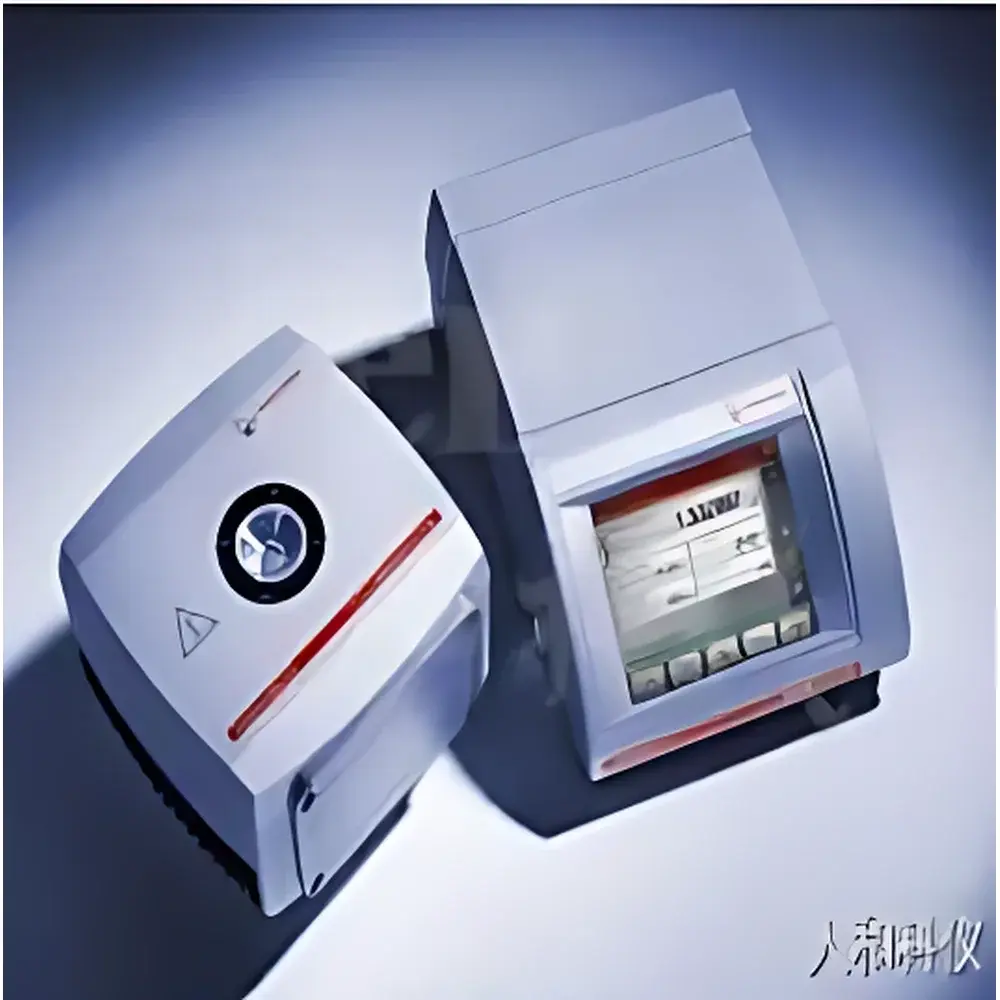
Anton Paar Abbemat 450/650/HT/MW Advanced Benchtop Refractometers
| Brand | Anton Paar |
|---|---|
| Origin | Austria |
| Model | Abbemat 450 / Abbemat 650 / Abbemat HT / Abbemat MW |
| Product Type | Benchtop Refractometer |
| Temperature Control | Yes |
| Digital Display | Yes |
| Refractive Index Accuracy | ±0.00001 (Abbemat 450), ±0.000001 (Abbemat 650 & HT) |
| Refractive Index Range | 1.26–1.72 (450/650), 1.30–1.72 (HT) |
| Brix Range | 0–100% |
| Temperature Range | 4–85 °C (450/650), 10–110 °C (HT) |
| Wavelength | 589.3 ± 0.1 nm (Na D-line) |
| Light Source | LED (>100,000 h lifetime) |
| Prism Material | Synthetic Sapphire (450/650), YAG (HT/MW) |
| Minimum Sample Volume | ~0.2 mL |
| Measurement Time | 5 s (post-thermal equilibrium) |
| IP Rating | IP68 (450/650) |
| Compliance | FDA 21 CFR Part 11, GLP/GMP-ready, 3Q Documentation Available (DQ/IQ/OQ/PQ) |
| Connectivity | RS-232, CAN bus, Ethernet, VGA |
| Software | Windows-based PDC (Precision Data Control) |
Overview
The Anton Paar Abbemat series represents a class of high-precision benchtop refractometers engineered for rigorous scientific and industrial applications where traceable, repeatable, and thermally stable refractive index (nD) measurements are critical. Based on the principle of total internal reflection at a solid–liquid interface—measured via high-resolution angular detection of the critical angle—the Abbemat instruments deliver metrological-grade performance in compliance with ISO 17025 and ASTM D1218 standards. Designed for operation in regulated environments—including pharmaceutical QC labs, food & beverage R&D, and petrochemical process control—the system integrates advanced thermal management, inert optical path design, and full audit-trail capability. Each model employs a stabilized LED light source emitting at 589.3 ± 0.1 nm (sodium D-line equivalent), eliminating spectral drift and mercury-lamp maintenance. The measurement cell features either synthetic sapphire or yttrium aluminum garnet (YAG) prisms—both chemically inert, scratch-resistant, and compatible with aggressive solvents, acids, and bases. Unlike conventional refractometers, the Abbemat architecture eliminates mechanical moving parts in the optical path, ensuring long-term calibration stability and zero instrumental drift over time.
Key Features
- Ultra-high resolution refractive index measurement: ±0.000001 nD accuracy (Abbemat 650 & HT models), enabling detection of subtle compositional shifts in concentrated solutions, polymer blends, or high-purity solvents.
- Integrated T-Check function: Real-time surface temperature verification and automatic compensation of prism thermal gradients—critical for accurate nD determination under non-isothermal conditions.
- Ruggedized enclosure: IP68-rated stainless steel or anodized aluminum housing; resistant to condensation, corrosion, and mechanical impact—even in cold rooms, humid cleanrooms, or pilot-scale production areas.
- Flexible orientation: 90° side-mount configuration available to prevent sediment interference when measuring suspensions, fruit pulps, or particulate-laden samples without filtration.
- Thermal performance: Rapid temperature equilibration (<20 s for 0.5 mL water), ±0.002 °C temperature stability, and programmable ramp profiles (e.g., Abbemat HT supports up to 110 °C with Peltier + heater hybrid control).
- No-maintenance optics: Solid-state LED illumination with >100,000-hour lifetime; no alignment required; no warm-up delay.
Sample Compatibility & Compliance
The Abbemat platform accommodates diverse sample types—from clear aqueous solutions and organic solvents to opaque emulsions, viscous syrups, and heterogeneous suspensions—without compromising measurement integrity. Its sealed optical interface prevents contamination and enables safe analysis of corrosive or volatile substances (e.g., HF, chlorinated hydrocarbons, ethanol–water mixtures). All models comply with FDA 21 CFR Part 11 requirements for electronic records and signatures, including role-based user access control, immutable audit trails, electronic signature workflows, and tamper-evident data export. Full GxP readiness is supported through optional 3Q documentation packages (Design Qualification, Installation Qualification, Operational Qualification, Performance Qualification), aligned with ICH Q7 and EU Annex 15 guidelines. Calibration traceability is maintained to NIST-traceable reference standards (e.g., certified sucrose solutions, bromonaphthalene), with automated calibration validation and drift monitoring embedded in firmware.
Software & Data Management
Operation is managed via Anton Paar’s Precision Data Control (PDC) software—a Windows-native application supporting Windows 10/11 (64-bit) with backward compatibility to legacy systems. PDC provides preconfigured method templates for pharmacopeial assays (USP , Ph. Eur. 2.2.6), sugar analysis (ICUMSA, AOAC), and API purity verification. Users may define custom measurement sequences—including multi-point temperature ramps, time-series kinetics, and multi-parameter correlation (e.g., nD vs. density from connected Anton Paar DMA density meters). Data export supports CSV, PDF, XML, and LIMS-integrated formats—with configurable headers, corporate branding, digital watermarking, and batch-specific metadata tagging. All raw sensor readings, calibration logs, user actions, and system events are stored in encrypted SQLite databases with SHA-256 hashing—ensuring forensic-level data integrity and regulatory defensibility during inspections.
Applications
- Pharmaceutical manufacturing: Excipient concentration verification, solvent recovery monitoring, and final product release testing per USP monographs.
- F&B quality assurance: Brix quantification in juices, syrups, and dairy products; alcohol content estimation in spirits; honey adulteration screening.
- Chemical R&D: Polymer solution characterization, surfactant CMC determination, and reaction endpoint detection in condensation syntheses.
- Petrochemical analysis: Hydrocarbon blend composition, lubricant base oil classification, and biodiesel FAME content assessment.
- Academic research: Thermodynamic modeling of binary/ternary systems, colloidal stability studies, and microfluidic droplet characterization.
FAQ
What distinguishes Abbemat 650 from Abbemat 450 in terms of metrological performance?
The Abbemat 650 offers tenfold higher refractive index resolution (±0.000001 vs. ±0.00001) and improved Brix accuracy (±0.001% vs. ±0.01%), achieved via enhanced angular detection electronics and extended thermal stabilization algorithms.
Can Abbemat HT operate continuously at 110 °C without degradation?
Yes—its dual-stage thermal module (Peltier cooling + resistive heating) and PEEK-encapsulated YAG prism ensure long-term operational reliability at maximum setpoint, validated per IEC 61000-4-2 and ISO 13485 environmental stress testing protocols.
Is method transfer between Abbemat models possible?
All Abbemat instruments share identical PDC software architecture and calibration logic; methods—including temperature profiles, pass/fail criteria, and report templates—are fully portable across 450, 650, HT, and MW variants.
Does Abbemat MW require external monochromators or filters?
No—the Abbemat MW integrates a tunable LED array covering 430–650 nm with <0.5 nm wavelength repeatability, eliminating reliance on mechanical filter wheels or external spectroscopic accessories.
How is data integrity enforced during remote operation via Ethernet?
All network-transmitted measurement packets are signed using TLS 1.2 encryption and authenticated against device-specific certificates; local database writes occur synchronously prior to transmission, preventing data loss during connection interruption.



