
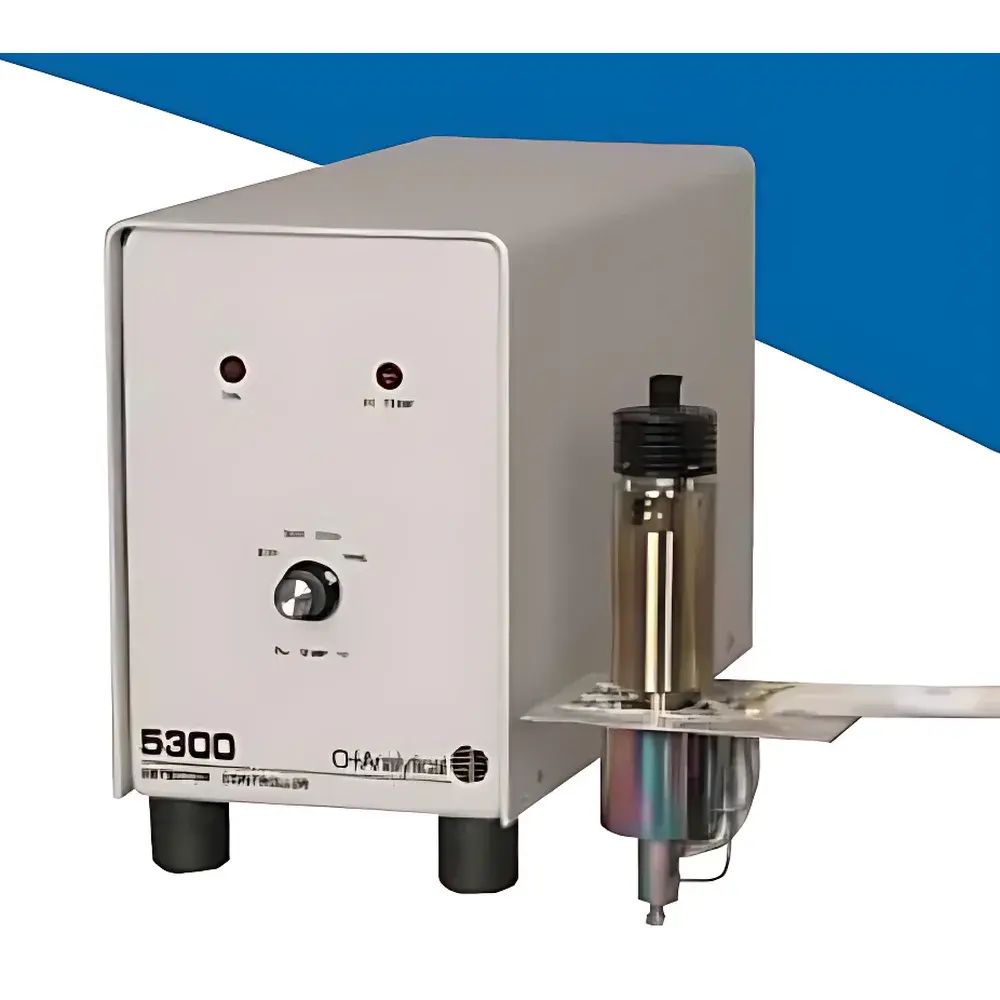
OI Analytical 5360 XSD Halogen-Specific Detector for Gas Chromatography
| Brand | OI Analytical |
|---|---|
| Origin | USA |
| Model | 5360XSD Halogen-Specific Detector |
| Detector Type | Halogen-selective, GC-compatible |
| Installation | Standard GC detector port (universal mounting interface) |
| Configuration Options | Standalone or in-series with OI 4430 PID |
| Detection Range | Sub-picogram to microgram levels of halogenated compounds |
| Regulatory Compliance | Designed to support EPA Method 8021B, ASTM D7412, and ISO 10302 workflows |
Overview
The OI Analytical 5360 XSD (Halogen-Specific Detector) is a highly selective, chemiluminescence-based detection system engineered for the quantitative analysis of organohalogen compounds eluting from capillary gas chromatographs. Unlike universal detectors such as FID or ECD, the 5360 XSD employs a proprietary high-temperature pyrolysis–chemiluminescence reaction pathway optimized specifically for chlorine, bromine, fluorine, and iodine-containing species. Upon thermal decomposition in a hydrogen-rich reducing furnace (~1000 °C), halogen atoms are converted to excited halogen hydride intermediates (e.g., HCl*, HBr*), which emit characteristic near-infrared photons upon relaxation. This emission is captured by a thermoelectrically cooled InGaAs photodiode, enabling exceptional signal-to-noise performance and minimizing interferences from hydrocarbons, sulfur compounds, or nitrogenous matrices. The detector delivers linear dynamic response across six orders of magnitude (sub-pg to µg on-column), making it suitable for environmental trace analysis, pharmaceutical impurity profiling, and polymer degradation studies where halogen speciation is critical.
Key Features
- Halogen-selective detection with negligible cross-sensitivity to non-halogenated VOCs, CO₂, H₂O, or common solvents
- Modular design compatible with major GC platforms—including Agilent, Thermo Fisher, Shimadzu, and PerkinElmer—via standard detector mounting flanges and analog/digital I/O interfaces
- Integrated temperature-controlled reaction chamber with precise furnace ramping and dwell control to optimize halogen atom release efficiency
- Dual-mode operation: functions as a standalone detector or couples in-series with the OI 4430 Photoionization Detector (PID) for simultaneous halogen-specific and broad-spectrum VOC detection
- Real-time baseline stabilization algorithm compensates for minor carrier gas flow fluctuations and column bleed effects
- Robust architecture with ceramic-lined reaction zones and corrosion-resistant stainless-steel gas pathways for extended service life under routine laboratory use
Sample Compatibility & Compliance
The 5360 XSD supports analysis of volatile and semi-volatile halogenated analytes including chlorinated pesticides (e.g., DDT, chlordane), brominated flame retardants (PBDEs, HBCDD), fluorinated pharmaceuticals (e.g., fluoroquinolones), and iodinated contrast media. It is validated for use in regulatory methods requiring halogen-specific quantification, including U.S. EPA Method 8021B (halogenated hydrocarbons), ASTM D7412 (halogen content in petroleum distillates), and ISO 10302 (determination of halogenated organic compounds in water). When operated within defined calibration protocols and paired with appropriate GC inlet systems (e.g., split/splitless, PTV), the detector meets GLP documentation requirements and supports audit-ready data integrity when integrated with compliant chromatography data systems (CDS).
Software & Data Management
The 5360 XSD interfaces seamlessly with industry-standard CDS platforms via analog voltage output (0–1 V full scale) and optional RS-232/USB digital communication. OI’s optional Detector Control Software (DCS v3.2) provides real-time monitoring of furnace temperature, reaction gas flow rates (H₂, O₂), and photodiode bias voltage—parameters logged with timestamped metadata for full traceability. All operational settings and calibration curves are stored in encrypted binary files compliant with FDA 21 CFR Part 11 requirements, including electronic signatures, audit trails, and user-access controls. Raw signal data export supports CSV, ASCII, and native CDF formats for post-acquisition processing in third-party chemometric tools.
Applications
- Environmental monitoring of halogenated contaminants in soil extracts, groundwater, and air samples per EPA SW-846 protocols
- Quality control of halogenated intermediates and residual solvents in API synthesis under ICH Q3A/B guidelines
- Leachate screening from e-waste recycling facilities targeting PBDEs and PCB congeners
- Forensic toxicology analysis of halogenated anesthetics and metabolites in biological matrices
- Failure analysis of halogen-containing polymers (e.g., PVC, PVDF) subjected to thermal aging or UV exposure
FAQ
What halogen elements does the 5360 XSD detect?
The detector responds quantitatively to chlorine, bromine, fluorine, and iodine atoms bound in organic molecules. Detection sensitivity varies by element and molecular structure, with Cl > Br > I > F under standardized operating conditions.
Can the 5360 XSD be used with mass spectrometry (GC-MS)?
No—it is a dedicated GC detector designed for installation at the GC column outlet. It is not compatible with MS ion sources or vacuum systems. For compound identification, it is typically deployed in parallel or sequential GC configurations with MS or FTIR detectors.
Is method validation support available?
Yes. OI Analytical provides application notes, calibration protocols, and verification checklists aligned with ISO/IEC 17025 and USP analytical instrument qualification frameworks.
What maintenance intervals are recommended?
Furnace liner replacement every 6–12 months (depending on sample load); photodiode cleaning and system leak checks quarterly; full performance verification using certified halogen standards biannually.



