
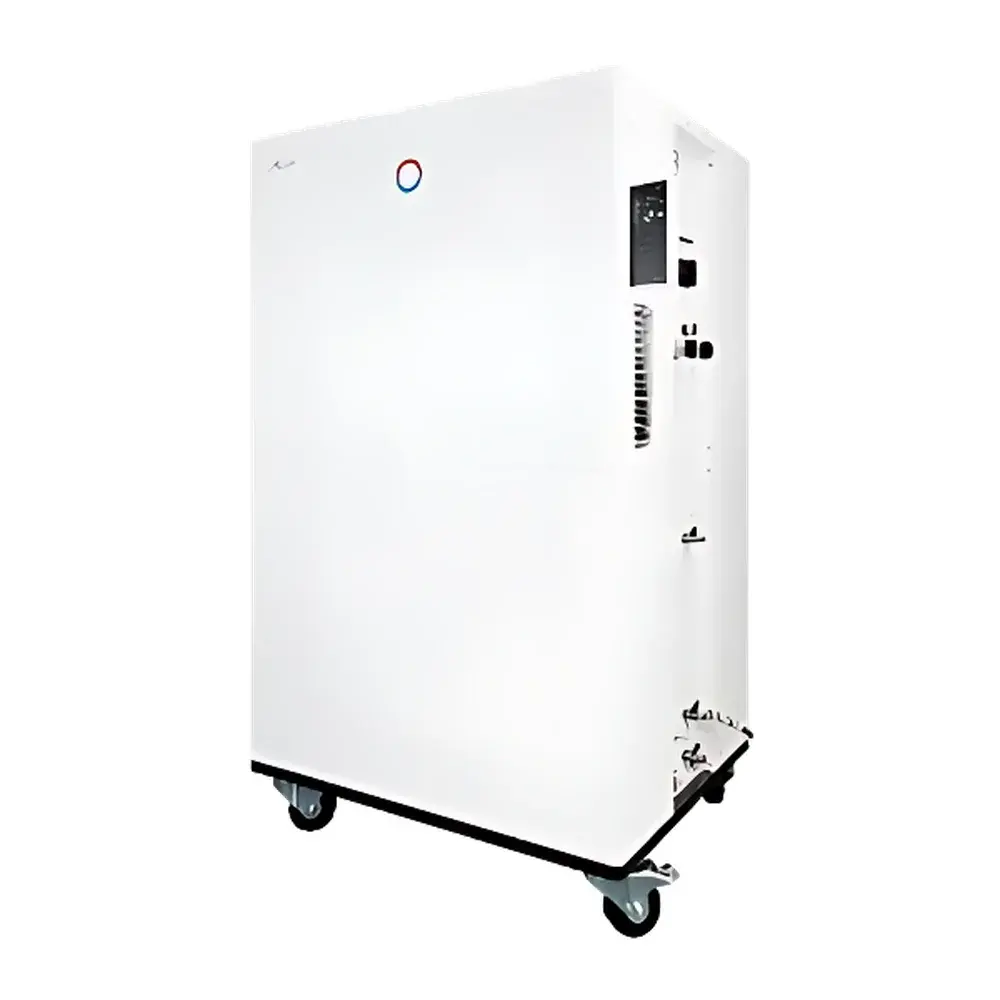
LAUDA Integral P Process Thermostat
| Brand | LAUDA |
|---|---|
| Origin | Germany |
| Model | Integral P |
| Temperature Range | -40 to +140 °C |
| Heat Transfer Fluid | Non-flammable water/ethylene glycol mixture |
| Max Operating Pressure | 4 bar (gauge) |
| Pump Type | Magnetically coupled, electronically controlled |
| Flow Rate | Adjustable per application |
| Compatible Controller | LAUDA MID 80 Flow Control Unit |
| Application Focus | Automotive, Aerospace, EV Battery Thermal Testing |
Overview
The LAUDA Integral P is a high-performance process thermostat engineered for precise, stable, and reproducible temperature control in demanding industrial R&D and quality assurance environments. Unlike conventional bath circulators, the Integral P employs a pressurized closed-loop system—utilizing up to 4 bar(g) of superimposed pressure—to elevate the boiling point of aqueous heat transfer fluids (typically water/ethylene glycol blends), thereby extending the operational temperature range to -40 °C to +140 °C without requiring hazardous or high-GWP synthetic oils. This pressure-assisted thermal management principle enables reliable operation under transient thermal loads and rapid ramping conditions typical in powertrain validation, battery cell cycling, and aerospace component testing. The system’s architecture integrates thermal regulation, fluid circulation, and pressure management into a single compact unit, minimizing external dependencies and reducing integration complexity in automated test benches.
Key Features
- Pressurized fluid circuit (up to 4 bar(g)) enabling extended temperature range with non-flammable, low-toxicity water/glycol mixtures
- Electronically controlled, magnetically coupled circulation pump—ensuring zero seal leakage, maintenance-free operation, and precise flow modulation across varying system backpressures
- Dual-mode temperature control algorithm supporting both PID-regulated stability and dynamic setpoint tracking for fast thermal transients
- Integrated pressure monitoring and safety interlocks compliant with PED 2014/68/EU and EN 13445 standards
- Modular interface design compatible with LAUDA MID 80 flow control units for synchronized multi-zone thermal management
- Robust stainless-steel fluid path construction resistant to glycol degradation and long-term thermal cycling
Sample Compatibility & Compliance
The Integral P is designed for direct thermal coupling with external test articles—including electric vehicle battery modules, fuel cell stacks, hydraulic actuators, and composite material specimens—via standardized quick-connect ports (DN15/DN20). Its use of water/ethylene glycol mixtures ensures compatibility with aluminum, copper, stainless steel, and most polymer-based cooling plates commonly found in automotive and aerospace thermal interfaces. From a regulatory standpoint, the system conforms to IEC 61000-6-2 (EMC immunity) and IEC 61000-6-4 (EMC emissions), and supports GLP/GMP-aligned audit trails when integrated with LAUDA’s optional Ethernet-enabled controller module (firmware v3.2+). While not a medical device, its temperature accuracy (±0.05 °C at steady state, per ISO 17025 traceable calibration protocol) meets requirements for ASTM D5276 (plastic thermal aging), ISO 16750-4 (road vehicle environmental testing), and SAE J2380 (EV battery thermal cycle validation).
Software & Data Management
The Integral P operates natively with LAUDA’s WinTHERM software suite (v5.1+), providing real-time visualization of temperature, pressure, flow rate, and pump speed via intuitive graphical dashboards. All operational parameters—including setpoints, ramp rates, hold times, and alarm thresholds—are programmable through hierarchical user profiles with role-based access control (operator, engineer, administrator). Data logging occurs at 1 Hz resolution with timestamped CSV export, and optional integration with LabVIEW, MATLAB, or OPC UA–enabled MES platforms enables full traceability in regulated environments. When paired with the MID 80 flow controller, synchronized multi-channel thermal profiling—including differential temperature mapping across parallel test fixtures—is supported. Audit trail functionality complies with FDA 21 CFR Part 11 requirements when configured with digital signature authentication and electronic record retention policies.
Applications
- Thermal validation of traction battery packs under extreme ambient and load conditions (-40 °C cold soak, 140 °C coolant loop simulation)
- Active cooling/heating cycles for fuel cell membrane electrode assemblies (MEA) during durability testing
- Temperature-controlled fatigue testing of aerospace hydraulic systems and composite airframe components
- Calibration and qualification of infrared thermography systems using certified reference sources
- Stabilization of optical benches and interferometric measurement setups requiring sub-0.1 °C drift control over 24-hour periods
FAQ
What heat transfer fluids are approved for use with the Integral P?
Only non-flammable, inhibited water/ethylene glycol mixtures meeting LAUDA specification “Glycol 50/50 HTF” or equivalent DIN 51528 Class II formulations are permitted. Silicone oils or hydrocarbon-based fluids are strictly prohibited.
Can the Integral P operate unattended for extended periods?
Yes—when configured with remote monitoring, automatic fault escalation (email/SNMP), and redundant pressure relief valves, it supports unattended 72-hour validation runs per ISO 17025 Clause 7.8.2.
Is third-party calibration documentation available?
LAUDA provides factory-issued ISO/IEC 17025-accredited calibration certificates (traceable to PTB) for temperature, pressure, and flow sensors—valid for 12 months from date of commissioning.
How does the Integral P differ from the LAUDA ECO or ALPHA series?
The Integral P is a process-grade thermostat with active pressure management and high-flow capacity; ECO/ALPHA models are open-bath laboratory circulators limited to ≤95 °C and atmospheric pressure operation.
What electrical supply is required?
Standard configuration requires 400 V AC, 3-phase, 50/60 Hz, with dedicated 32 A circuit protection. Single-phase 230 V variants (IN 2050 PW-S) are available upon request.



