
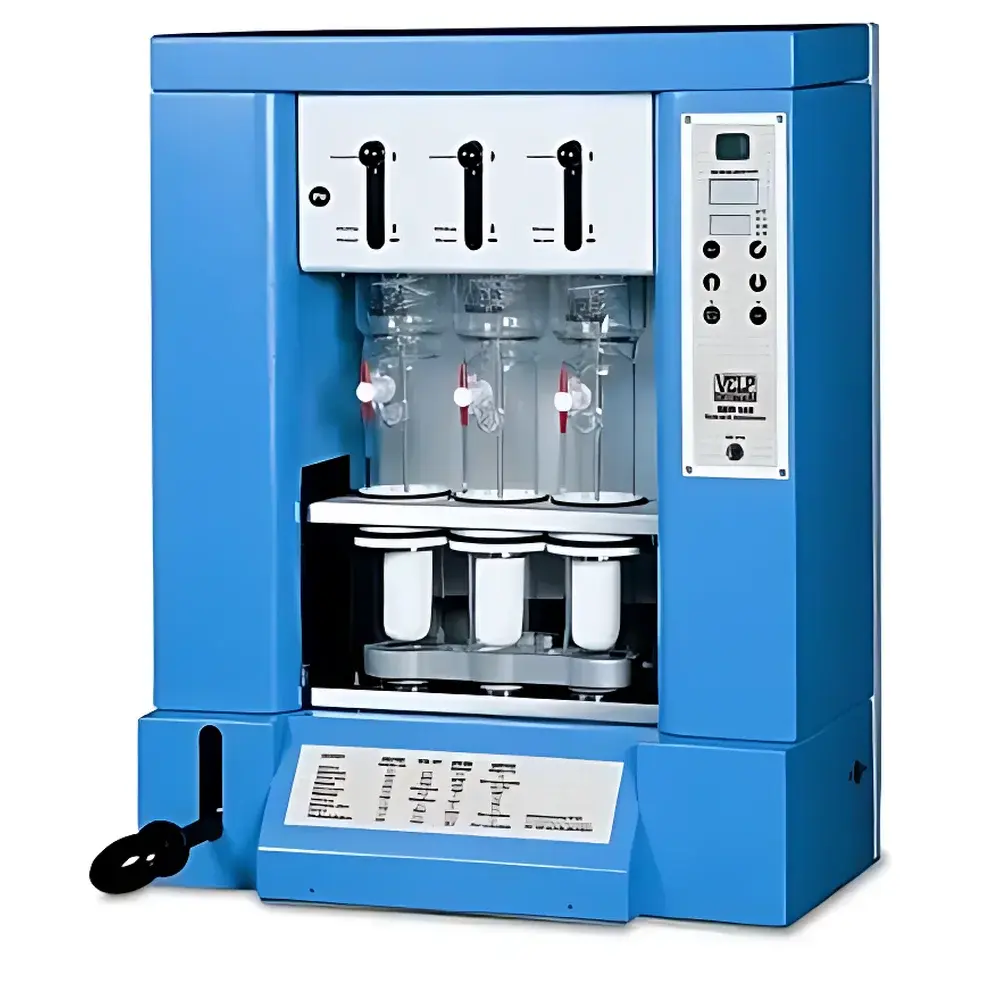
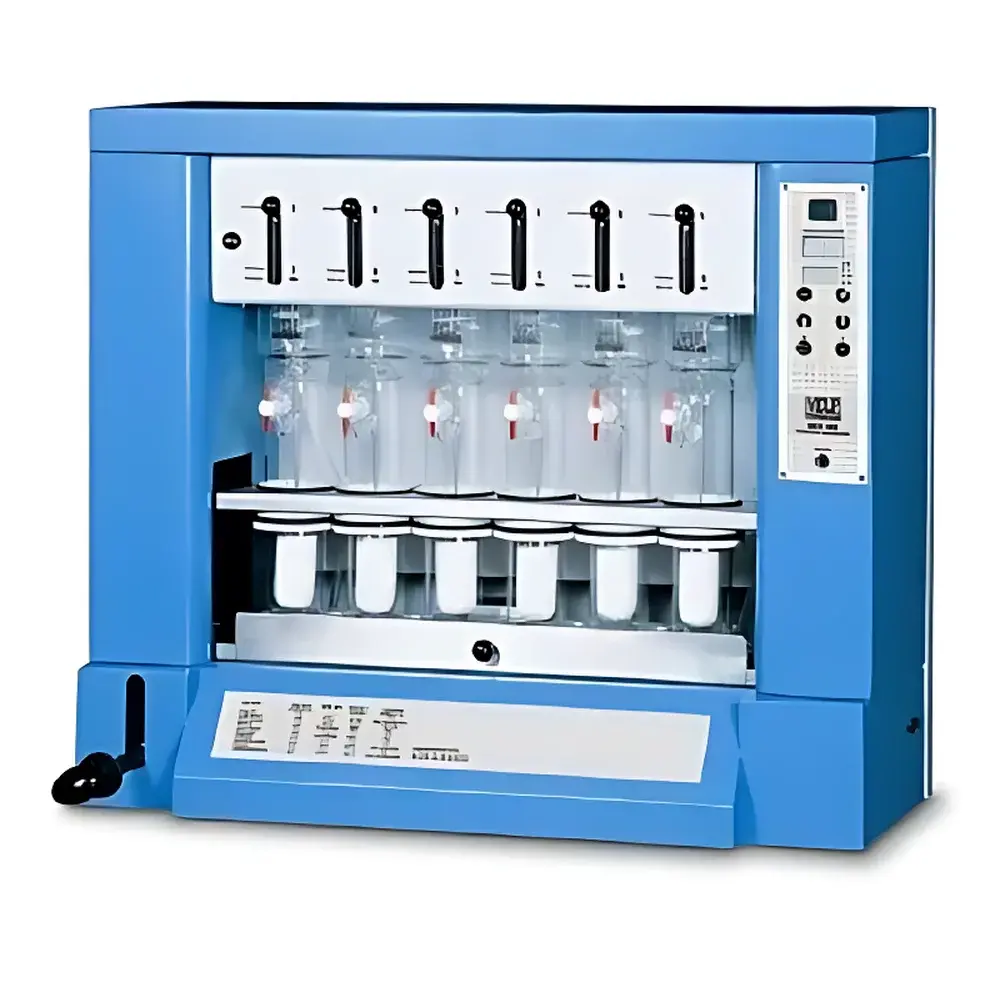
VELP SER148 Randall-Style Soxhlet Extractor
| Brand | VELP |
|---|---|
| Origin | Italy |
| Model | SER148 |
| Extraction Channels | 6 |
| Sample Capacity per Channel | 0.5–15 g |
| Reproducibility | ±1% |
| Solvent Volume Range | 30–100 mL |
| Solvent Recovery Rate | 50–75% |
| Temperature Control Range | 100–260 °C |
| Immersion Time | 0–999 min |
| Washing Time | 0–999 min |
| Power Consumption | 900 W |
| Net Weight | 40 kg |
Overview
The VELP SER148 Randall-Style Soxhlet Extractor is an automated, microprocessor-controlled extraction system engineered for high-throughput fat and lipid analysis in solid and semi-solid matrices. Unlike classical Soxhlet apparatuses relying solely on continuous reflux, the SER148 implements the Randall extraction principle — a three-stage process comprising immersion, dynamic solvent淋洗 (percolation wash), and distillation-based solvent recovery. This methodology significantly reduces total extraction time (typically by 30–50% compared to conventional Soxhlet) while maintaining full compliance with internationally recognized reference methods including AOAC 920.39, ISO 1444, ISO 6496, and USP . The instrument operates within a precisely regulated thermal range of 100–260 °C, enabling method flexibility across diverse solvents (e.g., petroleum ether, diethyl ether, hexane, chloroform/methanol mixtures) and sample types — from high-fat animal tissues to low-lipid cereals and polymer-bound additives.
Key Features
- Six independent extraction channels with individual heating zones, supporting parallel processing of up to six samples under identical or customized protocols
- Microprocessor-based control system with programmable memory for up to 29 user-defined methods, each storing immersion duration, washing duration, temperature setpoint, and ramp profiles
- Integrated cold-water flow monitoring with real-time self-diagnostic alarm to prevent condenser dry-out and ensure consistent reflux efficiency
- Large backlit LCD display showing real-time bath temperature, elapsed/remaining time per cycle, and active stage indicator (immersion → wash → distillation)
- High-efficiency solvent recovery module achieving 50–75% volumetric recovery, minimizing hazardous waste generation and reducing operational cost per analysis
- Robust stainless-steel construction with insulated heating mantle and corrosion-resistant solvent pathways compliant with laboratory safety standards (EN 61010-1)
Sample Compatibility & Compliance
The SER148 accommodates heterogeneous solid and semi-solid samples ranging from 0.5 g to 15 g per extraction thimble — including ground foodstuffs (meat, dairy powders, grains), feed pellets, soil composites, pharmaceutical tablets, rubber compounds, and surfactant-laden detergents. All wetted components are chemically inert to common organic solvents and validated for repeated exposure without leaching or degradation. The system supports full traceability requirements under GLP and GMP environments: all method parameters, runtime logs, temperature profiles, and operator IDs (via optional login module) are timestamped and exportable in CSV format. It meets essential regulatory prerequisites for food safety testing (EC No. 852/2004), veterinary drug residue analysis (EU Directive 2002/657/EC), and environmental monitoring (EPA Method 3541).
Software & Data Management
While the SER148 operates as a standalone benchtop unit, its embedded firmware enables comprehensive data logging — recording start/end timestamps, actual temperature curves, solvent addition confirmation, and error flags (e.g., low water flow, overtemperature). Data export is performed via USB interface to standard PCs; no proprietary software installation is required. Exported files contain structured metadata compatible with LIMS integration (e.g., LabWare, STARLIMS) and support audit trail reconstruction per FDA 21 CFR Part 11 requirements when paired with validated electronic signature workflows. Optional Ethernet connectivity (via external gateway) allows remote status monitoring and scheduled firmware updates.
Applications
- Food & Feed Quality Control: Crude fat determination in raw materials (soybean meal, fishmeal), finished products (chocolate, cheese, pet food), and dietary supplements per AOAC 991.36 and ISO 1444
- Pharmaceutical & Cosmetic Analysis: Quantification of lipophilic excipients, residual oils in tablet coatings, and surfactant content in cleansing formulations
- Environmental Testing: Extraction of organochlorine pesticides (e.g., DDT, lindane) and polycyclic aromatic hydrocarbons (PAHs) from soil and sediment matrices per EPA SW-846 Method 3541
- Polymer & Industrial Chemistry: Isolation of plasticizers (e.g., phthalates) from PVC, antioxidant residues from rubber, and unreacted monomers from cured resins
- Research Laboratories: Method development for novel lipidomics workflows, including sequential fractionation using solvent polarity gradients
FAQ
What extraction standards does the SER148 support?
The SER148 is validated for AOAC, ISO, USP, and EPA reference methods requiring Randall-style extraction — particularly where accelerated throughput and solvent conservation are critical.
Can the SER148 be used with chlorinated solvents such as chloroform?
Yes, provided appropriate fume hood ventilation and corrosion-resistant thimbles (e.g., glass-fiber or quartz) are employed; the system’s solvent pathways are compatible with halogenated organics when operated within specified temperature limits.
Is method validation documentation available?
VELP provides a Factory Acceptance Test (FAT) report and IQ/OQ protocol templates aligned with ISO/IEC 17025 and ASTM E2656, supporting laboratory-specific PQ execution.
How is solvent recovery efficiency measured?
Recovery rate is determined gravimetrically by comparing initial solvent mass added to recovered mass after distillation — values of 50–75% reflect typical performance under standardized test conditions (n-hexane, 100 mL, 200 °C, 60-min wash cycle).
Does the SER148 require external cooling water circulation?
Yes — it relies on a continuous tap water or recirculating chiller supply (minimum flow: 1.5 L/min at 15–25 °C) for condenser operation; integrated flow sensor triggers audible/visual alerts if flow falls below threshold.



