
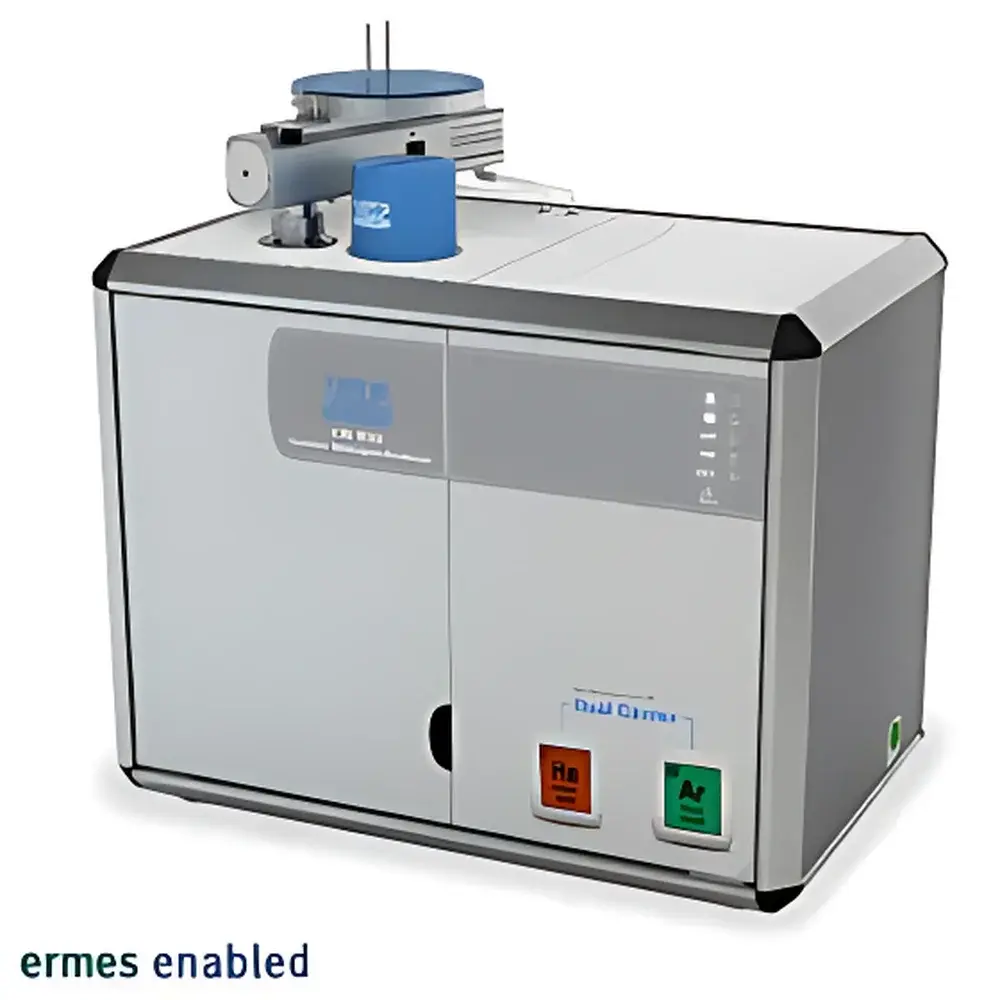
VELP CN802 Dumas Combustion Carbon and Nitrogen Analyzer
| Brand | VELP |
|---|---|
| Origin | Italy |
| Model | CN802 |
| Analysis Principle | Dumas Combustion Method |
| Measurement Range | 0.001–200 mg N (equivalent to ppm–100% N in sample) |
| Sample Weight | 200 mg–1 g |
| Digestion/Combustion Time | 3–4 min per sample |
| Repeatability | RSD < 0.5% (verified with EDTA reference standard) |
| Detection Limits | 0.01 mg C, 0.001 mg N |
| Recovery Rate | >99.5% |
| Power Consumption | 1400 W |
| Dimensions (L×W×H) | 655 × 510 × 410 mm |
| Carrier Gas Options | Helium or Argon (dual-gas system, no hardware modification required) |
| Compliance | Designed for GLP/GMP environments |
Overview
The VELP CN802 is a high-precision, dual-element combustion analyzer engineered for rapid, simultaneous quantification of total carbon (C) and total nitrogen (N) in solid and liquid samples using the standardized Dumas combustion method (ISO 13878:1998, AOAC 992.23, ASTM D5373). Samples are flash-combusted at 1150 °C in a pure oxygen atmosphere within a ceramic furnace, converting organic and inorganic C and N compounds quantitatively into CO₂, NOₓ, and N₂. Gaseous effluents pass through a proprietary physical water removal system (DriStep™), followed by catalytic reduction of nitrogen oxides to molecular nitrogen in a high-efficiency reduction furnace. Carbon is measured via non-dispersive infrared (NDIR) detection with a lower limit of quantification (LLOQ) of 0.01 mg C, while nitrogen is determined by thermal conductivity detection (TCD) after selective CO₂ scrubbing—ensuring independence from matrix interference and eliminating cross-sensitivity between C and N channels.
Key Features
- True dual-channel detection architecture: Independent NDIR (carbon) and TCD (nitrogen) modules enable concurrent, non-interfering measurement without sequential switching or calibration drift.
- DriStep™ moisture removal technology: A patented, maintenance-free condensation step replaces chemical desiccants—reducing consumables, eliminating carryover risk, and improving long-term baseline stability.
- Flexible carrier gas compatibility: Dual-gas inlet manifold supports seamless transition between helium and argon without hardware reconfiguration—optimizing cost, safety, and detector response based on lab infrastructure.
- Optimized thermal design: High-stability combustion furnace (1150 °C ± 2 °C) with programmable ramp profiles ensures complete oxidation of recalcitrant matrices (e.g., soils, polymers, biochar) while minimizing ash residue and crucible degradation.
- Low-sample-mass capability: Validated performance across 200 mg–1 g sample weights enables precise analysis of precious or limited-volume materials—including clinical tissue biopsies, pharmaceutical intermediates, and environmental filter extracts.
- Integrated safety architecture: Real-time O₂ monitoring, overtemperature cutoff, pressure-controlled gas flow regulation, and automatic leak diagnostics meet IEC 61010-1 requirements for laboratory instrumentation.
Sample Compatibility & Compliance
The CN802 accommodates homogeneous solids (powders, pellets, plant tissues), viscous liquids (oils, digestates), and slurries (sediments, wastewater solids) following standardized homogenization and weighing protocols. It complies with ISO 13878 for soil and plant material analysis, AOAC 992.23 for feedstuffs, and ASTM D5373 for coal and coke. All measurement sequences generate timestamped, user-attributed raw data files compatible with 21 CFR Part 11–compliant electronic records when deployed with the Ermes Cloud Platform. Instrument qualification documentation (IQ/OQ/PQ templates) and traceable calibration kits (certified EDTA, benzoic acid, acetanilide) are supplied to support GLP and GMP audits.
Software & Data Management
Controlled via VELP’s Ermes Cloud Platform—a secure, browser-based interface accessible from desktops, tablets, or smartphones—the CN802 delivers real-time instrument status monitoring, remote method execution, and automated report generation (PDF/CSV/XLSX). Ermes implements role-based access control, electronic signatures, and immutable audit trails—including parameter changes, calibration events, and result exports—fully aligned with FDA 21 CFR Part 11 Annex 11 and EU GMP Annex 11 requirements. Raw chromatograms, peak integration logs, and system suitability reports are archived with SHA-256 hashing for data integrity verification.
Applications
- Agricultural science: Total N and organic C determination in soils, composts, manures, and fertilizers for nutrient balance modeling and regulatory reporting (EU Fertilising Products Regulation 2019/1009).
- Environmental laboratories: Quantification of TC/TN in sediments, sludges, and airborne particulate filters per EPA Method 440.1 and ISO 10694.
- Food & feed quality control: Protein content calculation (N × 6.25) and adulteration screening in dairy powders, meat products, and aquaculture feeds under ISO 8968 and AOAC guidelines.
- Pharmaceutical R&D: Elemental profiling of active pharmaceutical ingredients (APIs), excipients, and residual catalysts in compliance with ICH Q5E and USP .
- Materials science: Carbon black content in elastomers, nitrogen doping level in graphene derivatives, and stoichiometric validation of metal–organic frameworks (MOFs).
FAQ
What standards does the CN802 comply with for routine quality control?
The instrument meets ISO 13878, AOAC 992.23, ASTM D5373, and EPA Method 440.1. Full validation packages—including system suitability tests and recovery studies—are provided for method transfer and regulatory submissions.
Can the CN802 analyze volatile or halogen-rich samples without hardware modification?
Yes—optional quartz wool traps and halogen scrubbers (sold separately) are compatible with the existing gas path; no furnace or detector retrofitting is required.
Is method development supported for non-standard matrices?
VELP provides application notes and collaborative method optimization services for complex samples such as activated carbons, carbon nanotubes, and high-salt biological extracts.
How is data integrity ensured during remote operation via Ermes Cloud?
All user actions, result calculations, and instrument events are logged with cryptographic timestamps and digital signatures; data backups follow ISO/IEC 27001-aligned encryption and retention policies.
What maintenance intervals are recommended for optimal long-term precision?
Daily: Ash trap inspection and DriStep™ chamber check. Quarterly: Reduction furnace catalyst activity verification. Annually: NDIR cell calibration and TCD filament resistance verification—service kits and certified standards are available directly from VELP.
Related Products







