
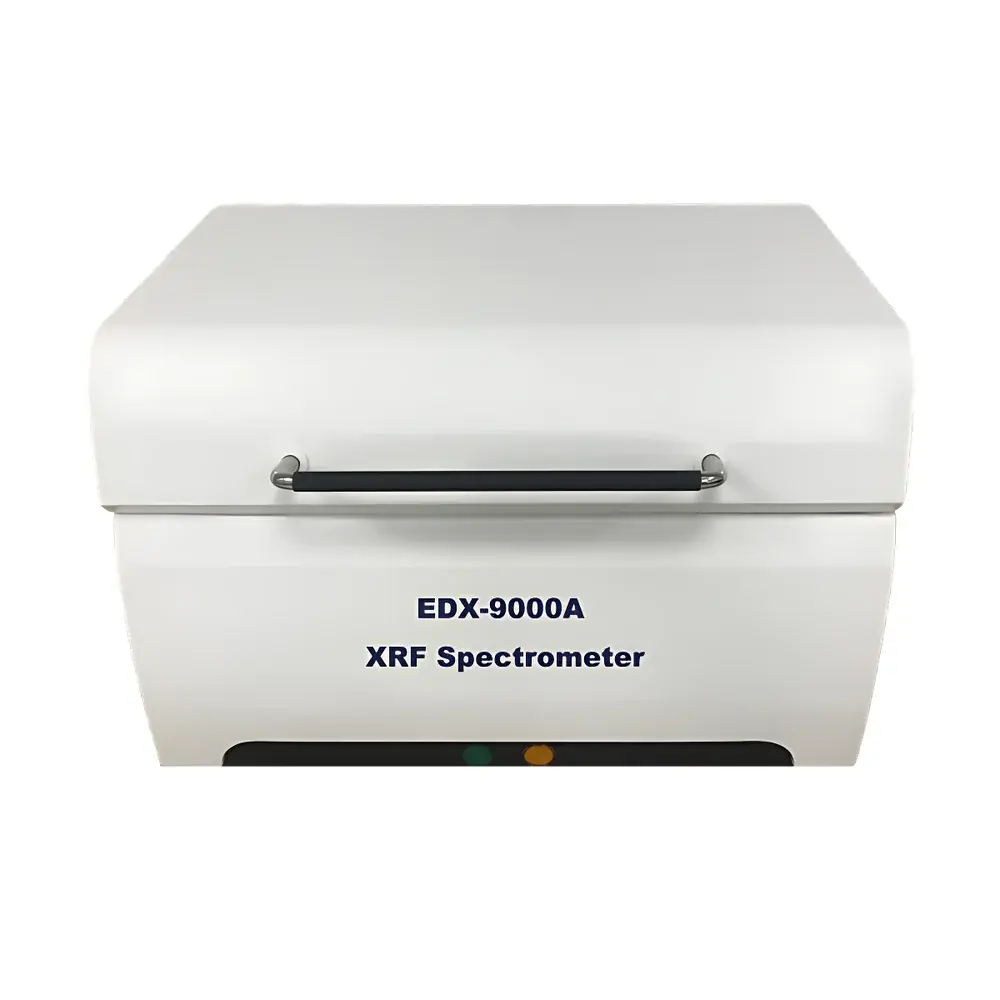
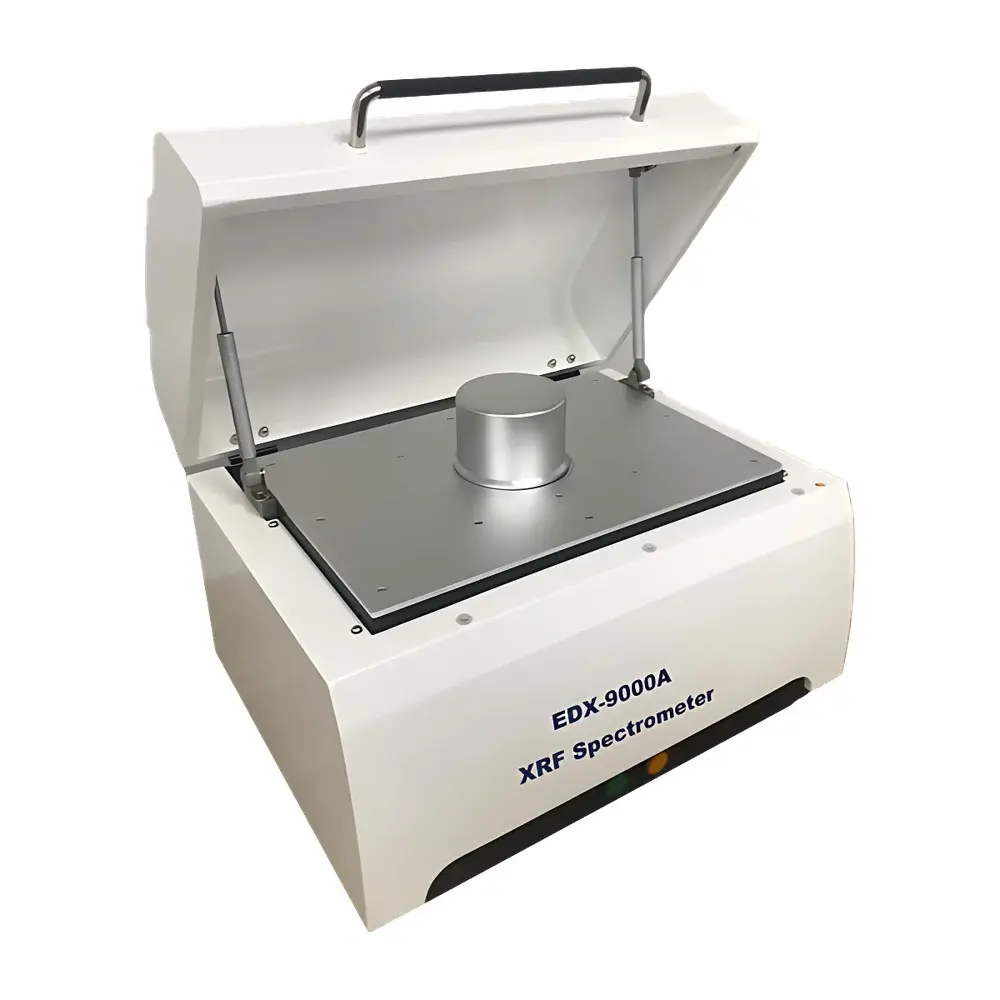
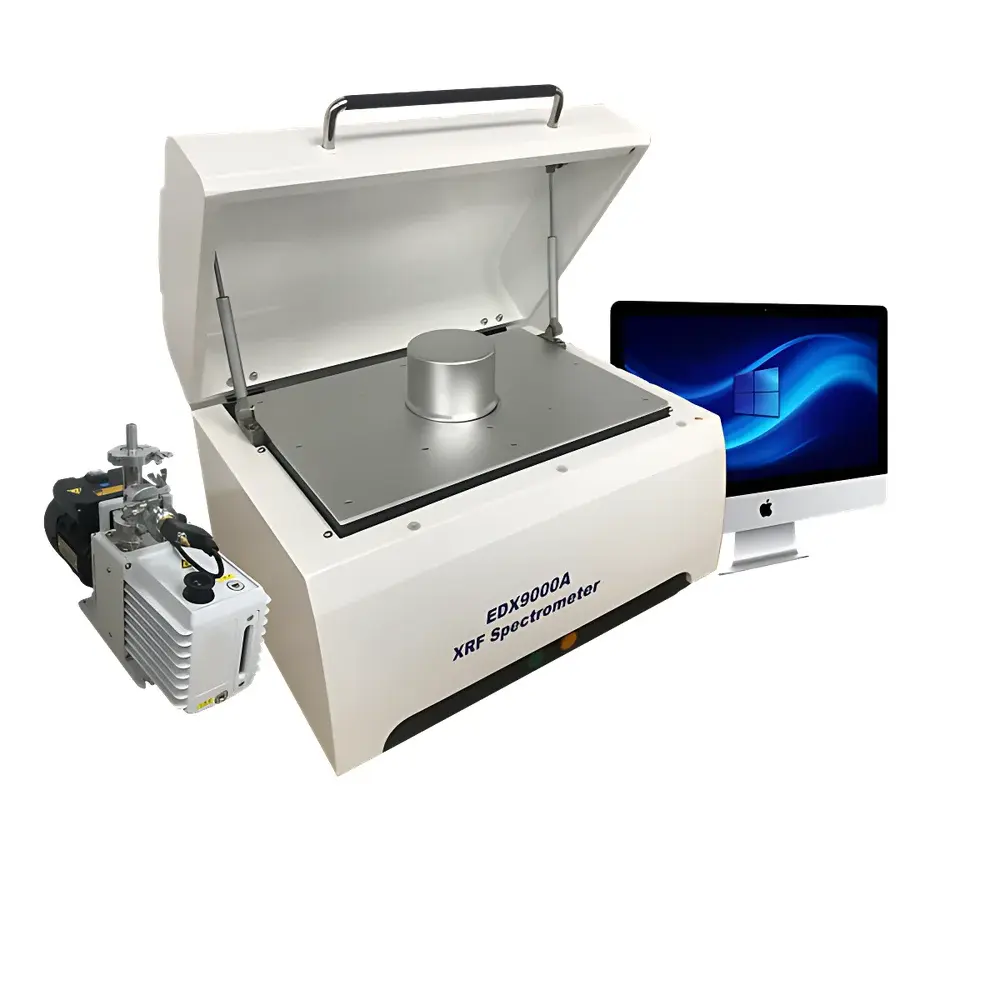
ESI EDX9000A Energy Dispersive X-ray Fluorescence (EDXRF) Spectrometer for Bronze and Alloy Elemental Analysis
| Brand | ESI |
|---|---|
| Model | EDX9000A |
| Element Range | Na (11) – U (92) |
| Detection Limit | 1 ppm |
| Quantification Range | 1 ppm – 99.99 wt% |
| Excitation Source | 50 W Rh-target X-ray tube, 0–50 kV |
| Detector | AmpTek high-resolution silicon drift detector (SDD) |
| DPP Analyzer | 4096-channel digital pulse processor |
| Sample Chamber Dimensions | 460 × 310 × 95 mm |
| Vacuum Chamber | Φ150 mm × 75 mm |
| Instrument Dimensions | 560 × 380 × 410 mm |
| Weight | 45 kg |
| Operating Environment | −10 °C to 35 °C |
| Power Supply | 220 V AC, 50/60 Hz |
Overview
The ESI EDX9000A is a benchtop energy dispersive X-ray fluorescence (EDXRF) spectrometer engineered for rapid, non-destructive elemental quantification in metallic alloys—including bronze, brass, aluminum, stainless steel, and titanium grades. Based on fundamental XRF physics, the instrument irradiates a sample with high-energy X-rays from a micro-focus Rh anode tube; characteristic secondary (fluorescent) X-rays emitted by constituent atoms are resolved by a high-resolution silicon drift detector (SDD). Each element produces unique emission lines—e.g., Cu Kα at 8.04 keV, Sn Kα at 25.27 keV, Pb Lα at 10.55 keV—enabling simultaneous identification and quantification of up to 25 elements in a single measurement. Unlike destructive techniques such as ICP-OES or arc-spark OES, EDXRF requires no acid digestion, melting, or electrode preparation—making it ideal for museum-grade artifact analysis, QC screening of incoming billets, or verification of alloy compliance per ASTM E1621, ISO 21043, or GB/T 4333. The EDX9000A delivers laboratory-grade precision in a compact, field-deployable format—reducing reliance on off-site testing while maintaining traceability under GLP/GMP-aligned workflows.
Key Features
- Non-destructive multi-element analysis from 1 ppm to 99.99 wt%—no sample dissolution, polishing, or vacuum metallization required
- Analysis time ≤ 30 seconds per sample for routine alloy grade verification (e.g., C51000 vs. C52100 bronze)
- High-resolution SDD detector with <125 eV Mn Kα resolution ensures baseline separation of overlapping peaks (e.g., S Kα/Pb Mα, Zn Kα/Cu Lα)
- Integrated HD camera with real-time crosshair overlay enables precise targeting of heterogeneous samples—critical for patina-layered archaeological bronzes or plated substrates
- Automated vacuum/purge gas mode optimizes light-element sensitivity (Na–Mg) for slag inclusion or corrosion product analysis
- Robust mechanical design: vibration-damped optical path, sealed detector chamber, and industrial-grade thermal management for stable operation over 8-hour shifts
- Intuitive touch-enabled software interface compliant with FDA 21 CFR Part 11 requirements—supporting electronic signatures, audit trails, and user role-based access control
Sample Compatibility & Compliance
The EDX9000A accommodates solid, powdered, liquid, and thin-film samples without size or geometry constraints—samples up to 460 × 310 mm fit within the standard chamber. It is routinely applied to cast bronze artifacts (statues, bells, ritual vessels), rolled copper-tin sheet stock, solder joints, electroplated components, and foundry sand residues. Method validation aligns with ASTM E2857 (quantitative EDXRF for metals), ISO 17025-accredited calibration protocols, and RoHS Directive 2011/65/EU screening requirements for restricted substances (Pb, Cd, Hg, Cr⁶⁺, Br). Certified reference materials—including NIST SRM 1250 (copper alloy), BCR-681 (brass), and ESI-branded bronze CRM sets—are supported for daily performance verification. All spectral data files retain full metadata (tube voltage/current, live time, detector temperature, calibration ID) to satisfy ISO/IEC 17025 documentation mandates.
Software & Data Management
The proprietary ESI QuantLab™ software provides quantitative analysis via fundamental parameter (FP) and empirical calibration modes. FP modeling incorporates matrix absorption and enhancement effects—essential for accurate Sn/Pb ratio determination in α+δ phase bronzes. Empirical calibrations support up to 100 custom standards per method, with linear and polynomial regression options. Data export includes CSV, PDF reports (with spectra overlays), and XML for LIMS integration. Built-in statistical tools calculate RSD (<2% for Cu/Sn in repeated bronze measurements), detection limit tables per element, and trend charts across production lots. Audit logs record every user action—including method edits, calibration updates, and result approvals—with timestamped, non-erasable entries compliant with GxP data integrity principles.
Applications
- Archaeometallurgy: Quantifying Sn, Pb, As, and Ni content in ancient bronze artifacts to infer smelting technology, ore provenance, and workshop attribution
- Foundry QC: Real-time verification of Cu–Sn–Zn–Pb composition against ASTM B138 (copper-tin alloys) or UNS C50000 series specifications
- Conservation Science: Mapping elemental distribution across corroded surfaces using optional motorized XYZ stage (add-on) to guide selective cleaning protocols
- Recycling Stream Sorting: Discriminating phosphor bronze (C51000) from aluminum bronze (C61400) or nickel silver (C75200) in scrap yards with >99.5% classification accuracy
- Coating Analysis: Measuring Sn plating thickness (0.1–50 µm) on copper substrates and quantifying interdiffusion layers via depth profiling mode
- Environmental Screening: Detecting Pb and As leachables in soil adjacent to historic bronze foundry sites per EPA Method 6200
FAQ
Can the EDX9000A distinguish between different bronze grades (e.g., C51000 vs. C52100)?
Yes—using factory-loaded or user-defined calibrations, it reliably differentiates grades based on Sn (4–6% vs. 7–9%), Zn (<0.3% vs. 0.5–1.0%), and impurity profiles (Fe, Ni, P) with ≤0.2% RSD.
Is vacuum required for analyzing light elements like sodium or magnesium in bronze corrosion products?
Vacuum mode is recommended for Na–Al quantification; atmospheric helium purge is an alternative for Mg–Si analysis when vacuum pumping is impractical.
Does the system support regulatory reporting for ISO 9001 or AS9100 audits?
Yes—full electronic records, calibration certificates, CRM traceability, and 21 CFR Part 11-compliant audit trails are exportable in validated formats.
How often must the instrument be recalibrated?
Daily verification with a check standard is advised; full multi-point calibration is recommended every 30 days or after hardware maintenance.
Can it analyze irregularly shaped or curved bronze objects (e.g., statues, bells)?
Yes—the large chamber and adjustable sample stage accommodate objects up to 300 mm in height; the HD camera ensures reproducible positioning even on non-planar surfaces.




