
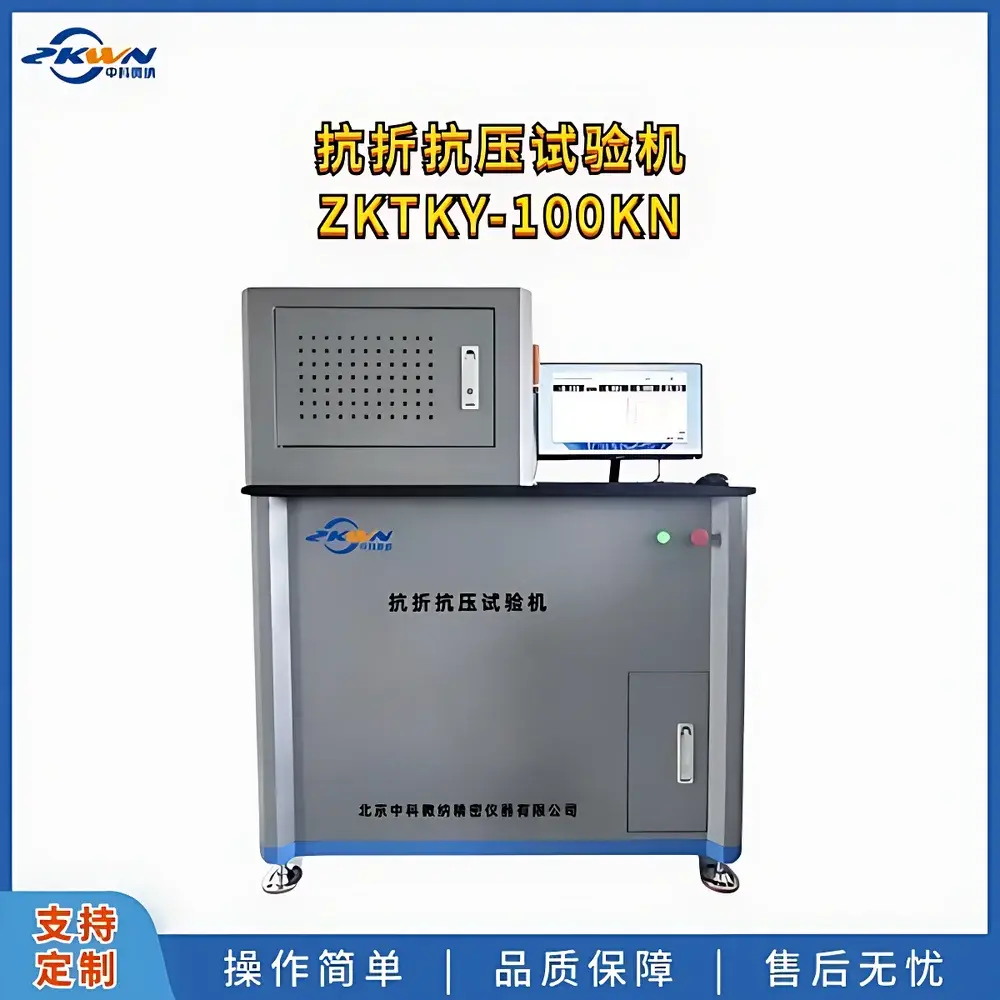
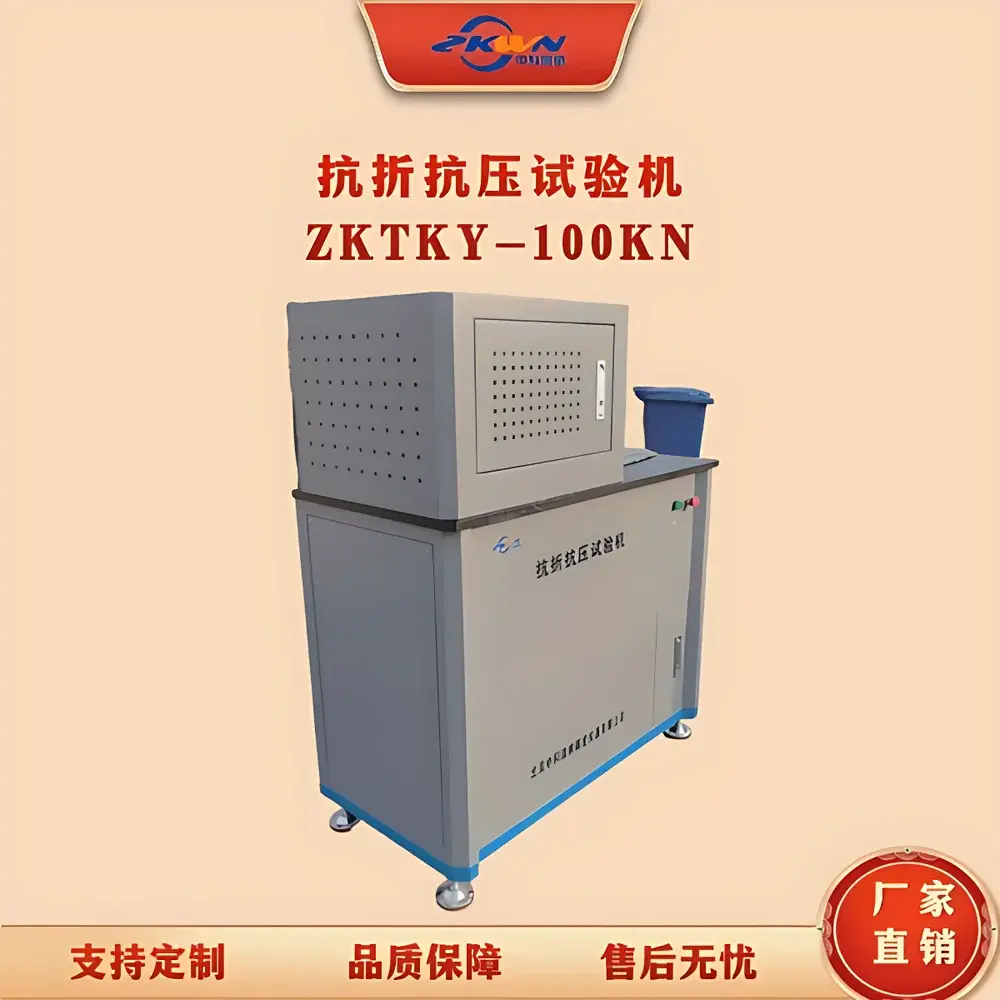
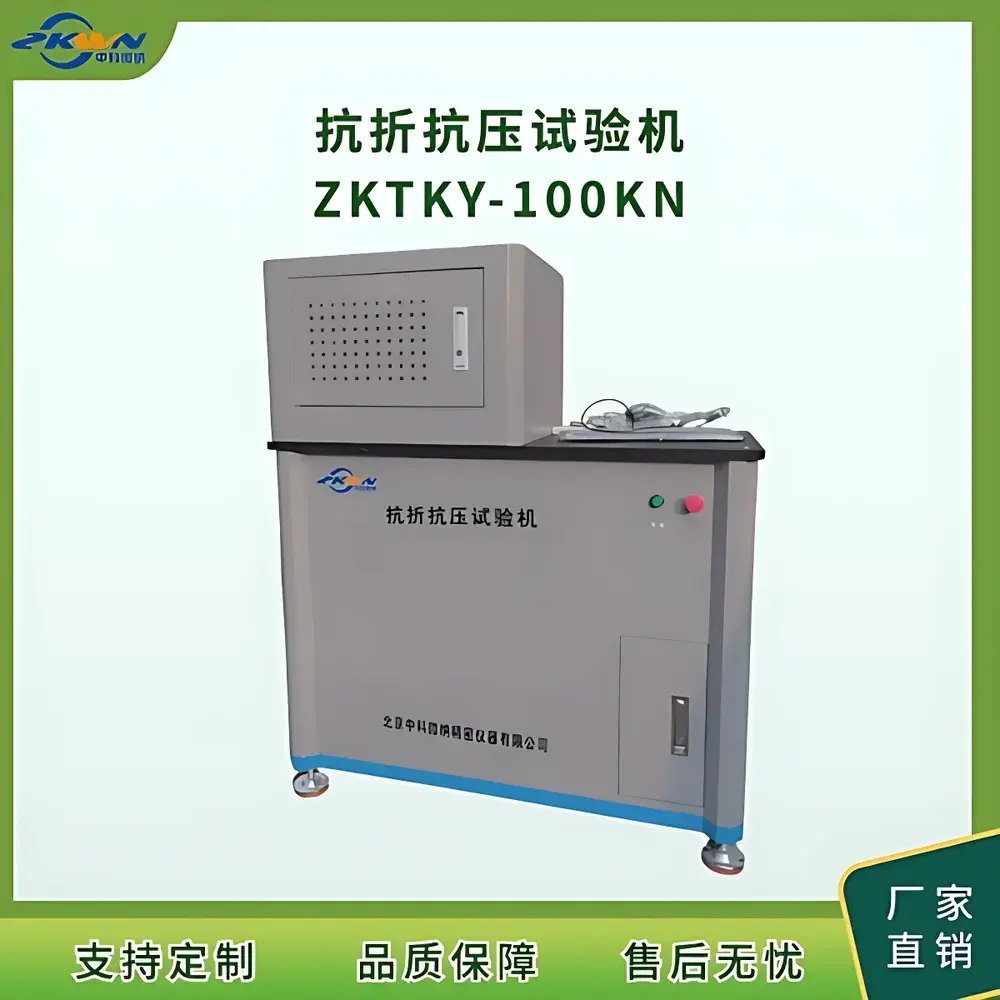
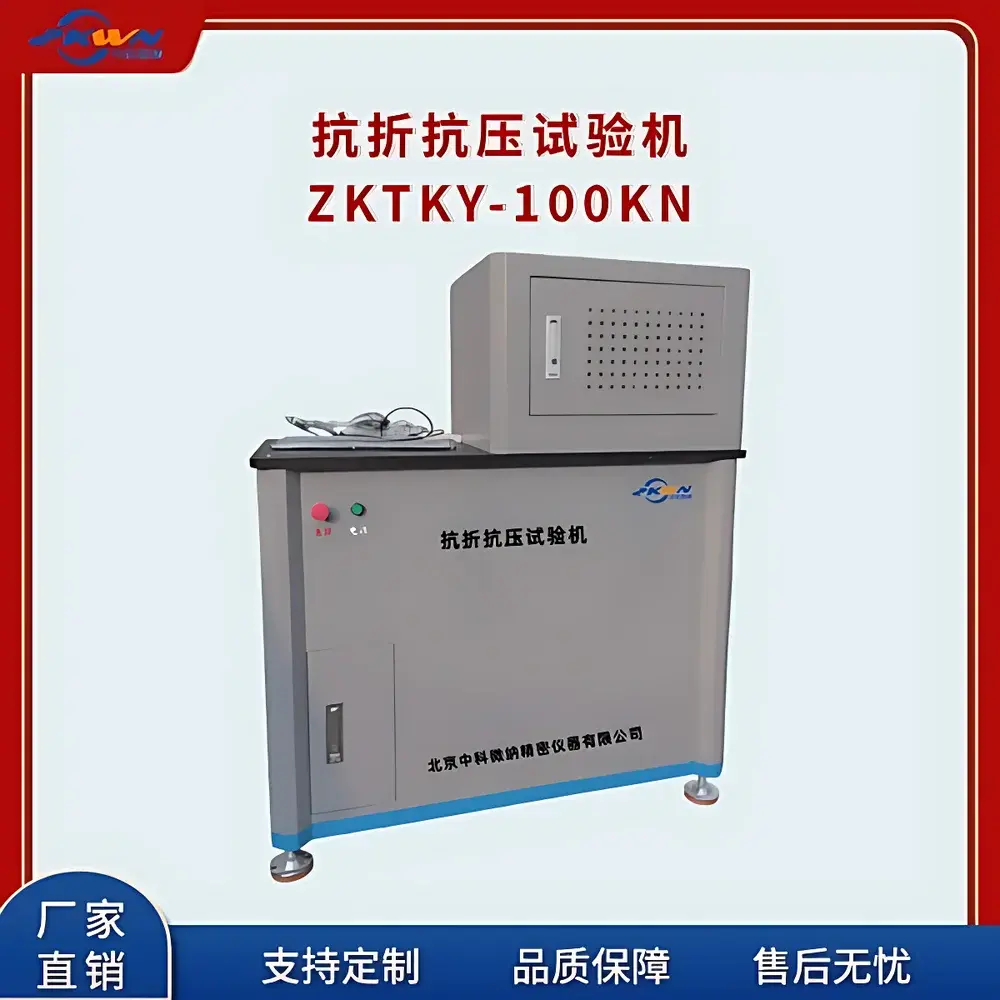
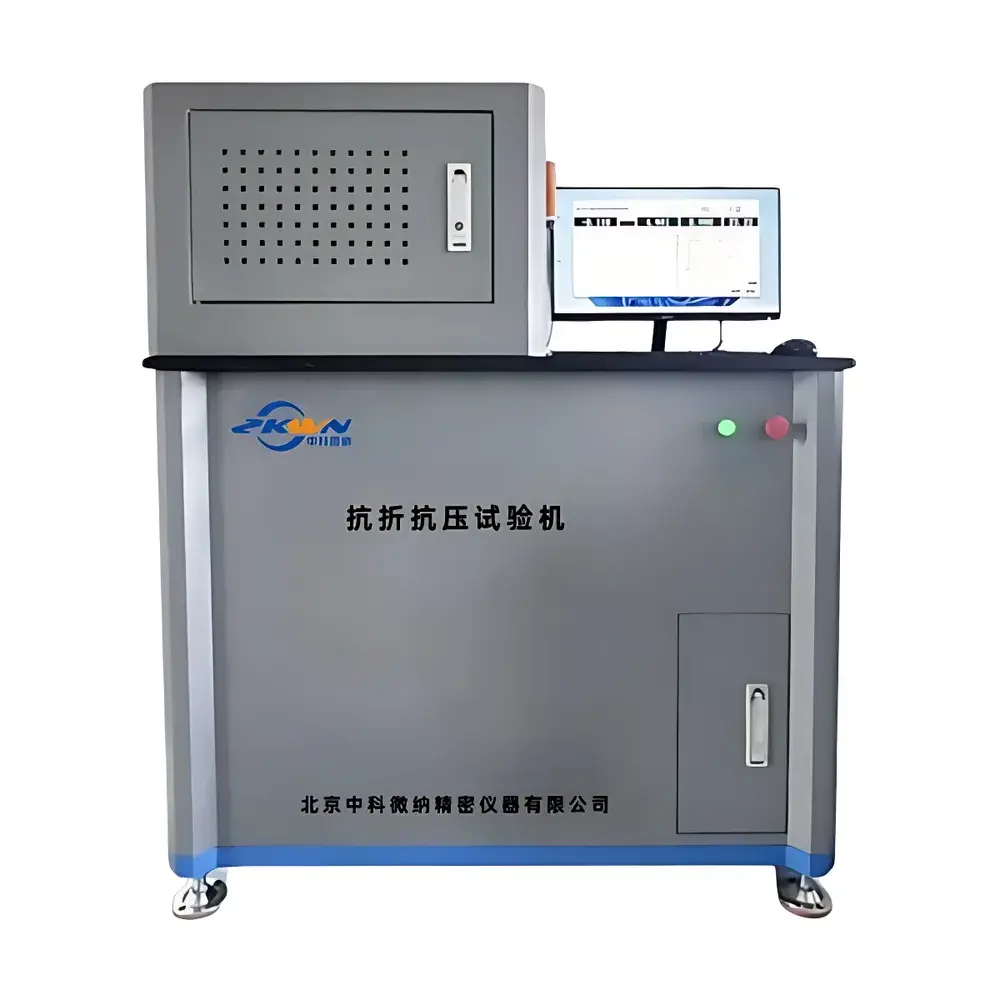
ZKWN ZKTKY-100KN Universal Flexural and Compressive Testing Machine
| Brand | ZKWN |
|---|---|
| Origin | Beijing, China |
| Model | ZKTKY-100KN |
| Maximum Load Capacity | 100 kN |
| Loading Method | Electromechanical (AC Servo Motor + Precision Ball Screw) |
| Control Modes | Constant Rate of Force, Constant Rate of Displacement, Constant Rate of Strain |
| Frame Configuration | Bottom-Acting, Rigid Steel Frame |
| Force Measurement Accuracy | ±1% FS (per GB/T 3074.1–2021 and ISO 6892-1) |
| Safety Protections | Overload Cut-off, Specimen Fracture Detection, Piston Stroke Limit Switch |
| Compliance Standards | GB/T 3074.1–2021, GB/T 2611–2013, JJG 139–2014 |
| Software Interface | PC-based Control & Data Acquisition System with Audit Trail Capability |
Overview
The ZKWN ZKTKY-100KN Universal Flexural and Compressive Testing Machine is an electromechanically driven, dual-function mechanical testing system engineered for precision measurement of flexural strength (modulus of rupture) and compressive strength in rigid and quasi-brittle materials. Unlike hydraulic systems, this machine employs a high-torque AC servo motor coupled to a preloaded precision ball screw actuator—eliminating fluid leakage, oil temperature drift, and maintenance-intensive hydraulic components. Its bottom-acting frame design ensures high structural rigidity, minimal deflection under load, and rapid specimen installation. The system operates in full compliance with GB/T 3074.1–2021 (Determination of Flexural Strength of Carbon Materials), while also supporting test protocols aligned with ASTM C78, ASTM C39, ISO 679, and EN 196-1 for cementitious and ceramic materials. It delivers traceable, repeatable mechanical data essential for quality assurance, structural validation, and materials R&D.
Key Features
- Rigid all-steel monolithic frame construction with optimized load path geometry, minimizing parasitic bending and ensuring ≤0.05% frame deformation at full 100 kN load.
- High-resolution force transduction via calibrated S-type or column-type load cells, achieving ≤±1% full-scale accuracy per JJG 139–2014 verification requirements.
- Multi-mode closed-loop control architecture supporting constant-rate force (N/s), displacement (mm/min), and strain (mm/mm/s) profiles—programmable via intuitive GUI for ISO-compliant ramp-hold cycles.
- Dual-test capability enabled by interchangeable fixture sets: compression platens (with self-aligning spherical seats) and three-point flexural fixtures (with adjustable span and roller diameters).
- Integrated hardware safety interlocks—including real-time overload detection, automatic emergency stop upon specimen fracture (acoustic/force-drop trigger), and mechanical piston stroke limit switches—fully compliant with IEC 61508 SIL1 functional safety principles.
- Thermally stable electromechanical drive eliminates heat-induced drift; rated for continuous unattended operation (7×24 h) without performance degradation or thermal shutdown.
Sample Compatibility & Compliance
The ZKTKY-100KN accommodates standard and non-standard specimens across civil engineering and advanced materials sectors: prismatic concrete beams (100×100×400 mm), cement mortar bars (40×40×160 mm), fired clay bricks (240×115×53 mm), ceramic tiles (up to 600×600 mm), refractory samples (ISO 2473), and polymer-matrix composites. All test methods adhere to statutory metrological verification standards (JJG 139–2014), national material testing norms (GB/T 2611–2013), and international reference frameworks including ISO/IEC 17025:2017 for testing laboratory competence. Data acquisition meets GLP audit requirements with timestamped raw channel logging, user-access-level permissions, and electronic signature support.
Software & Data Management
The bundled Windows-based control software provides ISO 17025-aligned data governance: automatic calibration certificate import, configurable test templates (pre-loaded with GB/T 3074.1, ASTM C78, and EN 12390-3 workflows), real-time curve overlay, and automated report generation in PDF/XLSX formats with embedded metadata (operator ID, environmental conditions, calibration expiry). Audit trail functionality logs all parameter modifications, test starts/stops, and result exports—fully compatible with FDA 21 CFR Part 11 requirements when deployed with validated electronic signatures and role-based access controls.
Applications
- Cement and concrete production: routine compressive strength verification of 28-day cured cubes/cylinders per GB/T 50081 and ASTM C39.
- Building materials certification: flexural testing of roofing tiles, pavers, and autoclaved aerated concrete (AAC) per GB/T 21144.
- Academic research: mechanical characterization of geopolymer binders, fiber-reinforced mortars, and bio-based composites under controlled loading rates.
- Quality control in ceramics and refractories: modulus of rupture assessment of kiln furniture, insulating firebricks, and technical porcelain.
- Infrastructure QA/QC: on-site or lab-based validation of precast elements, grouting materials, and repair mortars prior to structural acceptance.
FAQ
Does the ZKTKY-100KN support third-party calibration certificates?
Yes—it accepts NIST-traceable or CNAS-accredited calibration reports imported directly into the software; force and displacement channels are independently verifiable per JJG 139–2014.
Can the system perform split tensile (Brazilian) tests?
Yes—with optional cylindrical compression fixtures and diametral loading platens, enabling ASTM C496-compliant indirect tensile strength evaluation.
Is environmental chamber integration possible?
Yes—the machine features standardized I/O ports and Modbus TCP interface for synchronized temperature/humidity chamber control (e.g., -20°C to +150°C ranges) during conditioned testing.
What is the typical recalibration interval?
Per ISO/IEC 17025 recommendations, annual recalibration is advised; however, internal verification using certified reference load cells can be performed daily or per-shift as part of GLP routines.
Does the software support LIMS connectivity?
Yes—via HL7 or ASTM E1384-compliant API export, enabling direct data push to enterprise laboratory information management systems without manual re-entry.



