
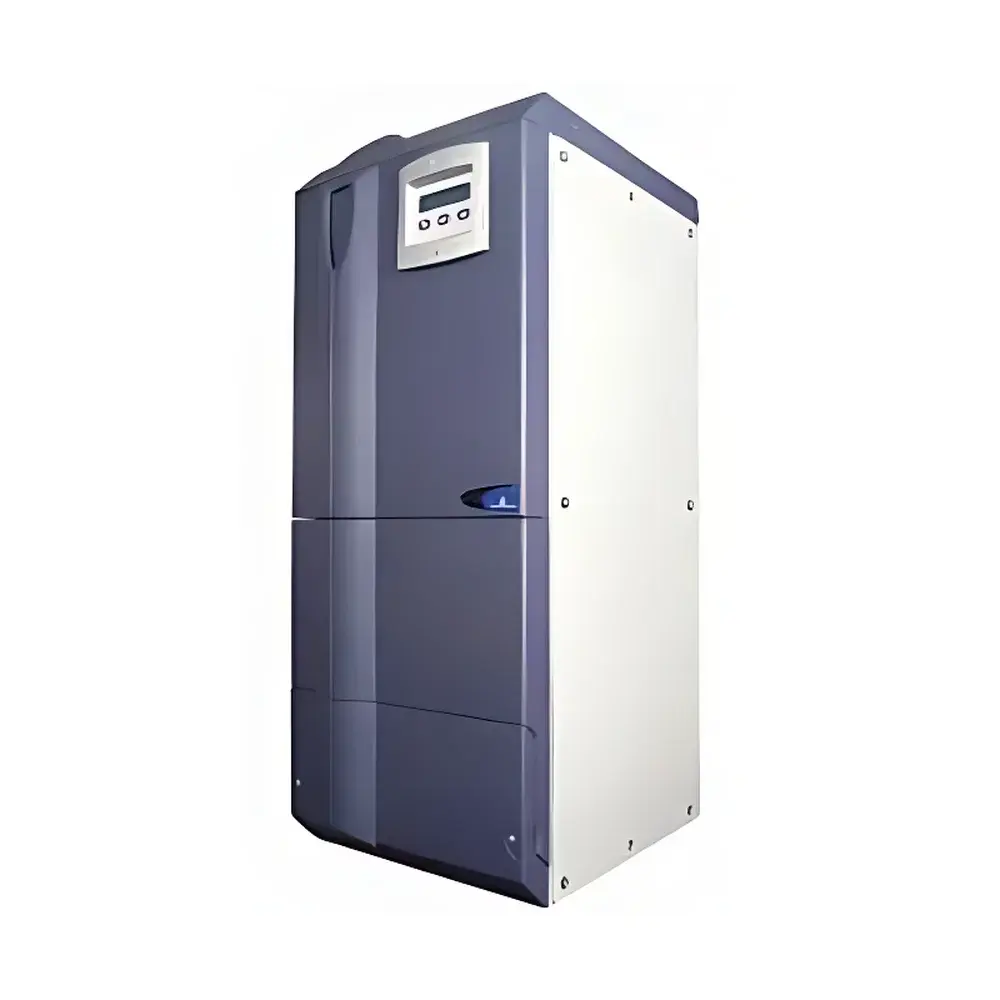
Parker Domnick Hunter UHPN2 Series Ultra-High-Purity Nitrogen Generator
| Brand | Parker DH |
|---|---|
| Origin | United Kingdom |
| Model | UHPN2-550C-E / UHPN2-750C-E / UHPN2-1500C-E / UHPN2-3000C-E |
| Nitrogen Purity | >99.9995% |
| Flow Rate | 0.55–3.0 L/min |
| Outlet Pressure | 5–7 bar (adjustable) |
| Integrated Oil-Free Compressor | Yes |
| Air Inlet Requirement (for non-C models) | 3–11.7 L/min @ 9 bar |
| Dimensions (W×H×D) | 345×869×417 mm (UHPN2-550/750-C) / 345×869×667 mm (UHPN2-1500/3000-C) |
| Weight | 44–93 kg |
| Compliance | ISO 9001 certified design, CE marked, meets IEC 61000-6-3/6-4 EMC requirements |
Overview
The Parker Domnick Hunter UHPN2 Series is an ultra-high-purity nitrogen generator engineered for continuous, on-demand supply of laboratory-grade nitrogen gas (≥99.9995% purity) to analytical instrumentation. Utilizing pressure swing adsorption (PSA) technology with high-efficiency carbon molecular sieve (CMS) beds, the system selectively removes oxygen, moisture, and CO₂ from compressed air—delivering stable, contaminant-free nitrogen without cryogenic liquid supply or high-pressure cylinder dependency. Designed and manufactured in the United Kingdom, each unit integrates a maintenance-free, oil-free scroll compressor (C-series models), eliminating external air source requirements and ensuring consistent inlet pressure control critical for PSA process stability. The UHPN2 platform supports critical applications demanding strict gas specification adherence—including GC carrier gas, ICP-OES plasma purge, ELSD nebulizer gas, and LC-MS mobile phase sparging—where trace oxygen or hydrocarbon contamination directly impacts baseline noise, detector sensitivity, and method robustness.
Key Features
- Ultra-high nitrogen purity ≥99.9995% (O₂ & H₂O < 0.1 ppm, total hydrocarbons < 0.01 ppm) verified per ISO 8573-1 Class 1:1:1
- Integrated oil-free scroll compressor (C-series) with thermal overload protection and automatic start-stop logic synchronized to demand
- Redundant CMS bed configuration with automated valve sequencing for uninterrupted operation during regeneration cycles
- Real-time purity monitoring via built-in electrochemical O₂ sensor with digital display and alarm thresholds configurable via front-panel interface
- Adjustable outlet pressure (5–7 bar) with precision pressure regulator and integrated safety relief valve (set at 8.5 bar)
- Low power consumption: 300–1200 W depending on model; energy-efficient standby mode reduces idle draw by >60%
- Compact footprint (345 × 869 × 417 mm for low-flow models) enabling under-bench installation—minimizing lab space utilization
- Front-access service panel with tool-free filter cartridge replacement (particulate, coalescing, and desiccant stages)
Sample Compatibility & Compliance
The UHPN2 series is validated for compatibility with gas chromatography (GC), inductively coupled plasma optical emission spectroscopy (ICP-OES), evaporative light scattering detection (ELSD), and mass spectrometry (MS)-based platforms requiring inert, dry, hydrocarbon-free nitrogen. Its output meets ASTM D6349-18 specifications for high-purity instrument gases and aligns with USP and EP 2.5.27 guidelines for pharmaceutical analytical gas quality. All units are CE-marked and conform to IEC 61010-1 (Safety Requirements for Electrical Equipment for Measurement, Control, and Laboratory Use) and IEC 61000-6-3/6-4 (EMC Emission and Immunity). The integrated compressor complies with ISO 8573-1:2010 Class 0 for oil-free air generation, ensuring no lubricant carryover into the PSA train.
Software & Data Management
While the UHPN2 operates as a standalone hardware system, its embedded controller supports optional RS-232 or Ethernet (Modbus TCP) communication for integration into centralized lab infrastructure monitoring systems. Logged parameters—including runtime hours, compressor cycles, purity readings, pressure trends, and fault codes—are timestamped and exportable as CSV files for GLP/GMP audit trails. Firmware updates are performed via secure USB interface, and all critical events (e.g., low-purity alert, filter saturation warning, overtemperature shutdown) trigger latching status indicators with non-volatile memory retention. The system supports 21 CFR Part 11-compliant data integrity workflows when deployed with validated third-party LIMS or ELN platforms.
Applications
- GC carrier gas: Eliminates baseline drift and column degradation associated with variable cylinder purity and moisture ingress
- ICP-OES plasma purge: Maintains stable plasma ignition and minimizes oxide-based polyatomic interferences (e.g., ArO⁺ on Fe⁺)
- ELSD and CAD nebulizer gas: Ensures consistent droplet formation and signal reproducibility across injection sequences
- LC-MS mobile phase sparging and solvent degassing: Reduces dissolved oxygen-induced oxidation of analytes and ion suppression effects
- Inert atmosphere glove boxes and sample preparation enclosures: Provides continuous flow without pressure fluctuations or refill interruptions
- Calibration gas blending systems: Serves as primary nitrogen source for dynamic dilution standards generation
FAQ
What is the expected lifetime of the carbon molecular sieve (CMS) beds?
CMS beds are rated for ≥20,000 operational hours under nominal flow and inlet air quality meeting ISO 8573-1 Class 4:4:4. Actual service life depends on ambient humidity, particulate load, and compressor maintenance frequency.
Does the UHPN2 require external compressed air?
C-series models include an integrated oil-free scroll compressor; E-series models require clean, dry, oil-free compressed air (3–11.7 L/min @ 9 bar) supplied externally.
How often must filters be replaced?
Pre-filters (particulate + coalescing) require replacement every 6 months or 4,000 hours; desiccant filters every 12 months or 8,000 hours—both intervals adjustable based on local air quality.
Can the system be validated for GxP environments?
Yes. IQ/OQ documentation templates are available upon request, and the system supports calibration traceability to NIST-traceable O₂ sensors and pressure transducers.
Is remote monitoring supported out of the box?
Standard models include analog 4–20 mA outputs for purity and pressure; digital communication (RS-232/Ethernet) is optional and requires configuration during ordering.



