
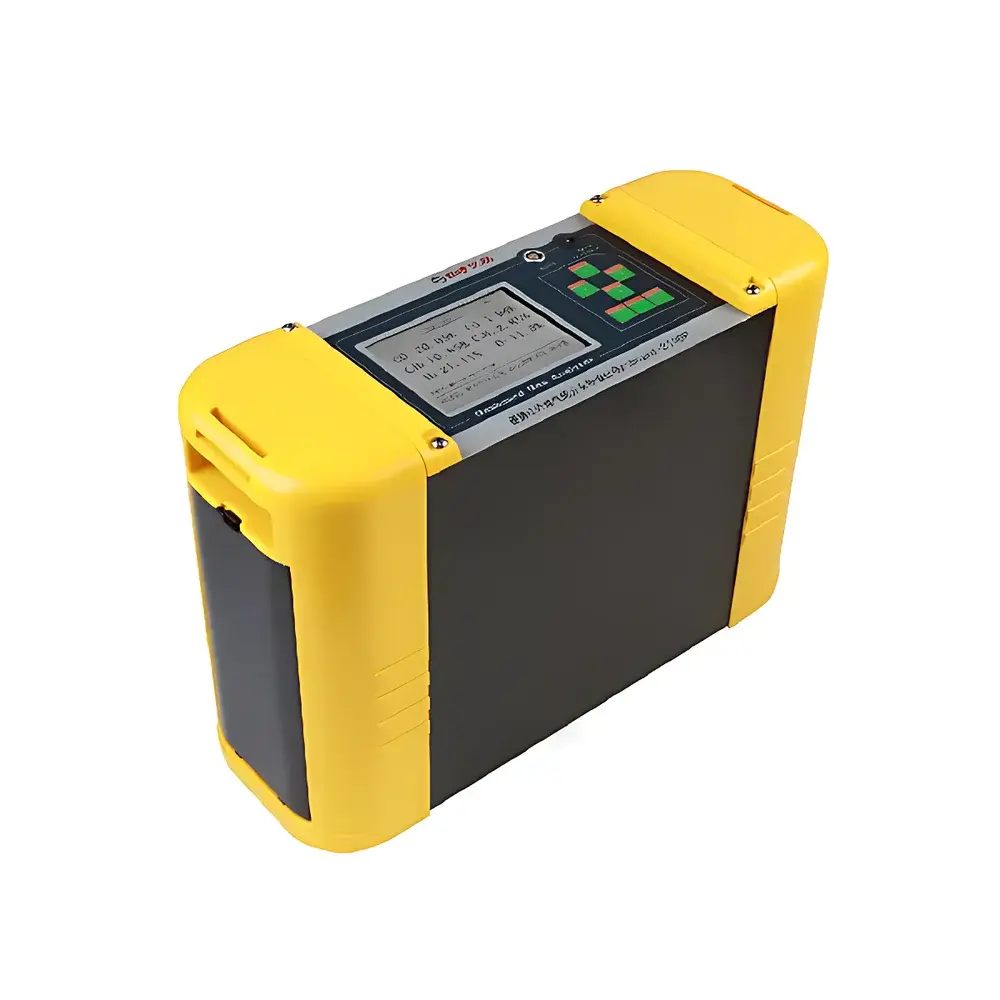
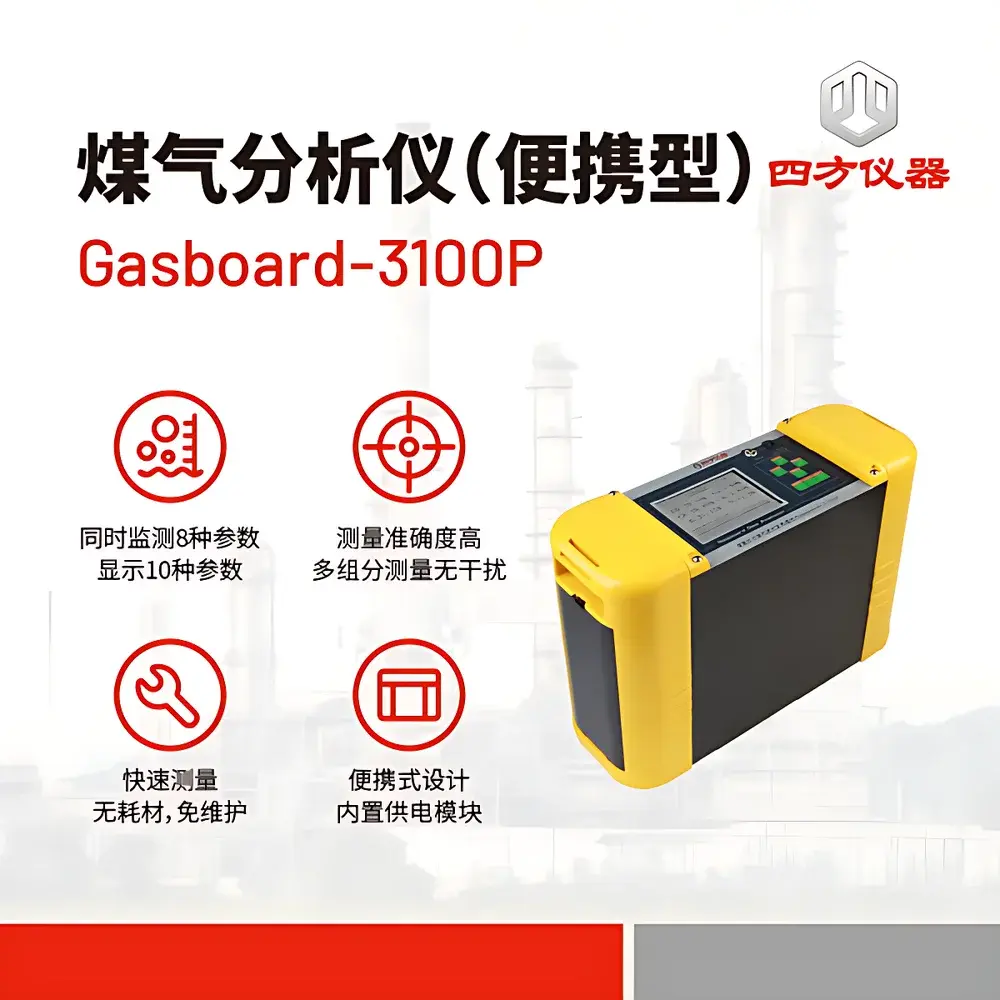

CUBIC INSTRUMENTS Gasboard-3100P Portable Biogas and Producer Gas Analyzer
| Brand | CUBIC INSTRUMENTS |
|---|---|
| Origin | Hubei, China |
| Model | Gasboard-3100P |
| Measured Gases | CO/CO₂/CH₄/H₂/O₂/C₂H₂/C₂H₄/CnHm*/Calorific Value |
| Resolution | 0.01% |
| Minimum Range | CO/CO₂/CH₄/H₂: (0–100)% |
| O₂ | (0–25)% |
| CnHm | (0–10)% (optional) |
| Response Time | T90 < 15 s (NDIR) |
| Detection Principles | NDIR (CO, CO₂, CH₄, C₂H₂, C₂H₄, CnHm), TCD (H₂), ECD (O₂) |
| Linearity Error | ±1% FS (NDIR gases), ±2% FS (O₂/H₂) |
| Repeatability | ≤1% |
| Sample Flow Rate | 0.7–1.2 L/min |
| Inlet Pressure | 2–50 kPa |
| Dimensions (L×W×H) | 412×152×294 mm |
| Weight | 9 kg |
| Power | Rechargeable Li-ion battery, external 12.6 V charger |
| Display | LCD |
| Communication | RS-232 |
| Calorific Value Units | kcal/m³ & MJ/m³ (switchable) |
Overview
The CUBIC INSTRUMENTS Gasboard-3100P is a field-deployable, multi-parameter gas analyzer engineered for precise, real-time compositional analysis and calorific value determination of industrial fuel gases—including coke oven gas, blast furnace gas, converter gas, producer gas, biogas, syngas, and natural gas blends. It integrates three complementary detection technologies within a single robust platform: non-dispersive infrared (NDIR) spectroscopy for CO, CO₂, CH₄, C₂H₂, C₂H₄, and total non-methane hydrocarbons (CnHm); thermal conductivity detection (TCD) for H₂; and electrochemical detection (ECD) for O₂. This hybrid architecture eliminates cross-sensitivity between key analytes—ensuring that CnHm does not interfere with CH₄ quantification, and that CO, CO₂, and CH₄ exert no measurable influence on H₂ measurement accuracy. The instrument computes higher heating value (HHV) in situ using ASTM D3588-17–derived stoichiometric algorithms, eliminating reliance on empirical correlations or external combustion calorimetry.
Key Features
- Simultaneous quantification of eight gas species (CO, CO₂, CH₄, H₂, O₂, C₂H₂, C₂H₄, CnHm) plus real-time gross calorific value (GCV) in kcal/m³ or MJ/m³—fully compliant with ISO 6976:2016 for natural gas energy content calculation.
- NDIR modules feature temperature-stabilized optical cells and dual-beam referencing, delivering long-term zero stability (<±0.1% FS/month) and immunity to flow-induced signal drift.
- H₂ measurement via MEMS-based TCD ensures linear response across 0–100% vol with negligible sensitivity to background gas composition changes—critical for coal gas and biomass-derived syngas applications.
- Integrated sample pump with adjustable flow control (0.7–1.2 L/min) and inlet pressure regulation (2–50 kPa) enables direct connection to process lines, Tedlar® bags, or gas-tight syringes without external vacuum sources.
- Intelligent power management includes soft-start circuitry, state-of-charge monitoring, low-voltage cutoff, and battery runtime estimation—supporting >6 hours of continuous operation on a single charge.
- Self-diagnostic firmware continuously monitors sensor health, optical path integrity, and electronic calibration status, logging fault codes accessible via RS-232 for predictive maintenance planning.
Sample Compatibility & Compliance
The Gasboard-3100P accepts dry, particle-free, oil-free sample streams—compatible with standard gas conditioning systems (e.g., Nafion™ dryers, particulate filters, and catalytic scrubbers for H₂S removal). It meets IEC 61000-6-2 (immunity) and IEC 61000-6-4 (emissions) for industrial electromagnetic environments. While not intrinsically safe certified, it complies with EN 61010-1:2010 for laboratory and controlled industrial use. Data integrity aligns with GLP principles: all measurements include timestamp, sensor ID, calibration epoch, and environmental compensation flags (temperature/pressure). Audit trails are exportable via RS-232 for integration into LIMS or SCADA platforms requiring FDA 21 CFR Part 11–compliant data handling.
Software & Data Management
On-device firmware supports automatic storage of up to 10,000 measurement records—including raw sensor outputs, calculated GCV, and diagnostic metadata. Data retrieval is performed via ASCII protocol over RS-232, enabling seamless ingestion into Excel, MATLAB, or enterprise MES systems. No proprietary software installation is required; configuration and firmware updates are executed via terminal emulation (e.g., PuTTY) using standardized AT-style command sets. All stored entries retain full traceability: date/time stamp, operator ID (user-configurable), and sensor-specific calibration coefficients applied at time of acquisition.
Applications
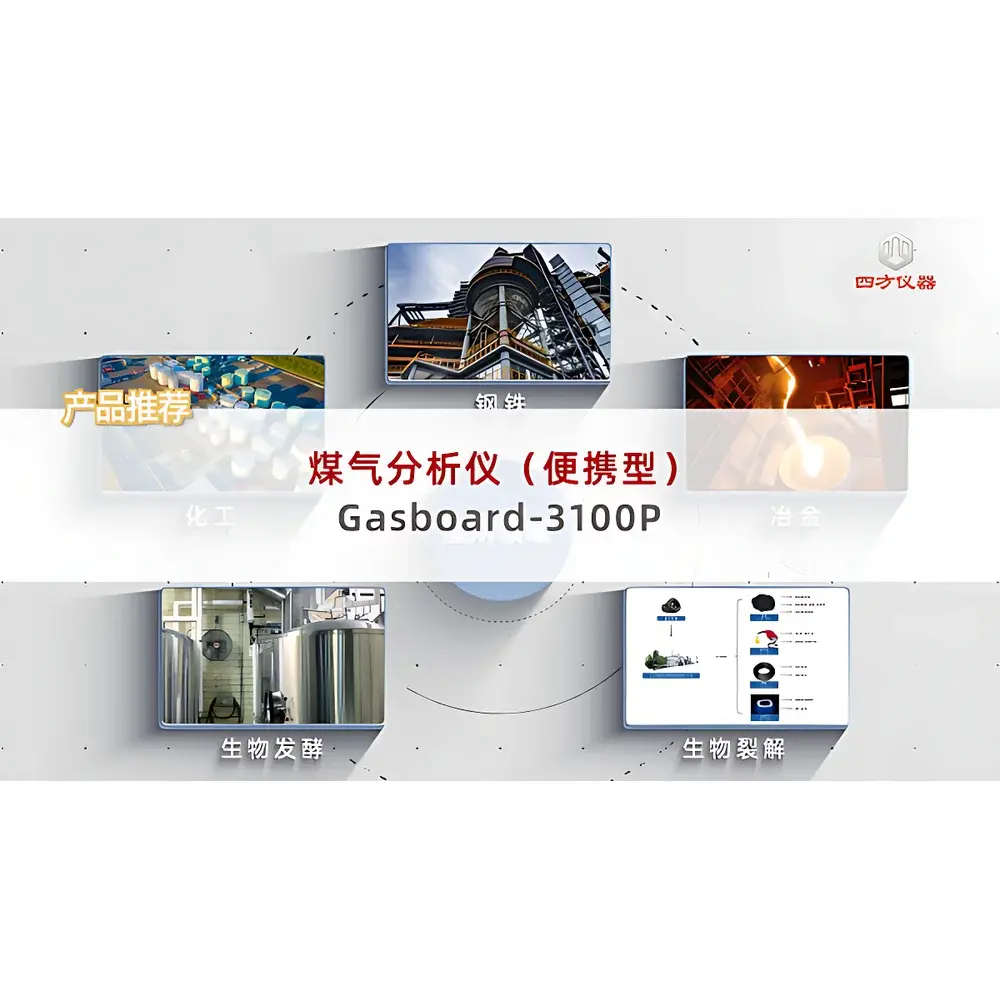
- Metallurgical process control: Continuous monitoring of blast furnace gas (BFG), basic oxygen furnace (BOF) off-gas, and coke oven gas (COG) for energy recovery optimization and emissions reporting (EU ETS, EPA GHG Reporting Program).
- Biogas upgrading verification: Quantification of CH₄ enrichment efficiency, H₂S breakthrough detection (via optional add-on sensor), and post-upgrading calorific value validation per EN 16723-1.
- R&D combustion studies: High-frequency sampling during burner testing, gas turbine fuel flexibility trials, and pyrolysis/gasification reactor characterization—supporting ASTM D1945, ISO 10101, and ISO 6974-1 methodologies.
- Gas quality compliance: Verification of town gas specifications (e.g., GB/T 13612–2006, EN 437:2022), including Wobbe index derivation from measured composition and density.
FAQ
What gas conditioning is required prior to analysis?
The sample must be free of particulates, condensed moisture, and oil aerosols. A heated filter (≤110 °C) and Peltier-cooled condenser (dew point ≤5 °C) are recommended for high-humidity biogas or wet producer gas. Optional integrated pre-treatment modules include stainless-steel particulate filters and sintered metal coalescers.
Can the instrument measure hydrogen sulfide (H₂S)?
H₂S is not included in the standard configuration but can be added via an optional electrochemical sensor module (0–200 ppm range, ±2% FS accuracy), with automatic compensation for humidity and temperature effects.
How is calorific value calculated?
GCV is computed in real time using the measured volumetric concentrations of CO, CO₂, CH₄, H₂, C₂H₂, C₂H₄, and CnHm, combined with published higher heating values per mole (per ISO 6976 Annex A) and ideal gas law corrections for temperature and pressure.
Is calibration traceable to national standards?
Yes—factory calibration uses NIST-traceable gas standards (e.g., Scott-Marrin, Air Liquide) certified to ISO/IEC 17025. Users may perform span calibration with certified multi-component reference gases; zero calibration employs certified zero air (O₂-free N₂).
What maintenance intervals are recommended?
Optical windows should be inspected quarterly; NDIR light sources have >5-year service life. Electrochemical O₂ sensors require replacement every 24 months; TCD filaments are solid-state and maintenance-free. Annual full-system verification is advised per ISO/IEC 17025–based QA protocols.




